YRO 1000VDC NH00 Fuse Disconnector Switch
Official Store Deal
Expert Analysis Overview
The YRO 1000VDC Fuse Disconnector Switch is a critical safety component engineered for high-voltage DC circuits, specifically targeting robust overcurrent protection in demanding telecommunications and battery energy storage systems. This device integrates a fuse holder with a disconnector function, providing both circuit protection and isolation capabilities essential for system maintenance and safety. Its design adheres to established electrical standards, ensuring reliable operation within its specified parameters.
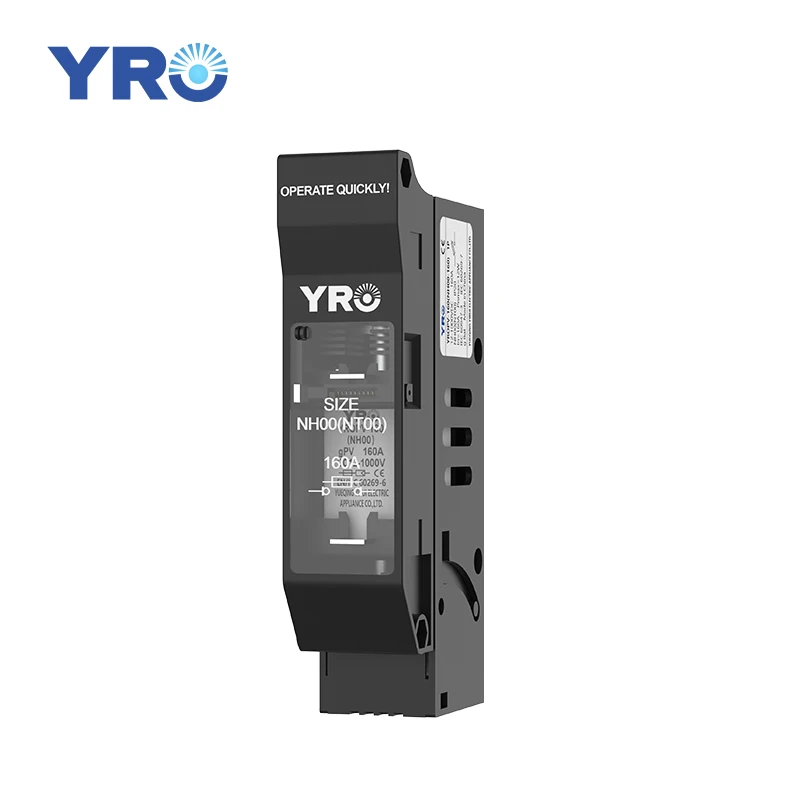
This YRO unit is explicitly rated for 1000VDC and 160A, designed to accommodate NH00 battery fuses. The visible markings confirm compliance with EN/IEC 60269-6 and bear the CE mark. These specifications are not merely numbers; they dictate the operational envelope and the types of systems this disconnector can safely integrate into.
In practical terms, the 1000VDC rating signifies its suitability for modern high-voltage DC applications, such as large-scale solar photovoltaic (PV) arrays or advanced battery energy storage systems (BESS). Such systems operate at elevated DC voltages to minimize current and associated resistive losses, making robust protection paramount. The 160A current rating ensures it can handle significant power flows, protecting critical infrastructure from damaging overcurrent events. This is a high-capacity device.
Unlike standard AC circuit breakers, this DC-specific fuse disconnector is engineered to interrupt direct current, which is inherently more challenging to extinguish due to the lack of zero-crossings. Its compliance with EN/IEC 60269-6 indicates it meets international standards for low-voltage fuses for the protection of semiconductor devices and for general applications, a crucial distinction for DC systems. Generic fuse holders often lack the specific arc-quenching capabilities required for high-voltage DC, leading to potential catastrophic failures. This unit provides specialized DC interruption.
The disconnector is designed for NH00 type fuses, a common standard for industrial and battery applications. The images clearly show the mechanism for inserting and securing the fuse element, which is a critical aspect of its functionality. The fuse itself, labeled YROPV-160, confirms its gPV rating, indicating full-range protection for photovoltaic systems.
This integration means the device serves a dual purpose: it holds the sacrificial fuse element that breaks the circuit under fault conditions, and it provides a means to manually isolate the circuit. Isolation is vital for safe maintenance, allowing technicians to de-energize a section of the system without affecting the entire installation. This simplifies troubleshooting.
Compared to a standalone fuse holder, the disconnector switch offers an added layer of operational safety and convenience. Technicians do not need specialized tools to remove a live fuse, reducing the risk of arc flash and electrical shock. The integrated switch mechanism provides a clear visual indication of the circuit's status, enhancing workplace safety protocols. This is a significant operational advantage.
The housing of the fuse disconnector appears to be constructed from a durable, flame-retardant plastic, typical for electrical enclosures. Visible vents on the side suggest thermal management is considered in its design, allowing heat generated during normal operation or fault conditions to dissipate. The black finish is standard for industrial components.
Such material selection is critical for components operating in high-power electrical environments. The plastic must withstand mechanical stress, resist environmental factors, and, most importantly, possess excellent dielectric properties to prevent electrical breakdown. Flame retardancy is a non-negotiable feature, mitigating the spread of fire in the event of an internal fault. This ensures system resilience.
Unlike cheaper, general-purpose plastics that can become brittle or degrade under thermal cycling, the implied quality of this housing suggests a material engineered for longevity and safety in demanding electrical installations. The robust construction minimizes the risk of physical damage during installation or operation. This is a professional-grade enclosure.
While the specific terminal type is not fully visible in all images, the overall design suggests robust connection points suitable for high-current applications. The integration with NH00 fuses implies a design compatible with substantial busbar or cable connections. Secure connections are paramount.
High-amperage DC circuits demand terminals that can maintain low resistance connections over time, preventing hotspots and power losses. The quality of the terminal material and its clamping mechanism directly impacts the long-term reliability and safety of the entire circuit. Loose or corroded terminals are a leading cause of electrical fires and system failures. This requires careful installation.
Inferior terminal designs often rely on inadequate clamping forces or materials prone to oxidation, leading to increased resistance and heat generation. This YRO unit, designed for 160A, must incorporate high-quality, corrosion-resistant conductive materials and a secure fastening method to ensure optimal current transfer. This is a critical design element.
The product's designation for telecom fuse and battery fuse applications highlights its versatility within critical DC power systems. Telecommunications infrastructure relies heavily on robust DC power distribution, often backed by extensive battery banks. This disconnector fits perfectly into such architectures.
In telecommunications, uninterrupted power is non-negotiable. This fuse disconnector provides the necessary protection for DC distribution panels, rectifier outputs, and battery strings, safeguarding sensitive electronic equipment from overcurrents. Its ability to isolate circuits also facilitates rapid fault location and repair, minimizing downtime. This maintains network uptime.
Many generic fuse holders are not rated for the specific demands of telecom or battery systems, which often involve high short-circuit currents and continuous operation. This YRO unit, with its gPV rating and 1000VDC capability, offers a specialized solution that meets the stringent requirements of these critical applications. It is a purpose-built component.
The CE mark and EN/IEC 60269-6 compliance are significant indicators of the product's adherence to European safety, health, and environmental protection standards. These certifications are not merely labels; they represent a rigorous testing and conformity assessment process. This ensures product reliability.
For electrical components, compliance with such standards means the product has been tested for its ability to safely interrupt fault currents, withstand specified voltages, and operate reliably within its environmental limits. It provides assurance that the device will perform as expected under fault conditions, preventing damage to equipment and protecting personnel. This is a fundamental safety requirement.
Choosing components without proper certification can introduce significant risks into an electrical system, potentially leading to equipment damage, fire, or electric shock. The presence of these certifications on the YRO disconnector provides a level of confidence in its design and manufacturing quality, distinguishing it from unverified alternatives. This is a mark of quality.
Installation of this fuse disconnector requires adherence to local electrical codes and manufacturer guidelines. The single-pole (1P) configuration means it protects one conductor, typically the positive or negative line in a DC system, depending on the grounding scheme. Proper wiring is essential.
During installation, careful attention must be paid to wire gauge selection, ensuring it is appropriate for the 160A rating and the expected fault currents. Over-torquing or under-torquing terminal connections can compromise performance and safety. A qualified electrician should always perform the installation. This prevents installation errors.
Unlike simpler fuse blocks, the disconnector mechanism requires proper alignment and secure latching to ensure reliable contact and safe operation. Regular inspection of the unit, especially in high-vibration or harsh environments, is recommended to verify terminal integrity and the condition of the housing. This ensures long-term performance.
The investment in a specialized fuse disconnector like the YRO 1000VDC unit translates into significant long-term value, particularly in high-stakes applications. Its robust design and compliance with international standards reduce the likelihood of costly system failures and downtime. This protects assets.
Considering the potential cost of equipment damage, production losses, or even legal liabilities arising from electrical faults, the price of a high-quality protection device is a small fraction of the potential losses. This unit acts as an insurance policy for expensive DC infrastructure, ensuring operational continuity. It is a preventative measure.
Compared to opting for cheaper, uncertified alternatives, this YRO disconnector offers a superior return on investment through enhanced safety, reliability, and reduced maintenance overhead. The peace of mind that comes from knowing critical systems are adequately protected is invaluable. This is a smart investment.
While the YRO disconnector offers robust protection, its single-pole configuration means that for complete isolation of a two-wire DC circuit, two such units would be required, or a separate isolation switch for the second pole. This is a design choice.
This single-pole design is common in many DC applications where only one line requires fused protection or where the other line is grounded. However, for applications demanding full galvanic isolation of both positive and negative conductors, this necessitates additional components or a different product. Users must plan accordingly.
Some users accustomed to multi-pole AC circuit breakers might find the single-pole nature a minor inconvenience for certain installations. However, for its intended purpose in specific DC architectures, it is an efficient and effective solution. This is a specific application tool.
Imagine a critical telecommunications hub, powered by a vast array of solar panels and battery banks, operating flawlessly through fluctuating loads and potential grid disturbances. This YRO fuse disconnector switch stands as a silent guardian, ensuring that any unforeseen electrical anomaly is swiftly and safely contained, preventing cascading failures and maintaining essential communication links. Its presence guarantees operational resilience, allowing vital systems to perform without interruption, securing both data flow and power integrity for years to come. This is reliable protection.
The Core of Circuit Safeguarding
This YRO unit is explicitly rated for 1000VDC and 160A, designed to accommodate NH00 battery fuses. The visible markings confirm compliance with EN/IEC 60269-6 and bear the CE mark. These specifications are not merely numbers; they dictate the operational envelope and the types of systems this disconnector can safely integrate into.
In practical terms, the 1000VDC rating signifies its suitability for modern high-voltage DC applications, such as large-scale solar photovoltaic (PV) arrays or advanced battery energy storage systems (BESS). Such systems operate at elevated DC voltages to minimize current and associated resistive losses, making robust protection paramount. The 160A current rating ensures it can handle significant power flows, protecting critical infrastructure from damaging overcurrent events. This is a high-capacity device.
Unlike standard AC circuit breakers, this DC-specific fuse disconnector is engineered to interrupt direct current, which is inherently more challenging to extinguish due to the lack of zero-crossings. Its compliance with EN/IEC 60269-6 indicates it meets international standards for low-voltage fuses for the protection of semiconductor devices and for general applications, a crucial distinction for DC systems. Generic fuse holders often lack the specific arc-quenching capabilities required for high-voltage DC, leading to potential catastrophic failures. This unit provides specialized DC interruption.
Fuse Integration and Isolation
The disconnector is designed for NH00 type fuses, a common standard for industrial and battery applications. The images clearly show the mechanism for inserting and securing the fuse element, which is a critical aspect of its functionality. The fuse itself, labeled YROPV-160, confirms its gPV rating, indicating full-range protection for photovoltaic systems.
This integration means the device serves a dual purpose: it holds the sacrificial fuse element that breaks the circuit under fault conditions, and it provides a means to manually isolate the circuit. Isolation is vital for safe maintenance, allowing technicians to de-energize a section of the system without affecting the entire installation. This simplifies troubleshooting.
Compared to a standalone fuse holder, the disconnector switch offers an added layer of operational safety and convenience. Technicians do not need specialized tools to remove a live fuse, reducing the risk of arc flash and electrical shock. The integrated switch mechanism provides a clear visual indication of the circuit's status, enhancing workplace safety protocols. This is a significant operational advantage.
Structural Integrity and Material Selection
The housing of the fuse disconnector appears to be constructed from a durable, flame-retardant plastic, typical for electrical enclosures. Visible vents on the side suggest thermal management is considered in its design, allowing heat generated during normal operation or fault conditions to dissipate. The black finish is standard for industrial components.
Such material selection is critical for components operating in high-power electrical environments. The plastic must withstand mechanical stress, resist environmental factors, and, most importantly, possess excellent dielectric properties to prevent electrical breakdown. Flame retardancy is a non-negotiable feature, mitigating the spread of fire in the event of an internal fault. This ensures system resilience.
Unlike cheaper, general-purpose plastics that can become brittle or degrade under thermal cycling, the implied quality of this housing suggests a material engineered for longevity and safety in demanding electrical installations. The robust construction minimizes the risk of physical damage during installation or operation. This is a professional-grade enclosure.
Terminal Quality and Connection Security
While the specific terminal type is not fully visible in all images, the overall design suggests robust connection points suitable for high-current applications. The integration with NH00 fuses implies a design compatible with substantial busbar or cable connections. Secure connections are paramount.
High-amperage DC circuits demand terminals that can maintain low resistance connections over time, preventing hotspots and power losses. The quality of the terminal material and its clamping mechanism directly impacts the long-term reliability and safety of the entire circuit. Loose or corroded terminals are a leading cause of electrical fires and system failures. This requires careful installation.
Inferior terminal designs often rely on inadequate clamping forces or materials prone to oxidation, leading to increased resistance and heat generation. This YRO unit, designed for 160A, must incorporate high-quality, corrosion-resistant conductive materials and a secure fastening method to ensure optimal current transfer. This is a critical design element.
Application Versatility and Compliance
The product's designation for telecom fuse and battery fuse applications highlights its versatility within critical DC power systems. Telecommunications infrastructure relies heavily on robust DC power distribution, often backed by extensive battery banks. This disconnector fits perfectly into such architectures.
In telecommunications, uninterrupted power is non-negotiable. This fuse disconnector provides the necessary protection for DC distribution panels, rectifier outputs, and battery strings, safeguarding sensitive electronic equipment from overcurrents. Its ability to isolate circuits also facilitates rapid fault location and repair, minimizing downtime. This maintains network uptime.
Many generic fuse holders are not rated for the specific demands of telecom or battery systems, which often involve high short-circuit currents and continuous operation. This YRO unit, with its gPV rating and 1000VDC capability, offers a specialized solution that meets the stringent requirements of these critical applications. It is a purpose-built component.
Safety Standard Adherence
The CE mark and EN/IEC 60269-6 compliance are significant indicators of the product's adherence to European safety, health, and environmental protection standards. These certifications are not merely labels; they represent a rigorous testing and conformity assessment process. This ensures product reliability.
For electrical components, compliance with such standards means the product has been tested for its ability to safely interrupt fault currents, withstand specified voltages, and operate reliably within its environmental limits. It provides assurance that the device will perform as expected under fault conditions, preventing damage to equipment and protecting personnel. This is a fundamental safety requirement.
Choosing components without proper certification can introduce significant risks into an electrical system, potentially leading to equipment damage, fire, or electric shock. The presence of these certifications on the YRO disconnector provides a level of confidence in its design and manufacturing quality, distinguishing it from unverified alternatives. This is a mark of quality.
Installation and Operational Considerations
Installation of this fuse disconnector requires adherence to local electrical codes and manufacturer guidelines. The single-pole (1P) configuration means it protects one conductor, typically the positive or negative line in a DC system, depending on the grounding scheme. Proper wiring is essential.
During installation, careful attention must be paid to wire gauge selection, ensuring it is appropriate for the 160A rating and the expected fault currents. Over-torquing or under-torquing terminal connections can compromise performance and safety. A qualified electrician should always perform the installation. This prevents installation errors.
Unlike simpler fuse blocks, the disconnector mechanism requires proper alignment and secure latching to ensure reliable contact and safe operation. Regular inspection of the unit, especially in high-vibration or harsh environments, is recommended to verify terminal integrity and the condition of the housing. This ensures long-term performance.
Value Proposition in Critical Infrastructure
The investment in a specialized fuse disconnector like the YRO 1000VDC unit translates into significant long-term value, particularly in high-stakes applications. Its robust design and compliance with international standards reduce the likelihood of costly system failures and downtime. This protects assets.
Considering the potential cost of equipment damage, production losses, or even legal liabilities arising from electrical faults, the price of a high-quality protection device is a small fraction of the potential losses. This unit acts as an insurance policy for expensive DC infrastructure, ensuring operational continuity. It is a preventative measure.
Compared to opting for cheaper, uncertified alternatives, this YRO disconnector offers a superior return on investment through enhanced safety, reliability, and reduced maintenance overhead. The peace of mind that comes from knowing critical systems are adequately protected is invaluable. This is a smart investment.
Addressing Operational Nuances
While the YRO disconnector offers robust protection, its single-pole configuration means that for complete isolation of a two-wire DC circuit, two such units would be required, or a separate isolation switch for the second pole. This is a design choice.
This single-pole design is common in many DC applications where only one line requires fused protection or where the other line is grounded. However, for applications demanding full galvanic isolation of both positive and negative conductors, this necessitates additional components or a different product. Users must plan accordingly.
Some users accustomed to multi-pole AC circuit breakers might find the single-pole nature a minor inconvenience for certain installations. However, for its intended purpose in specific DC architectures, it is an efficient and effective solution. This is a specific application tool.
Imagine a critical telecommunications hub, powered by a vast array of solar panels and battery banks, operating flawlessly through fluctuating loads and potential grid disturbances. This YRO fuse disconnector switch stands as a silent guardian, ensuring that any unforeseen electrical anomaly is swiftly and safely contained, preventing cascading failures and maintaining essential communication links. Its presence guarantees operational resilience, allowing vital systems to perform without interruption, securing both data flow and power integrity for years to come. This is reliable protection.