WSX JGS1 Fused Silica Laser Protective Lenses
Official Store Deal
Expert Analysis Overview
The WSX JGS1 Fused Silica Laser Protective Lenses are precision optical components engineered for critical laser cutting applications, ensuring optimal beam integrity and extended system longevity. These lenses represent a significant upgrade over standard optical windows, specifically designed to withstand the rigorous demands of high-power laser environments. Their metrological precision is paramount for maintaining the focal accuracy and power density required in industrial laser systems.
These protective lenses are fabricated from JGS1 Fused Silica, a material renowned for its exceptional optical properties and thermal stability. Fused silica, particularly the JGS1 grade, exhibits extremely low thermal expansion. This characteristic is vital in high-power laser applications where temperature fluctuations can induce optical distortion, known as thermal lensing. Standard glass alternatives often suffer from significant refractive index changes with temperature, leading to beam divergence and reduced cutting efficiency. JGS1 mitigates this. Its inherent purity also minimizes absorption, preventing localized heating and potential damage.
In a laser cutting scenario, where beam quality directly translates to cut precision and speed, the stability offered by JGS1 Fused Silica is indispensable. The material's high damage threshold means it can endure intense laser radiation without degradation, extending the operational life of the lens. This directly impacts the cost-per-use over time. Unlike less robust materials, JGS1 maintains its optical integrity under sustained thermal load.
Compared to conventional optical glass, JGS1 Fused Silica provides superior transmission across a broad spectrum, particularly in the UV to near-IR range relevant for many industrial lasers. This high transmission minimizes energy loss, ensuring more of the laser's power reaches the workpiece. The material's hardness also contributes to its scratch resistance, a critical factor in dusty industrial environments. This reduces the frequency of replacements.
The lenses are available in precise dimensions: 18x2mm, 20x2mm, 30x5mm, and 37x7mm. These specific diameters and thicknesses are critical for seamless integration into various WSX laser cutting heads. The manufacturing process ensures tight tolerances on these dimensions, which is a fundamental requirement for maintaining the optical path's integrity. Any deviation in thickness or diameter can lead to misalignment or improper seating within the lens holder.
Dimensional accuracy directly influences the optical performance of the laser system. A lens that is even slightly off-spec can introduce aberrations, shift the focal point, or reduce the effective power density at the cutting surface. For a metrologist, verifying these dimensions with high-precision calipers or optical comparators is a standard procedure. Repeatable results are expected from these components. The precise fit ensures consistent performance.
Generic protective windows often exhibit wider manufacturing tolerances, which can lead to variability in performance or even fitment issues. These WSX lenses, being original equipment, are designed to meet the exact specifications of WSX laser machines. This eliminates guesswork during installation and ensures the laser system operates as intended. The exact sizing prevents light leakage.
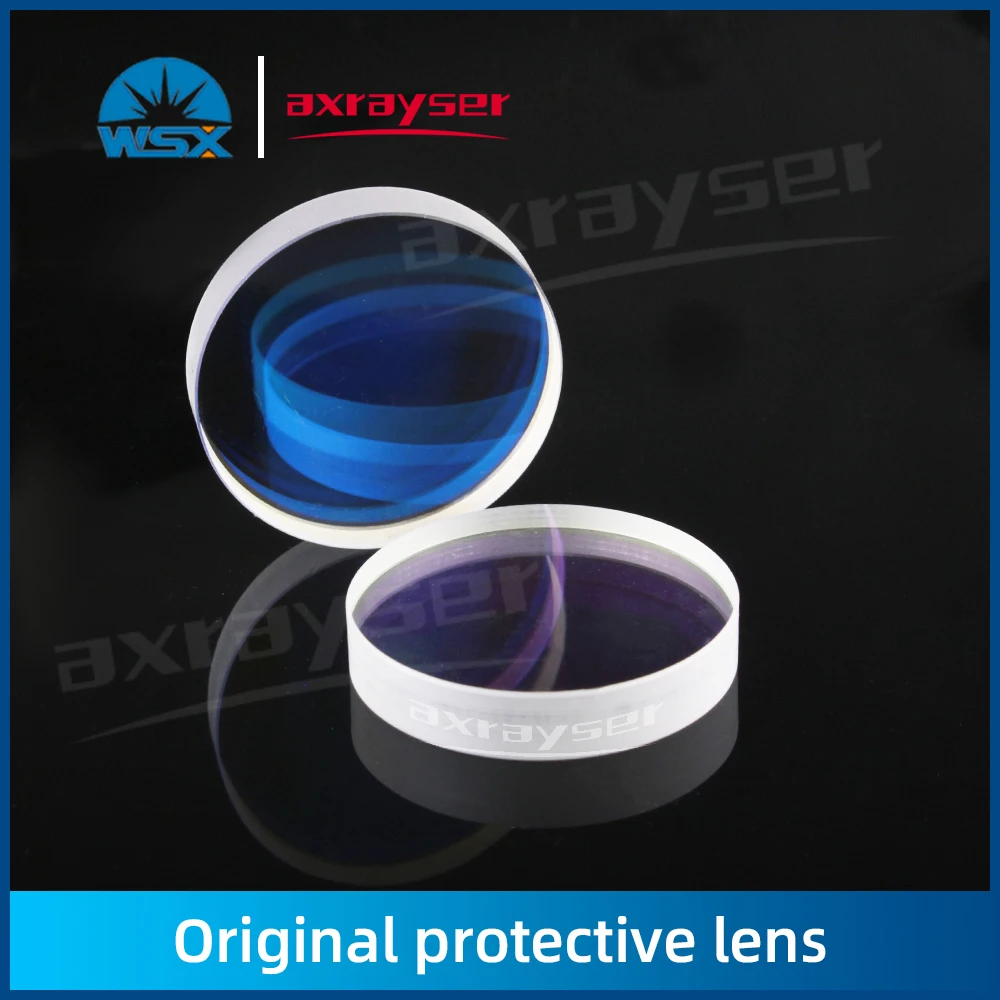
While not explicitly detailed, the visible blue and purple reflections on the lens surfaces strongly indicate the presence of multi-layer anti-reflective (AR) coatings. These coatings are engineered to minimize reflection losses and maximize transmission at the specific operating wavelength of the laser. Without AR coatings, a significant portion of the laser energy would be reflected away from the workpiece, leading to reduced efficiency and potential damage to the laser head components from back-reflections.
AR coatings are applied with nanometer-level precision, often involving multiple layers of dielectric materials. The effectiveness of these coatings is measured by their residual reflection, which should be less than 0.25% per surface for high-quality optics. This ensures nearly all the laser power passes through the lens. The coating's durability is also crucial, as it must withstand the laser's power and environmental factors without delamination or degradation.
Inferior or improperly applied AR coatings can degrade over time, leading to increased reflection and absorption, which can manifest as localized heating and eventual lens failure. The visual consistency of the coatings across the various lenses suggests a controlled manufacturing process. This contributes to the repeatable results expected from these components. Data logging of coating performance is often part of quality control.
These protective lenses are designed to act as a sacrificial element, shielding the more expensive internal optics of the laser head from spatter, debris, and fumes generated during the cutting process. Their robust construction from JGS1 Fused Silica, combined with durable AR coatings, ensures a longer service life compared to standard glass windows. Regular inspection and cleaning are still necessary to maintain optimal performance.
In a high-volume production environment, the longevity of these protective lenses directly impacts uptime and maintenance costs. A lens that requires frequent replacement due to damage or degradation can significantly reduce productivity. The material choice and coating technology aim to extend the interval between replacements. This minimizes operational interruptions. Proper handling during installation is also critical.
Unlike cheaper alternatives that may quickly pit or scratch, these original WSX lenses are built to endure the harsh conditions of industrial laser cutting. This translates to fewer unscheduled stops and more consistent cut quality. The investment in high-quality protective optics pays dividends in sustained operational efficiency and reduced long-term expenses. Calibration certification for the optical properties would be a valuable addition.
For any laser system, particularly those used in precision manufacturing, the metrological characteristics of every optical component are paramount. These WSX protective lenses, by virtue of their JGS1 Fused Silica construction and precise dimensions, contribute directly to the overall accuracy and repeatability of the laser cutting process. The flatness and parallelism of the lens surfaces are critical parameters, often measured in fractions of a wavelength. Deviations here can introduce wavefront errors.
Maintaining a consistent optical path is essential for achieving the specified focal spot size and beam profile. Any imperfections in the protective lens can degrade the beam before it even reaches the focusing optics, leading to a larger, less intense spot and compromised cut quality. This is where the
The Foundation of Optical Integrity: JGS1 Fused Silica
These protective lenses are fabricated from JGS1 Fused Silica, a material renowned for its exceptional optical properties and thermal stability. Fused silica, particularly the JGS1 grade, exhibits extremely low thermal expansion. This characteristic is vital in high-power laser applications where temperature fluctuations can induce optical distortion, known as thermal lensing. Standard glass alternatives often suffer from significant refractive index changes with temperature, leading to beam divergence and reduced cutting efficiency. JGS1 mitigates this. Its inherent purity also minimizes absorption, preventing localized heating and potential damage.
In a laser cutting scenario, where beam quality directly translates to cut precision and speed, the stability offered by JGS1 Fused Silica is indispensable. The material's high damage threshold means it can endure intense laser radiation without degradation, extending the operational life of the lens. This directly impacts the cost-per-use over time. Unlike less robust materials, JGS1 maintains its optical integrity under sustained thermal load.
Compared to conventional optical glass, JGS1 Fused Silica provides superior transmission across a broad spectrum, particularly in the UV to near-IR range relevant for many industrial lasers. This high transmission minimizes energy loss, ensuring more of the laser's power reaches the workpiece. The material's hardness also contributes to its scratch resistance, a critical factor in dusty industrial environments. This reduces the frequency of replacements.
Precision in Form Factor: Dimensional Accuracy
The lenses are available in precise dimensions: 18x2mm, 20x2mm, 30x5mm, and 37x7mm. These specific diameters and thicknesses are critical for seamless integration into various WSX laser cutting heads. The manufacturing process ensures tight tolerances on these dimensions, which is a fundamental requirement for maintaining the optical path's integrity. Any deviation in thickness or diameter can lead to misalignment or improper seating within the lens holder.
Dimensional accuracy directly influences the optical performance of the laser system. A lens that is even slightly off-spec can introduce aberrations, shift the focal point, or reduce the effective power density at the cutting surface. For a metrologist, verifying these dimensions with high-precision calipers or optical comparators is a standard procedure. Repeatable results are expected from these components. The precise fit ensures consistent performance.
Generic protective windows often exhibit wider manufacturing tolerances, which can lead to variability in performance or even fitment issues. These WSX lenses, being original equipment, are designed to meet the exact specifications of WSX laser machines. This eliminates guesswork during installation and ensures the laser system operates as intended. The exact sizing prevents light leakage.
The Role of Anti-Reflective Coatings
While not explicitly detailed, the visible blue and purple reflections on the lens surfaces strongly indicate the presence of multi-layer anti-reflective (AR) coatings. These coatings are engineered to minimize reflection losses and maximize transmission at the specific operating wavelength of the laser. Without AR coatings, a significant portion of the laser energy would be reflected away from the workpiece, leading to reduced efficiency and potential damage to the laser head components from back-reflections.
AR coatings are applied with nanometer-level precision, often involving multiple layers of dielectric materials. The effectiveness of these coatings is measured by their residual reflection, which should be less than 0.25% per surface for high-quality optics. This ensures nearly all the laser power passes through the lens. The coating's durability is also crucial, as it must withstand the laser's power and environmental factors without delamination or degradation.
Inferior or improperly applied AR coatings can degrade over time, leading to increased reflection and absorption, which can manifest as localized heating and eventual lens failure. The visual consistency of the coatings across the various lenses suggests a controlled manufacturing process. This contributes to the repeatable results expected from these components. Data logging of coating performance is often part of quality control.
Operational Durability and Maintenance
These protective lenses are designed to act as a sacrificial element, shielding the more expensive internal optics of the laser head from spatter, debris, and fumes generated during the cutting process. Their robust construction from JGS1 Fused Silica, combined with durable AR coatings, ensures a longer service life compared to standard glass windows. Regular inspection and cleaning are still necessary to maintain optimal performance.
In a high-volume production environment, the longevity of these protective lenses directly impacts uptime and maintenance costs. A lens that requires frequent replacement due to damage or degradation can significantly reduce productivity. The material choice and coating technology aim to extend the interval between replacements. This minimizes operational interruptions. Proper handling during installation is also critical.
Unlike cheaper alternatives that may quickly pit or scratch, these original WSX lenses are built to endure the harsh conditions of industrial laser cutting. This translates to fewer unscheduled stops and more consistent cut quality. The investment in high-quality protective optics pays dividends in sustained operational efficiency and reduced long-term expenses. Calibration certification for the optical properties would be a valuable addition.
The Metrological Imperative in Laser Optics
For any laser system, particularly those used in precision manufacturing, the metrological characteristics of every optical component are paramount. These WSX protective lenses, by virtue of their JGS1 Fused Silica construction and precise dimensions, contribute directly to the overall accuracy and repeatability of the laser cutting process. The flatness and parallelism of the lens surfaces are critical parameters, often measured in fractions of a wavelength. Deviations here can introduce wavefront errors.
Maintaining a consistent optical path is essential for achieving the specified focal spot size and beam profile. Any imperfections in the protective lens can degrade the beam before it even reaches the focusing optics, leading to a larger, less intense spot and compromised cut quality. This is where the