USB Connector Wire Kits for Custom Power & Data
Official Store Deal
Expert Analysis Overview
The Foundation of Custom Connectivity
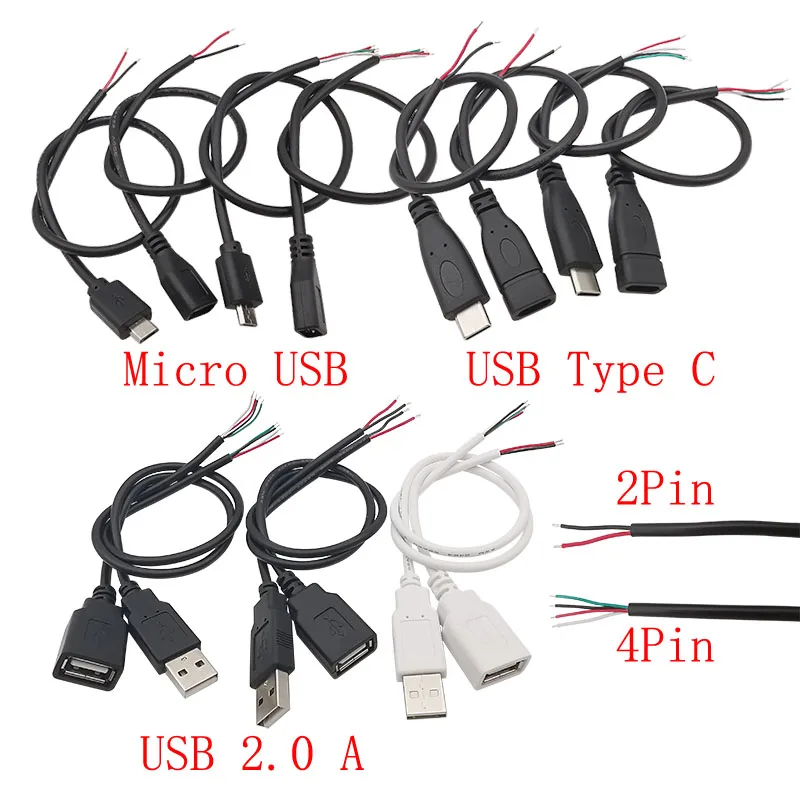
These USB connector wire kits are essential components for electrical technicians and hobbyists engaged in custom wiring, device repair, or prototyping. They offer a flexible solution for integrating USB power and data into bespoke projects, providing a range of connector types including Micro USB, USB Type C, and USB 2.0 A, in both male and female configurations. The exposed wire ends, available in 2-pin for power or 4-pin for power and data, necessitate careful and precise termination. This product is not a plug-and-play solution; it demands a foundational understanding of electrical principles and soldering techniques for safe and effective deployment.
Unlike pre-fabricated cables that offer limited customization, these kits empower users to define exact cable lengths and pinouts. This modularity is a significant advantage for specialized applications where off-the-shelf solutions are inadequate. The inherent flexibility, however, places the onus of electrical integrity directly on the installer. Proper wire stripping and secure connections are paramount.
Pin Configuration and Current Pathways
The kits feature both 2-pin and 4-pin wire configurations. The 2-pin variants typically consist of red and black wires, designated for positive voltage (V+) and ground (GND) respectively. These are suitable for power-only applications, such as charging low-power devices or providing auxiliary power to circuits. Understanding the correct polarity is critical to prevent damage to connected electronics. Incorrect wiring can lead to immediate component failure.
Conversely, the 4-pin configurations include red (V+), black (GND), white (D-), and green (D+) wires. These enable both power delivery and data transfer, adhering to standard USB pinout conventions. The presence of data lines expands the utility of these connectors to applications requiring communication between devices, such as custom sensor interfaces or embedded systems. Each wire serves a specific function.
For any application, verifying the pinout against the device's requirements is a mandatory safety step. While USB standards are generally consistent, variations can exist, particularly with non-standard or proprietary devices. A multimeter should be used to confirm voltage and continuity before connecting to sensitive equipment. This prevents costly errors.
Conductor Integrity and Thermal Management
The visible conductors appear to be of a gauge suitable for typical USB power and data transmission. However, without explicit AWG (American Wire Gauge) specifications, assumptions regarding current capacity must be made cautiously. USB 2.0 power lines typically utilize 28 AWG to 24 AWG, with thinner gauges for data lines. The insulation on these wires appears to be standard PVC, offering basic electrical isolation. Overloading a conductor can lead to excessive heat generation.
Thermal management is a critical consideration for any electrical circuit. If the wire gauge is insufficient for the intended current load, the conductors will heat up, potentially melting the insulation, causing short circuits, or even initiating an electrical fire. This risk is amplified in enclosed spaces where heat dissipation is limited. Always calculate the maximum current draw of the connected device.
Compared to industrial-grade wiring, these connectors are designed for low-voltage, low-current applications. They are not intended for high-power delivery or applications where robust mechanical protection is required. For projects demanding higher current, a larger gauge wire with appropriate insulation ratings (e.g., UL-certified) would be necessary. Proper wire selection prevents thermal runaway.
Connector Durability and Signal Stability
The USB connectors themselves, including Micro USB, Type C, and USB 2.0 A, appear to be standard molded plastic designs. The quality of the internal contacts within these connectors is paramount for reliable electrical and data transmission. Inferior contacts can lead to increased resistance, intermittent connections, and signal degradation, particularly for data-intensive applications. A stable connection is vital.
For USB Type C, the reversible design and higher power delivery capabilities (though limited by the DIY wiring) demand a higher standard of internal contact integrity. Poorly manufactured Type C connectors can suffer from premature wear or unreliable connections, impacting both charging speed and data transfer rates. The physical robustness of the connector housing also plays a role in its longevity, especially in applications involving frequent plugging and unplugging.
Unlike premium, branded USB connectors that often feature gold-plated contacts for enhanced conductivity and corrosion resistance, these generic connectors likely utilize more common materials. While adequate for many DIY projects, users should be aware that long-term durability and signal integrity might not match higher-end alternatives. Regular inspection of connections is advised.
Versatility in Electrical Integration
The broad selection of connector types makes these kits highly versatile for a multitude of custom electrical projects. Technicians can use them to repair damaged USB cables, create custom power adapters for single-board computers like Raspberry Pi, or integrate USB functionality into custom enclosures. The ability to choose between male and female connectors further enhances their adaptability. This flexibility is a core advantage.
Consider a scenario where an embedded system requires a specific length of USB power cable to fit within a compact housing. Using these DIY connectors, an exact length can be cut and terminated, avoiding excess cable clutter and improving airflow. Similarly, for prototyping, these wires allow for quick modifications and testing of different power or data routing configurations. They simplify custom builds.
This level of customization is often unavailable with pre-manufactured cables, which come in fixed lengths and configurations. While requiring more effort in assembly, the tailored fit and function often outweigh the convenience of off-the-shelf options for specialized tasks. They are a tool for precision.
The Economic Advantage of Modular Wiring
At their price point, these USB connector wire kits offer a highly cost-effective solution for acquiring multiple USB connector types with exposed wiring. For individuals or small businesses undertaking numerous custom projects or repairs, purchasing these modular components in bulk is significantly more economical than buying individual pre-assembled cables for each specific need. This reduces project overhead.
The long-term value stems from the ability to reuse and reconfigure components. If a project requires a unique cable length or a specific male-to-female adapter, these kits provide the raw materials at a fraction of the cost of sourcing specialized cables. This approach minimizes waste and maximizes resource utilization. They are an investment in flexibility.
Compared to the retail price of a single, specialized USB cable, these kits represent a substantial saving, particularly when multiple unique configurations are needed. The initial investment in tools (soldering iron, wire strippers) is quickly offset by the cost savings on materials for subsequent projects. This makes custom work more accessible. Value is clear for DIYers.
Ensuring Long-Term Operational Safety
For any custom electrical assembly utilizing these components, rigorous adherence to safety protocols is non-negotiable. Proper soldering techniques, adequate insulation of exposed connections (e.g., with heat shrink tubing or electrical tape), and thorough testing of continuity and polarity are essential steps. Failure to do so can result in electrical hazards, including short circuits, overheating, and potential fire risks. Safety must always be the priority.
Regular inspection of custom-built cables and connections is also recommended, especially for devices that experience frequent movement or environmental stress. Loose connections can develop over time, leading to intermittent operation or increased resistance. A proactive maintenance schedule can identify and rectify potential issues before they escalate. Vigilance prevents failure.
Imagine completing a custom project, confident in the integrity of every connection, knowing that the power and data pathways are robust and secure. The satisfaction of a perfectly executed custom build, free from electrical anomalies, is the ultimate benefit. These kits provide the raw materials for such precision, enabling reliable and safe operation for all your bespoke electronic endeavors.