USB-C Screw-Mount Sockets (2-Pin & 4-Pin)
Official Store Deal
Expert Analysis Overview
Robust USB-C Integration for Custom Projects
The USB-C Screw-Mount Sockets are specialized female connectors designed for secure, panel-mount integration in custom electronic projects and repairs. These components are essential for engineers and hobbyists requiring a mechanically stable USB-C power or data port, moving beyond the limitations of standard PCB-mounted connectors. The inclusion of both 2-pin and 4-pin configurations offers versatility for power-only or basic data applications.
Mechanical Stability and Mounting Precision
The most distinguishing feature of these USB-C sockets is the integrated screw-mounting plate. This plate provides a robust physical anchor, a critical upgrade over typical surface-mount or through-hole USB-C ports. Standard ports often rely solely on solder joints for both electrical and mechanical connection, making them susceptible to stress fractures and failure under repeated use or external strain.
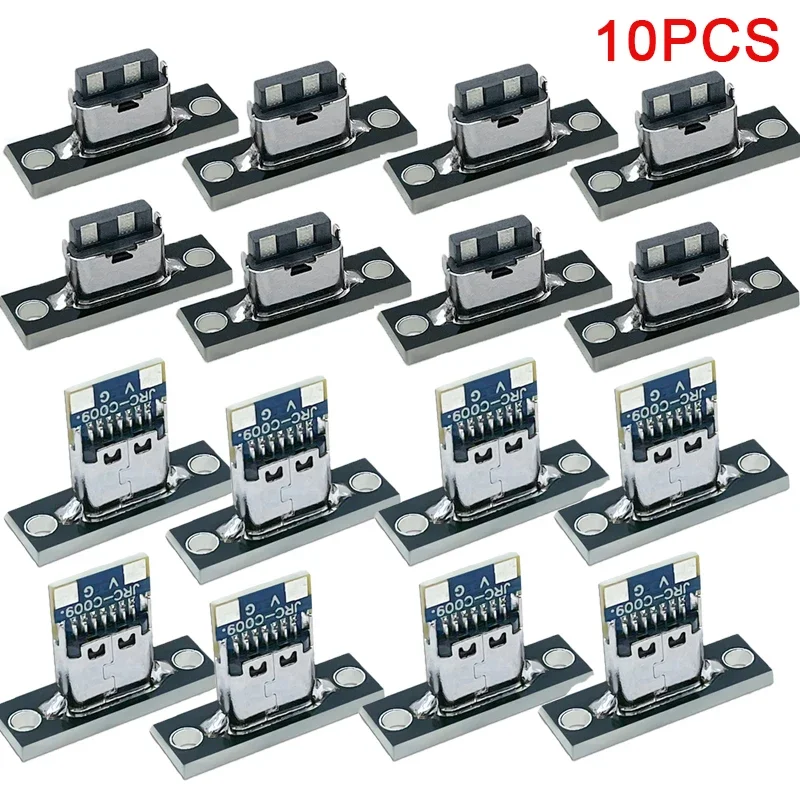
Visible dimensions indicate a plate length of 20.1mm. This length provides ample surface area for secure fastening. The screw holes, clearly visible, allow for direct attachment to an enclosure or panel, distributing mechanical stress away from the delicate electrical connections. This design significantly enhances the longevity of the connection, particularly in environments where the port might experience frequent plugging and unplugging cycles.
Compared to conventional PCB-only USB-C connectors, which are prone to detachment from the board due to leverage forces, these screw-mount variants offer superior resistance to physical wear and tear. The mechanical stability is paramount for industrial applications or user-facing devices where reliability is non-negotiable. It is a significant design improvement.
Electrical Configurations: 2-Pin vs. 4-Pin Analysis
The product offers two distinct electrical configurations: 2-pin and 4-pin. Understanding the implications of each is crucial for proper application and safety.
#
2-Pin Configuration: Dedicated Power Delivery
The 2-pin variant, with a visible height of 8.8mm, is engineered for power delivery applications. These two pins typically correspond to VBUS (voltage supply) and GND (ground). This configuration is ideal for charging ports, powering low-voltage devices, or integrating a dedicated power input into a custom circuit board.
For an electrician, the primary concern with a 2-pin connector is current handling and voltage drop. While the specific current rating is not provided, the robust physical construction implies a capacity for standard USB charging currents (e.g., 5V at 2A or 3A). Proper wire gauge selection is essential to prevent overheating and ensure efficient power transfer. Overcurrent protection should always be implemented at the source.
This configuration simplifies wiring, focusing solely on reliable power transmission. It avoids unnecessary data lines, reducing complexity and potential points of failure for power-only applications. The simplicity is a benefit.
#
4-Pin Configuration: Power and Basic Data
The 4-pin variant, with a visible height of 6.8mm, expands functionality to include basic data transfer alongside power. These four pins typically correspond to VBUS, GND, D+ (data positive), and D
This configuration enables the port to not only supply power but also facilitate data communication at USB 2.0 speeds (up to 480 Mbps). Applications include connecting peripherals, data logging, or firmware updates for embedded systems. Signal integrity becomes a consideration here, requiring careful soldering and routing of data lines to minimize interference.
While the product title mentions "USB 3.1 Type C," it is critical to clarify that a 4-pin configuration does not support the full data capabilities of USB 3.1 (which requires many more pins for SuperSpeed data, sideband signals, etc.). The "USB 3.1 Type C" likely refers to the physical form factor of the connector, not its full electrical specification. Users requiring full USB 3.1 or USB 3.2 data rates should seek connectors with a greater pin count. For basic data and power, this 4-pin unit is perfectly adequate.
Material Quality and Construction Durability
The visible components suggest a construction focused on durability. The metallic housing of the USB-C receptacle appears to be a nickel-plated steel or similar alloy, offering good corrosion resistance and mechanical strength. This material choice is superior to plastic-only connectors, which can degrade over time or crack under stress.
For the 4-pin version, a small PCB is integrated, indicating proper routing and termination of the electrical contacts. The solder points visible on the mounting plate suggest a secure connection between the receptacle and the plate itself. Quality solder joints are fundamental for long-term electrical reliability and mechanical integrity. Cold solder joints are a common failure point.
The overall design prioritizes a secure and stable connection, both electrically and mechanically. This focus on robust construction minimizes the risk of intermittent connections or complete failure, which are common frustrations with lower-quality USB ports. The upgrade in material and design is evident.
Installation Best Practices and Electrical Safety
Installing these screw-mount USB-C sockets requires careful attention to electrical safety and proper wiring techniques. As a Certified Electrician, emphasis is placed on correct soldering, wire selection, and insulation.
Users must ensure that the wires connected to the VBUS and GND pins are adequately sized for the anticipated current load. Undersized wires can lead to excessive heat generation, voltage drop, and potential fire hazards. For data lines (D+ and D-), using shielded twisted pair cables is recommended for longer runs to maintain signal integrity and reduce electromagnetic interference.
Proper insulation of all connections is non-negotiable. Heat shrink tubing or electrical tape should be used to cover exposed solder joints, preventing short circuits and accidental contact. The screw-mounting process itself should be done with appropriate fasteners, ensuring a tight fit without over-tightening, which could damage the mounting plate or the underlying enclosure. Always verify polarity before applying power.
Versatile Applications in Electrical Engineering
These screw-mount USB-C sockets find their utility in a wide array of electrical and electronic applications. Their robust design makes them suitable for environments where standard connectors would quickly fail.
Consider custom power supply units. Integrating a 2-pin USB-C socket provides a dedicated, secure charging output for modern devices. For embedded systems, a 4-pin socket can serve as a reliable programming or data logging port, ensuring consistent communication even in field conditions. Repair scenarios also benefit; replacing a damaged, flimsy USB-C port on a device with one of these screw-mount units significantly extends the device's lifespan and improves its reliability.
Their use in DIY projects, such as custom charging stations, portable power banks, or integrated smart home devices, is also evident. The ability to securely mount the connector to a panel or enclosure offers a professional finish and enhanced durability that is often lacking in hobbyist builds. This provides a clean, functional interface.
The Long-Term Value of Enhanced Durability
The initial investment in these more robust USB-C sockets translates into significant long-term value. The enhanced durability and mechanical stability reduce the frequency of repairs and replacements, saving both time and material costs. A failed USB port can render an entire device unusable, making the reliability of this component critical.
By preventing common failure modes associated with standard PCB-mounted connectors, these screw-mount sockets contribute to the overall reliability and lifespan of the electronic systems they are integrated into. This is a cost-effective solution for ensuring consistent performance in demanding applications. The peace of mind is invaluable.
Imagine completing a custom project, knowing that the critical power and data interfaces are not only electrically sound but also physically anchored against the rigors of daily use. These USB-C sockets provide that assurance, allowing for the creation of durable, professional-grade electronic devices and systems. They ensure reliable power and data flow for years to come, making your creations more dependable and user-friendly. This is an investment in reliability.