USB 3.1 Type-C Breakout Board for Prototyping and Data Transfer
Official Store Deal
Expert Analysis Overview
The USB 3.1 Type-C Breakout Board is a fundamental prototyping component designed for electrical engineers and hobbyists requiring direct access to essential USB-C power and data lines. This compact adapter simplifies the integration of USB Type-C connectivity into custom circuits and projects, bypassing the complexities of direct surface-mount soldering to the connector itself. Its utility lies in providing a robust, accessible interface for basic USB-C functions, making it an invaluable asset for development and repair tasks.
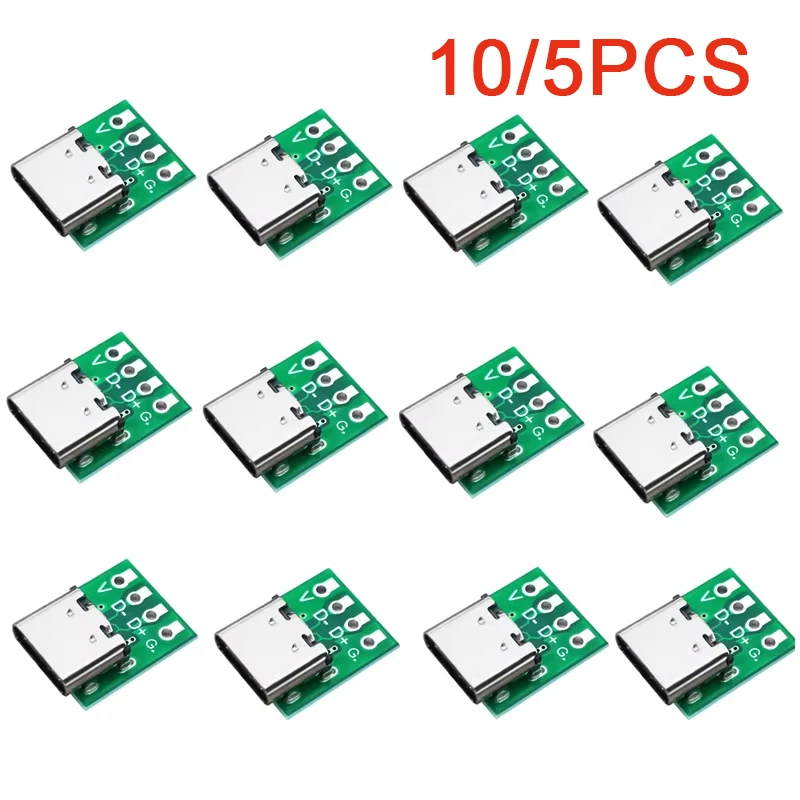
This breakout board serves as a crucial bridge between the intricate USB Type-C connector and a more manageable prototyping environment. The visible design clearly exposes four primary connection points: V (VCC), D(Data Minus), D+ (Data Plus), and G (Ground). These pads are essential for establishing basic USB 2.0 communication and power delivery. This configuration is ideal for applications where full USB 3.1 SuperSpeed data lanes or advanced Power Delivery (PD) negotiation are not required. It is a simple, effective solution.
Unlike directly attempting to solder fine wires to the tiny pins of a bare USB-C connector, which often leads to frustration and potential damage, this board provides generously sized through-hole pads. This design significantly reduces the difficulty of making reliable electrical connections. The board's primary function is to simplify the physical interface, allowing developers to focus on the circuit logic rather than the mechanical challenges of connector integration. This is a significant advantage for rapid development cycles.
Compared to more complex breakout boards that expose all 16 or 24 pins of a full USB-C connector, this simplified version prioritizes ease of use and a smaller footprint. While it does not offer the full spectrum of USB 3.1 capabilities, such as alternate modes or higher data rates, its focused design makes it exceptionally efficient for power supply, charging, and USB 2.0 data transfer applications. This targeted approach ensures that users only deal with the connections relevant to their basic needs, streamlining the design process.
The physical dimensions of the board, measuring approximately 12mm by 13.8mm, underscore its suitability for space-constrained projects. This compact size allows for seamless integration into miniature devices, wearable electronics, or tightly packed enclosures. The small form factor is a key design consideration.
Constructed on a standard green FR-4 PCB, the board exhibits typical quality for prototyping components. The solder mask is evenly applied, and the silkscreen labels for V, D-, D+, and G are clear and legible, minimizing the risk of miswiring. The through-hole pads are adequately sized for standard gauge wires or header pins, promoting strong mechanical and electrical connections. This attention to detail in the board's layout is critical for reliable performance.
When contrasted with generic, unbranded PCBs, the visible quality of the solder pads and trace routing appears consistent with industry standards for low-power breakout boards. The metal housing of the USB Type-C connector itself appears robust, providing a secure mating interface for USB-C cables. This physical durability is important for repeated insertions and removals, ensuring the longevity of the connection point in a project. The construction supports frequent use.
From an electrical safety standpoint, the clear labeling of VCC and GND is paramount. Incorrect polarity can lead to immediate component damage or, in severe cases, present a fire hazard. Users must meticulously verify their wiring before applying power to prevent such incidents. Safety protocols are non-negotiable.
Given that this board primarily breaks out USB 2.0 lines, it is crucial to adhere to the current limitations associated with that standard, typically 500mA at 5V. While USB Type-C connectors are capable of much higher currents and voltages with Power Delivery, this specific breakout board does not provide the necessary control lines (CC pins) or robust trace widths for such applications. Attempting to draw excessive current through these simplified traces could lead to overheating and potential circuit failure. Understanding these limitations is vital.
Unlike custom PCB designs where trace widths can be precisely calculated for specific current loads, this off-the-shelf breakout board relies on general-purpose trace dimensions. Therefore, conservative current management is advised. For applications requiring higher power, a dedicated USB-C Power Delivery module or a breakout board designed for higher current capacities with appropriate trace engineering would be necessary. This board is for basic power needs.
This breakout board finds its niche in a wide array of applications. For educational purposes, it provides students with a tangible way to understand USB connectivity without delving into complex surface-mount soldering. It simplifies learning. Hobbyists can integrate it into custom charging solutions, data loggers, or small embedded systems that require a modern USB interface. Its ease of use accelerates project completion.
In a scenario where a legacy device needs a USB-C power input, this board offers a straightforward conversion solution. It can also be used for creating custom USB-C cables for specific lengths or pinouts, provided only the basic VCC, D-, D+, and GND lines are needed. This flexibility extends its utility beyond mere prototyping to practical implementation. The board adapts to many needs.
Compared to purchasing pre-made USB-C cables and cutting them, which can be wasteful and less flexible, this breakout board offers a modular and reusable component. It allows for experimentation and modification without committing to a permanent cable configuration. This makes it a more sustainable and adaptable choice for iterative design processes. It promotes efficient resource use.
Investing in a set of these breakout boards offers significant long-term value for anyone regularly working with electronics. The low cost per unit, especially when purchased in packs, makes them an economical choice for stocking a workbench. Having these readily available prevents project delays caused by waiting for specialized connectors. This ensures continuous workflow.
The durability of the metal USB-C connector, combined with the robust PCB, means these boards can withstand repeated use in various projects. They are not single-use components. This longevity translates into a lower cost-per-use over time, making them a more financially sound investment than constantly replacing damaged or poorly soldered direct connections. It is a smart economic choice.
Unlike generic, flimsy connectors that can quickly fail under stress, this breakout board provides a stable and reliable connection point. This reliability is crucial for projects that require consistent performance, reducing troubleshooting time and increasing the overall success rate of electronic designs. It builds confidence in your work.
Imagine seamlessly integrating modern USB-C power and data into your next custom gadget, knowing that the connection is robust, correctly wired, and easily accessible. Picture the satisfaction of quickly prototyping a new device, confident in the foundational electrical connections. Envision a workbench where the frustration of tiny, unmanageable pins is replaced by the simplicity of clearly labeled solder pads, allowing your creative energy to flow unimpeded into innovative designs. This breakout board empowers you to build with precision and ease, bringing your electronic visions to life with reliable, modern connectivity at their core.
Precision Prototyping and Connectivity
The Core Functionality
This breakout board serves as a crucial bridge between the intricate USB Type-C connector and a more manageable prototyping environment. The visible design clearly exposes four primary connection points: V (VCC), D
Unlike directly attempting to solder fine wires to the tiny pins of a bare USB-C connector, which often leads to frustration and potential damage, this board provides generously sized through-hole pads. This design significantly reduces the difficulty of making reliable electrical connections. The board's primary function is to simplify the physical interface, allowing developers to focus on the circuit logic rather than the mechanical challenges of connector integration. This is a significant advantage for rapid development cycles.
Compared to more complex breakout boards that expose all 16 or 24 pins of a full USB-C connector, this simplified version prioritizes ease of use and a smaller footprint. While it does not offer the full spectrum of USB 3.1 capabilities, such as alternate modes or higher data rates, its focused design makes it exceptionally efficient for power supply, charging, and USB 2.0 data transfer applications. This targeted approach ensures that users only deal with the connections relevant to their basic needs, streamlining the design process.
Design and Construction Integrity
The physical dimensions of the board, measuring approximately 12mm by 13.8mm, underscore its suitability for space-constrained projects. This compact size allows for seamless integration into miniature devices, wearable electronics, or tightly packed enclosures. The small form factor is a key design consideration.
Constructed on a standard green FR-4 PCB, the board exhibits typical quality for prototyping components. The solder mask is evenly applied, and the silkscreen labels for V, D-, D+, and G are clear and legible, minimizing the risk of miswiring. The through-hole pads are adequately sized for standard gauge wires or header pins, promoting strong mechanical and electrical connections. This attention to detail in the board's layout is critical for reliable performance.
When contrasted with generic, unbranded PCBs, the visible quality of the solder pads and trace routing appears consistent with industry standards for low-power breakout boards. The metal housing of the USB Type-C connector itself appears robust, providing a secure mating interface for USB-C cables. This physical durability is important for repeated insertions and removals, ensuring the longevity of the connection point in a project. The construction supports frequent use.
Electrical Safety and Current Management
From an electrical safety standpoint, the clear labeling of VCC and GND is paramount. Incorrect polarity can lead to immediate component damage or, in severe cases, present a fire hazard. Users must meticulously verify their wiring before applying power to prevent such incidents. Safety protocols are non-negotiable.
Given that this board primarily breaks out USB 2.0 lines, it is crucial to adhere to the current limitations associated with that standard, typically 500mA at 5V. While USB Type-C connectors are capable of much higher currents and voltages with Power Delivery, this specific breakout board does not provide the necessary control lines (CC pins) or robust trace widths for such applications. Attempting to draw excessive current through these simplified traces could lead to overheating and potential circuit failure. Understanding these limitations is vital.
Unlike custom PCB designs where trace widths can be precisely calculated for specific current loads, this off-the-shelf breakout board relies on general-purpose trace dimensions. Therefore, conservative current management is advised. For applications requiring higher power, a dedicated USB-C Power Delivery module or a breakout board designed for higher current capacities with appropriate trace engineering would be necessary. This board is for basic power needs.
Application Versatility
This breakout board finds its niche in a wide array of applications. For educational purposes, it provides students with a tangible way to understand USB connectivity without delving into complex surface-mount soldering. It simplifies learning. Hobbyists can integrate it into custom charging solutions, data loggers, or small embedded systems that require a modern USB interface. Its ease of use accelerates project completion.
In a scenario where a legacy device needs a USB-C power input, this board offers a straightforward conversion solution. It can also be used for creating custom USB-C cables for specific lengths or pinouts, provided only the basic VCC, D-, D+, and GND lines are needed. This flexibility extends its utility beyond mere prototyping to practical implementation. The board adapts to many needs.
Compared to purchasing pre-made USB-C cables and cutting them, which can be wasteful and less flexible, this breakout board offers a modular and reusable component. It allows for experimentation and modification without committing to a permanent cable configuration. This makes it a more sustainable and adaptable choice for iterative design processes. It promotes efficient resource use.
Long-Term Value in Development
Investing in a set of these breakout boards offers significant long-term value for anyone regularly working with electronics. The low cost per unit, especially when purchased in packs, makes them an economical choice for stocking a workbench. Having these readily available prevents project delays caused by waiting for specialized connectors. This ensures continuous workflow.
The durability of the metal USB-C connector, combined with the robust PCB, means these boards can withstand repeated use in various projects. They are not single-use components. This longevity translates into a lower cost-per-use over time, making them a more financially sound investment than constantly replacing damaged or poorly soldered direct connections. It is a smart economic choice.
Unlike generic, flimsy connectors that can quickly fail under stress, this breakout board provides a stable and reliable connection point. This reliability is crucial for projects that require consistent performance, reducing troubleshooting time and increasing the overall success rate of electronic designs. It builds confidence in your work.
The Future of Connectivity
Imagine seamlessly integrating modern USB-C power and data into your next custom gadget, knowing that the connection is robust, correctly wired, and easily accessible. Picture the satisfaction of quickly prototyping a new device, confident in the foundational electrical connections. Envision a workbench where the frustration of tiny, unmanageable pins is replaced by the simplicity of clearly labeled solder pads, allowing your creative energy to flow unimpeded into innovative designs. This breakout board empowers you to build with precision and ease, bringing your electronic visions to life with reliable, modern connectivity at their core.