USB 3.1 Type C Breakout Board Adapter
Official Store Deal
Expert Analysis Overview
Optimizing Production with the USB 3.1 Type C Breakout Board
The USB 3.1 Type C Breakout Board Adapter is a critical component engineered for streamlined integration of USB-C connectivity into custom electronics, specifically targeting high-volume manufacturing environments. This compact PCB adapter simplifies the often-complex task of incorporating modern USB-C ports, making it an indispensable asset for production managers focused on efficiency and cost control. Its design directly addresses the need for rapid prototyping and reliable assembly in demanding production schedules. This board is a workhorse.
Design and Manufacturing Integration
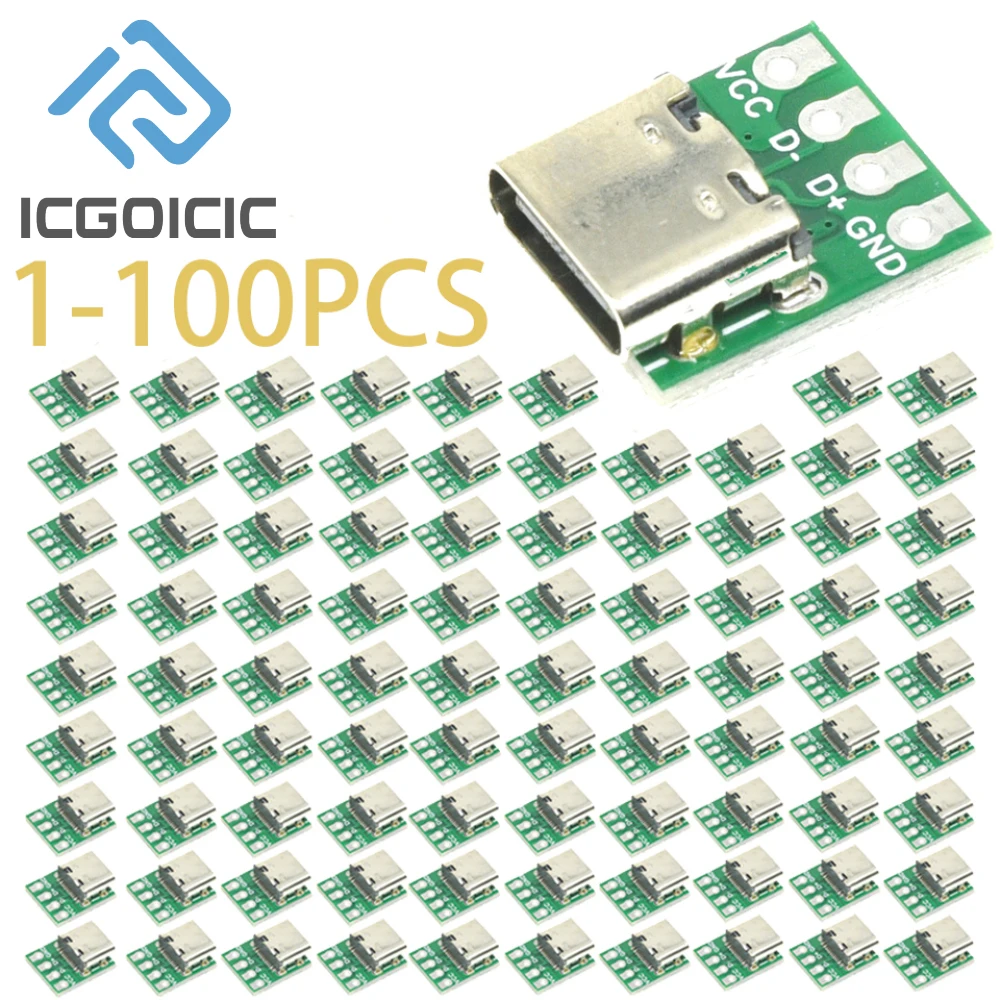
The physical design of this breakout board features a green FR-4 PCB with a robust USB Type C female connector. The board clearly labels four essential pins: VCC, D-, D+, and GND. These markings are not merely informational; they are a direct aid to assembly line personnel, reducing the potential for miswiring during manual or semi-automated processes. The visible solder pads are generously sized.
From a manufacturing perspective, this clear labeling and standardized layout significantly reduces the learning curve for new technicians and minimizes errors. It ensures consistent assembly, which is paramount for maintaining high yield rates. The board's compact dimensions, approximately 15mm by 12mm, also mean it consumes minimal board real estate. This is crucial for miniaturized devices.
Unlike direct soldering to a bare USB-C connector, which can be delicate and prone to cold joints or misalignment, this breakout board provides a stable, pre-mounted interface. This stability translates directly into fewer rework cycles and reduced material waste, directly impacting the bottom line. It's a simpler connection.
Functional Capabilities and Throughput
While the product title references "USB 3.1 Type C," a critical distinction for production planning is that this specific breakout board exposes only the VCC, D-, D+, and GND pins. This configuration means the board is optimized for USB 2.0 data transfer speeds (up to 480 Mbps) and standard 5V power delivery. It does not provide the full 24-pin functionality of USB 3.1, which includes higher data rates, alternate modes, or advanced power delivery profiles.
For applications such as embedded systems, IoT devices, charging ports, or basic data logging, this focused pinout is not a limitation but an advantage. It simplifies the required circuitry on the main PCB, reducing component count and design complexity. This simplification directly contributes to faster design cycles and quicker time-to-market for new products. Production moves faster.
Compared to designing a custom PCB footprint for a full USB 3.1 Type C connector, which involves intricate trace routing and potentially multi-layer boards, this breakout offers a plug-and-play (or rather, solder-and-play) solution. This reduces engineering overhead and accelerates the transition from prototype to mass production. It's a streamlined approach.
Durability and Reliability in Production
The visible construction of the board, including the metal housing of the USB-C connector and the FR-4 PCB material, suggests a design intended for durability. The through-hole solder pads provide a strong mechanical anchor for connections, which is vital in products that may experience repeated plugging and unplugging cycles. Robustness is key.
In a production environment, component reliability directly impacts line uptime. A flimsy connector or poorly designed breakout board can lead to intermittent failures, requiring costly troubleshooting and rework. This board's apparent build quality aims to minimize such occurrences, ensuring consistent performance once integrated. Fewer failures mean more output.
This level of reliability is an upgrade over generic, unbranded breakout boards that might use lower-grade materials or less precise manufacturing. Investing in components that offer consistent quality reduces the risk of field failures, protecting brand reputation and minimizing warranty claims. It's a smart investment.
Cost-Effectiveness and Scalability
The availability of these breakout boards in quantities from 1 to 100 pieces directly supports flexible procurement strategies, from small-batch prototyping to larger production runs. The competitive pricing, especially for bulk orders, makes it an attractive option for managing the bill of materials (BOM) in cost-sensitive projects. Cost efficiency is paramount.
For a production manager, optimizing the BOM without compromising quality is a constant challenge. This component offers a balanced solution, providing modern USB-C connectivity at a price point that supports high-volume manufacturing. It allows for the integration of a contemporary interface without significantly inflating unit costs. Every penny counts.
This approach contrasts sharply with custom-designed solutions that incur higher non-recurring engineering (NRE) costs and potentially longer lead times for specialized components. By utilizing off-the-shelf breakout boards, manufacturers can scale production rapidly and adapt to market demands with greater agility. It's about market responsiveness.
Strategic Transparency: Pinout Considerations
It is crucial for design engineers and production planners to understand the specific pinout of this board. While the USB 3.1 Type C connector itself is capable of advanced features, this breakout board specifically provides access to VCC, D-, D+, and GND. This means it is suitable for applications requiring basic power and USB 2.0 data communication. It's a focused solution.
This design choice is a deliberate trade-off, prioritizing simplicity, ease of integration, and cost-effectiveness over the full spectrum of USB 3.1 capabilities. For many embedded and IoT applications, the higher speeds and complex protocols of full USB 3.1 are unnecessary and would only add complexity and cost. Simplicity often wins.
Therefore, when evaluating this component, the focus should be on whether its capabilities align with the project's actual requirements for power and data. If the application demands USB 3.1 Gen 1 or Gen 2 speeds, DisplayPort Alt Mode, or USB Power Delivery (PD) beyond basic 5V, a different, more complex breakout solution exposing all 24 pins would be necessary. Know your needs.
Streamlining Assembly Processes
This breakout board directly contributes to minimizing line stoppages. Its clear pin labeling and robust solder pads reduce the likelihood of assembly errors that can halt production. When components are easy to integrate, the throughput of pick-and-place machines and manual soldering stations remains high. This ensures consistent output.
Automating assembly becomes more feasible with standardized, compact components like this. The small form factor and predictable pin locations are ideal for automated optical inspection (AOI) systems and robotic placement. This reduces reliance on manual labor, improving consistency and speeding up production cycles. Automation is the future.
The Production Advantage
Imagine a production line where USB-C integration is no longer a bottleneck. Envision engineers rapidly prototyping new devices, confident that the transition to mass production will be smooth and cost-effective. This USB 3.1 Type C breakout board delivers that capability. It allows for the efficient creation of modern, connected products, ensuring manufacturing quotas are met with minimal fuss and maximum profitability. This component is a strategic asset for any electronics manufacturer aiming for efficiency and reliability in a competitive market. It simply works.