UL1423 PTFE Silver Plated Copper Micro Fine Wire
Official Store Deal
Expert Analysis Overview
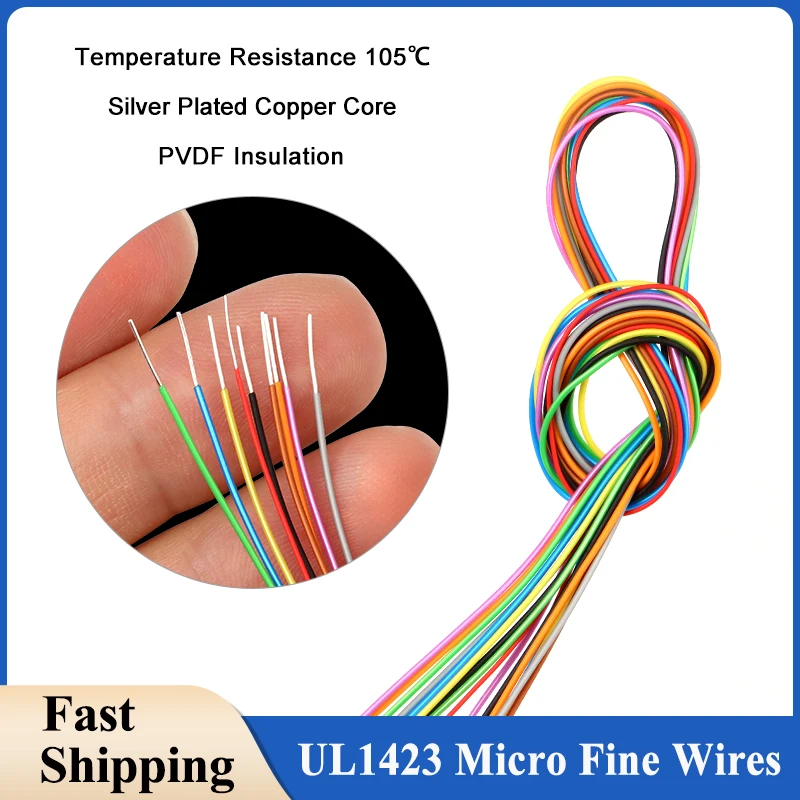
The UL1423 PTFE Silver Plated Copper Micro Fine Wire is a specialized electrical conductor engineered for precision repairs and high-temperature applications in compact electronic assemblies. This product line, available in gauges from 38 AWG to 24 AWG, provides critical solutions for intricate wiring tasks where standard conductors prove too bulky or lack the necessary thermal and chemical resilience. Its construction prioritizes both signal integrity and long-term durability, making it an essential component for professional electronics repair technicians and advanced hobbyists.
The core of these wires features silver-plated copper. This material choice is not arbitrary; it directly impacts electrical performance. Silver plating enhances conductivity, particularly at higher frequencies, by reducing the skin effect where current tends to flow on the conductor's surface. This is crucial for maintaining signal integrity in sensitive circuits.
In practical applications, this translates to minimal signal loss and stable current transmission, even across very fine gauges. For delicate sensor wiring or high-speed data lines within compact devices, consistent electrical characteristics are paramount. The plating ensures a reliable pathway.
Compared to bare copper wire, silver-plated copper offers superior oxidation resistance. This prolongs the wire's lifespan and maintains its low resistance over time, preventing performance degradation in devices that are expected to operate for years. It's a subtle but significant upgrade.
The product offers a wide range of American Wire Gauge (AWG) sizes, from 38 AWG down to 24 AWG. The smaller the AWG number, the larger the wire's diameter and current carrying capacity. Conversely, higher AWG numbers indicate extremely fine wires, ideal for micro-soldering.
This extensive gauge selection allows technicians to precisely match the wire to the application's current requirements and physical constraints. For instance, 38 AWG is exceptionally fine, suitable for jumper wires on integrated circuit boards or repairing traces, while 24 AWG offers more robust connectivity for power delivery to individual components. Choosing the correct gauge prevents both overheating and unnecessary bulk.
Standard hook-up wire often comes in a limited range of gauges, typically 22 AWG or larger. The availability of micro-fine gauges down to 38 AWG sets this product apart, enabling repairs that would be impossible with thicker alternatives. Precision is key here.
Insulation is provided by PVDF (Polyvinylidene Fluoride) or PTFE (Polytetrafluoroethylene), both high-performance fluoropolymers. These materials are renowned for their exceptional temperature resistance, rated at 105°C, and superior chemical inertness. The insulation will not burn when exposed to flame, a critical safety feature.
This material choice ensures the wire remains stable and functional in environments where heat is a significant factor, such as inside power supplies, near heat-generating components, or in industrial control systems. The high temperature rating prevents insulation breakdown and short circuits. Chemical resistance protects against common solvents, oils, and acids encountered during manufacturing or repair processes.
Unlike standard PVC insulation, which can melt, degrade, or become brittle at elevated temperatures or when exposed to certain chemicals, PVDF/PTFE insulation maintains its integrity. This provides a much higher degree of reliability and safety, particularly in demanding electronic assemblies. It's a robust protective layer.
The TEFLON sheath, a common term for PTFE, contributes significantly to the wire's overall durability. It is wear-resistant, corrosion-resistant, and impervious to many harsh substances. This ensures a long service life for the connections.
In applications where wires might experience friction, vibration, or exposure to corrosive elements, the robust sheath prevents premature failure. This is particularly relevant in automotive electronics, industrial machinery, or outdoor equipment where environmental factors are challenging. The wire withstands harsh conditions.
Generic wire insulation often lacks this level of mechanical and chemical resilience, leading to compromised performance or outright failure over time. The advanced sheath material of these UL1423 wires offers a substantial upgrade in terms of longevity and operational stability. It resists degradation effectively.
The designation "Micro Fine Wire" accurately describes the product's primary utility. These wires are designed for applications requiring extremely small conductors, often in tight spaces where precision is paramount. Their flexibility and small diameter facilitate intricate routing.
Technicians working on smartphone repairs, drone electronics, or miniature circuit boards will find these wires indispensable. The ability to route a wire through a crowded PCB without interfering with other components is a major advantage. It simplifies complex repairs.
Attempting such delicate work with standard gauge wires would be impractical, if not impossible. The micro-fine nature of these conductors allows for repairs that restore functionality without adding significant bulk or altering the original design. This preserves device aesthetics and functionality.
The combination of silver-plated copper and high-performance fluoropolymer insulation results in connections with exceptional long-term reliability. The materials resist common failure modes such as oxidation, thermal degradation, and chemical attack. This ensures stable performance.
For critical repairs where a device's continued operation is essential, selecting components that offer maximum longevity is a strategic decision. These wires minimize the risk of future electrical failures attributable to the conductor or its insulation. They provide lasting peace of mind.
Many consumer-grade wires prioritize cost over durability, leading to components that may fail prematurely under stress. The UL1423 wires, by contrast, are engineered for sustained performance in challenging conditions, offering a superior return on investment through extended device life. This is a sound investment.
While primarily suited for electronics repair, the characteristics of these wires extend their utility to various other applications. Their high temperature resistance makes them suitable for internal wiring in appliances, heating elements, or lighting fixtures. The chemical resistance benefits laboratory equipment.
Consider scenarios involving custom circuit board fabrication, prototyping, or even artistic electronic projects where discretion and fine detail are desired. The multiple color options also aid in circuit identification and organization. They adapt to diverse needs.
Unlike single-purpose wires, the robust specifications of the UL1423 series provide a broad spectrum of potential uses, making them a valuable addition to any electronics workshop. Their adaptability is a significant asset. This wire is highly versatile.
For the electronics repair technician, this wire is more than just a conductor; it is a tool that enables successful, durable repairs on increasingly miniaturized and complex devices. The ability to restore functionality to expensive equipment with affordable, high-quality components is a significant advantage. This empowers effective repairs.
Imagine confidently tackling a board-level repair, knowing the replacement wire will withstand the device's operational temperatures and resist environmental stressors. The precise gauge options and robust insulation simplify the process, reducing rework and improving customer satisfaction. This wire ensures reliable outcomes. Investing in these specialized wires means fewer callbacks and a reputation for quality workmanship, ultimately enhancing professional credibility and efficiency. It's a smart choice for professionals.
Precision Conduction Engineering
The core of these wires features silver-plated copper. This material choice is not arbitrary; it directly impacts electrical performance. Silver plating enhances conductivity, particularly at higher frequencies, by reducing the skin effect where current tends to flow on the conductor's surface. This is crucial for maintaining signal integrity in sensitive circuits.
In practical applications, this translates to minimal signal loss and stable current transmission, even across very fine gauges. For delicate sensor wiring or high-speed data lines within compact devices, consistent electrical characteristics are paramount. The plating ensures a reliable pathway.
Compared to bare copper wire, silver-plated copper offers superior oxidation resistance. This prolongs the wire's lifespan and maintains its low resistance over time, preventing performance degradation in devices that are expected to operate for years. It's a subtle but significant upgrade.
Conductor Diameter and Gauge Selection
The product offers a wide range of American Wire Gauge (AWG) sizes, from 38 AWG down to 24 AWG. The smaller the AWG number, the larger the wire's diameter and current carrying capacity. Conversely, higher AWG numbers indicate extremely fine wires, ideal for micro-soldering.
This extensive gauge selection allows technicians to precisely match the wire to the application's current requirements and physical constraints. For instance, 38 AWG is exceptionally fine, suitable for jumper wires on integrated circuit boards or repairing traces, while 24 AWG offers more robust connectivity for power delivery to individual components. Choosing the correct gauge prevents both overheating and unnecessary bulk.
Standard hook-up wire often comes in a limited range of gauges, typically 22 AWG or larger. The availability of micro-fine gauges down to 38 AWG sets this product apart, enabling repairs that would be impossible with thicker alternatives. Precision is key here.
Thermal Resilience and Chemical Immunity
Insulation is provided by PVDF (Polyvinylidene Fluoride) or PTFE (Polytetrafluoroethylene), both high-performance fluoropolymers. These materials are renowned for their exceptional temperature resistance, rated at 105°C, and superior chemical inertness. The insulation will not burn when exposed to flame, a critical safety feature.
This material choice ensures the wire remains stable and functional in environments where heat is a significant factor, such as inside power supplies, near heat-generating components, or in industrial control systems. The high temperature rating prevents insulation breakdown and short circuits. Chemical resistance protects against common solvents, oils, and acids encountered during manufacturing or repair processes.
Unlike standard PVC insulation, which can melt, degrade, or become brittle at elevated temperatures or when exposed to certain chemicals, PVDF/PTFE insulation maintains its integrity. This provides a much higher degree of reliability and safety, particularly in demanding electronic assemblies. It's a robust protective layer.
Durability of the Sheath
The TEFLON sheath, a common term for PTFE, contributes significantly to the wire's overall durability. It is wear-resistant, corrosion-resistant, and impervious to many harsh substances. This ensures a long service life for the connections.
In applications where wires might experience friction, vibration, or exposure to corrosive elements, the robust sheath prevents premature failure. This is particularly relevant in automotive electronics, industrial machinery, or outdoor equipment where environmental factors are challenging. The wire withstands harsh conditions.
Generic wire insulation often lacks this level of mechanical and chemical resilience, leading to compromised performance or outright failure over time. The advanced sheath material of these UL1423 wires offers a substantial upgrade in terms of longevity and operational stability. It resists degradation effectively.
The Art of Micro-Wiring
The designation "Micro Fine Wire" accurately describes the product's primary utility. These wires are designed for applications requiring extremely small conductors, often in tight spaces where precision is paramount. Their flexibility and small diameter facilitate intricate routing.
Technicians working on smartphone repairs, drone electronics, or miniature circuit boards will find these wires indispensable. The ability to route a wire through a crowded PCB without interfering with other components is a major advantage. It simplifies complex repairs.
Attempting such delicate work with standard gauge wires would be impractical, if not impossible. The micro-fine nature of these conductors allows for repairs that restore functionality without adding significant bulk or altering the original design. This preserves device aesthetics and functionality.
Longevity in Connections
The combination of silver-plated copper and high-performance fluoropolymer insulation results in connections with exceptional long-term reliability. The materials resist common failure modes such as oxidation, thermal degradation, and chemical attack. This ensures stable performance.
For critical repairs where a device's continued operation is essential, selecting components that offer maximum longevity is a strategic decision. These wires minimize the risk of future electrical failures attributable to the conductor or its insulation. They provide lasting peace of mind.
Many consumer-grade wires prioritize cost over durability, leading to components that may fail prematurely under stress. The UL1423 wires, by contrast, are engineered for sustained performance in challenging conditions, offering a superior return on investment through extended device life. This is a sound investment.
Application Versatility
While primarily suited for electronics repair, the characteristics of these wires extend their utility to various other applications. Their high temperature resistance makes them suitable for internal wiring in appliances, heating elements, or lighting fixtures. The chemical resistance benefits laboratory equipment.
Consider scenarios involving custom circuit board fabrication, prototyping, or even artistic electronic projects where discretion and fine detail are desired. The multiple color options also aid in circuit identification and organization. They adapt to diverse needs.
Unlike single-purpose wires, the robust specifications of the UL1423 series provide a broad spectrum of potential uses, making them a valuable addition to any electronics workshop. Their adaptability is a significant asset. This wire is highly versatile.
The Repair Technician's Edge
For the electronics repair technician, this wire is more than just a conductor; it is a tool that enables successful, durable repairs on increasingly miniaturized and complex devices. The ability to restore functionality to expensive equipment with affordable, high-quality components is a significant advantage. This empowers effective repairs.
Imagine confidently tackling a board-level repair, knowing the replacement wire will withstand the device's operational temperatures and resist environmental stressors. The precise gauge options and robust insulation simplify the process, reducing rework and improving customer satisfaction. This wire ensures reliable outcomes. Investing in these specialized wires means fewer callbacks and a reputation for quality workmanship, ultimately enhancing professional credibility and efficiency. It's a smart choice for professionals.