Type-C/Micro USB 3.7V Lithium Battery Boost Charger Module
Official Store Deal
Expert Analysis Overview
Precision Power Conversion: The 3.7V Lithium Battery Boost Charger Module
The 3.7V to 9V/5V DC-DC Boost Module is a compact power conversion and charging solution engineered for portable electronics and DIY battery management, specifically targeting applications requiring stable voltage output from single-cell lithium-ion batteries. This board integrates both charging and boosting functionalities, offering a versatile platform for powering various low-voltage projects. Its design prioritizes efficient energy transfer. The module addresses the common challenge of deriving higher voltages from standard 3.7V lithium cells, a frequent requirement in many embedded systems.
Core Functionality and Design Integrity
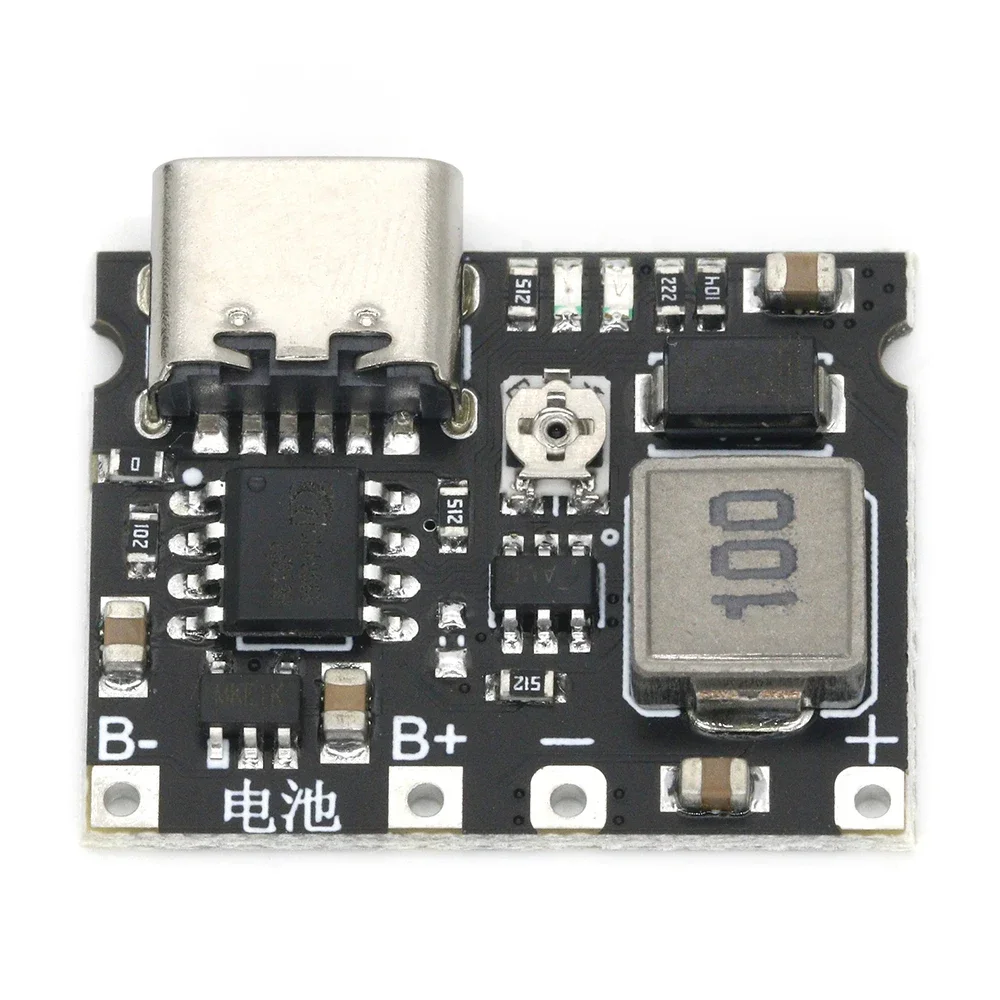
This module visibly incorporates a Type-C USB port for input power, alongside dedicated solder pads for battery connection (B+, B-) and boosted output (VO+, VO-). A variant featuring a Micro USB port is also available, providing flexibility for different power sources. The primary function involves taking a 3.7V input from a lithium battery and stepping it up to either 5V or 9V, depending on the specific model and configuration. This capability is crucial for devices that operate at these higher voltage levels but rely on single-cell battery power.
The board's layout appears well-organized. Component placement is logical. The visible surface-mount components, including the inductor and various ICs, suggest a standard buck-boost or boost converter topology. The compact form factor is a significant advantage for space-constrained projects. This design choice minimizes the overall footprint.
Unlike generic power modules that often lack integrated charging, this unit combines both charging and discharge capabilities. This dual functionality simplifies power management for battery-powered devices. Users avoid the need for separate charging circuits. The integrated approach reduces component count and complexity in DIY builds.
Electrical Specifications and Component Quality
Examination of the module reveals key electrical components. The inductor, marked "100" on the Type-C variant, typically signifies a 10µH inductance, a common value for boost converters operating in this power range. The Micro USB variant features an inductor marked "4R7", indicating 4.7µH. These inductors are critical for energy storage and transfer during the boosting process. Their physical size suggests a moderate current handling capability. Proper inductor selection is vital for efficiency.
Terminal quality is a paramount concern for any electrical component. The solder pads for battery input and voltage output appear to be adequately sized for direct wire soldering. These pads offer robust connection points. The USB connectors themselves are standard, providing reliable input power. Ensuring proper soldering techniques is essential for long-term reliability and preventing intermittent connections. Loose connections can lead to arcing and potential fire hazards.
Wire gauge accuracy is crucial for safe operation. While the module itself does not include wires, the user must select appropriate wire gauges for connecting the battery and load. Undersized wires can overheat, posing a significant risk. For typical applications drawing up to 1A or 2A, 20-24 AWG wire is generally suitable for short runs. Always match wire gauge to the expected current draw. This prevents thermal overload.
Performance and Application Scenarios
This module is designed to deliver stable output voltages, which is critical for sensitive electronics. The ability to switch between 5V and 9V output (or a fixed output depending on the specific variant) expands its utility. Many microcontrollers and sensors operate at 5V, while certain motors or specialized ICs may require 9V. The module provides this flexibility.
In a scenario where a portable device needs to be powered by a single 18650 lithium-ion battery, this module provides the necessary voltage step-up. Consider a portable audio player or a small IoT device. The module ensures consistent power delivery. This prevents performance degradation due to fluctuating battery voltage. It maintains operational stability.
Compared to simple boost converters without charging capabilities, this module offers a more integrated solution. Users gain the convenience of charging the connected battery directly through the USB port. This eliminates the need for a separate battery charger. The combined functionality streamlines the power system design. It reduces the overall footprint of the project.
Safety Considerations and Operational Integrity
Electrical safety is non-negotiable. This module, like all power conversion circuits, generates heat during operation, especially under higher loads. Adequate ventilation must be ensured when integrating it into an enclosure. Overheating can lead to component failure and, in extreme cases, fire. Monitoring the module's temperature during initial testing is a recommended practice. This helps identify potential thermal issues.
Preventing electrical fires and ensuring safety standard compliance begins with correct wiring. The input and output terminals are clearly marked. Reversing polarity on the battery connection can cause immediate damage to the module and potentially the battery. Double-check all connections before applying power. This simple step prevents costly errors. Always use a multimeter to verify connections.
While the module itself does not carry explicit UL or CE insulation ratings visible in the images, the user is responsible for ensuring the overall system meets relevant safety standards. This includes proper insulation of all exposed wiring and connections. Heat shrink tubing or electrical tape should be used where appropriate. This protects against accidental short circuits. It enhances user safety.
Long-Term Value and Integration
The compact size and integrated features of this boost charger module offer significant long-term value for hobbyists and developers. Its ability to provide both charging and boosted output from a single lithium cell makes it an economical choice for numerous projects. The cost-per-use is exceptionally low given its versatility. This module is a foundational component for many portable electronic designs.
Imagine completing a custom portable gadget, perhaps a handheld gaming console or a remote sensor array, knowing its power system is both efficient and robust. This module provides the stable voltage required for optimal performance, ensuring your creation operates reliably for extended periods. The convenience of Type-C charging means compatibility with modern power adapters, simplifying the user experience. This module empowers creators to build sophisticated battery-powered devices with confidence, transforming conceptual designs into functional realities. It is a reliable power backbone. The integrated charging capability means less hassle. Your projects will run longer and more consistently. This module is a smart investment for any electronics enthusiast.