TWO TREES GT2 Aluminum Idler Pulley for 3D Printers
Official Store Deal
Expert Analysis Overview
The TWO TREES GT2 Aluminum Idler Pulley is a precision-engineered component critical for maintaining belt tension and smooth motion in 3D printing and CNC applications. This review details its construction, performance implications, and overall value for enthusiasts and professionals.
This GT2 idler pulley is designed with a specific tooth profile, crucial for synchronous belt systems. The GT2 profile ensures optimal engagement with GT2 timing belts, minimizing backlash.
Backlash, the play or lost motion in a mechanical system, directly impacts print quality. Reduced backlash means more accurate tool head positioning, which translates to finer details and fewer artifacts in printed objects. This is vital for high-resolution models.
Compared to generic or poorly manufactured pulleys, the precise GT2 tooth geometry of these TWO TREES components ensures consistent belt tracking. This consistency is paramount for achieving smooth, artifact-free surfaces, particularly when printing complex geometries or at higher speeds. Every movement counts.
The pulleys are constructed from aluminum alloy, a material chosen for its strength-to-weight ratio and excellent wear resistance. This metallic composition offers a significant advantage over common plastic alternatives.
Plastic pulleys, especially under constant tension and friction, are prone to deformation and premature wear. Aluminum, by contrast, maintains its structural integrity over extended periods, resisting the grooves and flat spots that can develop on plastic surfaces. This translates to a longer operational lifespan.
Furthermore, aluminum's superior thermal conductivity helps dissipate any heat generated from friction, preventing localized thermal expansion that could affect dimensional stability. This material choice ensures the pulley remains a reliable guide, even in demanding, continuous operation scenarios. It's a robust choice.
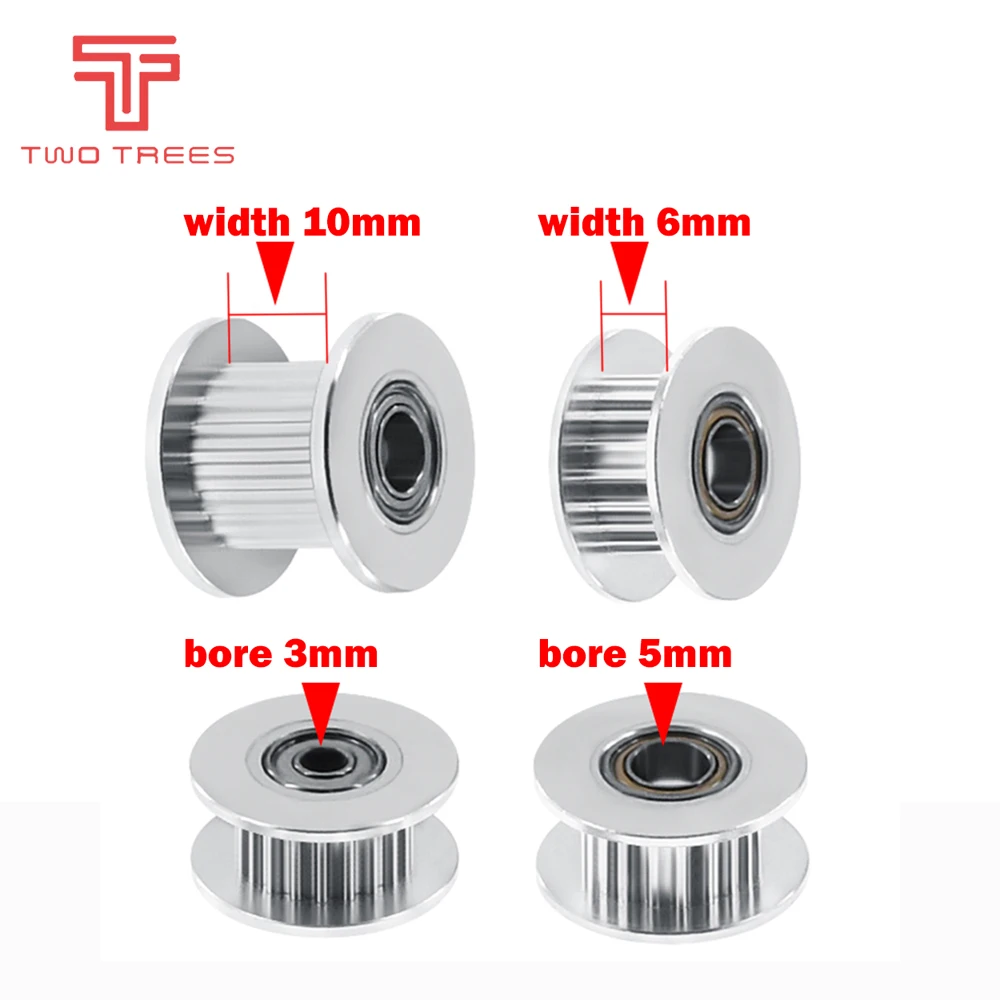
These idler pulleys are available in multiple configurations, specifically 16 or 20 teeth, and widths of 6mm or 10mm, with bore diameters of 3mm or 5mm. This range caters to a broad spectrum of 3D printer designs.
The tooth count directly influences the effective diameter and, consequently, the step-per-mm calibration of the printer's axes. Matching the tooth count to the existing system is essential for maintaining dimensional accuracy. The width options allow compatibility with the two most common GT2 belt sizes, ensuring a snug fit without lateral play. Bore diameter, the central hole, dictates compatibility with motor shafts or mounting pins. A precise fit is critical.
For users upgrading or building custom machines, this variety simplifies component selection. It eliminates the need for adapters or modifications, ensuring a direct fit into standard motion systems. This adaptability minimizes potential installation headaches and maximizes system compatibility. Choosing the right size is easy.
Each pulley incorporates an integrated ball bearing, a critical feature for reducing friction and ensuring smooth, effortless rotation. The bearing allows the pulley to spin freely with minimal resistance.
Without a bearing, a pulley would rely on direct contact between its bore and the mounting shaft, leading to significant friction, wear, and potential binding. The ball bearing, consisting of small, hardened steel balls within races, converts sliding friction into rolling friction, drastically reducing energy loss and heat generation. This improves efficiency.
This reduction in friction not only extends the life of the pulley itself but also reduces strain on the stepper motors and wear on the timing belt. A smoothly rotating idler pulley contributes directly to quieter operation and more consistent belt tension, which are both beneficial for print quality and machine longevity. Less friction means less wear.
Proper installation of these idler pulleys is straightforward but requires attention to detail. The bore must align perfectly with the mounting shaft to prevent wobble or binding.
Once mounted, the timing belt should be routed over the pulley, and tension adjusted to the manufacturer's specifications for the specific 3D printer model. Over-tensioning can strain motors and bearings, while under-tensioning can lead to belt slippage and print inaccuracies. A balanced tension is key.
Periodic inspection for debris, bearing smoothness, and any signs of wear is recommended. Cleaning the pulley and ensuring the bearing spins freely will maintain optimal performance. These simple maintenance steps extend the lifespan of both the pulley and the entire motion system. Regular checks are beneficial.
These TWO TREES GT2 aluminum idler pulleys represent a cost-effective upgrade for any 3D printer. Their robust construction and precise engineering deliver tangible improvements in print quality and machine reliability.
Investing in high-quality motion components like these pulleys minimizes common printing issues such as ghosting, layer shifts, and inconsistent extrusion. The long-term durability of aluminum means fewer replacements and less downtime compared to cheaper, less robust alternatives. This saves time and money.
For users committed to producing high-quality 3D prints, these pulleys offer a foundational improvement to the printer's mechanical stability. They are a small but significant component that contributes to the overall precision and longevity of the additive manufacturing system. It's a smart investment.
Imagine your 3D printer operating with newfound smoothness, its movements precise and unwavering, translating directly into prints that exhibit exceptional detail and consistency. The subtle hum of the machine will be a testament to its optimized mechanics, free from the minor hitches that plague less refined setups. This upgrade means less troubleshooting and more successful creations, allowing you to focus on design and innovation rather than mechanical frustrations. Your projects will achieve a new level of professional finish, reflecting the reliability built into every axis.
Precision Motion Control: The Foundation of Accurate Prints
This GT2 idler pulley is designed with a specific tooth profile, crucial for synchronous belt systems. The GT2 profile ensures optimal engagement with GT2 timing belts, minimizing backlash.
Backlash, the play or lost motion in a mechanical system, directly impacts print quality. Reduced backlash means more accurate tool head positioning, which translates to finer details and fewer artifacts in printed objects. This is vital for high-resolution models.
Compared to generic or poorly manufactured pulleys, the precise GT2 tooth geometry of these TWO TREES components ensures consistent belt tracking. This consistency is paramount for achieving smooth, artifact-free surfaces, particularly when printing complex geometries or at higher speeds. Every movement counts.
Material Integrity: Aluminum's Role in Durability
The pulleys are constructed from aluminum alloy, a material chosen for its strength-to-weight ratio and excellent wear resistance. This metallic composition offers a significant advantage over common plastic alternatives.
Plastic pulleys, especially under constant tension and friction, are prone to deformation and premature wear. Aluminum, by contrast, maintains its structural integrity over extended periods, resisting the grooves and flat spots that can develop on plastic surfaces. This translates to a longer operational lifespan.
Furthermore, aluminum's superior thermal conductivity helps dissipate any heat generated from friction, preventing localized thermal expansion that could affect dimensional stability. This material choice ensures the pulley remains a reliable guide, even in demanding, continuous operation scenarios. It's a robust choice.
Dimensional Versatility: Adapting to Diverse Printer Architectures
These idler pulleys are available in multiple configurations, specifically 16 or 20 teeth, and widths of 6mm or 10mm, with bore diameters of 3mm or 5mm. This range caters to a broad spectrum of 3D printer designs.
The tooth count directly influences the effective diameter and, consequently, the step-per-mm calibration of the printer's axes. Matching the tooth count to the existing system is essential for maintaining dimensional accuracy. The width options allow compatibility with the two most common GT2 belt sizes, ensuring a snug fit without lateral play. Bore diameter, the central hole, dictates compatibility with motor shafts or mounting pins. A precise fit is critical.
For users upgrading or building custom machines, this variety simplifies component selection. It eliminates the need for adapters or modifications, ensuring a direct fit into standard motion systems. This adaptability minimizes potential installation headaches and maximizes system compatibility. Choosing the right size is easy.
Bearing Integration: Reducing Friction, Enhancing Longevity
Each pulley incorporates an integrated ball bearing, a critical feature for reducing friction and ensuring smooth, effortless rotation. The bearing allows the pulley to spin freely with minimal resistance.
Without a bearing, a pulley would rely on direct contact between its bore and the mounting shaft, leading to significant friction, wear, and potential binding. The ball bearing, consisting of small, hardened steel balls within races, converts sliding friction into rolling friction, drastically reducing energy loss and heat generation. This improves efficiency.
This reduction in friction not only extends the life of the pulley itself but also reduces strain on the stepper motors and wear on the timing belt. A smoothly rotating idler pulley contributes directly to quieter operation and more consistent belt tension, which are both beneficial for print quality and machine longevity. Less friction means less wear.
Installation and Maintenance: Ensuring Optimal Performance
Proper installation of these idler pulleys is straightforward but requires attention to detail. The bore must align perfectly with the mounting shaft to prevent wobble or binding.
Once mounted, the timing belt should be routed over the pulley, and tension adjusted to the manufacturer's specifications for the specific 3D printer model. Over-tensioning can strain motors and bearings, while under-tensioning can lead to belt slippage and print inaccuracies. A balanced tension is key.
Periodic inspection for debris, bearing smoothness, and any signs of wear is recommended. Cleaning the pulley and ensuring the bearing spins freely will maintain optimal performance. These simple maintenance steps extend the lifespan of both the pulley and the entire motion system. Regular checks are beneficial.
The Value Proposition: Investing in Print Quality
These TWO TREES GT2 aluminum idler pulleys represent a cost-effective upgrade for any 3D printer. Their robust construction and precise engineering deliver tangible improvements in print quality and machine reliability.
Investing in high-quality motion components like these pulleys minimizes common printing issues such as ghosting, layer shifts, and inconsistent extrusion. The long-term durability of aluminum means fewer replacements and less downtime compared to cheaper, less robust alternatives. This saves time and money.
For users committed to producing high-quality 3D prints, these pulleys offer a foundational improvement to the printer's mechanical stability. They are a small but significant component that contributes to the overall precision and longevity of the additive manufacturing system. It's a smart investment.
Imagine your 3D printer operating with newfound smoothness, its movements precise and unwavering, translating directly into prints that exhibit exceptional detail and consistency. The subtle hum of the machine will be a testament to its optimized mechanics, free from the minor hitches that plague less refined setups. This upgrade means less troubleshooting and more successful creations, allowing you to focus on design and innovation rather than mechanical frustrations. Your projects will achieve a new level of professional finish, reflecting the reliability built into every axis.