Tuya Smart Air Quality Monitor (18-in-1)
Official Store Deal
Expert Analysis Overview
The Tuya Smart Air Quality Monitor is a sophisticated environmental sensing device engineered for comprehensive indoor air quality assessment. It targets homeowners, professionals, and anyone concerned with detailed atmospheric conditions within a space. This monitor provides granular data across numerous parameters, moving beyond simple temperature and humidity readings to offer a deep insight into the invisible elements impacting health and comfort. Its integration with the Tuya ecosystem and Wi-Fi connectivity positions it as a modern solution for smart home environmental management.
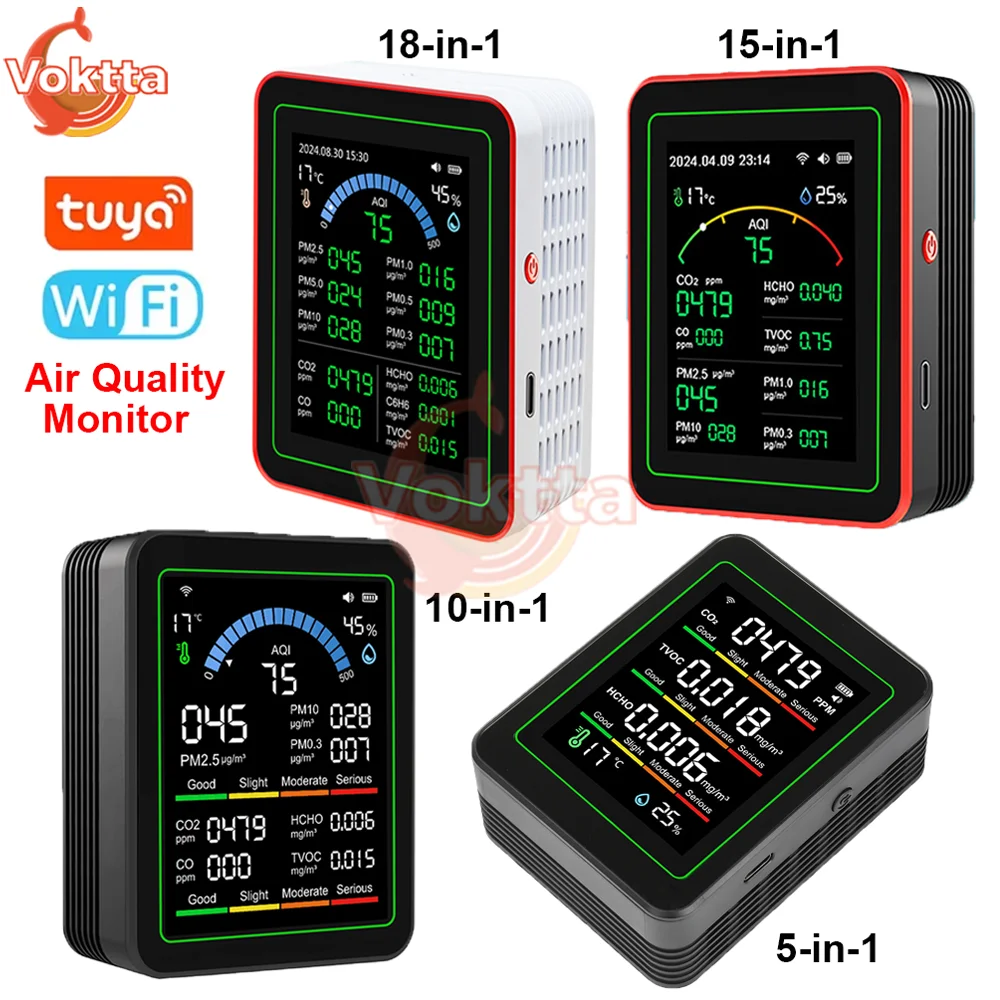
The device boasts an impressive array of sensors, capable of detecting up to 15 distinct air quality indicators and offering 3 additional useful functions, culminating in an '18-in-1' monitoring capability. These indicators include AQI (Air Quality Index), PM2.5, PM1.0, PM5.0, PM0.5, PM10, and PM0.3 particulate matter. Such detailed particulate analysis is critical. For a carpenter, working with wood dust, these readings are invaluable for assessing immediate exposure risks and the effectiveness of dust collection systems. The unit quantifies these microscopic threats.
Beyond particulates, it monitors CO2 (carbon dioxide) and CO (carbon monoxide), both crucial for safety. Elevated CO2 levels can indicate poor ventilation, leading to drowsiness and reduced concentration, a significant concern in enclosed workshops. Carbon monoxide, a silent killer, demands constant vigilance, especially where combustion appliances are present. Formaldehyde (HCHO) and Benzene (C6H6) detection are also included. These volatile organic compounds (VOCs) are often emitted from building materials, paints, and finishes, making this monitor particularly relevant for assessing newly constructed or renovated spaces. TVOC (Total Volatile Organic Compounds) provides a broader overview of chemical pollutants.
The monitor also tracks fundamental environmental metrics: temperature and humidity. These two factors, while seemingly basic, profoundly influence material stability and human comfort. Fluctuations can affect wood, glues, and finishes, making consistent monitoring essential for quality craftsmanship. The device provides a complete environmental picture.
Equipped with multiple high-precision sensors, the monitor delivers fast and accurate readings. Formaldehyde detection, specifically highlighted, is described as rapid, accurate, and reliable. This quick response time is not merely a convenience; it is a safety feature. Immediate detection of hazardous gas spikes allows for prompt corrective action, such as opening windows or evacuating a space. The data is presented on a 2.8-inch Ultra HD color screen. This vibrant display ensures that critical information is legible at a glance, even in varying lighting conditions.
For a professional like a carpenter, the ability to read fractions easily on a clear display is paramount. The numerical readouts for PM levels, CO2, and HCHO are distinct and well-organized, preventing misinterpretation of complex data. The screen's clarity supports quick decision-making on a busy job site. The visual interface includes a semi-circular gauge for AQI, providing an intuitive, color-coded summary of overall air quality. This visual cue simplifies complex data points. The presentation is efficient.
Unlike older, monochrome air quality testers, this unit's color screen and intuitive layout significantly enhance usability. Users spend less time deciphering cryptic codes and more time understanding their environment. The visual hierarchy of information ensures that the most critical data is instantly accessible. This design choice contributes directly to operational efficiency and safety awareness.
Integration with Tuya Smart Life via Wi-Fi is a core feature, transforming the monitor from a standalone device into a smart home component. This connectivity allows for remote monitoring of air quality from a smartphone or tablet. Imagine checking the air quality of a client's newly painted room before arriving on site, or monitoring your workshop's environment while away. The data is always accessible. This remote capability is a significant advantage for those managing multiple properties or needing to keep an eye on conditions over extended periods.
The device supports data storage and export to a computer. This functionality is invaluable for long-term analysis, trend identification, and compliance documentation. For professionals, maintaining records of environmental conditions during sensitive projects can be crucial. The ability to compare particulate matter data over time, as demonstrated by the intelligent analysis feature, allows users to quantify improvements or deteriorations in air quality. This comparison is data-driven.
Many entry-level air quality monitors lack any form of connectivity, forcing users to manually record data. This Tuya-enabled device eliminates that tedious process, automating data logging and offering sophisticated analysis tools. The integration streamlines environmental management. It provides a level of control and insight that standalone units simply cannot match, making it a powerful tool for proactive environmental management.
The monitor's physical design, as seen in the images, suggests a compact and reasonably durable build. The main body appears to be constructed from a robust plastic, with some models featuring a distinct red trim, possibly indicating a reinforced frame or a design accent. The side vents are neatly integrated, suggesting efficient airflow for accurate sensor readings. Its dimensions, approximately 90mm wide, 70mm high, and 35mm thick, make it portable. This compact footprint allows for placement in various locations without obstructing workspaces.
While not explicitly rated for extreme conditions, the visible materials imply a device capable of withstanding typical indoor and light workshop environments. The casing appears solid. For a carpenter, the ability to drop it off a ladder without immediately breaking is a practical consideration. While no drop rating is provided, the compact, blocky design with minimal protruding parts inherently offers more resilience than devices with delicate external sensors. Its construction balances functionality with a degree of everyday robustness.
Compared to flimsy, open-circuit sensor boards often used for DIY air quality projects, this unit presents a fully enclosed, self-contained system. The integrated battery and durable casing protect the sensitive internal components from dust and minor impacts. This closed design is essential for maintaining sensor accuracy and device longevity in environments where dust and debris are common. The device is built for practical use, not just display.
The device is powered by a 2000mAh lithium battery, promising a long battery life. This capacity ensures the monitor can operate autonomously for extended periods, freeing it from constant tethering to a power outlet. For monitoring air quality in a room alone, without immediate access to power, this battery life is a critical advantage. It allows for flexible placement, whether in a remote corner of a workshop, a client's home during a renovation, or a temporary setup for specific testing.
Charging occurs via a USB-C port, a modern and widely adopted standard. This ensures compatibility with common chargers and cables, simplifying power management. The convenience of USB-C means one less proprietary cable to manage. The efficient power management of the device, coupled with the generous battery capacity, minimizes downtime and maximizes continuous monitoring. This is a practical design choice.
Many portable electronic devices compromise on battery life to achieve smaller form factors. This monitor strikes a balance, offering substantial runtime without becoming excessively bulky. The integrated battery solution is superior to models relying on disposable batteries, reducing waste and long-term operating costs. It is a sustainable power solution.
The intelligent analysis of data evaluation and concise comparison of styles feature is a standout. The monitor can record average data over two groups of 30 seconds, allowing for a percentage increase or decrease comparison. This provides immediate, quantifiable feedback on changes in air quality. For instance, after activating a ventilation system or opening a window, one can quickly assess the impact on particulate levels. This direct feedback is powerful.
The inclusion of voice guidance (as mentioned for 2025's upgraded model) further enhances usability. Voice prompts can provide comprehensive operational guidance, making the device accessible to a broader audience, including those less familiar with complex air quality metrics. This feature simplifies interaction. It ensures users receive real-time alerts and instructions without needing to constantly look at the screen.
Unlike basic indicator lights, the detailed numerical data, combined with graphical representations and comparative analysis, empowers users with actionable insights. The ability to see trends and quantify changes allows for proactive environmental management rather than just reactive responses. This device offers more than just numbers; it offers understanding. It provides the tools to make informed decisions about one's environment.
This Tuya Smart Air Quality Monitor represents a significant step forward in personal and professional environmental monitoring. Its extensive sensor suite, clear display, smart connectivity, and robust design make it a versatile tool. From a carpenter ensuring a safe workshop environment free from harmful dust and VOCs, to a homeowner optimizing indoor air for family health, the monitor provides the data needed for informed decisions. The ability to remotely monitor and analyze trends offers peace of mind and proactive control over unseen pollutants. This device empowers users to take charge of their air quality, fostering healthier and more productive spaces. It is an investment in well-being and operational excellence, ensuring that the air you breathe is as clean as it should be.
Comprehensive Environmental Insight
The device boasts an impressive array of sensors, capable of detecting up to 15 distinct air quality indicators and offering 3 additional useful functions, culminating in an '18-in-1' monitoring capability. These indicators include AQI (Air Quality Index), PM2.5, PM1.0, PM5.0, PM0.5, PM10, and PM0.3 particulate matter. Such detailed particulate analysis is critical. For a carpenter, working with wood dust, these readings are invaluable for assessing immediate exposure risks and the effectiveness of dust collection systems. The unit quantifies these microscopic threats.
Beyond particulates, it monitors CO2 (carbon dioxide) and CO (carbon monoxide), both crucial for safety. Elevated CO2 levels can indicate poor ventilation, leading to drowsiness and reduced concentration, a significant concern in enclosed workshops. Carbon monoxide, a silent killer, demands constant vigilance, especially where combustion appliances are present. Formaldehyde (HCHO) and Benzene (C6H6) detection are also included. These volatile organic compounds (VOCs) are often emitted from building materials, paints, and finishes, making this monitor particularly relevant for assessing newly constructed or renovated spaces. TVOC (Total Volatile Organic Compounds) provides a broader overview of chemical pollutants.
The monitor also tracks fundamental environmental metrics: temperature and humidity. These two factors, while seemingly basic, profoundly influence material stability and human comfort. Fluctuations can affect wood, glues, and finishes, making consistent monitoring essential for quality craftsmanship. The device provides a complete environmental picture.
Precision Sensing and Real-time Feedback
Equipped with multiple high-precision sensors, the monitor delivers fast and accurate readings. Formaldehyde detection, specifically highlighted, is described as rapid, accurate, and reliable. This quick response time is not merely a convenience; it is a safety feature. Immediate detection of hazardous gas spikes allows for prompt corrective action, such as opening windows or evacuating a space. The data is presented on a 2.8-inch Ultra HD color screen. This vibrant display ensures that critical information is legible at a glance, even in varying lighting conditions.
For a professional like a carpenter, the ability to read fractions easily on a clear display is paramount. The numerical readouts for PM levels, CO2, and HCHO are distinct and well-organized, preventing misinterpretation of complex data. The screen's clarity supports quick decision-making on a busy job site. The visual interface includes a semi-circular gauge for AQI, providing an intuitive, color-coded summary of overall air quality. This visual cue simplifies complex data points. The presentation is efficient.
Unlike older, monochrome air quality testers, this unit's color screen and intuitive layout significantly enhance usability. Users spend less time deciphering cryptic codes and more time understanding their environment. The visual hierarchy of information ensures that the most critical data is instantly accessible. This design choice contributes directly to operational efficiency and safety awareness.
Seamless Data Bridging
Integration with Tuya Smart Life via Wi-Fi is a core feature, transforming the monitor from a standalone device into a smart home component. This connectivity allows for remote monitoring of air quality from a smartphone or tablet. Imagine checking the air quality of a client's newly painted room before arriving on site, or monitoring your workshop's environment while away. The data is always accessible. This remote capability is a significant advantage for those managing multiple properties or needing to keep an eye on conditions over extended periods.
The device supports data storage and export to a computer. This functionality is invaluable for long-term analysis, trend identification, and compliance documentation. For professionals, maintaining records of environmental conditions during sensitive projects can be crucial. The ability to compare particulate matter data over time, as demonstrated by the intelligent analysis feature, allows users to quantify improvements or deteriorations in air quality. This comparison is data-driven.
Many entry-level air quality monitors lack any form of connectivity, forcing users to manually record data. This Tuya-enabled device eliminates that tedious process, automating data logging and offering sophisticated analysis tools. The integration streamlines environmental management. It provides a level of control and insight that standalone units simply cannot match, making it a powerful tool for proactive environmental management.
Workshop-Ready Construction
The monitor's physical design, as seen in the images, suggests a compact and reasonably durable build. The main body appears to be constructed from a robust plastic, with some models featuring a distinct red trim, possibly indicating a reinforced frame or a design accent. The side vents are neatly integrated, suggesting efficient airflow for accurate sensor readings. Its dimensions, approximately 90mm wide, 70mm high, and 35mm thick, make it portable. This compact footprint allows for placement in various locations without obstructing workspaces.
While not explicitly rated for extreme conditions, the visible materials imply a device capable of withstanding typical indoor and light workshop environments. The casing appears solid. For a carpenter, the ability to drop it off a ladder without immediately breaking is a practical consideration. While no drop rating is provided, the compact, blocky design with minimal protruding parts inherently offers more resilience than devices with delicate external sensors. Its construction balances functionality with a degree of everyday robustness.
Compared to flimsy, open-circuit sensor boards often used for DIY air quality projects, this unit presents a fully enclosed, self-contained system. The integrated battery and durable casing protect the sensitive internal components from dust and minor impacts. This closed design is essential for maintaining sensor accuracy and device longevity in environments where dust and debris are common. The device is built for practical use, not just display.
Powering Extended Monitoring
The device is powered by a 2000mAh lithium battery, promising a long battery life. This capacity ensures the monitor can operate autonomously for extended periods, freeing it from constant tethering to a power outlet. For monitoring air quality in a room alone, without immediate access to power, this battery life is a critical advantage. It allows for flexible placement, whether in a remote corner of a workshop, a client's home during a renovation, or a temporary setup for specific testing.
Charging occurs via a USB-C port, a modern and widely adopted standard. This ensures compatibility with common chargers and cables, simplifying power management. The convenience of USB-C means one less proprietary cable to manage. The efficient power management of the device, coupled with the generous battery capacity, minimizes downtime and maximizes continuous monitoring. This is a practical design choice.
Many portable electronic devices compromise on battery life to achieve smaller form factors. This monitor strikes a balance, offering substantial runtime without becoming excessively bulky. The integrated battery solution is superior to models relying on disposable batteries, reducing waste and long-term operating costs. It is a sustainable power solution.
Data Analysis and User Experience
The intelligent analysis of data evaluation and concise comparison of styles feature is a standout. The monitor can record average data over two groups of 30 seconds, allowing for a percentage increase or decrease comparison. This provides immediate, quantifiable feedback on changes in air quality. For instance, after activating a ventilation system or opening a window, one can quickly assess the impact on particulate levels. This direct feedback is powerful.
The inclusion of voice guidance (as mentioned for 2025's upgraded model) further enhances usability. Voice prompts can provide comprehensive operational guidance, making the device accessible to a broader audience, including those less familiar with complex air quality metrics. This feature simplifies interaction. It ensures users receive real-time alerts and instructions without needing to constantly look at the screen.
Unlike basic indicator lights, the detailed numerical data, combined with graphical representations and comparative analysis, empowers users with actionable insights. The ability to see trends and quantify changes allows for proactive environmental management rather than just reactive responses. This device offers more than just numbers; it offers understanding. It provides the tools to make informed decisions about one's environment.
Conclusion: A Clearer Breath Ahead
This Tuya Smart Air Quality Monitor represents a significant step forward in personal and professional environmental monitoring. Its extensive sensor suite, clear display, smart connectivity, and robust design make it a versatile tool. From a carpenter ensuring a safe workshop environment free from harmful dust and VOCs, to a homeowner optimizing indoor air for family health, the monitor provides the data needed for informed decisions. The ability to remotely monitor and analyze trends offers peace of mind and proactive control over unseen pollutants. This device empowers users to take charge of their air quality, fostering healthier and more productive spaces. It is an investment in well-being and operational excellence, ensuring that the air you breathe is as clean as it should be.