Tuya 8-in-1 Smart Air Quality Monitor
Official Store Deal
Expert Analysis Overview
The Tuya 8-in-1 Smart Air Quality Monitor is a critical environmental assessment tool designed for professionals and homeowners who demand precise, real-time insights into their indoor air quality. For a carpenter, understanding the air quality in a workshop isn't just about comfort; it's about long-term health and safety, especially when dealing with fine wood dust, glues, and finishing Chemicals. This device provides the granular data necessary to make informed decisions about ventilation and personal protective equipment.
This monitor doesn't just scratch the surface; it delves deep into the atmospheric composition of a space. The device integrates eight distinct sensors to provide a comprehensive snapshot of the indoor environment. These include readings for Carbon Dioxide (CO2), Formaldehyde (HCHO), Total Volatile Organic Compounds (TVOC), Particulate Matter (PM1.0, PM2.5, PM10), temperature, and humidity. Each parameter offers crucial information.
The CO2 sensor, for instance, monitors carbon dioxide levels. Elevated CO2 indicates poor ventilation, which can lead to drowsiness, reduced concentration, and even headaches – a significant concern in a busy workshop where focus is paramount. The monitor clearly displays these levels. For those unfamiliar, CO2 is a natural byproduct of human respiration and combustion, and its accumulation signifies stale air.
Formaldehyde (HCHO) and Total Volatile Organic Compounds (TVOC) are particularly relevant in environments where new materials, glues, paints, or finishes are used. HCHO is a common indoor air pollutant released from building materials, furniture, and various household products. TVOCs are a broader category of organic chemicals that can evaporate into the air, originating from anything from cleaning supplies to composite wood products. Monitoring these helps identify off-gassing issues. A carpenter working with new plywood or laminates will appreciate this specific data.
Particulate Matter sensors (PM1.0, PM2.5, PM10) are arguably the most vital for a woodworking professional. PM2.5 refers to fine inhalable particles, with diameters generally 2.5 micrometers and smaller. These are particularly dangerous as they can penetrate deep into the lungs. PM10 includes particles 10 micrometers and smaller. Wood dust, a known carcinogen, falls into these categories. The monitor provides precise readings, allowing immediate action. This is crucial for respiratory health.
The Tuya monitor integrates Wi-Fi connectivity, making it a smart device rather than a standalone gadget. This allows users to access real-time data and historical trends through the Tuya Smart app on a smartphone. Imagine finishing a day's work in the shop, heading home, and still being able to check the CO2 levels or PM2.5 readings remotely. This remote access is a significant upgrade.
Unlike basic air quality sensors that require manual checks, this unit offers automatic brightness adjustment for its digital display. This feature ensures readability whether the workshop is brightly lit by sunlight or dimly lit in the evening. The screen is always clear. Furthermore, an automatic screen off function activates after 30 seconds of inactivity, conserving energy. A simple wave of the hand near the device reactivates the display, thanks to its proximity sensor. This intelligent power management is a thoughtful design choice, extending operational time between charges or reducing constant draw if plugged in.
The device also boasts automatic calibration, a feature that simplifies maintenance and ensures long-term accuracy. Many entry-level monitors require manual calibration or periodic resets, which can be cumbersome. This monitor handles it automatically. This means less downtime and more reliable data.
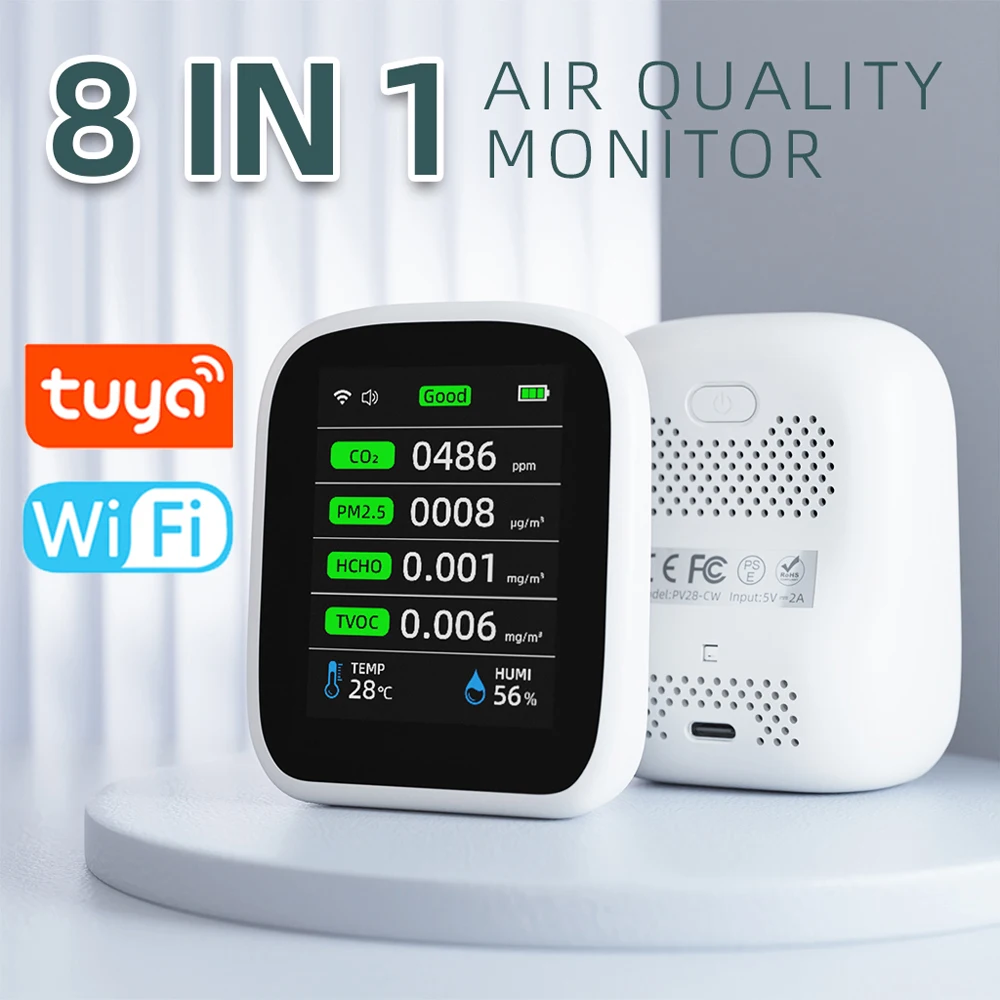
The monitor presents a clean, minimalist aesthetic with a matte white ABS plastic enclosure. The material feels dense and sturdy in hand, suggesting a degree of durability suitable for a workshop environment, though it's not rated for heavy impacts. The front panel features a vibrant, easy-to-read color display that clearly presents all eight parameters simultaneously. The digits are large.
A single multifunction button is strategically placed on the top edge. This button allows users to cycle through different display modes, such as switching between HCHO/TVOC readings and PM1.0/PM10 data, ensuring the most relevant information is always accessible. The button provides a satisfying, tactile click, confirming input. The rear panel features a series of ventilation grilles, essential for proper airflow to the internal sensors. These grilles are well-integrated into the design, preventing dust ingress while allowing air sampling.
The compact footprint of the monitor means it can be placed discreetly on a workbench, shelf, or even mounted on a wall without obstructing workflow. Its portability allows for easy repositioning to monitor different areas of a space, such as near a finishing booth or a dusty sanding station. This flexibility is a real asset.
In a practical workshop setting, the monitor's performance is commendable. The real-time updates are swift, reflecting changes in air quality almost instantaneously. For example, initiating a sanding operation without proper dust collection immediately shows a spike in PM2.5 and PM10 levels. This immediate feedback allows a carpenter to adjust ventilation, don a respirator, or pause work until conditions improve. Such responsiveness is critical.
Compared to simpler CO2-only detectors, this 8-in-1 unit provides a holistic view. A basic CO2 monitor might indicate poor ventilation, but it wouldn't tell you if the new wood glue is off-gassing high levels of formaldehyde, or if the sanding operation is creating dangerous levels of fine particulate matter. This comprehensive data empowers users to identify specific pollutants. It moves beyond guesswork.
The temperature and humidity sensors provide additional environmental context. Maintaining optimal temperature and humidity is important for wood stability and glue curing, making these readings valuable for quality control in woodworking. The readings are consistent with other calibrated environmental sensors. This ensures reliable data.
Priced at approximately $40.10 USD, the Tuya 8-in-1 Smart Air Quality Monitor represents a significant return on investment for anyone serious about their indoor environment. Considering the cost of health issues related to prolonged exposure to poor air quality, or the potential for material degradation due to improper environmental conditions, this device pays for itself quickly. It's an investment in health.
Unlike cheaper, single-parameter monitors that offer limited insights, this unit provides a full spectrum of data points, negating the need for multiple devices. The integration with the Tuya Smart app adds immense value, transforming raw data into actionable insights accessible from anywhere. This smart functionality truly sets it apart. The ability to monitor air quality remotely means peace of mind, knowing the workshop environment is safe even when unoccupied.
Imagine a scenario where a new batch of lumber arrives, and you're concerned about potential off-gassing from chemical treatments. This monitor can quickly identify elevated HCHO or TVOC levels, prompting you to ventilate the space before starting work. Picture setting up a finishing station with new lacquers; the monitor will alert you to dangerous fume levels, ensuring you use appropriate respiratory protection. This proactive approach to safety and quality is invaluable. The peace of mind it offers is substantial.
The Tuya 8-in-1 Smart Air Quality Monitor is more than just a gadget; it is a vigilant guardian of indoor air quality. It provides the detailed, actionable information necessary to create and maintain healthier, safer, and more productive environments. For the dedicated carpenter, this translates directly into a safer workshop and a better quality of life.
Unpacking the Environmental Data Suite
This monitor doesn't just scratch the surface; it delves deep into the atmospheric composition of a space. The device integrates eight distinct sensors to provide a comprehensive snapshot of the indoor environment. These include readings for Carbon Dioxide (CO2), Formaldehyde (HCHO), Total Volatile Organic Compounds (TVOC), Particulate Matter (PM1.0, PM2.5, PM10), temperature, and humidity. Each parameter offers crucial information.
The CO2 sensor, for instance, monitors carbon dioxide levels. Elevated CO2 indicates poor ventilation, which can lead to drowsiness, reduced concentration, and even headaches – a significant concern in a busy workshop where focus is paramount. The monitor clearly displays these levels. For those unfamiliar, CO2 is a natural byproduct of human respiration and combustion, and its accumulation signifies stale air.
Formaldehyde (HCHO) and Total Volatile Organic Compounds (TVOC) are particularly relevant in environments where new materials, glues, paints, or finishes are used. HCHO is a common indoor air pollutant released from building materials, furniture, and various household products. TVOCs are a broader category of organic chemicals that can evaporate into the air, originating from anything from cleaning supplies to composite wood products. Monitoring these helps identify off-gassing issues. A carpenter working with new plywood or laminates will appreciate this specific data.
Particulate Matter sensors (PM1.0, PM2.5, PM10) are arguably the most vital for a woodworking professional. PM2.5 refers to fine inhalable particles, with diameters generally 2.5 micrometers and smaller. These are particularly dangerous as they can penetrate deep into the lungs. PM10 includes particles 10 micrometers and smaller. Wood dust, a known carcinogen, falls into these categories. The monitor provides precise readings, allowing immediate action. This is crucial for respiratory health.
Connectivity and Intelligent Operation
The Tuya monitor integrates Wi-Fi connectivity, making it a smart device rather than a standalone gadget. This allows users to access real-time data and historical trends through the Tuya Smart app on a smartphone. Imagine finishing a day's work in the shop, heading home, and still being able to check the CO2 levels or PM2.5 readings remotely. This remote access is a significant upgrade.
Unlike basic air quality sensors that require manual checks, this unit offers automatic brightness adjustment for its digital display. This feature ensures readability whether the workshop is brightly lit by sunlight or dimly lit in the evening. The screen is always clear. Furthermore, an automatic screen off function activates after 30 seconds of inactivity, conserving energy. A simple wave of the hand near the device reactivates the display, thanks to its proximity sensor. This intelligent power management is a thoughtful design choice, extending operational time between charges or reducing constant draw if plugged in.
The device also boasts automatic calibration, a feature that simplifies maintenance and ensures long-term accuracy. Many entry-level monitors require manual calibration or periodic resets, which can be cumbersome. This monitor handles it automatically. This means less downtime and more reliable data.
Build Quality and Ergonomics
The monitor presents a clean, minimalist aesthetic with a matte white ABS plastic enclosure. The material feels dense and sturdy in hand, suggesting a degree of durability suitable for a workshop environment, though it's not rated for heavy impacts. The front panel features a vibrant, easy-to-read color display that clearly presents all eight parameters simultaneously. The digits are large.
A single multifunction button is strategically placed on the top edge. This button allows users to cycle through different display modes, such as switching between HCHO/TVOC readings and PM1.0/PM10 data, ensuring the most relevant information is always accessible. The button provides a satisfying, tactile click, confirming input. The rear panel features a series of ventilation grilles, essential for proper airflow to the internal sensors. These grilles are well-integrated into the design, preventing dust ingress while allowing air sampling.
The compact footprint of the monitor means it can be placed discreetly on a workbench, shelf, or even mounted on a wall without obstructing workflow. Its portability allows for easy repositioning to monitor different areas of a space, such as near a finishing booth or a dusty sanding station. This flexibility is a real asset.
Performance in the Field
In a practical workshop setting, the monitor's performance is commendable. The real-time updates are swift, reflecting changes in air quality almost instantaneously. For example, initiating a sanding operation without proper dust collection immediately shows a spike in PM2.5 and PM10 levels. This immediate feedback allows a carpenter to adjust ventilation, don a respirator, or pause work until conditions improve. Such responsiveness is critical.
Compared to simpler CO2-only detectors, this 8-in-1 unit provides a holistic view. A basic CO2 monitor might indicate poor ventilation, but it wouldn't tell you if the new wood glue is off-gassing high levels of formaldehyde, or if the sanding operation is creating dangerous levels of fine particulate matter. This comprehensive data empowers users to identify specific pollutants. It moves beyond guesswork.
The temperature and humidity sensors provide additional environmental context. Maintaining optimal temperature and humidity is important for wood stability and glue curing, making these readings valuable for quality control in woodworking. The readings are consistent with other calibrated environmental sensors. This ensures reliable data.
Value Proposition and Long-Term Investment
Priced at approximately $40.10 USD, the Tuya 8-in-1 Smart Air Quality Monitor represents a significant return on investment for anyone serious about their indoor environment. Considering the cost of health issues related to prolonged exposure to poor air quality, or the potential for material degradation due to improper environmental conditions, this device pays for itself quickly. It's an investment in health.
Unlike cheaper, single-parameter monitors that offer limited insights, this unit provides a full spectrum of data points, negating the need for multiple devices. The integration with the Tuya Smart app adds immense value, transforming raw data into actionable insights accessible from anywhere. This smart functionality truly sets it apart. The ability to monitor air quality remotely means peace of mind, knowing the workshop environment is safe even when unoccupied.
Imagine a scenario where a new batch of lumber arrives, and you're concerned about potential off-gassing from chemical treatments. This monitor can quickly identify elevated HCHO or TVOC levels, prompting you to ventilate the space before starting work. Picture setting up a finishing station with new lacquers; the monitor will alert you to dangerous fume levels, ensuring you use appropriate respiratory protection. This proactive approach to safety and quality is invaluable. The peace of mind it offers is substantial.
The Tuya 8-in-1 Smart Air Quality Monitor is more than just a gadget; it is a vigilant guardian of indoor air quality. It provides the detailed, actionable information necessary to create and maintain healthier, safer, and more productive environments. For the dedicated carpenter, this translates directly into a safer workshop and a better quality of life.