Tongou Smart WiFi RCBO Circuit Breaker
Official Store Deal
Expert Analysis Overview
The Tongou Smart WiFi RCBO Circuit Breaker is a sophisticated electrical protection device designed for modern residential and light commercial applications requiring remote monitoring and control capabilities. This unit integrates residual current protection (RCD) with overcurrent protection (MCB) into a single, compact DIN rail-mountable module, offering a significant upgrade over traditional standalone components. Its smart capabilities, facilitated by WiFi connectivity and the Tuya ecosystem, allow for advanced functionality beyond basic circuit interruption.
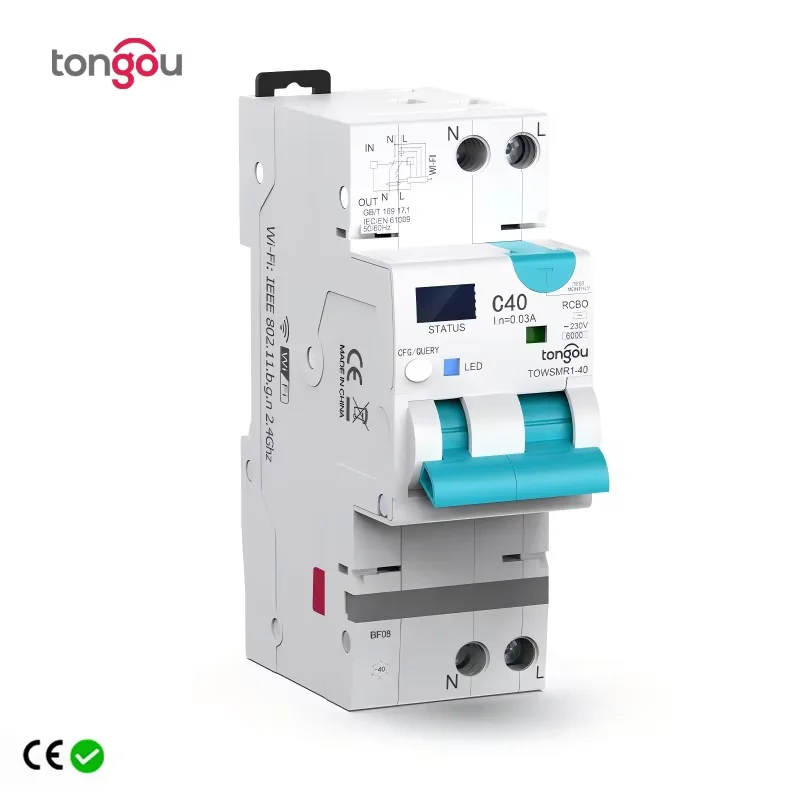
This device presents as a two-pole (2P) circuit breaker, clearly labeled for line (L) and neutral (N) connections, suitable for 230V single-phase systems. The visible C40 rating indicates a maximum continuous current of 40 Amperes, making it appropriate for a wide range of household and small business circuits. An integrated LED display provides real-time status and potentially adjustable parameters, enhancing user interaction. The CE mark signifies compliance with European safety, health, and environmental protection standards. This is crucial.
Traditional electrical panels often require separate miniature circuit breakers (MCBs) for overcurrent protection and residual current devices (RCDs) for earth leakage protection. The Tongou RCBO combines these functions, streamlining installation and saving valuable space within the consumer unit. This integration reduces wiring complexity and potential points of failure, which is a significant advantage for both new installations and retrofits. The combined functionality simplifies troubleshooting when a trip occurs, as the cause (overcurrent or leakage) is often indicated directly on the device or via the connected app.
Unlike standard electromechanical circuit breakers, this smart RCBO incorporates a digital interface and wireless communication. This allows for remote switching, monitoring of energy consumption, and receiving alerts directly to a smartphone. For property managers or homeowners with multiple circuits, this offers unprecedented control and insight into their electrical system's health and usage patterns. The ability to remotely reset a tripped breaker, after verifying safety, minimizes downtime and inconvenience.
An examination of the internal components, revealed through the exploded view, highlights the engineering behind this smart breaker. A dedicated circuit board, populated with surface-mount devices (SMDs) and a WiFi module, manages the smart functions. The quality of component placement and soldering, while not directly verifiable without a physical inspection, is implied by the CE certification. Clean signal transmission is paramount in such devices. The digital control unit processes data from internal sensors, making decisions on tripping parameters. This ensures precise operation.
Central to its protective function are the internal current transformers (CTs) and the electromagnetic tripping mechanism. The CTs continuously monitor the balance between the live and neutral currents. Any imbalance, indicative of an earth leakage fault, triggers the residual current protection. The speed of this detection is critical for preventing electric shock. The electromagnetic mechanism, visible as a coil and plunger, provides the rapid mechanical force required to open the contacts during an overcurrent event. This ensures swift disconnection.
The mechanical integrity of the switching contacts and the trip lever is vital for long-term reliability. The robust plastic housing protects these internal components from environmental factors and mechanical stress. The DIN rail clip, a common feature in modern electrical installations, ensures secure mounting within a standard enclosure. Assessing the long-term reliability of connections is a key concern for any electrical component. The screw terminals for wiring appear substantial, designed to securely clamp conductors, minimizing resistance and heat buildup at connection points. Proper torque application during installation is essential for maintaining these secure connections over time.
The 'LED Adjustable' feature suggests that certain operational parameters, such as residual current sensitivity or overcurrent delay characteristics, might be configurable via the onboard display or the Tuya app. This level of adjustability provides significant flexibility for installers to tailor the breaker's response to specific circuit requirements or environmental conditions. For instance, in circuits prone to nuisance tripping from minor, transient leakages, a slightly adjusted sensitivity could prevent unnecessary interruptions while still maintaining safety. This adaptability is a clear advantage.
Integrating the device into the Tuya smart home ecosystem opens up a world of automation possibilities. Users can schedule circuits to turn on or off, monitor real-time power consumption for individual circuits, and receive instant notifications for trips or abnormal conditions. This capability transforms a basic safety device into an active energy management tool. Imagine remotely powering down non-essential loads when leaving home, or receiving an alert if a critical appliance circuit trips. Such features enhance both convenience and energy efficiency.
Compared to non-smart RCBOs, the remote diagnostic and control features significantly reduce the need for physical inspection and manual intervention. If a circuit trips due to an unknown fault, the app can often provide more context than a simple tripped breaker. This allows for more informed decisions on whether a site visit is immediately necessary or if a remote reset is appropriate. This saves time and resources. The ability to track historical energy data can also help identify inefficient appliances or phantom loads, contributing to lower electricity bills.
Installation follows standard DIN rail procedures, requiring a qualified electrician. The clear labeling of input and output terminals simplifies wiring. The compact form factor, combining two protection types, reduces the overall footprint in the distribution board. This is a practical benefit. Correct wiring is paramount for the device's protective functions to operate as intended, especially for residual current detection which relies on balanced current flow through the CTs. Adherence to local electrical codes is non-negotiable.
Maintenance primarily involves periodic testing of the RCD function, typically via a 'Test' button on the device itself. This ensures the mechanical and electronic tripping mechanisms remain functional. The smart features also allow for firmware updates, which can improve performance or add new functionalities over the product's lifespan. Keeping firmware updated is often recommended. The digital display provides immediate feedback on the device's status, simplifying routine checks.
This smart circuit breaker represents a significant advancement in electrical safety and control. It offers a robust solution for those seeking to modernize their electrical infrastructure with intelligent protection. The integration of overcurrent and leakage protection with remote management capabilities provides peace of mind and enhanced operational efficiency. For users looking to gain granular control and monitoring over their electrical circuits, this device delivers substantial value, transforming a passive safety component into an active participant in home automation and energy management. Imagine a scenario where you can proactively manage your home's power, preventing issues before they escalate, all from the palm of your hand.
Integrated Protection and Smart Control
This device presents as a two-pole (2P) circuit breaker, clearly labeled for line (L) and neutral (N) connections, suitable for 230V single-phase systems. The visible C40 rating indicates a maximum continuous current of 40 Amperes, making it appropriate for a wide range of household and small business circuits. An integrated LED display provides real-time status and potentially adjustable parameters, enhancing user interaction. The CE mark signifies compliance with European safety, health, and environmental protection standards. This is crucial.
Traditional electrical panels often require separate miniature circuit breakers (MCBs) for overcurrent protection and residual current devices (RCDs) for earth leakage protection. The Tongou RCBO combines these functions, streamlining installation and saving valuable space within the consumer unit. This integration reduces wiring complexity and potential points of failure, which is a significant advantage for both new installations and retrofits. The combined functionality simplifies troubleshooting when a trip occurs, as the cause (overcurrent or leakage) is often indicated directly on the device or via the connected app.
Unlike standard electromechanical circuit breakers, this smart RCBO incorporates a digital interface and wireless communication. This allows for remote switching, monitoring of energy consumption, and receiving alerts directly to a smartphone. For property managers or homeowners with multiple circuits, this offers unprecedented control and insight into their electrical system's health and usage patterns. The ability to remotely reset a tripped breaker, after verifying safety, minimizes downtime and inconvenience.
Internal Architecture and Reliability
An examination of the internal components, revealed through the exploded view, highlights the engineering behind this smart breaker. A dedicated circuit board, populated with surface-mount devices (SMDs) and a WiFi module, manages the smart functions. The quality of component placement and soldering, while not directly verifiable without a physical inspection, is implied by the CE certification. Clean signal transmission is paramount in such devices. The digital control unit processes data from internal sensors, making decisions on tripping parameters. This ensures precise operation.
Central to its protective function are the internal current transformers (CTs) and the electromagnetic tripping mechanism. The CTs continuously monitor the balance between the live and neutral currents. Any imbalance, indicative of an earth leakage fault, triggers the residual current protection. The speed of this detection is critical for preventing electric shock. The electromagnetic mechanism, visible as a coil and plunger, provides the rapid mechanical force required to open the contacts during an overcurrent event. This ensures swift disconnection.
The mechanical integrity of the switching contacts and the trip lever is vital for long-term reliability. The robust plastic housing protects these internal components from environmental factors and mechanical stress. The DIN rail clip, a common feature in modern electrical installations, ensures secure mounting within a standard enclosure. Assessing the long-term reliability of connections is a key concern for any electrical component. The screw terminals for wiring appear substantial, designed to securely clamp conductors, minimizing resistance and heat buildup at connection points. Proper torque application during installation is essential for maintaining these secure connections over time.
Operational Versatility and Safety Enhancements
The 'LED Adjustable' feature suggests that certain operational parameters, such as residual current sensitivity or overcurrent delay characteristics, might be configurable via the onboard display or the Tuya app. This level of adjustability provides significant flexibility for installers to tailor the breaker's response to specific circuit requirements or environmental conditions. For instance, in circuits prone to nuisance tripping from minor, transient leakages, a slightly adjusted sensitivity could prevent unnecessary interruptions while still maintaining safety. This adaptability is a clear advantage.
Integrating the device into the Tuya smart home ecosystem opens up a world of automation possibilities. Users can schedule circuits to turn on or off, monitor real-time power consumption for individual circuits, and receive instant notifications for trips or abnormal conditions. This capability transforms a basic safety device into an active energy management tool. Imagine remotely powering down non-essential loads when leaving home, or receiving an alert if a critical appliance circuit trips. Such features enhance both convenience and energy efficiency.
Compared to non-smart RCBOs, the remote diagnostic and control features significantly reduce the need for physical inspection and manual intervention. If a circuit trips due to an unknown fault, the app can often provide more context than a simple tripped breaker. This allows for more informed decisions on whether a site visit is immediately necessary or if a remote reset is appropriate. This saves time and resources. The ability to track historical energy data can also help identify inefficient appliances or phantom loads, contributing to lower electricity bills.
Installation and Maintenance Considerations
Installation follows standard DIN rail procedures, requiring a qualified electrician. The clear labeling of input and output terminals simplifies wiring. The compact form factor, combining two protection types, reduces the overall footprint in the distribution board. This is a practical benefit. Correct wiring is paramount for the device's protective functions to operate as intended, especially for residual current detection which relies on balanced current flow through the CTs. Adherence to local electrical codes is non-negotiable.
Maintenance primarily involves periodic testing of the RCD function, typically via a 'Test' button on the device itself. This ensures the mechanical and electronic tripping mechanisms remain functional. The smart features also allow for firmware updates, which can improve performance or add new functionalities over the product's lifespan. Keeping firmware updated is often recommended. The digital display provides immediate feedback on the device's status, simplifying routine checks.
This smart circuit breaker represents a significant advancement in electrical safety and control. It offers a robust solution for those seeking to modernize their electrical infrastructure with intelligent protection. The integration of overcurrent and leakage protection with remote management capabilities provides peace of mind and enhanced operational efficiency. For users looking to gain granular control and monitoring over their electrical circuits, this device delivers substantial value, transforming a passive safety component into an active participant in home automation and energy management. Imagine a scenario where you can proactively manage your home's power, preventing issues before they escalate, all from the palm of your hand.