TOMZN TOCT1 Modular AC Contactor
Official Store Deal
Expert Analysis Overview
The TOMZN TOCT1 modular contactor is a critical electrical switching device designed for reliable control of non-inductive or slightly inductive loads in residential and light commercial applications. This DIN rail-mountable unit offers robust performance for automating circuits, ensuring efficient power management within a distribution board. Its compact form factor and clear electrical specifications make it a practical choice for integration into modern consumer units and control panels.
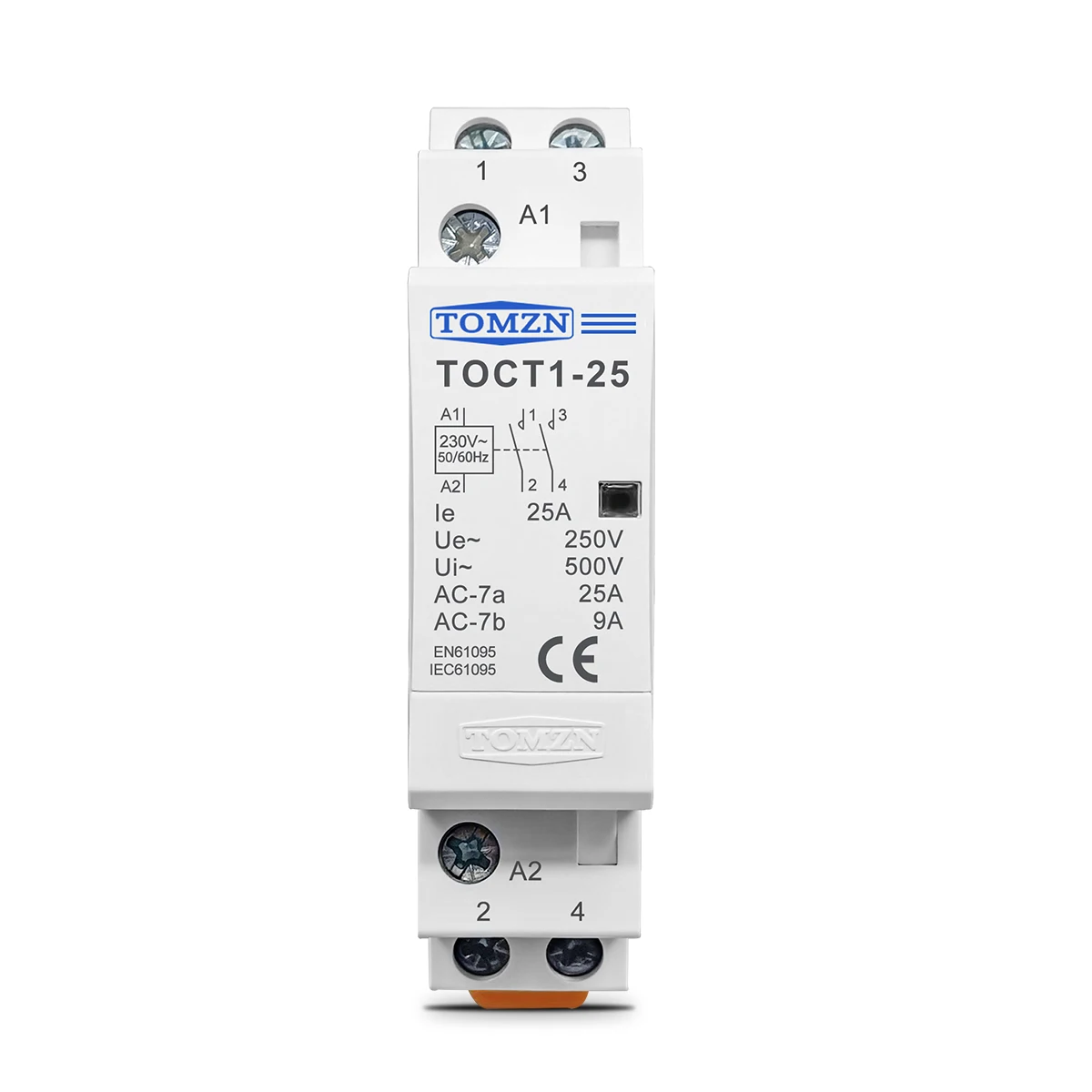
The TOMZN TOCT1 is available in various contact configurations, including 2NO (Normally Open), 1NO1NC (One Normally Open, One Normally Closed), and 2NC (Normally Closed). This range provides significant flexibility. The specific model depicted, TOCT1-25, primarily illustrates a 2NO configuration, which is common for direct load control.
A 2NO configuration is ideal for direct load switching, such as controlling lighting circuits, electric heaters, or ventilation fans. The contacts remain open until the coil is energized, then close to complete the circuit. A 1NO1NC variant allows for more complex control schemes, such as interlocking two circuits or providing a status indication for remote monitoring. The 2NC option is less common for primary load switching but useful for safety circuits where a load must be de-energized upon coil activation.
Unlike basic relays, modular contactors like the TOCT1 are engineered for higher current loads and continuous operation. They handle repetitive switching cycles effectively. This ensures long-term reliability in automated systems. The choice of configuration directly impacts circuit behavior.
High-quality screw terminals are visible at both the top (A1, 1, 3) and bottom (A2, 2, 4) of the unit. These terminals appear robust, designed to accept appropriate wire gauges for the specified current ratings. The clear labeling of coil terminals (A1, A2) and power contacts (1, 2, 3, 4) simplifies wiring procedures.
Proper wire termination is paramount for electrical safety. Loose connections generate excessive heat, which can lead to insulation degradation, arcing, and potential fire hazards. The screw-type terminals facilitate a secure mechanical and electrical connection when tightened to the correct torque. This minimizes resistance at the connection point. Always use the right screwdriver.
Inferior terminal designs often lead to stripped screws or inadequate wire clamping, compromising safety and performance. This design, with its visible robust screws and clear access, appears to mitigate those risks. It promotes reliable electrical continuity. Proper wire stripping length is also critical.
The unit is clearly marked for DIN rail mounting, a universal standard for electrical distribution boards and control panels. It operates at a common European voltage of 220V/230V AC and frequencies of 50/60Hz, making it suitable for a wide range of residential and light commercial installations. This is a standard requirement.
DIN rail compatibility simplifies installation in standard consumer units, allowing for quick and secure attachment without specialized tools. Correct voltage matching prevents component failure and ensures compatibility with existing electrical grids. Mismatched voltage can destroy the coil. The modular design allows for efficient use of panel space.
Many generic contactors lack clear mounting indicators or adhere to non-standard dimensions, complicating panel integration. The TOMZN TOCT1's adherence to DIN rail standards ensures a straightforward fit and interchangeability. This reduces installation time. It also simplifies future maintenance.
The product specifications indicate current ratings of 25A for AC-7a and 9A for AC-7b, with a rated operational voltage (Ue) of 250V and an insulation voltage (Ui) of 500V. These ratings are crucial for selecting the correct contactor for a given application. The current capacity varies significantly.
AC-7a is the utilization category for non-inductive or slightly inductive loads, such as resistive heaters, incandescent lighting, or small ventilation fans. For these loads, the TOCT1-25 can handle up to 25A. AC-7b, on the other hand, is for motor loads, specifically those with low starting currents, like household appliances or small pumps. For AC-7b applications, the current rating drops to 9A, reflecting the increased stress on contacts during motor starting and stopping. Misapplication can lead to premature failure. Always check the load type.
It is essential to differentiate these ratings from industrial contactors, which often carry AC-3 or AC-4 ratings for heavy-duty motor control with high starting currents and frequent operations. The TOMZN TOCT1 is specifically tailored for household and light commercial environments, where the demands on the switching mechanism are less severe. This ensures optimal performance within its intended scope. It is not an industrial workhorse.
A prominent CE mark is displayed on the contactor, indicating its compliance with European safety, health, and environmental protection standards. The housing appears to be constructed from a durable white thermoplastic material. This material choice is standard for electrical components.
CE marking provides a basic assurance of regulatory adherence, signifying that the product meets essential safety requirements for sale within the European Economic Area. The visible thermoplastic material suggests good insulation properties, protecting against electrical shock and containing potential arcing within the device. It also offers mechanical protection. This is a critical safety feature.
Unmarked or non-certified electrical components carry inherent risks, as their manufacturing processes and material quality may not meet stringent safety standards. The TOMZN TOCT1's robust plastic casing and certified status contribute to its long-term stability and operational safety. This builds user confidence. It is a well-built unit.
The modular and enclosed design of the TOMZN TOCT1 suggests a
Precision Switching for Modern Circuits
The TOMZN TOCT1 is available in various contact configurations, including 2NO (Normally Open), 1NO1NC (One Normally Open, One Normally Closed), and 2NC (Normally Closed). This range provides significant flexibility. The specific model depicted, TOCT1-25, primarily illustrates a 2NO configuration, which is common for direct load control.
A 2NO configuration is ideal for direct load switching, such as controlling lighting circuits, electric heaters, or ventilation fans. The contacts remain open until the coil is energized, then close to complete the circuit. A 1NO1NC variant allows for more complex control schemes, such as interlocking two circuits or providing a status indication for remote monitoring. The 2NC option is less common for primary load switching but useful for safety circuits where a load must be de-energized upon coil activation.
Unlike basic relays, modular contactors like the TOCT1 are engineered for higher current loads and continuous operation. They handle repetitive switching cycles effectively. This ensures long-term reliability in automated systems. The choice of configuration directly impacts circuit behavior.
Secure Connections: The Foundation of Safety
High-quality screw terminals are visible at both the top (A1, 1, 3) and bottom (A2, 2, 4) of the unit. These terminals appear robust, designed to accept appropriate wire gauges for the specified current ratings. The clear labeling of coil terminals (A1, A2) and power contacts (1, 2, 3, 4) simplifies wiring procedures.
Proper wire termination is paramount for electrical safety. Loose connections generate excessive heat, which can lead to insulation degradation, arcing, and potential fire hazards. The screw-type terminals facilitate a secure mechanical and electrical connection when tightened to the correct torque. This minimizes resistance at the connection point. Always use the right screwdriver.
Inferior terminal designs often lead to stripped screws or inadequate wire clamping, compromising safety and performance. This design, with its visible robust screws and clear access, appears to mitigate those risks. It promotes reliable electrical continuity. Proper wire stripping length is also critical.
Seamless Integration into Electrical Infrastructure
The unit is clearly marked for DIN rail mounting, a universal standard for electrical distribution boards and control panels. It operates at a common European voltage of 220V/230V AC and frequencies of 50/60Hz, making it suitable for a wide range of residential and light commercial installations. This is a standard requirement.
DIN rail compatibility simplifies installation in standard consumer units, allowing for quick and secure attachment without specialized tools. Correct voltage matching prevents component failure and ensures compatibility with existing electrical grids. Mismatched voltage can destroy the coil. The modular design allows for efficient use of panel space.
Many generic contactors lack clear mounting indicators or adhere to non-standard dimensions, complicating panel integration. The TOMZN TOCT1's adherence to DIN rail standards ensures a straightforward fit and interchangeability. This reduces installation time. It also simplifies future maintenance.
Understanding Load Dynamics: AC-7a and AC-7b
The product specifications indicate current ratings of 25A for AC-7a and 9A for AC-7b, with a rated operational voltage (Ue) of 250V and an insulation voltage (Ui) of 500V. These ratings are crucial for selecting the correct contactor for a given application. The current capacity varies significantly.
AC-7a is the utilization category for non-inductive or slightly inductive loads, such as resistive heaters, incandescent lighting, or small ventilation fans. For these loads, the TOCT1-25 can handle up to 25A. AC-7b, on the other hand, is for motor loads, specifically those with low starting currents, like household appliances or small pumps. For AC-7b applications, the current rating drops to 9A, reflecting the increased stress on contacts during motor starting and stopping. Misapplication can lead to premature failure. Always check the load type.
It is essential to differentiate these ratings from industrial contactors, which often carry AC-3 or AC-4 ratings for heavy-duty motor control with high starting currents and frequent operations. The TOMZN TOCT1 is specifically tailored for household and light commercial environments, where the demands on the switching mechanism are less severe. This ensures optimal performance within its intended scope. It is not an industrial workhorse.
Engineered for Reliability: Compliance and Construction
A prominent CE mark is displayed on the contactor, indicating its compliance with European safety, health, and environmental protection standards. The housing appears to be constructed from a durable white thermoplastic material. This material choice is standard for electrical components.
CE marking provides a basic assurance of regulatory adherence, signifying that the product meets essential safety requirements for sale within the European Economic Area. The visible thermoplastic material suggests good insulation properties, protecting against electrical shock and containing potential arcing within the device. It also offers mechanical protection. This is a critical safety feature.
Unmarked or non-certified electrical components carry inherent risks, as their manufacturing processes and material quality may not meet stringent safety standards. The TOMZN TOCT1's robust plastic casing and certified status contribute to its long-term stability and operational safety. This builds user confidence. It is a well-built unit.
Operational Longevity and Minimal Upkeep
The modular and enclosed design of the TOMZN TOCT1 suggests a