TOMZN TOB1Z-125 DC Miniature Circuit Breaker
Official Store Deal
Expert Analysis Overview
The TOMZN TOB1Z-125 DC Miniature Circuit Breaker is a critical safety component engineered for robust protection in high-voltage direct current applications. This device is specifically designed to safeguard photovoltaic (PV) systems and battery banks, where reliable overcurrent and short-circuit protection is paramount to system integrity and operational safety. Its specialized DC rating and C-curve characteristic make it a targeted solution for demanding renewable energy installations.
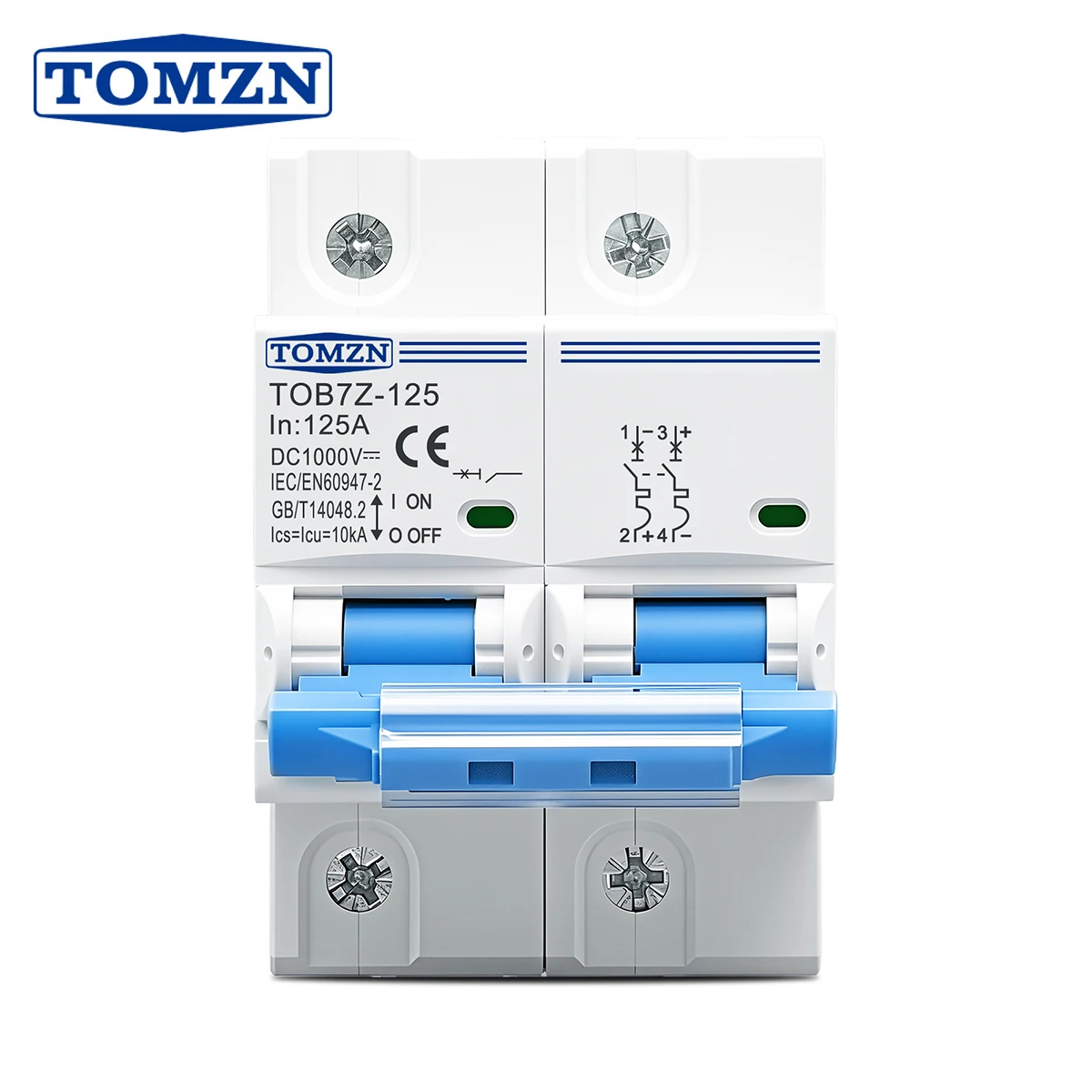
This circuit breaker features a 2-pole configuration, essential for isolating both positive and negative conductors in a DC circuit. The visible labeling confirms a 1000V DC rating, indicating suitability for high-voltage solar arrays and large-scale battery storage systems. Current ratings are available at 80A, 100A, and 125A, allowing for precise sizing based on the specific load and cable capacity.
Such high DC voltage ratings are crucial for modern PV installations, which often string multiple panels in series to achieve higher voltages for efficiency. A standard AC breaker cannot effectively interrupt a DC arc, making this specialized DC MCB indispensable. Its design addresses the unique challenges of DC fault interruption.
Compared to general-purpose AC circuit breakers, the TOMZN TOB1Z-125 incorporates enhanced arc-extinguishing mechanisms. These mechanisms are vital for safely interrupting direct current, which lacks the natural zero-crossing points found in alternating current, making arc suppression significantly more challenging. This specialized capability prevents sustained arcs that can cause severe damage or fire.
The C-curve tripping characteristic signifies that the breaker will trip instantaneously at 5 to 10 times its rated current. This provides a balance between nuisance tripping from transient surges and rapid protection against severe overloads or short circuits. For PV systems, this curve is generally well-suited for protecting against faults without being overly sensitive to the inrush currents of certain DC loads.
Accurate current sensing is vital. The internal thermal and magnetic trip units are calibrated for precise operation within the specified current ranges. This ensures that the breaker activates only when a genuine fault condition exists, preventing unnecessary system shutdowns. Proper sizing is critical for optimal performance.
Unlike faster B-curve breakers, which might trip prematurely on inductive loads, or slower D-curve breakers, which might allow excessive fault current, the C-curve offers a versatile response. It is a common choice for general power distribution and protection of resistive and moderately inductive loads in DC environments. This characteristic ensures reliable protection without undue sensitivity.
The visible housing is constructed from a robust white thermoplastic, likely a flame-retardant material such as polyamide. This material choice is standard for electrical safety devices, offering good insulation properties and mechanical strength. The blue toggle switch provides a clear visual indication of the breaker's status (ON/OFF).
The internal components, though not visible, must include a sophisticated arc chute system. This system rapidly cools and extinguishes the DC arc generated during an interruption, preventing damage to the contacts and ensuring safe operation. The quality of these internal mechanisms directly impacts the breaker's reliability and lifespan.
Many generic circuit breakers might compromise on the quality of arc suppression materials or contact alloys. The TOMZN unit, by adhering to IEC/EN60947-2 and GB/T14048.2 standards, implies a commitment to engineered solutions for arc management. This adherence suggests a higher standard of internal componentry compared to uncertified alternatives.
The screw terminals are designed for secure wire connections, a critical aspect for high-current DC applications. Loose connections can lead to increased resistance, heat buildup, and potential fire hazards. The robust design of the terminals ensures a firm grip on the conductors, minimizing these risks.
Proper torque application during installation is essential for maintaining low resistance and preventing thermal runaway at the connection points. The terminal blocks appear to accommodate appropriately sized conductors for the rated currents, which is crucial for safe power transmission. Secure connections are non-negotiable.
Compared to quick-connect or spring-loaded terminals, screw terminals offer a highly reliable and field-serviceable connection, provided they are installed correctly. This method allows for thorough inspection and retorquing if necessary, which is a significant advantage in systems requiring long-term stability and minimal maintenance. This ensures enduring electrical contact.
The standard DIN rail mounting mechanism, visible on the underside of the unit, facilitates easy and secure installation within electrical enclosures. This modular approach allows for organized and expandable system configurations. Installation is straightforward.
Clear labeling on the device provides essential information, including model number, voltage, current rating, and relevant standards. This aids in correct identification and ensures compliance with installation requirements. Proper identification prevents misapplication.
Unlike custom-mount solutions, DIN rail compatibility offers universal integration into existing electrical panels and enclosures. This reduces installation time and complexity, making it a preferred choice for professional installers and DIY enthusiasts alike. It simplifies system expansion.
Integrating this DC MCB into a PV or battery system provides a fundamental layer of protection against electrical faults. It protects expensive components like inverters, charge controllers, and battery banks from catastrophic damage due to overcurrents. This protection extends the operational life of the entire system.
Regular inspection of the breaker and its connections is a simple yet effective maintenance practice. Ensuring the terminals remain tight and the breaker housing is free from damage contributes to its long-term reliability. A visual check can prevent issues.
Choosing a dedicated DC circuit breaker like the TOMZN TOB1Z-125 over a repurposed AC breaker is a non-negotiable safety and reliability decision for DC power systems. The specific engineering for DC arc interruption provides peace of mind that generic solutions cannot offer. This specialized design is a vital safeguard. Imagine the peace of mind knowing your valuable solar and battery infrastructure is protected by a component specifically engineered for its unique electrical demands, ensuring continuous, safe power delivery for years to come.
Circuit Safeguarding Architecture
This circuit breaker features a 2-pole configuration, essential for isolating both positive and negative conductors in a DC circuit. The visible labeling confirms a 1000V DC rating, indicating suitability for high-voltage solar arrays and large-scale battery storage systems. Current ratings are available at 80A, 100A, and 125A, allowing for precise sizing based on the specific load and cable capacity.
Such high DC voltage ratings are crucial for modern PV installations, which often string multiple panels in series to achieve higher voltages for efficiency. A standard AC breaker cannot effectively interrupt a DC arc, making this specialized DC MCB indispensable. Its design addresses the unique challenges of DC fault interruption.
Compared to general-purpose AC circuit breakers, the TOMZN TOB1Z-125 incorporates enhanced arc-extinguishing mechanisms. These mechanisms are vital for safely interrupting direct current, which lacks the natural zero-crossing points found in alternating current, making arc suppression significantly more challenging. This specialized capability prevents sustained arcs that can cause severe damage or fire.
Overcurrent Response Dynamics
The C-curve tripping characteristic signifies that the breaker will trip instantaneously at 5 to 10 times its rated current. This provides a balance between nuisance tripping from transient surges and rapid protection against severe overloads or short circuits. For PV systems, this curve is generally well-suited for protecting against faults without being overly sensitive to the inrush currents of certain DC loads.
Accurate current sensing is vital. The internal thermal and magnetic trip units are calibrated for precise operation within the specified current ranges. This ensures that the breaker activates only when a genuine fault condition exists, preventing unnecessary system shutdowns. Proper sizing is critical for optimal performance.
Unlike faster B-curve breakers, which might trip prematurely on inductive loads, or slower D-curve breakers, which might allow excessive fault current, the C-curve offers a versatile response. It is a common choice for general power distribution and protection of resistive and moderately inductive loads in DC environments. This characteristic ensures reliable protection without undue sensitivity.
Enclosure Durability & Internal Structure
The visible housing is constructed from a robust white thermoplastic, likely a flame-retardant material such as polyamide. This material choice is standard for electrical safety devices, offering good insulation properties and mechanical strength. The blue toggle switch provides a clear visual indication of the breaker's status (ON/OFF).
The internal components, though not visible, must include a sophisticated arc chute system. This system rapidly cools and extinguishes the DC arc generated during an interruption, preventing damage to the contacts and ensuring safe operation. The quality of these internal mechanisms directly impacts the breaker's reliability and lifespan.
Many generic circuit breakers might compromise on the quality of arc suppression materials or contact alloys. The TOMZN unit, by adhering to IEC/EN60947-2 and GB/T14048.2 standards, implies a commitment to engineered solutions for arc management. This adherence suggests a higher standard of internal componentry compared to uncertified alternatives.
Terminal Integrity and Connection Security
The screw terminals are designed for secure wire connections, a critical aspect for high-current DC applications. Loose connections can lead to increased resistance, heat buildup, and potential fire hazards. The robust design of the terminals ensures a firm grip on the conductors, minimizing these risks.
Proper torque application during installation is essential for maintaining low resistance and preventing thermal runaway at the connection points. The terminal blocks appear to accommodate appropriately sized conductors for the rated currents, which is crucial for safe power transmission. Secure connections are non-negotiable.
Compared to quick-connect or spring-loaded terminals, screw terminals offer a highly reliable and field-serviceable connection, provided they are installed correctly. This method allows for thorough inspection and retorquing if necessary, which is a significant advantage in systems requiring long-term stability and minimal maintenance. This ensures enduring electrical contact.
Deployment Protocols
The standard DIN rail mounting mechanism, visible on the underside of the unit, facilitates easy and secure installation within electrical enclosures. This modular approach allows for organized and expandable system configurations. Installation is straightforward.
Clear labeling on the device provides essential information, including model number, voltage, current rating, and relevant standards. This aids in correct identification and ensures compliance with installation requirements. Proper identification prevents misapplication.
Unlike custom-mount solutions, DIN rail compatibility offers universal integration into existing electrical panels and enclosures. This reduces installation time and complexity, making it a preferred choice for professional installers and DIY enthusiasts alike. It simplifies system expansion.
Operational Assurance
Integrating this DC MCB into a PV or battery system provides a fundamental layer of protection against electrical faults. It protects expensive components like inverters, charge controllers, and battery banks from catastrophic damage due to overcurrents. This protection extends the operational life of the entire system.
Regular inspection of the breaker and its connections is a simple yet effective maintenance practice. Ensuring the terminals remain tight and the breaker housing is free from damage contributes to its long-term reliability. A visual check can prevent issues.
Choosing a dedicated DC circuit breaker like the TOMZN TOB1Z-125 over a repurposed AC breaker is a non-negotiable safety and reliability decision for DC power systems. The specific engineering for DC arc interruption provides peace of mind that generic solutions cannot offer. This specialized design is a vital safeguard. Imagine the peace of mind knowing your valuable solar and battery infrastructure is protected by a component specifically engineered for its unique electrical demands, ensuring continuous, safe power delivery for years to come.