TOMZN 4P 63A Manual Transfer Isolating Switch
Official Store Deal
Expert Analysis Overview
The TOMZN 4P 63A Manual Transfer Isolating Switch is a critical electrical component engineered for reliable and safe power source management in three-phase systems. This device is specifically designed for applications requiring a secure, mechanically interlocked method to switch between two distinct power inputs, such as utility power and a backup generator. Its robust construction and clear operational indicators make it a dependable choice for maintaining electrical continuity in essential circuits.
This manual transfer switch (MTS) serves a singular, vital purpose: to facilitate the safe and controlled transfer of electrical load between two independent power sources. It prevents the dangerous condition of backfeeding, where power from one source inadvertently flows into another, potentially harming personnel or equipment. The mechanical interlock is key.
The TOMZN 4P 63A MTS features a four-pole configuration, allowing it to manage all three phases and a neutral conductor in a typical 3-phase electrical installation. The manual operation provides direct, tactile control over the power transfer process. Users physically move levers to select either 'Position I' (main power), 'Position II' (alternate power), or the central 'OFF' position, which disconnects both sources from the load. This direct control is often preferred in scenarios where human oversight is paramount.
Unlike generic switches that lack integrated safety mechanisms, this unit incorporates a mechanical interlock. This critical feature physically prevents both power sources from being connected to the load simultaneously. Such a design ensures that dangerous short circuits or unintended power feedback into the grid are avoided, a fundamental requirement for electrical safety standards. It offers peace of mind.
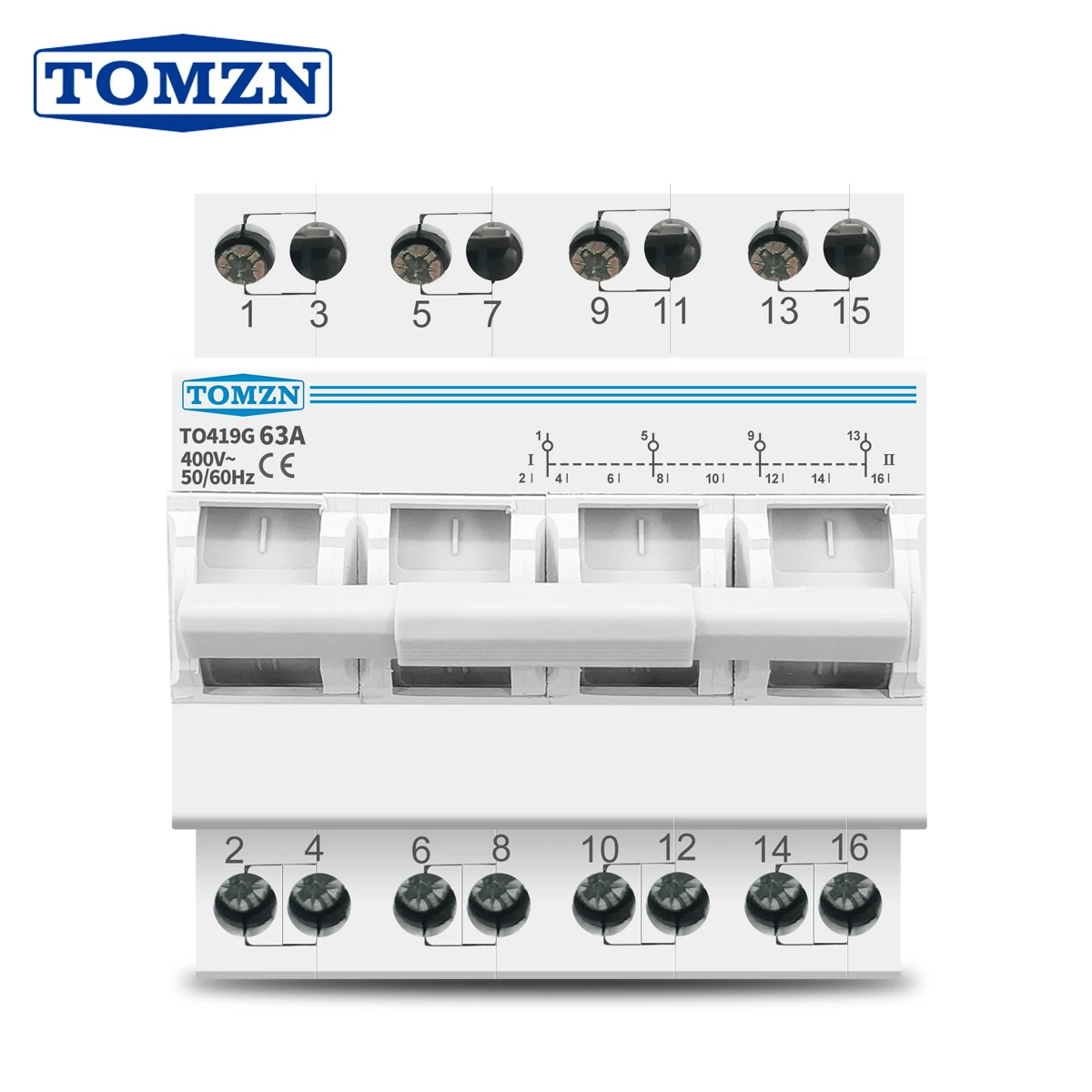
The visible housing of the TOMZN switch is constructed from a durable thermoplastic material, providing essential electrical insulation and a degree of protection against environmental factors. The terminals, clearly numbered from 1 to 16, appear to be robust screw-type connections, suitable for securing conductors rated for up to 63 amperes. This amperage rating signifies its capability to handle substantial electrical loads, making it appropriate for light industrial, commercial, or larger residential backup power systems. The build quality supports its intended use.
Proper installation is paramount for the safe and effective operation of any electrical transfer switch. The TOMZN 4P 63A MTS is designed for compatibility with standard DIN rail mounting, simplifying its integration into existing electrical panels and enclosures. This standardized mounting system ensures a secure fit and streamlines the installation process for qualified electricians.
The screw terminals are a critical interface between the switch and the electrical conductors. For a 63A rated device, the terminals must securely accommodate appropriately sized wires without causing damage or creating loose connections. The visual evidence suggests ample space for conductor insertion and tightening. Proper wire gauge selection is non-negotiable. An electrician must ensure that the wire gauge used is correctly matched to the 63A rating and the specific voltage of the system, adhering strictly to local electrical codes and manufacturer specifications to prevent overheating and potential fire hazards. Over-tightening or under-tightening terminal screws can compromise connection integrity.
The presence of the CE mark on the product label indicates its conformity with European safety, health, and environmental protection standards. This certification provides an assurance of quality and compliance, which is a significant factor for professional installations. Integrating this switch into a larger electrical system requires careful planning, including the placement of upstream overcurrent protection devices (circuit breakers or fuses) as this MTS does not provide such protection itself. The system design must account for all components.
Investing in a reliable manual transfer switch is not merely about the initial purchase price; it is about the long-term value derived from uninterrupted service and enhanced safety. A dependable MTS minimizes downtime during power outages, protecting sensitive equipment and maintaining operational continuity. This translates directly into cost savings by preventing production losses or data corruption.
Electrical components, especially those involved in power switching, must withstand repeated operation and environmental stresses. The TOMZN switch's construction suggests a design focused on durability for its intended application. The mechanical interlock, being a physical mechanism, offers a high degree of reliability compared to purely electronic solutions that might be susceptible to power fluctuations or software glitches. Its simplicity is a strength.
One of the most significant benefits of a properly installed and functioning manual transfer switch is its role in preventing electrical hazards. The interlock mechanism is a primary safeguard against dangerous conditions like backfeeding, which can energize utility lines during an outage, posing extreme risks to utility workers. This device contributes directly to a safer electrical environment. It protects lives and property.
For facilities or homes that rely on backup power, the ability to switch sources safely and efficiently is a strategic advantage. This TOMZN switch offers that capability without the complexity or higher cost associated with automatic transfer switches, making it an accessible solution for many applications. It empowers users with control.
Power outages, whether planned or unexpected, can be costly. A manual transfer switch allows for a swift and secure transition to an alternate power source, significantly reducing the duration of downtime. This capability is invaluable for businesses where continuous operation is critical, or for homeowners who depend on essential services during an outage. Every minute counts.
While the initial investment in a manual transfer switch is modest, its long-term value is substantial. By ensuring safe power transfers, it protects expensive electrical equipment from damage caused by improper switching. Its robust, simple design also implies lower maintenance requirements compared to more complex automated systems. This makes it a cost-effective solution for reliable power management. It saves money over time.
Imagine a scenario where a sudden power outage strikes, but your critical systems remain operational with minimal interruption. The TOMZN 4P 63A Manual Transfer Isolating Switch provides the foundational capability for such resilience. Its straightforward operation, robust construction, and integrated safety features ensure that your transition between power sources is not only efficient but also inherently safe. This device is a cornerstone for any electrical setup prioritizing secure and reliable power management, offering peace of mind and operational continuity for years to come.
The Core Function: Uninterrupted Power Transition
This manual transfer switch (MTS) serves a singular, vital purpose: to facilitate the safe and controlled transfer of electrical load between two independent power sources. It prevents the dangerous condition of backfeeding, where power from one source inadvertently flows into another, potentially harming personnel or equipment. The mechanical interlock is key.
Operational Mechanics and Safety Interlocks
The TOMZN 4P 63A MTS features a four-pole configuration, allowing it to manage all three phases and a neutral conductor in a typical 3-phase electrical installation. The manual operation provides direct, tactile control over the power transfer process. Users physically move levers to select either 'Position I' (main power), 'Position II' (alternate power), or the central 'OFF' position, which disconnects both sources from the load. This direct control is often preferred in scenarios where human oversight is paramount.
Unlike generic switches that lack integrated safety mechanisms, this unit incorporates a mechanical interlock. This critical feature physically prevents both power sources from being connected to the load simultaneously. Such a design ensures that dangerous short circuits or unintended power feedback into the grid are avoided, a fundamental requirement for electrical safety standards. It offers peace of mind.
Robust Construction for Demanding Loads
The visible housing of the TOMZN switch is constructed from a durable thermoplastic material, providing essential electrical insulation and a degree of protection against environmental factors. The terminals, clearly numbered from 1 to 16, appear to be robust screw-type connections, suitable for securing conductors rated for up to 63 amperes. This amperage rating signifies its capability to handle substantial electrical loads, making it appropriate for light industrial, commercial, or larger residential backup power systems. The build quality supports its intended use.
Installation and Compliance: A Professional's Perspective
Proper installation is paramount for the safe and effective operation of any electrical transfer switch. The TOMZN 4P 63A MTS is designed for compatibility with standard DIN rail mounting, simplifying its integration into existing electrical panels and enclosures. This standardized mounting system ensures a secure fit and streamlines the installation process for qualified electricians.
Terminal Integrity and Wire Management
The screw terminals are a critical interface between the switch and the electrical conductors. For a 63A rated device, the terminals must securely accommodate appropriately sized wires without causing damage or creating loose connections. The visual evidence suggests ample space for conductor insertion and tightening. Proper wire gauge selection is non-negotiable. An electrician must ensure that the wire gauge used is correctly matched to the 63A rating and the specific voltage of the system, adhering strictly to local electrical codes and manufacturer specifications to prevent overheating and potential fire hazards. Over-tightening or under-tightening terminal screws can compromise connection integrity.
Regulatory Adherence and System Integration
The presence of the CE mark on the product label indicates its conformity with European safety, health, and environmental protection standards. This certification provides an assurance of quality and compliance, which is a significant factor for professional installations. Integrating this switch into a larger electrical system requires careful planning, including the placement of upstream overcurrent protection devices (circuit breakers or fuses) as this MTS does not provide such protection itself. The system design must account for all components.
Long-Term Reliability: Beyond the Initial Investment
Investing in a reliable manual transfer switch is not merely about the initial purchase price; it is about the long-term value derived from uninterrupted service and enhanced safety. A dependable MTS minimizes downtime during power outages, protecting sensitive equipment and maintaining operational continuity. This translates directly into cost savings by preventing production losses or data corruption.
Durability in Continuous Service
Electrical components, especially those involved in power switching, must withstand repeated operation and environmental stresses. The TOMZN switch's construction suggests a design focused on durability for its intended application. The mechanical interlock, being a physical mechanism, offers a high degree of reliability compared to purely electronic solutions that might be susceptible to power fluctuations or software glitches. Its simplicity is a strength.
Preventing Electrical Hazards
One of the most significant benefits of a properly installed and functioning manual transfer switch is its role in preventing electrical hazards. The interlock mechanism is a primary safeguard against dangerous conditions like backfeeding, which can energize utility lines during an outage, posing extreme risks to utility workers. This device contributes directly to a safer electrical environment. It protects lives and property.
The Strategic Advantage: Why This Switch Matters
For facilities or homes that rely on backup power, the ability to switch sources safely and efficiently is a strategic advantage. This TOMZN switch offers that capability without the complexity or higher cost associated with automatic transfer switches, making it an accessible solution for many applications. It empowers users with control.
Mitigating Downtime Risks
Power outages, whether planned or unexpected, can be costly. A manual transfer switch allows for a swift and secure transition to an alternate power source, significantly reducing the duration of downtime. This capability is invaluable for businesses where continuous operation is critical, or for homeowners who depend on essential services during an outage. Every minute counts.
Cost-Efficiency Through Dependability
While the initial investment in a manual transfer switch is modest, its long-term value is substantial. By ensuring safe power transfers, it protects expensive electrical equipment from damage caused by improper switching. Its robust, simple design also implies lower maintenance requirements compared to more complex automated systems. This makes it a cost-effective solution for reliable power management. It saves money over time.
Final Assessment: Empowering Your Electrical Infrastructure
Imagine a scenario where a sudden power outage strikes, but your critical systems remain operational with minimal interruption. The TOMZN 4P 63A Manual Transfer Isolating Switch provides the foundational capability for such resilience. Its straightforward operation, robust construction, and integrated safety features ensure that your transition between power sources is not only efficient but also inherently safe. This device is a cornerstone for any electrical setup prioritizing secure and reliable power management, offering peace of mind and operational continuity for years to come.