TMC2209 V2.0 Silent Stepper Motor Driver for 3D Printers
Official Store Deal
Expert Analysis Overview
The Core of Precision Motion: Understanding the TMC2209 V2.0 Driver
The TMC2209 V2.0 Stepper Motor Driver is a sophisticated motion control component, engineered for 3D printer enthusiasts and makers seeking quieter operation and enhanced control over their stepper motors. This module represents a significant evolution in stepper motor driver technology, moving beyond the limitations of older generations to offer a more refined and adaptable solution. Unlike many basic drivers that offer only rudimentary step/direction control, the TMC2209 V2.0 integrates advanced features that directly address common frustrations in the 3D printing community, particularly regarding noise and precision.
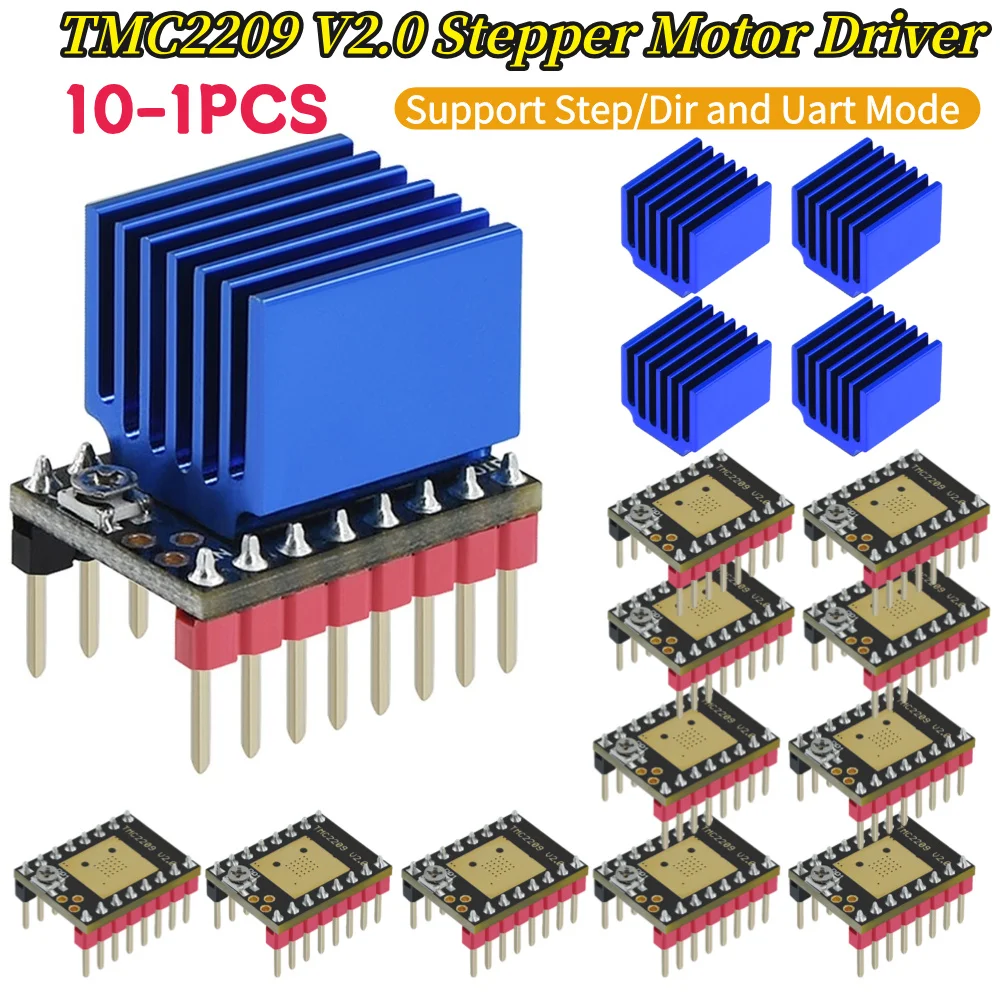
The visual presentation highlights the driver module itself, compact and designed for integration onto a mainboard, often seen on popular platforms like the SKR V1.3/1.4. Each module comes equipped with a distinctive blue aluminum heatsink, a critical element for thermal management. The driver's small footprint allows for dense packing on controller boards.
This driver is not merely a replacement; it is an upgrade. It offers a pathway to quieter machines and more detailed diagnostics, which are invaluable for both beginners and seasoned hobbyists. The ability to fine-tune motor behavior is a major draw.
Engineering for Serenity: Silent Operation
One of the most compelling attributes of the TMC2209 V2.0 is its capacity for exceptionally quiet operation. This is achieved through advanced stepper motor control algorithms, specifically StealthChop2. This technology actively manages current flow to the motor windings, resulting in significantly reduced motor noise during operation.
For anyone with a 3D printer running in a shared living space or a workshop where noise reduction is paramount, this feature is transformative. Imagine a printer running complex movements without the jarring whir and grind typically associated with stepper motors. The audible difference is often dramatic.
Compared to older drivers like the A4988 or even early DRV8825 models, the TMC2209's silence is a game-changer. These previous generations often produced noticeable, sometimes irritating, motor whine, which could be a significant deterrent for continuous printing in residential environments. The V2.0 improves this.
Unlocking Deeper Control: UART Mode Integration
The TMC2209 V2.0 driver supports UART (Universal Asynchronous Receiver-Transmitter) communication, which is a powerful feature for advanced users. This serial communication protocol allows the main 3D printer control board to communicate bi-directionally with each stepper driver. This is a crucial distinction from the traditional step/direction mode.
With UART enabled, a user gains dynamic control over various motor parameters directly through firmware. This includes setting motor current, enabling or disabling StealthChop, configuring microstepping, and accessing diagnostic data like stall detection. It offers unparalleled flexibility.
This level of integrated control is a significant departure from older drivers where physical jumpers or potentiometers were used for configuration. The ability to modify settings on the fly, without needing to open the printer's enclosure, streamlines the calibration and tuning process dramatically. It is a major efficiency boost.
The Foundational Method: Step/Direction Support
While the TMC2209 V2.0 excels with UART mode, it also retains full compatibility with the fundamental Step/Direction interface. This ensures broad compatibility across a wide range of 3D printer control boards, even those that might not natively support UART for all driver slots. This flexibility is key for modders.
In Step/Direction mode, the mainboard sends discrete pulses for each step the motor should take and a separate signal for the direction of rotation. This is the most basic and widely supported method for controlling stepper motors in 3D printers. It is robust and reliable.
This dual-mode capability makes the TMC2209 V2.0 a versatile choice. Users can start with the familiar Step/Direction setup and then transition to UART mode as their understanding and needs evolve, or if their specific mainboard configuration allows for it. It bridges the gap between old and new.
Thermal Management: The Importance of Heat Sinks
Each TMC2209 V2.0 module is visibly equipped with a blue aluminum heatsink. This component is not merely an accessory; it is integral to the long-term reliability and performance of the driver. Stepper motor drivers generate heat during operation, especially when driving motors at higher currents or speeds.
The heatsink dissipates this heat away from the driver chip, preventing it from reaching critical temperatures that could lead to thermal throttling, reduced performance, or even permanent damage. Proper thermal management ensures consistent current delivery and prevents skipped steps due to overheating. It prolongs component life.
For a maker pushing their printer's limits, perhaps with faster print speeds or larger motors, effective cooling is non-negotiable. The inclusion of a robust heatsink directly addresses this operational challenge, offering peace of mind that the driver will perform optimally even under demanding conditions. This is a critical design choice.
Installation and Upgrade Pathways for the Tinkerer
Integrating the TMC2209 V2.0 drivers into an existing 3D printer setup is generally straightforward for those familiar with electronics. The modules typically feature standard pin headers, making them drop-in replacements for many common driver types on boards like the SKR series. Proper orientation is crucial during installation to avoid damage.
For makers considering an upgrade, these drivers offer a clear path to improved print quality and a quieter printing environment. The process often involves physical installation, followed by firmware modifications to enable UART mode and fine-tune settings. Community support for these drivers on popular boards is extensive.
This upgrade path allows for iterative machine improvement. A tinkerer can start with basic functionality and gradually explore advanced features, tailoring their printer's performance precisely to their projects. It encourages experimentation.
Community Ecosystem and Support
The TMC2209 series drivers benefit from a robust and active community, particularly within the 3D printing space. This means a wealth of online resources, tutorials, and troubleshooting guides are readily available. Forums, Reddit communities, and YouTube channels frequently discuss optimal configurations and solutions to common issues.
This strong community support is invaluable for makers, especially when encountering unfamiliar settings or unexpected behaviors. The collective knowledge base significantly reduces the learning curve and provides solutions that might not be found in official documentation alone. It fosters collaborative problem-solving.
Unlike proprietary systems with limited documentation, the open-source nature of many 3D printer firmwares (like Marlin or Klipper) combined with the widespread adoption of TMC drivers ensures that help is always within reach. This makes it an ideal component for those who enjoy modifying and improving their machines. The shared experience is a major asset.
The Modder's Toolkit: Customization and Experimentation
For the true maker and tinkerer, the TMC2209 V2.0 drivers open up numerous avenues for customization and experimentation. The detailed control offered by UART mode means that parameters can be adjusted to compensate for unique motor characteristics, unusual printer kinematics, or specific material requirements.
This level of granular control allows for fine-tuning that goes beyond what is possible with simpler drivers. Experimenting with different microstepping settings, current limits, and stealthchop thresholds can lead to optimized print quality, faster speeds, or even improved motor longevity. The possibilities are vast.
Furthermore, the widespread use of these drivers means that custom PCB designs, adapter boards, and firmware patches often emerge from the community to push their capabilities even further. This encourages a continuous cycle of innovation and personal improvement for one's 3D printer. It is a fundamental building block for custom projects.
Power and Precision: The 2.5A Current Rating
The 2.5A current rating for the TMC2209 V2.0 driver indicates its capability to handle a substantial amount of power for driving stepper motors. This rating is generally sufficient for most NEMA17 stepper motors commonly found in desktop 3D printers, including those used for X, Y, Z, and extruder axes. Adequate current ensures motor torque and reliable movement.
This current capacity allows for driving motors effectively without constantly running at their absolute maximum, which can contribute to better thermal performance and longevity. It provides headroom for various motor types and operational demands. More power means more options.
In practical terms, this means the driver can reliably power motors that require higher torque, which is beneficial for faster print speeds, heavier gantry systems, or direct drive extruders. Unlike underpowered drivers that might struggle with demanding movements, the 2.5A rating provides a solid foundation for performance. It supports robust builds.
The Value Proposition: An Investment in Performance
While the initial cost of advanced stepper drivers like the TMC2209 V2.0 might be slightly higher than older, more basic alternatives, the long-term value proposition is significant. The improved print quality, reduced noise, and enhanced control contribute to a much more enjoyable and efficient 3D printing experience. It is an investment in the overall quality of output.
The reduction in noise alone can justify the upgrade for many, transforming a loud machine into a barely audible one, thus making it suitable for environments where noise is a concern. The ability to diagnose and fine-tune motor behavior remotely through UART mode saves time and effort in calibration. It streamlines the workflow.
Considering the potential for fewer failed prints due to smoother motion, the extended lifespan of motors due to better thermal management, and the sheer satisfaction of a high-performing machine, these drivers offer substantial return on investment for any serious maker. They are a foundational component for a premium 3D printing setup. It elevates the entire system.
Imagine the satisfaction of running your 3D printer late into the night, producing intricate parts with precision, without disturbing anyone. Picture the ease of adjusting motor settings on the fly, optimizing every print for speed and quality, all from your computer. This driver unlocks a new level of control and quiet operation, allowing your creative projects to truly shine with professional-grade smoothness and reliability.