TENSTAR ROBOT PWM DC Motor Speed Controller
Official Store Deal
Expert Analysis Overview
Precision Power Management for Solar Enthusiasts
The TENSTAR ROBOT PWM DC Motor Speed Controller is a compact, highly efficient voltage regulator and speed controller designed for hobbyists and DIY solar energy projects. This module offers precise control over DC motors and LED lighting, ensuring optimal performance and energy conservation within low-voltage DC systems. Its straightforward design makes it an accessible component for integrating variable speed or dimming capabilities into various applications.
The Core of Control: Pulse Width Modulation
At its heart, this device utilizes Pulse Width Modulation (PWM), a sophisticated technique for controlling power delivery. Instead of simply reducing voltage, which can lead to significant energy loss and heat generation, PWM rapidly switches the power to the load on and off. The duration of the 'on' pulses, relative to the 'off' pulses, determines the average power supplied. This method maintains high efficiency, minimizing wasted energy as heat, a critical consideration for battery-powered or solar-dependent systems. It's a smart way to manage power.
Consider a small DC water pump in an off-grid garden irrigation system. A linear voltage regulator would dissipate excess power as heat, reducing the overall efficiency of the solar setup. With a PWM controller, the pump receives bursts of full voltage, but the *average* power is controlled by the duty cycle. This results in cooler operation and more power available for other loads or for charging the battery bank. The difference in efficiency is substantial.
Compared to older, less efficient resistive dimmers or linear regulators, PWM offers a stark improvement in energy conservation. This is particularly vital in solar installations where every watt-hour counts. The module provides a modern solution for power regulation.
Integrating into Solar Ecosystems
For the solar energy hobbyist, this PWM controller presents numerous opportunities to optimize energy usage. It can seamlessly integrate into 5V or 12V DC systems, common voltages for small-scale solar panels and battery banks. The ability to handle up to 10A of current means it can manage a variety of loads, from small circulation pumps to cooling fans for charge controllers, or even multiple strings of LED lighting.
Imagine a scenario where a solar-powered fan cools a battery enclosure. During peak sun, the fan might run at full speed. As the sun sets and temperatures drop, the controller allows the fan speed to be reduced, conserving precious battery power without completely shutting down airflow. This extends the operational time of the system. Control is simple and direct.
Many entry-level solar kits often lack fine-grained control over DC loads. This module fills that gap, providing an affordable upgrade that enhances the functionality and efficiency of existing setups. It allows for dynamic load management.
Robust Design and User-Friendly Interface
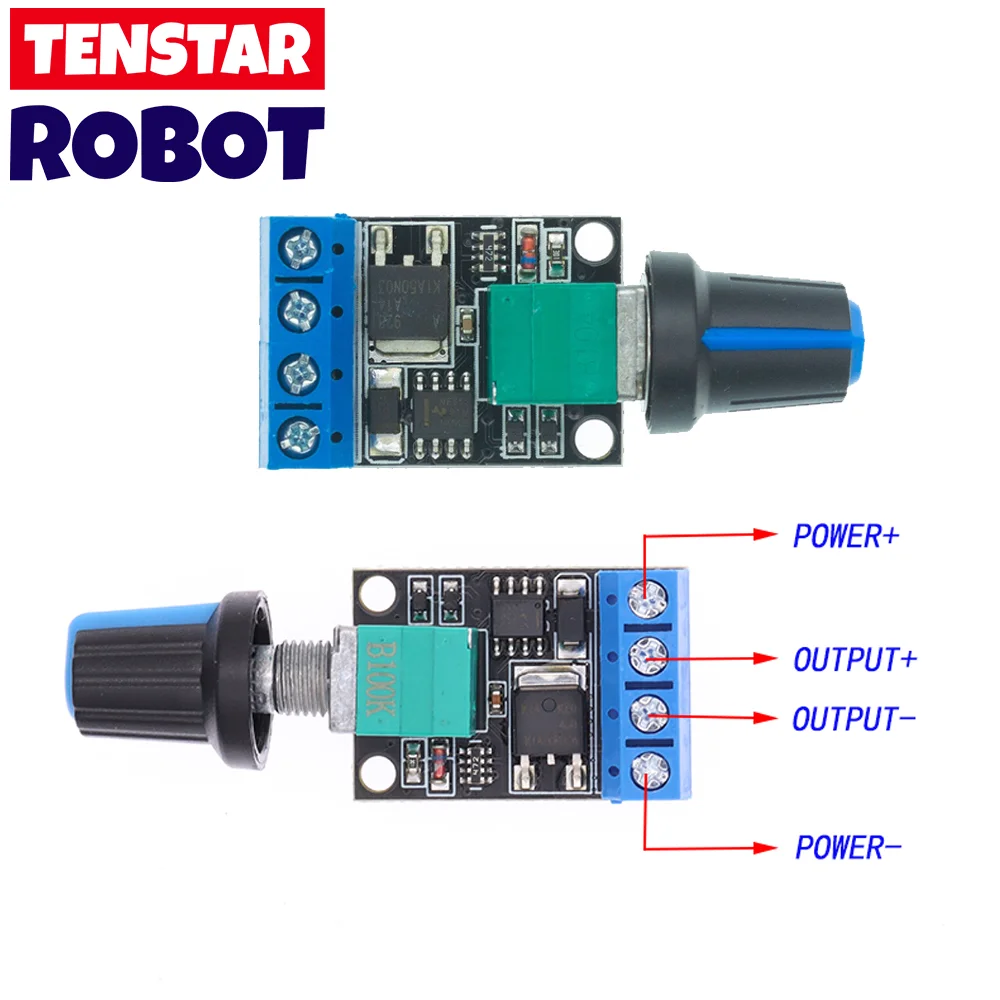
The physical construction of the module appears practical and robust for its intended use. The screw terminals ensure secure electrical connections, crucial for preventing power loss and ensuring safety in DC circuits. The potentiometer with a knurled knob provides a tactile interface for smooth, stepless adjustment of speed or brightness. Turning the knob feels solid. The small printed circuit board (PCB) is well-laid out, featuring surface-mount components that contribute to its compact footprint.
When connecting wires, the screw terminals grip firmly, minimizing the risk of accidental disconnections or intermittent power. This is a significant improvement over less secure push-in or solder-only connections, especially in applications where vibrations might occur. The module feels dependable.
Unlike some generic modules that use flimsy plastic components, the potentiometer on this unit appears to have a standard metal shaft and a durable plastic knob, suggesting a decent lifespan for repeated adjustments. This design choice speaks to its practical utility.
Performance Under Load
The controller's ability to manage up to 10A makes it suitable for a range of applications beyond simple LEDs. It can drive small DC motors used in robotics, model trains, or even small DIY automation projects. The stepless speed regulation ensures smooth acceleration and deceleration, preventing sudden jolts that could stress mechanical components or draw excessive current spikes from the power source. Smooth operation is key.
Consider a small conveyor belt system powered by a solar panel. The ability to precisely control the motor's speed means materials can be moved at an optimal pace, preventing jams or ensuring consistent processing. This level of control enhances the overall utility of the system. It truly improves functionality.
Compared to basic on/off switches, the variable control offered by this module provides a significant leap in functional flexibility, allowing users to fine-tune operations rather than simply activating or deactivating a load. This adds a layer of sophistication to any project.
Thermal Management and Longevity
Given its 10A current rating, effective thermal management is important for the longevity of the components. The module's design, while compact, likely relies on efficient PWM switching to minimize heat generation. For continuous operation at higher currents, especially in enclosed spaces or warmer climates, supplemental cooling might be considered, though for most hobbyist applications, the inherent efficiency of PWM should suffice. Keeping cool helps performance.
Running a DC motor or a bank of LEDs at partial power with PWM generates significantly less heat in the controller itself compared to resistive methods. This means the internal components are less stressed, leading to a longer operational life. It's a design choice that pays off.
Unlike cheaper, less robust controllers that might quickly fail under sustained load due to overheating, this module's reliance on PWM suggests a more durable solution for consistent power regulation. The design prioritizes endurance.
Versatility in Application
Beyond motor control, this module excels as an LED dimmer. For off-grid lighting solutions, the ability to dim LEDs not only saves power but also provides adjustable ambiance. A solar-powered shed light, for instance, can be set to full brightness for tasks and then dimmed for casual evening use, prolonging battery life. Dimming saves energy.
Imagine illuminating a remote cabin with solar power. Instead of having only full brightness or off, this dimmer allows for a comfortable, adjustable light level, making the space more livable and efficient. This enhances the user experience significantly. It offers great flexibility.
This versatility makes the controller a valuable tool for anyone building or maintaining small-scale DC systems, offering more control than simple switches or fixed-output regulators. It's a truly adaptable device.
The Value Proposition for DIYers
At its price point, this PWM controller offers exceptional value, transforming basic DC power sources into controllable, efficient energy systems. It empowers hobbyists to build more sophisticated projects without a significant investment. The module is incredibly affordable. Its compact size and ease of integration make it an ideal choice for space-constrained applications or for those new to electronics. It simplifies complex tasks.
This controller is not just a component; it is an enabler for more efficient and functional solar-powered creations. It allows for the fine-tuning of energy output, directly translating to better performance and extended battery life for a range of DC devices. This translates into tangible savings and improved system reliability over time. The investment quickly pays for itself, providing long-term benefits for any solar energy enthusiast seeking to build a self-sustaining and optimized energy system. It's an essential upgrade for any DIY solar project, offering precision and efficiency that generic solutions simply cannot match. This small device offers immense capability, allowing for the creation of truly intelligent and resource-conscious applications.
Short Description
Efficient 5V/12V 10A PWM DC motor speed controller and LED dimmer for solar projects. Optimize power and extend battery life.