T344D Super-Long Jigsaw Blades for Wood & PVC (5-Pack)
Official Store Deal
Expert Analysis Overview
Precision Cutting for Wood and Composites: The T344D Jigsaw Blade Analysis
The T344D Super-long Saw Blades are a specialized cutting solution engineered for high-speed, clean cuts in demanding wood and composite materials, specifically targeting professional and DIY users who require efficiency and precision in their woodworking and plastic fabrication projects.
Material Science: The High Carbon Steel Advantage
These T344D blades are constructed from High Carbon Steel (HCS), a material choice that is foundational to their performance characteristics. HCS is an alloy known for its excellent toughness and ability to hold a sharp edge, particularly when cutting softer, yet often abrasive, materials. This material composition allows the blades to withstand significant impact and bending forces without fracturing, a critical attribute for jigsaw blades that experience lateral stress during operation. The inherent toughness of HCS ensures that the blade can flex slightly under load, reducing the likelihood of snapping, which is a common failure point for blades made from more brittle materials when subjected to dynamic cutting forces.
Unlike high-speed steel (HSS) or carbide-tipped blades, HCS is optimized for organic and polymer-based materials. Its carbon content provides the necessary hardness for effective cutting, while its ductility prevents premature failure in applications where the blade might encounter knots in wood or varying densities in fibreboard. This material selection represents a deliberate engineering decision to balance cutting performance with blade resilience for the intended applications. The material's ability to be precisely ground into sharp, aggressive teeth is also a key factor in achieving the advertised "clean cutting" capability.
When compared to general-purpose HSS blades, HCS excels in wood and plastic due to its superior toughness and cost-effectiveness. While HSS offers better heat resistance and is suitable for some metals, it can be overly brittle for the dynamic, often twisting, forces encountered in jigsaw operations on thicker wood. Carbide-tipped blades, while offering extreme hardness and longevity for very abrasive or hard materials, would be overkill and significantly more expensive for the primary applications of these T344D blades, making HCS a pragmatic and high-value choice for wood, PVC, and fibreboard.
Tooth Geometry and Cutting Dynamics
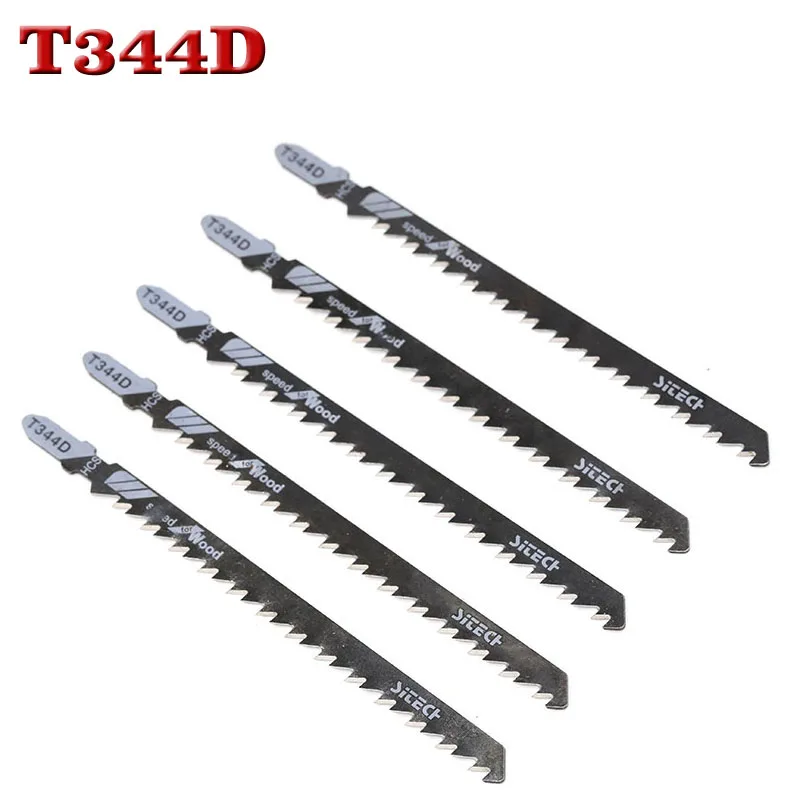
The visual evidence clearly shows these blades feature a large, aggressive tooth geometry, characteristic of blades designed for fast and efficient material removal. The teeth are ground, indicating a sharp, precise cutting edge that contributes to cleaner cuts. This specific tooth pattern, often referred to as a "speed wood" design, is optimized to quickly clear sawdust and chips from the kerf, preventing material buildup and reducing friction. The generous gullet size between teeth further aids in chip evacuation, allowing the blade to maintain its cutting efficiency even in deep cuts.
The aggressive tooth pitch and set are crucial for the blade's performance in thick materials. A wider tooth set helps to create a wider kerf, reducing friction on the blade body and allowing for smoother, faster cuts. This design minimizes the chance of the blade binding in the material, which can lead to overheating and premature wear. The forward-facing, sharp teeth are designed to bite into the material with each upward stroke, pulling the blade through the workpiece and facilitating rapid progress. This aggressive action is particularly beneficial when cutting through substantial thicknesses of wood or dense fibreboard, where a finer tooth pattern would struggle to remove material quickly.
In contrast to fine-tooth blades used for intricate scrollwork or very thin materials, the T344D's robust tooth design prioritizes speed and depth. Fine-tooth blades might offer a marginally smoother finish on the very surface, but they would be significantly slower and more prone to overheating or binding when tackling thicker stock. The T344D's geometry is a clear indication of its purpose: to make quick, straight, and clean cuts through considerable material thicknesses, making it an ideal choice for construction, framing, or general fabrication tasks where speed is paramount.
Extended Reach: The 135mm Advantage
The designation "Super-long" and the specified 135mm length are key indicators of these blades' intended use for deeper cutting applications. A longer blade provides a greater effective cutting depth, allowing users to tackle thicker workpieces that standard-length jigsaw blades cannot manage. This extended reach is invaluable for projects involving thick lumber, stacked sheets of plywood, or large-diameter PVC pipes. The additional length also contributes to greater stability during long, straight cuts, as more of the blade remains engaged with the material, reducing deflection and improving cut accuracy.
The increased length also means that the blade can dissipate heat more effectively across a larger surface area. While HCS is not as heat-resistant as HSS, the longer blade body helps to manage the thermal load generated during continuous cutting, especially in dense materials. This can contribute to a longer effective lifespan for the blade by reducing the risk of heat-induced material degradation or tooth dulling. The stability offered by a longer blade also translates into less vibration, which can improve user comfort and reduce fatigue during extended cutting sessions.
Compared to shorter, more common 75mm or 100mm jigsaw blades, the 135mm length significantly expands the range of materials and project types that can be undertaken with a jigsaw. Shorter blades are excellent for maneuverability and tighter curves in thinner materials, but they are inherently limited in depth. The T344D's extended length positions it as a heavy-duty option for users who frequently work with thicker stock, eliminating the need for multiple passes or alternative cutting tools for deeper cuts. This capability translates directly into time savings and increased project efficiency.
Versatility Across Materials: Wood, PVC, and Fibreboard
The T344D blades are explicitly designed for wood, PVC, and fibreboard, showcasing their versatility within these material categories. For wood, the aggressive HCS teeth provide rapid material removal and clean cuts in both softwoods and hardwoods, making them suitable for tasks from rough framing to cutting laminate flooring. The tooth geometry minimizes splintering on the top surface, which is crucial for visible cuts.
When cutting PVC, the blade's design helps to prevent melting and gumming, common issues with less optimized blades. The sharp HCS teeth slice through the plastic cleanly, and the efficient chip evacuation prevents softened plastic from re-adhering to the blade. This results in smoother edges and reduces the need for extensive post-cut finishing, saving time and effort. The ability to cut PVC cleanly is a significant advantage for plumbing, electrical, and general construction applications.
Fibreboard, including MDF and particle board, is notoriously abrasive due to its composite nature and binders. The toughness of HCS allows these blades to maintain their cutting edge against the abrasive particles in fibreboard for a reasonable duration, providing consistent performance. The aggressive tooth pattern ensures efficient cutting through these dense, uniform materials, making the T344D a reliable choice for cabinet making, shelving, and other furniture-related projects. The multi-material capability makes these blades a practical addition to any toolkit, reducing the need to switch between different blade types for common construction and DIY tasks.
T-Shank Compatibility and Value Proposition
The images clearly show a T-shank design, which is the most common and widely compatible jigsaw blade shank type. This ensures that the T344D blades will fit securely into the vast majority of modern jigsaws from various manufacturers, offering universal applicability. The T-shank provides a robust connection to the saw, minimizing wobble and maximizing power transfer from the tool to the cutting edge, which is essential for maintaining accuracy and efficiency during demanding cuts.
The availability of these blades in a 5-piece pack offers significant value to the user. Jigsaw blades are consumable items, and having multiple spares on hand ensures uninterrupted workflow. This bulk packaging reduces the cost per blade, making it an economical choice for both frequent users and those undertaking larger projects. The value proposition extends beyond just the initial purchase price; the durability of HCS for its intended materials means fewer blade changes and less downtime, contributing to overall project efficiency and cost savings in the long run.
Imagine the satisfaction of effortlessly gliding through thick timber for a new deck, or precisely shaping PVC pipes for a plumbing upgrade, all with the confidence that your blades will deliver clean, consistent results. These T344D blades are not just cutting tools; they are enablers of efficient, high-quality craftsmanship, allowing you to focus on the project at hand rather than struggling with inadequate equipment. Equip your jigsaw with these specialized blades and experience the tangible difference in speed, precision, and overall project completion.