T200-2/T157-2 Iron Powder Toroid Cores for Inductors
Official Store Deal
Expert Analysis Overview
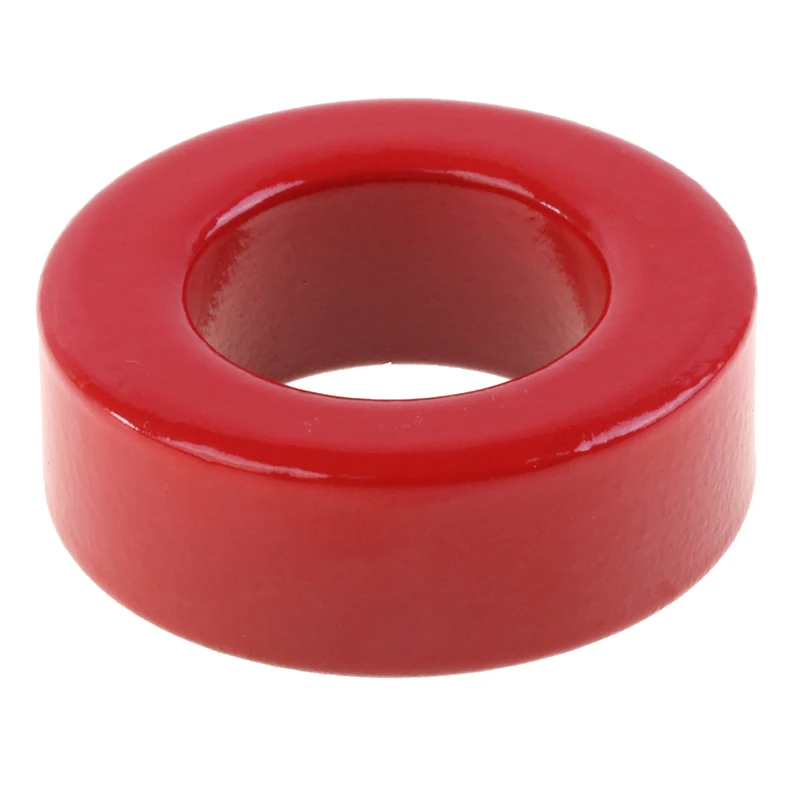
The T200-2/T157-2 Iron Powder Toroid Cores are essential low-permeability magnetic components designed for precision inductance in electronic restoration and custom circuit fabrication. These cores, available in specific dimensions, provide a stable foundation for inductors, chokes, and transformers, critical for maintaining signal integrity and power efficiency in a range of applications. Their red coating and iron powder composition indicate a specific performance profile suitable for medium to high-frequency operations, offering a distinct advantage over generic core materials.
These toroid cores are fabricated from an iron powder composite, denoted by the '-2' material type. Iron powder cores offer a distributed air gap, which translates to a softer saturation characteristic compared to solid ferrite cores. This distributed air gap is crucial. It permits the core to handle higher DC bias currents without saturating, a common issue in power supply filters and output chokes. The material's inherent properties ensure stable inductance values across varying current loads, preventing performance degradation in critical circuits.
Unlike conventional solid ferrite cores that can exhibit abrupt saturation, the iron powder composition provides a more gradual saturation curve. This characteristic is particularly beneficial in applications where current fluctuations are expected, such as switch-mode power supplies or audio amplifier output stages. A stable inductance is paramount. This design minimizes distortion and maintains consistent filtering capabilities, which is vital for sensitive electronic equipment. The core material dictates performance.
Compared to air-core inductors, these iron powder toroids offer significantly higher inductance in a smaller physical volume. Air-core inductors, while linear, require substantial winding turns and physical space to achieve comparable inductance, making them impractical for compact designs. The magnetic properties of iron powder cores efficiently concentrate the magnetic flux, leading to a superior Q-factor and reduced electromagnetic interference (EMI) in many scenarios. This efficiency is a major upgrade for many circuits.
The available dimensions, 51x32x14mm (T200-2) and 40x24x14.5mm (T157-2), cater to a variety of project requirements. These standardized sizes ensure compatibility with existing circuit board layouts and enclosure constraints. Accurate sizing is key. The precise outer diameter, inner diameter, and height allow for predictable winding parameters, which directly influence the final inductance value and current handling capacity of the finished component. Proper fitment simplifies assembly.
For a restoration technician, having access to specific dimensions means direct replacements are often possible for obsolete components. If a vintage power supply choke has failed, identifying a core with matching dimensions and magnetic properties can save an entire unit. This avoids the costly and often impossible task of sourcing original parts. The exact dimensions are critical. The consistency in manufacturing ensures that multiple cores of the same designation will perform identically, allowing for reliable replication of circuit designs.
Generic or improperly sized cores can lead to significant issues, including insufficient inductance, overheating due to poor winding fit, or physical incompatibility with the circuit board. These issues compromise circuit performance and reliability. Utilizing cores with verified dimensions, like these T200-2 and T157-2 options, prevents such complications, ensuring that the constructed inductor functions as intended. This attention to detail saves troubleshooting time.
The iron powder core material, specifically the '-2' mix, is known for its stable performance across a broad temperature range. This thermal stability is crucial for electronic components, especially those operating in power conversion or high-current environments where heat generation is inevitable. Temperature variations affect magnetic properties. The core's ability to maintain its magnetic characteristics under thermal stress ensures consistent circuit operation and longevity of the component. Heat management is essential.
In applications such as automotive electronics or industrial controls, where ambient temperatures can fluctuate dramatically, the thermal resilience of these cores becomes a significant advantage. An inductor built with a thermally stable core will exhibit less drift in its inductance value, maintaining filtering efficacy or energy storage capability. This prevents circuit malfunctions that could arise from temperature-induced changes in component values. Stable operation is guaranteed.
Inferior core materials might experience significant changes in permeability with temperature, leading to unpredictable circuit behavior or even thermal runaway in extreme cases. Such instability can cause system failures and require frequent recalibration or replacement. These iron powder cores provide a reliable alternative, contributing to the overall robustness and extended operational life of the electronic assembly. This reduces long-term maintenance costs.
These toroid cores are invaluable for restoring vintage electronic equipment, particularly power supplies, audio amplifiers, and radio frequency (RF) circuits. Many older devices rely on custom-wound inductors or chokes that are no longer commercially available. A core allows for faithful reproduction. With these cores, technicians can rewind replacement components, preserving the original design and functionality of classic electronics. This extends the life of valuable equipment.
For custom electronics projects, these cores offer the flexibility to design and fabricate inductors tailored to specific frequency and current requirements. Whether it's a custom filter for a sensitive sensor, a power inductor for a bespoke power supply, or a balun for antenna matching, the ability to select the core material and wind the inductor precisely is a major asset. Customization provides optimal performance. This allows for fine-tuning circuit characteristics that pre-made components often cannot achieve, leading to superior performance in niche applications.
Compared to purchasing off-the-shelf inductors, winding your own with these cores offers greater control over inductance, Q-factor, and current handling. It also provides a cost-effective solution for prototyping and small-batch production, especially when specialized inductors are required. This approach empowers the builder. The flexibility to choose wire gauge and winding technique further optimizes the inductor for specific electrical and thermal demands. This is a significant advantage for specialized projects.
For the dedicated restoration technician, these iron powder toroid cores represent a critical resource. The ability to replace or upgrade internal components with precision-engineered parts directly impacts the success and longevity of a repair. Saving a vintage tool or piece of equipment often hinges on the availability of suitable internal components. These cores fill that gap.
Utilizing these cores allows technicians to avoid the often prohibitive cost of sourcing new, expensive units when a simple component failure is the root cause. Instead of discarding a valuable piece of equipment, a targeted repair using a custom-wound inductor can bring it back to full operational status. This approach is economically sound. It preserves the historical and functional value of the original item, a key objective in restoration work.
Furthermore, these cores enable the upgrade of internals in existing equipment. For instance, an older power supply might benefit from a more stable output choke, improving ripple rejection and overall efficiency. By winding a new inductor with a T200-2 core, the technician can enhance performance beyond its original specifications. This is a tangible improvement. This capability transforms a simple repair into a performance enhancement, adding significant value to the restored item.
Proper winding technique is paramount when utilizing these toroid cores. Wire selection, including gauge and insulation type, must align with the intended current and voltage requirements. Winding turns should be evenly distributed around the core to maximize magnetic coupling and minimize leakage inductance. Uneven winding reduces efficiency. Using a winding machine or careful manual technique ensures consistent results. Securing the windings with appropriate adhesives or tie wraps prevents movement and potential short circuits. This maintains structural integrity.
Consider the thermal environment where the inductor will operate. Adequate ventilation around the component helps dissipate heat, especially in high-current applications. If space is limited, selecting a larger core size (e.g., T200-2 over T157-2) can provide more surface area for heat dissipation and allow for thicker wire gauges. Heat is a factor. Proper thermal management prevents premature component failure and ensures long-term reliability. This extends operational life.
When integrating the finished inductor into a circuit, pay close attention to lead dress and shielding. Keeping leads short minimizes parasitic inductance and capacitance. In noise-sensitive applications, positioning the inductor away from other magnetic components or using external shielding can prevent unwanted coupling. Isolation is important. Proper grounding techniques further reduce EMI and ensure stable circuit operation. This optimizes signal clarity.
The red protective coating on these toroid cores serves a critical function beyond aesthetics. It provides electrical insulation, preventing accidental short circuits between the windings and the core material itself. This insulation is vital. It also offers a degree of environmental protection, guarding the iron powder material against moisture and contaminants that could degrade its magnetic properties over time. A robust coating extends life.
The inherent stability of iron powder cores contributes to their long operational lifespan. Unlike some other magnetic materials that can degrade or become brittle with age or repeated thermal cycling, these cores maintain their structural and magnetic integrity. This durability is key. This makes them an excellent choice for applications requiring high reliability and extended service intervals, reducing the need for frequent component replacement. Reliability is a core benefit.
Regular inspection of inductors in critical applications can help identify any signs of physical damage or overheating. While these cores are designed for durability, extreme conditions or improper installation can still affect performance. Ensuring proper ventilation and operating within specified current limits will maximize the lifespan of the inductor. Preventative measures save time. This proactive approach helps maintain the overall health of the electronic system. This ensures continuous operation.
Sourcing individual toroid cores like the T200-2 and T157-2 offers significant cost advantages, particularly for hobbyists, small-scale manufacturers, and repair shops. Buying bulk cores and winding custom inductors is often more economical than purchasing pre-made inductors, especially for specific values or high current ratings. This reduces project costs. The ability to optimize for exact specifications also prevents over-engineering with more expensive, oversized components.
For restoration projects, the cost-effectiveness is even more pronounced. The alternative to replacing a failed custom inductor might be to replace an entire vintage unit, which can be prohibitively expensive or impossible. These cores provide a low-cost path to repair and extend the life of valuable equipment. This saves significant capital. The investment in these basic components yields a high return by preserving functionality and value.
Compared to the fluctuating prices and limited availability of specialized inductors from niche suppliers, these standardized iron powder cores offer a stable and accessible supply chain. This predictability in sourcing helps manage project timelines and budgets more effectively. Consistent availability is a plus. It reduces dependency on single-source components, enhancing overall supply chain resilience for any repair or manufacturing operation. This ensures project continuity.
Imagine completing a challenging restoration, bringing a cherished piece of electronics back to life, knowing that the new components you've meticulously integrated will provide years of stable, reliable performance. These iron powder toroid cores empower that precision, offering the magnetic foundation for circuits that perform exactly as intended, whether in a vintage receiver or a cutting-edge custom power solution. They are the quiet workhorses ensuring your projects not only function but excel, providing peace of mind and enduring quality in every application.
The Foundation of Inductance: Core Material Science
These toroid cores are fabricated from an iron powder composite, denoted by the '-2' material type. Iron powder cores offer a distributed air gap, which translates to a softer saturation characteristic compared to solid ferrite cores. This distributed air gap is crucial. It permits the core to handle higher DC bias currents without saturating, a common issue in power supply filters and output chokes. The material's inherent properties ensure stable inductance values across varying current loads, preventing performance degradation in critical circuits.
Unlike conventional solid ferrite cores that can exhibit abrupt saturation, the iron powder composition provides a more gradual saturation curve. This characteristic is particularly beneficial in applications where current fluctuations are expected, such as switch-mode power supplies or audio amplifier output stages. A stable inductance is paramount. This design minimizes distortion and maintains consistent filtering capabilities, which is vital for sensitive electronic equipment. The core material dictates performance.
Compared to air-core inductors, these iron powder toroids offer significantly higher inductance in a smaller physical volume. Air-core inductors, while linear, require substantial winding turns and physical space to achieve comparable inductance, making them impractical for compact designs. The magnetic properties of iron powder cores efficiently concentrate the magnetic flux, leading to a superior Q-factor and reduced electromagnetic interference (EMI) in many scenarios. This efficiency is a major upgrade for many circuits.
Precision in Form: Dimensions and Fitment
The available dimensions, 51x32x14mm (T200-2) and 40x24x14.5mm (T157-2), cater to a variety of project requirements. These standardized sizes ensure compatibility with existing circuit board layouts and enclosure constraints. Accurate sizing is key. The precise outer diameter, inner diameter, and height allow for predictable winding parameters, which directly influence the final inductance value and current handling capacity of the finished component. Proper fitment simplifies assembly.
For a restoration technician, having access to specific dimensions means direct replacements are often possible for obsolete components. If a vintage power supply choke has failed, identifying a core with matching dimensions and magnetic properties can save an entire unit. This avoids the costly and often impossible task of sourcing original parts. The exact dimensions are critical. The consistency in manufacturing ensures that multiple cores of the same designation will perform identically, allowing for reliable replication of circuit designs.
Generic or improperly sized cores can lead to significant issues, including insufficient inductance, overheating due to poor winding fit, or physical incompatibility with the circuit board. These issues compromise circuit performance and reliability. Utilizing cores with verified dimensions, like these T200-2 and T157-2 options, prevents such complications, ensuring that the constructed inductor functions as intended. This attention to detail saves troubleshooting time.
Thermal Resilience and Operational Stability
The iron powder core material, specifically the '-2' mix, is known for its stable performance across a broad temperature range. This thermal stability is crucial for electronic components, especially those operating in power conversion or high-current environments where heat generation is inevitable. Temperature variations affect magnetic properties. The core's ability to maintain its magnetic characteristics under thermal stress ensures consistent circuit operation and longevity of the component. Heat management is essential.
In applications such as automotive electronics or industrial controls, where ambient temperatures can fluctuate dramatically, the thermal resilience of these cores becomes a significant advantage. An inductor built with a thermally stable core will exhibit less drift in its inductance value, maintaining filtering efficacy or energy storage capability. This prevents circuit malfunctions that could arise from temperature-induced changes in component values. Stable operation is guaranteed.
Inferior core materials might experience significant changes in permeability with temperature, leading to unpredictable circuit behavior or even thermal runaway in extreme cases. Such instability can cause system failures and require frequent recalibration or replacement. These iron powder cores provide a reliable alternative, contributing to the overall robustness and extended operational life of the electronic assembly. This reduces long-term maintenance costs.
Applications in Restoration and Custom Builds
These toroid cores are invaluable for restoring vintage electronic equipment, particularly power supplies, audio amplifiers, and radio frequency (RF) circuits. Many older devices rely on custom-wound inductors or chokes that are no longer commercially available. A core allows for faithful reproduction. With these cores, technicians can rewind replacement components, preserving the original design and functionality of classic electronics. This extends the life of valuable equipment.
For custom electronics projects, these cores offer the flexibility to design and fabricate inductors tailored to specific frequency and current requirements. Whether it's a custom filter for a sensitive sensor, a power inductor for a bespoke power supply, or a balun for antenna matching, the ability to select the core material and wind the inductor precisely is a major asset. Customization provides optimal performance. This allows for fine-tuning circuit characteristics that pre-made components often cannot achieve, leading to superior performance in niche applications.
Compared to purchasing off-the-shelf inductors, winding your own with these cores offers greater control over inductance, Q-factor, and current handling. It also provides a cost-effective solution for prototyping and small-batch production, especially when specialized inductors are required. This approach empowers the builder. The flexibility to choose wire gauge and winding technique further optimizes the inductor for specific electrical and thermal demands. This is a significant advantage for specialized projects.
The Restoration Tech's Advantage: Why These Cores Matter
For the dedicated restoration technician, these iron powder toroid cores represent a critical resource. The ability to replace or upgrade internal components with precision-engineered parts directly impacts the success and longevity of a repair. Saving a vintage tool or piece of equipment often hinges on the availability of suitable internal components. These cores fill that gap.
Utilizing these cores allows technicians to avoid the often prohibitive cost of sourcing new, expensive units when a simple component failure is the root cause. Instead of discarding a valuable piece of equipment, a targeted repair using a custom-wound inductor can bring it back to full operational status. This approach is economically sound. It preserves the historical and functional value of the original item, a key objective in restoration work.
Furthermore, these cores enable the upgrade of internals in existing equipment. For instance, an older power supply might benefit from a more stable output choke, improving ripple rejection and overall efficiency. By winding a new inductor with a T200-2 core, the technician can enhance performance beyond its original specifications. This is a tangible improvement. This capability transforms a simple repair into a performance enhancement, adding significant value to the restored item.
Installation Best Practices for Optimal Performance
Proper winding technique is paramount when utilizing these toroid cores. Wire selection, including gauge and insulation type, must align with the intended current and voltage requirements. Winding turns should be evenly distributed around the core to maximize magnetic coupling and minimize leakage inductance. Uneven winding reduces efficiency. Using a winding machine or careful manual technique ensures consistent results. Securing the windings with appropriate adhesives or tie wraps prevents movement and potential short circuits. This maintains structural integrity.
Consider the thermal environment where the inductor will operate. Adequate ventilation around the component helps dissipate heat, especially in high-current applications. If space is limited, selecting a larger core size (e.g., T200-2 over T157-2) can provide more surface area for heat dissipation and allow for thicker wire gauges. Heat is a factor. Proper thermal management prevents premature component failure and ensures long-term reliability. This extends operational life.
When integrating the finished inductor into a circuit, pay close attention to lead dress and shielding. Keeping leads short minimizes parasitic inductance and capacitance. In noise-sensitive applications, positioning the inductor away from other magnetic components or using external shielding can prevent unwanted coupling. Isolation is important. Proper grounding techniques further reduce EMI and ensure stable circuit operation. This optimizes signal clarity.
Longevity and Material Integrity
The red protective coating on these toroid cores serves a critical function beyond aesthetics. It provides electrical insulation, preventing accidental short circuits between the windings and the core material itself. This insulation is vital. It also offers a degree of environmental protection, guarding the iron powder material against moisture and contaminants that could degrade its magnetic properties over time. A robust coating extends life.
The inherent stability of iron powder cores contributes to their long operational lifespan. Unlike some other magnetic materials that can degrade or become brittle with age or repeated thermal cycling, these cores maintain their structural and magnetic integrity. This durability is key. This makes them an excellent choice for applications requiring high reliability and extended service intervals, reducing the need for frequent component replacement. Reliability is a core benefit.
Regular inspection of inductors in critical applications can help identify any signs of physical damage or overheating. While these cores are designed for durability, extreme conditions or improper installation can still affect performance. Ensuring proper ventilation and operating within specified current limits will maximize the lifespan of the inductor. Preventative measures save time. This proactive approach helps maintain the overall health of the electronic system. This ensures continuous operation.
Cost-Efficiency in Component Sourcing
Sourcing individual toroid cores like the T200-2 and T157-2 offers significant cost advantages, particularly for hobbyists, small-scale manufacturers, and repair shops. Buying bulk cores and winding custom inductors is often more economical than purchasing pre-made inductors, especially for specific values or high current ratings. This reduces project costs. The ability to optimize for exact specifications also prevents over-engineering with more expensive, oversized components.
For restoration projects, the cost-effectiveness is even more pronounced. The alternative to replacing a failed custom inductor might be to replace an entire vintage unit, which can be prohibitively expensive or impossible. These cores provide a low-cost path to repair and extend the life of valuable equipment. This saves significant capital. The investment in these basic components yields a high return by preserving functionality and value.
Compared to the fluctuating prices and limited availability of specialized inductors from niche suppliers, these standardized iron powder cores offer a stable and accessible supply chain. This predictability in sourcing helps manage project timelines and budgets more effectively. Consistent availability is a plus. It reduces dependency on single-source components, enhancing overall supply chain resilience for any repair or manufacturing operation. This ensures project continuity.
Imagine completing a challenging restoration, bringing a cherished piece of electronics back to life, knowing that the new components you've meticulously integrated will provide years of stable, reliable performance. These iron powder toroid cores empower that precision, offering the magnetic foundation for circuits that perform exactly as intended, whether in a vintage receiver or a cutting-edge custom power solution. They are the quiet workhorses ensuring your projects not only function but excel, providing peace of mind and enduring quality in every application.