T-Tap Quick Splice Wire Connectors (22-10 AWG)
Official Store Deal
Expert Analysis Overview
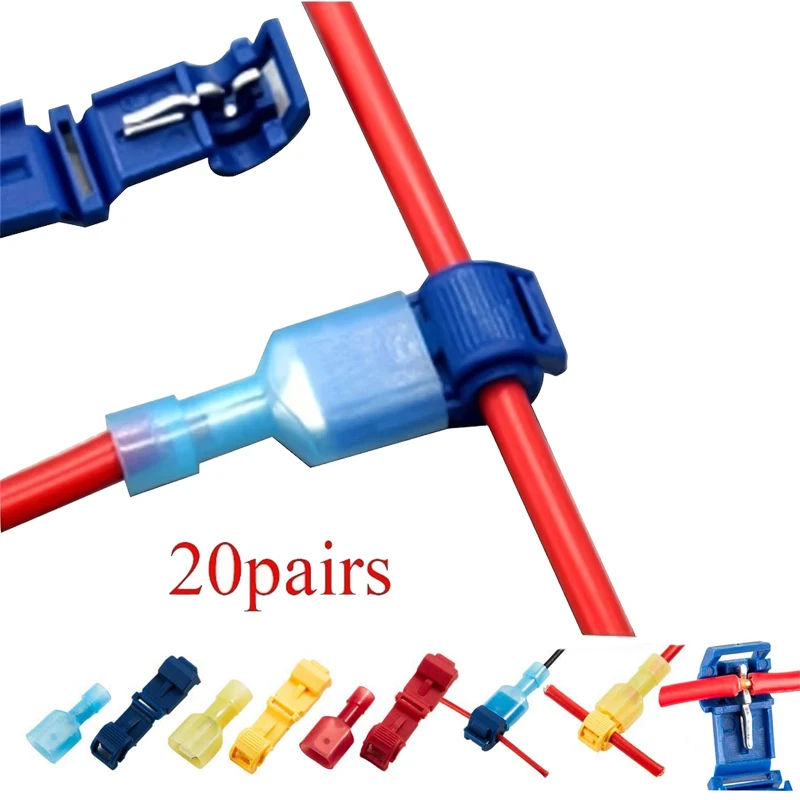
The T-Tap Quick Splice Wire Connectors are a practical, albeit sometimes debated, solution for quickly integrating into existing electrical circuits without the need for traditional wire cutting or stripping. This set, comprising 20 pairs of T-tap connectors and male spade terminals, offers a rapid method for creating branch connections in automotive, marine, and household low-voltage applications. The design prioritizes ease of use, aiming to simplify what can often be a time-consuming and intricate wiring task. These connectors are designed to accommodate a wide range of wire gauges, specifically from 22 AWG to 10 AWG, indicated by their color-coding system: red for 22-18 AWG, blue for 18-14 AWG, and yellow for 12-10 AWG. This broad compatibility makes them suitable for various projects, from installing auxiliary lighting to adding new components to a vehicle's electrical system. The product's emphasis on quick installation addresses a common pain point for both professional electricians and DIY enthusiasts: the desire for efficient, reliable electrical connections. Improper connections can lead to significant issues. This system aims to mitigate such risks through its straightforward application process.
The core functionality of these T-tap connectors revolves around their ability to tap into an existing wire without severing it. The connector features a metal blade that pierces the insulation of the main wire, establishing an electrical contact. This method bypasses the need for stripping insulation, which can often weaken the wire or introduce potential points of failure if not done correctly. The male spade terminal then plugs into the T-tap, completing the connection for the new branch circuit. This two-part system ensures a secure, insulated connection once properly crimped. The visual instructions provided clearly illustrate the insertion of the main wire into the T-tap, followed by crimping with pliers to secure the connection and pierce the insulation. The spade terminal then slides into the T-tap, creating a robust electrical junction. This mechanical engagement is critical for conductivity.
Compared to traditional soldering or twist-and-tape methods, T-taps offer a significant time-saving advantage. Soldering requires heat, flux, and skill, while twist-and-tape methods often lack long-term reliability and insulation integrity. These connectors provide a cleaner, more consistent connection. The design minimizes exposed conductors, reducing the risk of short circuits. This is a key safety feature.
Material quality is paramount in electrical connectors, directly impacting safety and longevity. The product images highlight a crucial distinction: these connectors utilize thickened tinned copper for their internal conductive elements, as opposed to standard brass. Copper offers superior conductivity and corrosion resistance compared to brass, especially when tinned. Tinned copper resists oxidation, ensuring a stable electrical path over time, which is vital in environments exposed to moisture or temperature fluctuations. The use of premium plastic for the insulating housing is also emphasized, contrasting with recycled plastic alternatives. Premium plastic provides better dielectric strength and mechanical durability, preventing cracking or degradation that could expose live conductors. This enhances overall safety. Inferior plastics can become brittle.
The choice of tinned copper for the internal contacts directly translates to enhanced electrical performance. Lower resistance means less heat generation, which is critical for preventing thermal runaway and potential fire hazards, particularly when carrying higher currents. The improved corrosion resistance ensures that the connection remains stable and conductive even in harsh automotive or marine environments where moisture and salt can rapidly degrade brass terminals. This material selection contributes to a more reliable and safer electrical system. Users can expect consistent power delivery.
Generic T-tap connectors often cut corners with cheaper brass contacts and brittle plastics, leading to intermittent connections, increased resistance, and premature failure. This product's visible commitment to higher-grade materials positions it as a more dependable option for critical applications. The investment in quality materials pays dividends in long-term reliability and reduced maintenance. It's a smart choice for durability.
The specified wire gauge compatibility (22-10 AWG) and maximum current ratings (20A for yellow, 15A for blue, 10A for red) are critical for safe operation. The images provide detailed specifications, including dimensions and current limits for each color-coded connector. Adhering to these ratings is non-negotiable for preventing overheating and potential electrical fires. The yellow connectors, designed for 12-10 AWG wires, can handle up to 20 amps, making them suitable for higher-power accessories. Blue connectors (18-14 AWG) are rated for 15 amps, ideal for standard automotive lighting or audio components. Red connectors (22-18 AWG) support up to 10 amps, perfect for low-current sensors or small LED installations. Proper gauge matching is essential.
Understanding the relationship between wire gauge, current, and connector rating is fundamental for any electrical installation. Using a connector rated for a lower current than the circuit demands will inevitably lead to excessive heat, insulation breakdown, and potential failure. The clear labeling and visual charts in the product description assist users in selecting the correct connector for their specific application, minimizing guesswork. This transparency is a significant advantage. Always verify the load requirements.
Many generic connectors on the market provide vague or inflated current ratings, leading to dangerous situations. This product's detailed specification tables, showing both AWG and metric wire ranges alongside maximum current, offer a level of precision that instills confidence. This attention to detail is crucial for compliance with electrical safety standards. It ensures a safer installation. The data is readily available.
The installation process, as depicted in the step-by-step guide, emphasizes simplicity. First, the main wire is inserted into the T-tap connector. Then, pliers are used to crimp the connector, ensuring the internal blade pierces the wire's insulation and establishes contact. The male spade terminal is then crimped onto the end of the branch wire. Finally, the spade terminal is plugged into the T-tap connector, completing the circuit. This sequence ensures a secure mechanical and electrical connection. Proper crimping is vital.
For optimal performance and safety, it is imperative to use the correct crimping tool. While standard pliers can be used, a dedicated crimping tool designed for insulated terminals will provide a more consistent and secure crimp, reducing the risk of loose connections or damaged insulation. Ensuring the wire is fully seated within the connector before crimping is also crucial. A loose wire can lead to high resistance. Always double-check connections.
Unlike methods that require specialized tools like soldering irons or heat guns, these T-taps can be installed with common hand tools, making them accessible to a broader audience. However, the simplicity should not overshadow the need for careful execution. Rushing the installation or using inadequate tools can compromise the integrity of the connection. Take your time. A good connection is a safe connection.
The durability of electrical connectors is often tested by the environments in which they operate. The premium plastic housing, as highlighted, offers enhanced resistance to environmental factors such as moisture, dust, and temperature fluctuations. This is particularly important for automotive applications where connectors are exposed to engine heat, road spray, and vibrations. The robust construction helps maintain the integrity of the insulation and the connection over the long term. These connectors are built to last.
The tinned copper contacts further contribute to the product's longevity by resisting corrosion, a common cause of electrical failure in harsh conditions. Corrosion can increase resistance, leading to voltage drops and heat buildup. By mitigating this, the connectors help maintain consistent performance throughout their operational life. This ensures long-term reliability. Corrosion is a silent killer.
Many cheaper connectors fail prematurely due to brittle plastic housings that crack under stress or temperature changes, or due to brass contacts that quickly corrode. This product's material choices suggest a design intended for greater resilience and a longer service life, reducing the need for frequent replacements or repairs. This translates to better value. It's an investment in reliability.
Imagine completing your wiring projects with confidence, knowing each connection is secure, insulated, and built to last. Envision the ease of adding new accessories to your vehicle without the frustration of stripping wires or the uncertainty of unreliable splices. These T-tap connectors offer a streamlined, dependable solution that empowers you to tackle electrical tasks efficiently and safely, ensuring your circuits perform flawlessly for years to come. The peace of mind is invaluable.
Circuit Integration Mechanics
The core functionality of these T-tap connectors revolves around their ability to tap into an existing wire without severing it. The connector features a metal blade that pierces the insulation of the main wire, establishing an electrical contact. This method bypasses the need for stripping insulation, which can often weaken the wire or introduce potential points of failure if not done correctly. The male spade terminal then plugs into the T-tap, completing the connection for the new branch circuit. This two-part system ensures a secure, insulated connection once properly crimped. The visual instructions provided clearly illustrate the insertion of the main wire into the T-tap, followed by crimping with pliers to secure the connection and pierce the insulation. The spade terminal then slides into the T-tap, creating a robust electrical junction. This mechanical engagement is critical for conductivity.
Compared to traditional soldering or twist-and-tape methods, T-taps offer a significant time-saving advantage. Soldering requires heat, flux, and skill, while twist-and-tape methods often lack long-term reliability and insulation integrity. These connectors provide a cleaner, more consistent connection. The design minimizes exposed conductors, reducing the risk of short circuits. This is a key safety feature.
Material Integrity and Conductor Performance
Material quality is paramount in electrical connectors, directly impacting safety and longevity. The product images highlight a crucial distinction: these connectors utilize thickened tinned copper for their internal conductive elements, as opposed to standard brass. Copper offers superior conductivity and corrosion resistance compared to brass, especially when tinned. Tinned copper resists oxidation, ensuring a stable electrical path over time, which is vital in environments exposed to moisture or temperature fluctuations. The use of premium plastic for the insulating housing is also emphasized, contrasting with recycled plastic alternatives. Premium plastic provides better dielectric strength and mechanical durability, preventing cracking or degradation that could expose live conductors. This enhances overall safety. Inferior plastics can become brittle.
The choice of tinned copper for the internal contacts directly translates to enhanced electrical performance. Lower resistance means less heat generation, which is critical for preventing thermal runaway and potential fire hazards, particularly when carrying higher currents. The improved corrosion resistance ensures that the connection remains stable and conductive even in harsh automotive or marine environments where moisture and salt can rapidly degrade brass terminals. This material selection contributes to a more reliable and safer electrical system. Users can expect consistent power delivery.
Generic T-tap connectors often cut corners with cheaper brass contacts and brittle plastics, leading to intermittent connections, increased resistance, and premature failure. This product's visible commitment to higher-grade materials positions it as a more dependable option for critical applications. The investment in quality materials pays dividends in long-term reliability and reduced maintenance. It's a smart choice for durability.
Amperage Load and Wire Gauge Precision
The specified wire gauge compatibility (22-10 AWG) and maximum current ratings (20A for yellow, 15A for blue, 10A for red) are critical for safe operation. The images provide detailed specifications, including dimensions and current limits for each color-coded connector. Adhering to these ratings is non-negotiable for preventing overheating and potential electrical fires. The yellow connectors, designed for 12-10 AWG wires, can handle up to 20 amps, making them suitable for higher-power accessories. Blue connectors (18-14 AWG) are rated for 15 amps, ideal for standard automotive lighting or audio components. Red connectors (22-18 AWG) support up to 10 amps, perfect for low-current sensors or small LED installations. Proper gauge matching is essential.
Understanding the relationship between wire gauge, current, and connector rating is fundamental for any electrical installation. Using a connector rated for a lower current than the circuit demands will inevitably lead to excessive heat, insulation breakdown, and potential failure. The clear labeling and visual charts in the product description assist users in selecting the correct connector for their specific application, minimizing guesswork. This transparency is a significant advantage. Always verify the load requirements.
Many generic connectors on the market provide vague or inflated current ratings, leading to dangerous situations. This product's detailed specification tables, showing both AWG and metric wire ranges alongside maximum current, offer a level of precision that instills confidence. This attention to detail is crucial for compliance with electrical safety standards. It ensures a safer installation. The data is readily available.
Installation Protocol and Best Practices
The installation process, as depicted in the step-by-step guide, emphasizes simplicity. First, the main wire is inserted into the T-tap connector. Then, pliers are used to crimp the connector, ensuring the internal blade pierces the wire's insulation and establishes contact. The male spade terminal is then crimped onto the end of the branch wire. Finally, the spade terminal is plugged into the T-tap connector, completing the circuit. This sequence ensures a secure mechanical and electrical connection. Proper crimping is vital.
For optimal performance and safety, it is imperative to use the correct crimping tool. While standard pliers can be used, a dedicated crimping tool designed for insulated terminals will provide a more consistent and secure crimp, reducing the risk of loose connections or damaged insulation. Ensuring the wire is fully seated within the connector before crimping is also crucial. A loose wire can lead to high resistance. Always double-check connections.
Unlike methods that require specialized tools like soldering irons or heat guns, these T-taps can be installed with common hand tools, making them accessible to a broader audience. However, the simplicity should not overshadow the need for careful execution. Rushing the installation or using inadequate tools can compromise the integrity of the connection. Take your time. A good connection is a safe connection.
Longevity and Environmental Resilience
The durability of electrical connectors is often tested by the environments in which they operate. The premium plastic housing, as highlighted, offers enhanced resistance to environmental factors such as moisture, dust, and temperature fluctuations. This is particularly important for automotive applications where connectors are exposed to engine heat, road spray, and vibrations. The robust construction helps maintain the integrity of the insulation and the connection over the long term. These connectors are built to last.
The tinned copper contacts further contribute to the product's longevity by resisting corrosion, a common cause of electrical failure in harsh conditions. Corrosion can increase resistance, leading to voltage drops and heat buildup. By mitigating this, the connectors help maintain consistent performance throughout their operational life. This ensures long-term reliability. Corrosion is a silent killer.
Many cheaper connectors fail prematurely due to brittle plastic housings that crack under stress or temperature changes, or due to brass contacts that quickly corrode. This product's material choices suggest a design intended for greater resilience and a longer service life, reducing the need for frequent replacements or repairs. This translates to better value. It's an investment in reliability.
Imagine completing your wiring projects with confidence, knowing each connection is secure, insulated, and built to last. Envision the ease of adding new accessories to your vehicle without the frustration of stripping wires or the uncertainty of unreliable splices. These T-tap connectors offer a streamlined, dependable solution that empowers you to tackle electrical tasks efficiently and safely, ensuring your circuits perform flawlessly for years to come. The peace of mind is invaluable.