Sunlu FC01 Filament Fusion Splicer
Official Store Deal
Expert Analysis Overview
The Sunlu FC01 Filament Fusion Splicer is a purpose-built tool designed for 3D printing enthusiasts and professionals seeking to optimize filament utilization and minimize material waste. This device addresses the common challenge of managing leftover filament segments and ensuring continuous printing operations. Its core function is to precisely melt and join 1.75mm diameter filaments, creating a strong, usable bond.
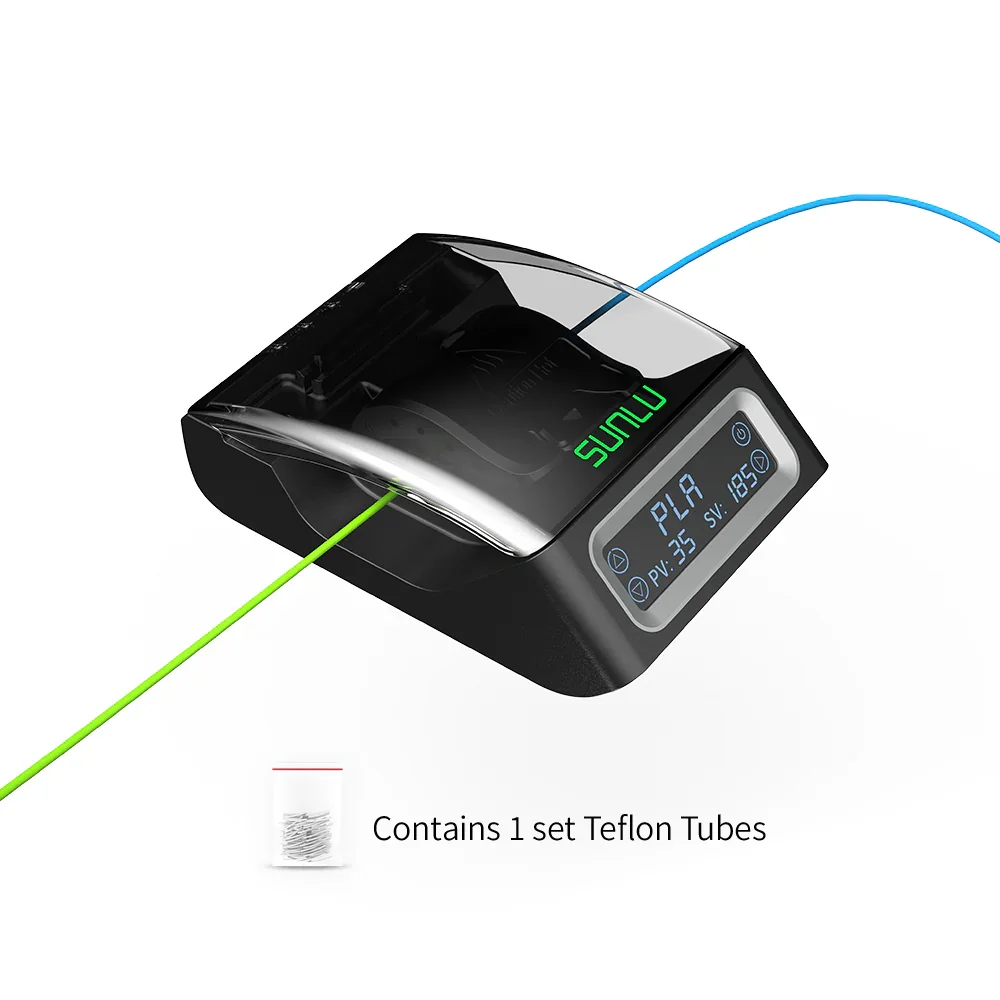
This fusion splicer is engineered to provide a reliable method for joining various 1.75mm diameter 3D printing filaments. The visual evidence indicates a compact, self-contained unit with an integrated heating element and a digital display. This design suggests a focus on user-friendliness and operational efficiency.
The real-world implication of this design is the ability to consolidate numerous short filament lengths into a single, longer spool. This significantly reduces the amount of material typically discarded, offering substantial cost savings over time. It makes every gram count.
Unlike manual splicing methods that often result in inconsistent bonds or material degradation, the FC01 automates the heating and joining process. This ensures a more uniform and robust splice, crucial for maintaining print quality and preventing mid-print failures.
The device features a clear digital display, showing both the process value (PV) and set value (SV) for temperature, alongside the selected filament type (e.g., PLA). This indicates precise thermal control. The unit heats up to 240°C, a temperature range suitable for common 3D printing materials.
Accurate temperature regulation is paramount for successful filament fusion. Different polymers have distinct melting points and thermal characteristics; an imprecise temperature can lead to weak joints, material burning, or inconsistent filament diameter at the splice point. The FC01's digital interface allows for specific temperature settings, critical for material integrity.
Compared to rudimentary heat guns or soldering irons, which offer little to no temperature control, the FC01 provides a controlled environment. This minimizes the risk of overheating or underheating the filament, leading to superior splice quality and print reliability. It's a controlled process.
The Sunlu FC01 is advertised as compatible with a wide array of 1.75mm filaments, including PLA, ABS, PETG, PCL, PA (Nylon), and PC (Polycarbonate). This broad compatibility is a significant advantage for users working with diverse material requirements.
This extensive material support means that a single device can handle the majority of filament types encountered in typical 3D printing workflows. Users do not need specialized tools for each material, streamlining their toolkit and reducing overall investment. Versatility is key.
Many generic filament joining techniques are often limited to PLA or ABS due to their lower melting temperatures. The FC01's ability to handle higher-temperature materials like PA and PC positions it as a more comprehensive solution for advanced prototyping and functional part creation.
The primary benefit of the FC01 is its contribution to efficient filament utilization. It enables the use of otherwise discarded filament ends, preventing material waste and reducing operational costs for 3D printing.
Imagine a scenario where a critical print job requires more filament than available on a single spool, but several partial spools are on hand. The FC01 allows these partial spools to be joined seamlessly, avoiding print interruptions and the need to purchase new material. This saves time and money.
Traditional methods often involve simply discarding short lengths of filament, which accumulates into significant waste over time. The FC01 transforms these remnants into valuable printing resources, aligning with sustainable practices and maximizing the return on investment for filament purchases. Waste becomes resource.
The device features a compact, sleek black design with a prominent digital display and intuitive controls. The images suggest a simple, two-button interface for temperature adjustment and filament type selection, making operation straightforward.
An easy-to-understand interface reduces the learning curve, allowing users to quickly integrate the splicer into their workflow without extensive training. The clear display provides immediate feedback on settings and status, enhancing user confidence and operational safety. Simplicity is valued.
Unlike complex industrial splicing equipment that may require specialized knowledge, the FC01 is designed for accessibility. Its straightforward operation makes it suitable for both hobbyists and professionals who prioritize ease of use alongside functionality.
The product images highlight features such as a safe protection against burnt hands and the inclusion of Teflon tubes. These details point to a design that considers user safety during the heating process.
Working with heated elements always carries a risk of burns. The integrated safety features, such as the protective casing and the use of Teflon tubes for filament guidance, are crucial for preventing accidental contact with hot surfaces. Safety is paramount.
Many DIY filament splicing solutions lack these integrated safety measures, exposing users to direct contact with heating elements. The FC01's design prioritizes user protection, making it a safer alternative for regular use in a workshop or home environment. It protects the user.
For precision prototypers, the FC01 offers a significant advantage by ensuring material consistency and reducing unexpected print failures due to filament run-out. The ability to create dimensionally accurate engineering parts relies heavily on consistent material properties throughout the print.
When printing complex or large-scale prototypes, a mid-print filament change can introduce weak points or visual inconsistencies. By pre-splicing filament, the FC01 allows for longer, uninterrupted print runs, leading to higher quality and more reliable prototypes. Uninterrupted prints are better.
Compared to relying solely on new, full spools, the FC01 provides an economical and reliable way to manage filament inventory. This allows prototypers to experiment more freely with different materials and designs without the constant concern of material cost or availability. It empowers experimentation.
The investment in a filament splicer like the Sunlu FC01 translates into long-term operational benefits beyond immediate cost savings. It contributes to a more streamlined and efficient 3D printing ecosystem.
By minimizing filament waste, the device supports a more sustainable approach to 3D printing. It also reduces the frequency of ordering new filament, which can lead to fewer shipping costs and a smaller carbon footprint associated with material procurement. Sustainability is a bonus.
Ultimately, the FC01 enhances the overall productivity of a 3D printing setup. Fewer print failures, less material waste, and the ability to utilize all available filament contribute to a more efficient and cost-effective operation, allowing users to focus on design and innovation rather than material management. It streamlines the workflow.
Imagine a future where every millimeter of filament contributes to your creations, where the frustration of discarded ends is a distant memory, and your 3D printer runs continuously, bringing your most ambitious designs to life without interruption. This tool empowers that vision, transforming material management into a seamless, efficient process that supports endless innovation.
Engineered for Filament Continuity
This fusion splicer is engineered to provide a reliable method for joining various 1.75mm diameter 3D printing filaments. The visual evidence indicates a compact, self-contained unit with an integrated heating element and a digital display. This design suggests a focus on user-friendliness and operational efficiency.
The real-world implication of this design is the ability to consolidate numerous short filament lengths into a single, longer spool. This significantly reduces the amount of material typically discarded, offering substantial cost savings over time. It makes every gram count.
Unlike manual splicing methods that often result in inconsistent bonds or material degradation, the FC01 automates the heating and joining process. This ensures a more uniform and robust splice, crucial for maintaining print quality and preventing mid-print failures.
Precision Thermal Management
The device features a clear digital display, showing both the process value (PV) and set value (SV) for temperature, alongside the selected filament type (e.g., PLA). This indicates precise thermal control. The unit heats up to 240°C, a temperature range suitable for common 3D printing materials.
Accurate temperature regulation is paramount for successful filament fusion. Different polymers have distinct melting points and thermal characteristics; an imprecise temperature can lead to weak joints, material burning, or inconsistent filament diameter at the splice point. The FC01's digital interface allows for specific temperature settings, critical for material integrity.
Compared to rudimentary heat guns or soldering irons, which offer little to no temperature control, the FC01 provides a controlled environment. This minimizes the risk of overheating or underheating the filament, leading to superior splice quality and print reliability. It's a controlled process.
Broad Material Compatibility
The Sunlu FC01 is advertised as compatible with a wide array of 1.75mm filaments, including PLA, ABS, PETG, PCL, PA (Nylon), and PC (Polycarbonate). This broad compatibility is a significant advantage for users working with diverse material requirements.
This extensive material support means that a single device can handle the majority of filament types encountered in typical 3D printing workflows. Users do not need specialized tools for each material, streamlining their toolkit and reducing overall investment. Versatility is key.
Many generic filament joining techniques are often limited to PLA or ABS due to their lower melting temperatures. The FC01's ability to handle higher-temperature materials like PA and PC positions it as a more comprehensive solution for advanced prototyping and functional part creation.
Operational Efficiency and Waste Reduction
The primary benefit of the FC01 is its contribution to efficient filament utilization. It enables the use of otherwise discarded filament ends, preventing material waste and reducing operational costs for 3D printing.
Imagine a scenario where a critical print job requires more filament than available on a single spool, but several partial spools are on hand. The FC01 allows these partial spools to be joined seamlessly, avoiding print interruptions and the need to purchase new material. This saves time and money.
Traditional methods often involve simply discarding short lengths of filament, which accumulates into significant waste over time. The FC01 transforms these remnants into valuable printing resources, aligning with sustainable practices and maximizing the return on investment for filament purchases. Waste becomes resource.
User Interface and Ergonomics
The device features a compact, sleek black design with a prominent digital display and intuitive controls. The images suggest a simple, two-button interface for temperature adjustment and filament type selection, making operation straightforward.
An easy-to-understand interface reduces the learning curve, allowing users to quickly integrate the splicer into their workflow without extensive training. The clear display provides immediate feedback on settings and status, enhancing user confidence and operational safety. Simplicity is valued.
Unlike complex industrial splicing equipment that may require specialized knowledge, the FC01 is designed for accessibility. Its straightforward operation makes it suitable for both hobbyists and professionals who prioritize ease of use alongside functionality.
Safety and Durability Considerations
The product images highlight features such as a safe protection against burnt hands and the inclusion of Teflon tubes. These details point to a design that considers user safety during the heating process.
Working with heated elements always carries a risk of burns. The integrated safety features, such as the protective casing and the use of Teflon tubes for filament guidance, are crucial for preventing accidental contact with hot surfaces. Safety is paramount.
Many DIY filament splicing solutions lack these integrated safety measures, exposing users to direct contact with heating elements. The FC01's design prioritizes user protection, making it a safer alternative for regular use in a workshop or home environment. It protects the user.
The Value Proposition in Prototyping
For precision prototypers, the FC01 offers a significant advantage by ensuring material consistency and reducing unexpected print failures due to filament run-out. The ability to create dimensionally accurate engineering parts relies heavily on consistent material properties throughout the print.
When printing complex or large-scale prototypes, a mid-print filament change can introduce weak points or visual inconsistencies. By pre-splicing filament, the FC01 allows for longer, uninterrupted print runs, leading to higher quality and more reliable prototypes. Uninterrupted prints are better.
Compared to relying solely on new, full spools, the FC01 provides an economical and reliable way to manage filament inventory. This allows prototypers to experiment more freely with different materials and designs without the constant concern of material cost or availability. It empowers experimentation.
Long-Term Operational Benefits
The investment in a filament splicer like the Sunlu FC01 translates into long-term operational benefits beyond immediate cost savings. It contributes to a more streamlined and efficient 3D printing ecosystem.
By minimizing filament waste, the device supports a more sustainable approach to 3D printing. It also reduces the frequency of ordering new filament, which can lead to fewer shipping costs and a smaller carbon footprint associated with material procurement. Sustainability is a bonus.
Ultimately, the FC01 enhances the overall productivity of a 3D printing setup. Fewer print failures, less material waste, and the ability to utilize all available filament contribute to a more efficient and cost-effective operation, allowing users to focus on design and innovation rather than material management. It streamlines the workflow.
Imagine a future where every millimeter of filament contributes to your creations, where the frustration of discarded ends is a distant memory, and your 3D printer runs continuously, bringing your most ambitious designs to life without interruption. This tool empowers that vision, transforming material management into a seamless, efficient process that supports endless innovation.