SUNLU ASA 1.75mm UV/Weather Resistant 3D Printer Filament
Official Store Deal
Expert Analysis Overview
The Resilient Choice for Outdoor 3D Printing
The SUNLU ASA filament is a high-performance polymer engineered for demanding outdoor and functional applications. This material offers superior resistance to environmental stressors, making it an excellent upgrade for projects requiring durability beyond standard PLA or ABS. Its robust properties make it particularly suitable for educational settings where students might be exploring advanced material science or designing components for real-world, exposed conditions.
Material Science for Enduring Creations
Acrylonitrile Styrene Acrylate (ASA) is a thermoplastic known for its exceptional mechanical properties and weatherability. The filament's composition provides inherent resistance to ultraviolet (UV) radiation, heat, and water, as explicitly highlighted in the product imagery. These characteristics are fundamental for prints that will be situated outdoors or in environments with fluctuating temperatures.
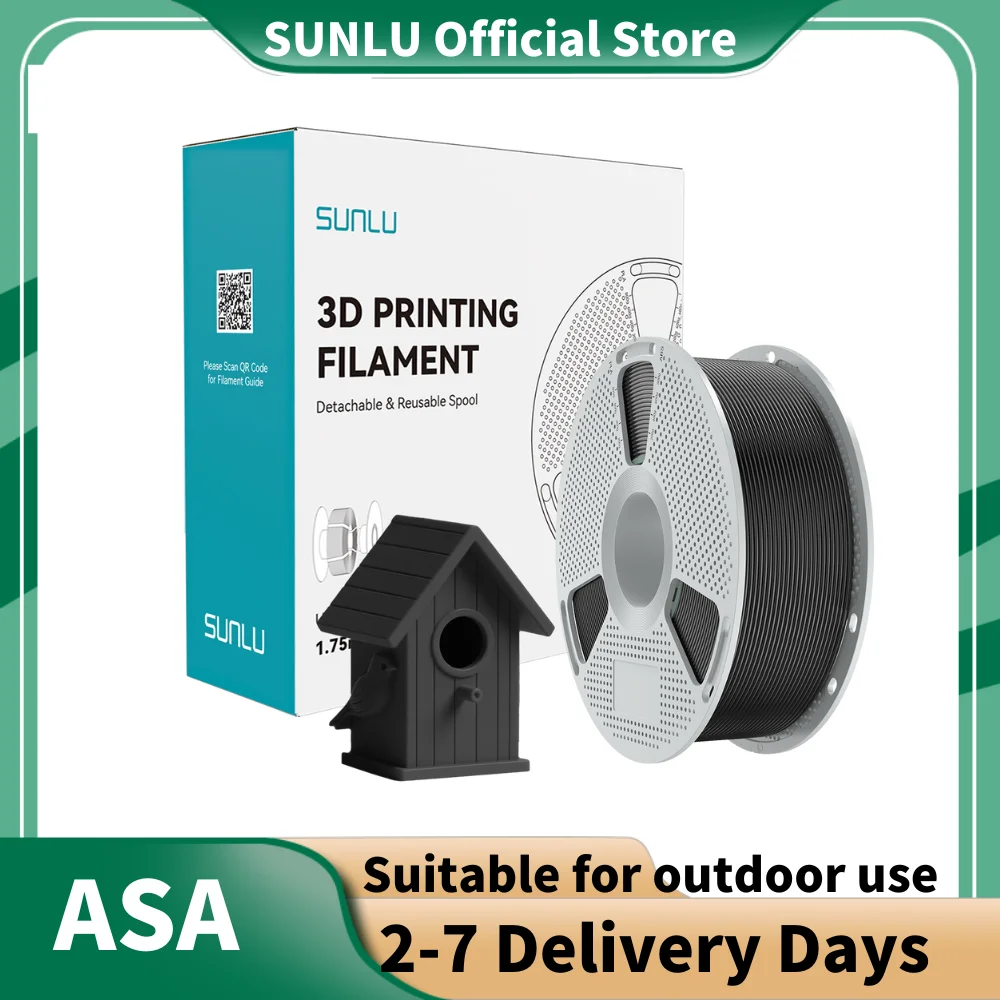
This inherent resilience ensures that 3D printed objects maintain their structural integrity and aesthetic quality over extended periods, even when subjected to harsh sunlight or moisture. Imagine a birdhouse printed for a school project; it will withstand seasons without degrading. This capability is a significant advantage for functional prototypes and end-use parts.
Unlike common PLA, which quickly becomes brittle and fades under UV light, or even ABS, which can yellow and warp over time, ASA maintains its structural integrity and vibrant appearance. This makes it a superior choice for long-lasting outdoor applications, reducing the need for frequent reprints.
Optimized Printing for Consistent Outcomes
Achieving optimal results with ASA filament involves specific print settings to leverage its material advantages fully. Recommended nozzle temperatures range from 230-260°C, while the build plate should be heated to 80-120°C. These temperatures are higher than those typically used for PLA, indicating the material's greater thermal stability. Print speed is suggested between 50-100mm/s, allowing for a balance between detail and efficiency. Cooling fan speed should be reduced to 50% or turned off entirely to prevent warping and improve layer adhesion.
These precise settings are crucial for minimizing common issues like warping and cracking, which can occur with high-temperature materials if not properly managed. An enclosed print environment is strongly recommended, as indicated by the product's guidelines. This helps maintain a stable ambient temperature around the print, which is vital for successful ASA prints. Consistent heat distribution is key.
For educators, teaching students the importance of these parameters provides valuable insight into material science and advanced 3D printing techniques. Compared to the more forgiving nature of PLA, working with ASA introduces students to the complexities and rewards of engineering-grade materials. This hands-on experience is invaluable.
Innovative Spool Design for Sustainability and Convenience
The SUNLU ASA filament features a detachable and reusable spool design. This innovative approach allows users to convert the reel, simplifying storage and reducing plastic waste. The spool's dimensions, with a 200mm diameter and 68mm width, are standard for most desktop 3D printers.
This design not only contributes to environmental sustainability by encouraging spool reuse but also offers practical benefits for users. Once the filament is consumed, the core can be detached and used with refill coils, minimizing the accumulation of empty plastic spools. It's a smart solution.
Many generic filaments come on single-use plastic spools, which often end up in landfills. The SUNLU design represents a thoughtful upgrade, aligning with modern sustainability practices and offering a more organized workspace for hobbyists and educational institutions alike. This reduces waste.
Applications Beyond the Classroom
The inherent toughness and environmental resistance of ASA filament open up a wide array of practical applications. From outdoor signage and garden fixtures to drone components and automotive parts, the material's ability to withstand harsh conditions makes it a go-to for functional prints. Its water-resistant properties are particularly beneficial for projects exposed to rain or high humidity, preventing material degradation and ensuring longevity.
Consider the creation of custom enclosures for outdoor electronics. The material's properties ensure the internal components remain protected from moisture and UV exposure. This extends the lifespan of the device. Such applications demonstrate the real-world utility of advanced 3D printing materials.
While general-purpose filaments might suffice for indoor decorative items, the SUNLU ASA filament excels where structural integrity and environmental resilience are paramount. It offers a clear advantage for projects that demand more than just aesthetic appeal. The material is truly robust.
Educational Empowerment Through Advanced Materials
For STEM education, introducing students to ASA filament provides a tangible lesson in material science and engineering. Understanding why certain materials are chosen for specific applications, and the printing challenges associated with them, fosters a deeper appreciation for design and manufacturing processes. The ability to print durable, weather-resistant objects allows students to bring their innovative ideas to life in a more robust and functional way.
Teaching students about the need for an enclosure, proper bed adhesion (like using a brim), and temperature management with ASA builds critical problem-solving skills. These are essential for future engineers. It also emphasizes the importance of safety protocols in a workshop environment.
Compared to simpler filaments, ASA demands more precise control and understanding, which pushes students to a higher level of technical proficiency. This preparation is invaluable for careers in engineering, product design, and advanced manufacturing. It's a valuable learning curve.
The Long-Term Value of Durability
Investing in a filament like SUNLU ASA, despite a potentially higher initial cost than basic PLA, offers significant long-term value. The durability and resistance to environmental factors mean that printed parts will last longer, reducing the need for reprints and replacements. This translates into cost savings over the lifespan of the printed object.
For educational institutions, this means projects can be displayed outdoors without fear of rapid degradation, serving as lasting examples of student work. For hobbyists, it means functional prints that truly perform their intended purpose for years. This is a smart investment.
Considering the time and effort invested in designing and printing, using a material that ensures longevity offers a superior return on investment compared to cheaper, less durable alternatives. The value extends beyond the initial purchase. It's about lasting quality.
Imagine the satisfaction of creating functional, durable objects that withstand the elements, whether for a school project displayed outdoors or a custom part for a personal vehicle. This filament empowers creators to push the boundaries of what's possible with desktop 3D printing, delivering robust results that endure. The future of your outdoor projects starts here.