SUNLU AMS Filament Heater for Bambu Lab AMS Gen 1
Official Store Deal
Expert Analysis Overview
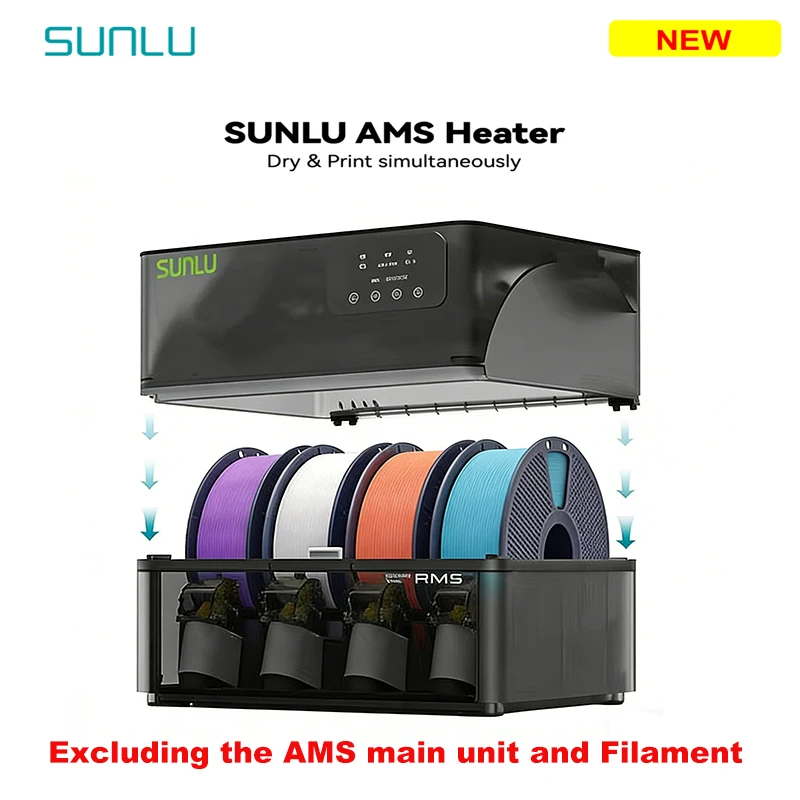
The SUNLU AMS Heater is a critical thermal management accessory engineered for the Bambu Lab AMS Gen 1, specifically designed to enable simultaneous filament drying and 3D printing. This device addresses the pervasive issue of moisture absorption in 3D printing filaments, a primary cause of print failures and compromised part quality. Its integration with an existing AMS unit transforms a standard multi-material system into a high-performance, moisture-controlled printing environment.
The AMS Heater features a sophisticated internal heating system capable of reaching temperatures up to 70°C. Visible heating elements indicate an active thermal process. This temperature range is crucial for effectively extracting moisture from a wide array of hygroscopic filaments, including PETG, Nylon, ABS, and PVA, which are notoriously sensitive to humidity.
Circulation is managed by a dual-airflow system. This design ensures uniform heat distribution throughout the filament spools, preventing localized overheating or uneven drying. Consistent thermal exposure is paramount for maintaining the filament's material properties and preventing degradation, which can lead to brittle filament or inconsistent extrusion.
Unlike passive drying solutions or basic filament boxes that rely on desiccant alone, this active heating system provides a controlled, elevated temperature environment. This active approach significantly accelerates the drying process, making it a more efficient solution for users requiring immediate access to dry filament for critical prints. It's a direct upgrade from ambient drying.
Wet filament is a significant impediment to achieving high-quality 3D prints. The visual comparison of printed elephants clearly demonstrates the impact: a model printed with dried PLA exhibits superior surface finish and structural integrity, while the wet-filament counterpart shows pronounced stringing, poor layer adhesion, and an overall lack of definition. This is a common problem.
Moisture within filament, when heated in the printer's hotend, vaporizes into steam bubbles. These bubbles disrupt the extrusion process, leading to inconsistent flow, voids in the printed part, and a rough surface texture. Such defects compromise the mechanical strength and aesthetic appeal of the final product, rendering many prints unusable for engineering or functional applications.
By actively drying filament to optimal levels, the AMS Heater directly addresses these root causes of print failure. This capability is particularly beneficial for producing dimensionally accurate engineering parts where tight tolerances and consistent material properties are non-negotiable. The reduction in stringing and improved layer adhesion translate into more reliable prints and less material waste, a tangible return on investment for any serious maker.
The installation process for the AMS Heater is designed for simplicity, requiring only three steps: loosening existing components, removing and installing the heater unit, and then tightening the fasteners. The inclusion of necessary hinges, screws, and a hexagonal screwdriver in the packing list underscores a commitment to user-friendly integration. This process is straightforward.
The design ensures that installing the AMS Heater will not damage the existing Bambu Lab AMS unit. This guarantees the longevity and continued functionality of the core multi-material system, providing users with confidence in their upgrade path. The mechanical fit appears secure and stable.
This integrated approach offers a distinct advantage over standalone filament dryers, which often require manual transfer of spools or separate feeding mechanisms. The SUNLU AMS Heater allows for simultaneous drying and printing directly from the AMS, streamlining the workflow and minimizing interruptions. This efficiency is crucial for multi-day prints or high-volume production scenarios, where continuous operation is key.
The ability to maintain filament at a consistent, dry state is foundational for printing with advanced and hygroscopic materials. Filaments like Nylon, known for its strength and flexibility, are highly susceptible to moisture, which can severely degrade its mechanical properties and printability. The heater provides a controlled environment.
For materials such as PETG, which can exhibit stringing and poor adhesion when wet, active drying significantly improves print quality, leading to smoother surfaces and stronger bonds between layers. This precision in material handling expands the range of printable filaments and the reliability of their output. It enhances material compatibility.
Furthermore, the consistent dryness provided by the AMS Heater ensures that the filament's diameter remains stable, leading to more consistent extrusion rates. This contributes directly to improved dimensional accuracy in printed parts, a critical factor for functional prototypes and end-use components. The system minimizes print failures by addressing the fundamental material condition.
The SUNLU AMS Heater represents a significant upgrade for any Bambu Lab AMS Gen 1 user seeking to optimize their 3D printing workflow. By preventing common moisture-related issues, it reduces the frequency of failed prints, thereby saving both time and expensive filament material. This translates into a lower overall cost per successful print.
The convenience of simultaneous drying and printing means less manual intervention and a more automated process. Users can load their spools, initiate a print, and trust that the filament will be maintained in optimal condition throughout the entire duration, even for extended print jobs. This operational efficiency is a key benefit.
For those who frequently print with engineering-grade or specialty filaments, or who operate in humid environments, this heater transitions from a convenience to a necessity. It empowers users to achieve professional-grade results consistently, pushing the boundaries of what is possible with their 3D printer. Imagine consistently producing flawless, strong, and dimensionally accurate parts, free from the frustrations of stringing, warping, or poor layer adhesion, and confidently tackling complex projects with hygroscopic materials, knowing your filament is always in prime condition for optimal extrusion and superior print quality.
Precision Thermal Management for Filament Integrity
The AMS Heater features a sophisticated internal heating system capable of reaching temperatures up to 70°C. Visible heating elements indicate an active thermal process. This temperature range is crucial for effectively extracting moisture from a wide array of hygroscopic filaments, including PETG, Nylon, ABS, and PVA, which are notoriously sensitive to humidity.
Circulation is managed by a dual-airflow system. This design ensures uniform heat distribution throughout the filament spools, preventing localized overheating or uneven drying. Consistent thermal exposure is paramount for maintaining the filament's material properties and preventing degradation, which can lead to brittle filament or inconsistent extrusion.
Unlike passive drying solutions or basic filament boxes that rely on desiccant alone, this active heating system provides a controlled, elevated temperature environment. This active approach significantly accelerates the drying process, making it a more efficient solution for users requiring immediate access to dry filament for critical prints. It's a direct upgrade from ambient drying.
Mitigating Print Failures and Enhancing Part Quality
Wet filament is a significant impediment to achieving high-quality 3D prints. The visual comparison of printed elephants clearly demonstrates the impact: a model printed with dried PLA exhibits superior surface finish and structural integrity, while the wet-filament counterpart shows pronounced stringing, poor layer adhesion, and an overall lack of definition. This is a common problem.
Moisture within filament, when heated in the printer's hotend, vaporizes into steam bubbles. These bubbles disrupt the extrusion process, leading to inconsistent flow, voids in the printed part, and a rough surface texture. Such defects compromise the mechanical strength and aesthetic appeal of the final product, rendering many prints unusable for engineering or functional applications.
By actively drying filament to optimal levels, the AMS Heater directly addresses these root causes of print failure. This capability is particularly beneficial for producing dimensionally accurate engineering parts where tight tolerances and consistent material properties are non-negotiable. The reduction in stringing and improved layer adhesion translate into more reliable prints and less material waste, a tangible return on investment for any serious maker.
Seamless Integration and Operational Efficiency
The installation process for the AMS Heater is designed for simplicity, requiring only three steps: loosening existing components, removing and installing the heater unit, and then tightening the fasteners. The inclusion of necessary hinges, screws, and a hexagonal screwdriver in the packing list underscores a commitment to user-friendly integration. This process is straightforward.
The design ensures that installing the AMS Heater will not damage the existing Bambu Lab AMS unit. This guarantees the longevity and continued functionality of the core multi-material system, providing users with confidence in their upgrade path. The mechanical fit appears secure and stable.
This integrated approach offers a distinct advantage over standalone filament dryers, which often require manual transfer of spools or separate feeding mechanisms. The SUNLU AMS Heater allows for simultaneous drying and printing directly from the AMS, streamlining the workflow and minimizing interruptions. This efficiency is crucial for multi-day prints or high-volume production scenarios, where continuous operation is key.
Material Science and Advanced Filament Handling
The ability to maintain filament at a consistent, dry state is foundational for printing with advanced and hygroscopic materials. Filaments like Nylon, known for its strength and flexibility, are highly susceptible to moisture, which can severely degrade its mechanical properties and printability. The heater provides a controlled environment.
For materials such as PETG, which can exhibit stringing and poor adhesion when wet, active drying significantly improves print quality, leading to smoother surfaces and stronger bonds between layers. This precision in material handling expands the range of printable filaments and the reliability of their output. It enhances material compatibility.
Furthermore, the consistent dryness provided by the AMS Heater ensures that the filament's diameter remains stable, leading to more consistent extrusion rates. This contributes directly to improved dimensional accuracy in printed parts, a critical factor for functional prototypes and end-use components. The system minimizes print failures by addressing the fundamental material condition.
Value Proposition and Enhanced Workflow
The SUNLU AMS Heater represents a significant upgrade for any Bambu Lab AMS Gen 1 user seeking to optimize their 3D printing workflow. By preventing common moisture-related issues, it reduces the frequency of failed prints, thereby saving both time and expensive filament material. This translates into a lower overall cost per successful print.
The convenience of simultaneous drying and printing means less manual intervention and a more automated process. Users can load their spools, initiate a print, and trust that the filament will be maintained in optimal condition throughout the entire duration, even for extended print jobs. This operational efficiency is a key benefit.
For those who frequently print with engineering-grade or specialty filaments, or who operate in humid environments, this heater transitions from a convenience to a necessity. It empowers users to achieve professional-grade results consistently, pushing the boundaries of what is possible with their 3D printer. Imagine consistently producing flawless, strong, and dimensionally accurate parts, free from the frustrations of stringing, warping, or poor layer adhesion, and confidently tackling complex projects with hygroscopic materials, knowing your filament is always in prime condition for optimal extrusion and superior print quality.