Sumry 3600W Hybrid Solar Inverter
Official Store Deal
Expert Analysis Overview
The Sumry 3600W Hybrid Solar Inverter is a robust power management unit engineered for off-grid and grid-tied residential solar applications, prioritizing stable power delivery and battery longevity. This device integrates a pure sine wave inverter, a high-efficiency MPPT solar charger, and a utility charger into a single, compact enclosure. Its design addresses common frustrations with basic solar setups, offering a comprehensive solution for energy independence and optimized power flow.
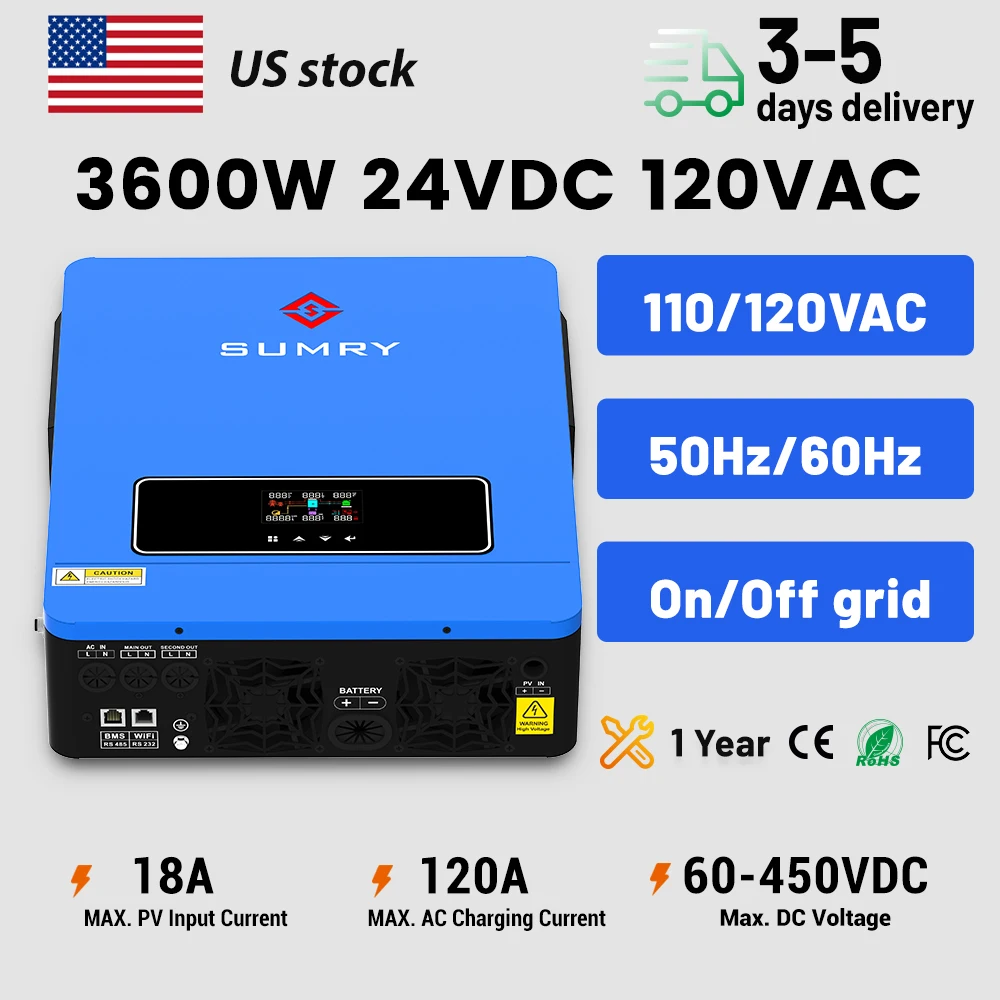
This inverter delivers a continuous output of 3600 watts, converting 24VDC battery power to 110/120VAC for household appliances. The pure sine wave output is critical. Unlike modified sine wave inverters that can damage sensitive electronics, this unit provides clean, stable power. This ensures compatibility with all types of loads, from delicate medical equipment to power tools.
Its 24VDC battery system input is a common choice for smaller to medium-sized residential setups. This voltage offers a balance between efficiency and system complexity. Users benefit from reduced current draw compared to 12V systems, leading to smaller wire gauges and less voltage drop over distance.
One of the most significant advantages of this Sumry inverter is its hybrid functionality, supporting both on-grid and off-grid operations. This flexibility allows users to configure their system for maximum self-consumption, backup power, or even grid interaction where permitted. The unit's ability to operate at both 50Hz and 60Hz further enhances its global applicability, adapting to various regional electrical standards.
The integrated MPPT (Maximum Power Point Tracking) solar charger boasts a substantial 120A capacity. This high amperage allows for a significant solar array input, maximizing energy harvest from photovoltaic panels. The MPPT technology dynamically adjusts to the solar panel's voltage and current, ensuring optimal power extraction even under varying light conditions. This is a substantial upgrade over older PWM (Pulse Width Modulation) chargers, which are less efficient, especially in colder temperatures or when panels are partially shaded.
The inverter offers three distinct charging modes: "Solar First," "Solar and Utility (Default)," and "Only Solar." These modes provide granular control over how the system prioritizes energy sources for battery charging. "Solar First" is ideal for maximizing renewable energy use, while "Solar and Utility" ensures batteries are always charged, using grid power as a supplement. "Only Solar" is perfect for completely off-grid scenarios, preventing any utility draw.
Similarly, three output modes are available: "Mains First," "Solar First (Default)," and "SBU Priority." "Mains First" prioritizes grid power, using the inverter for backup only. "Solar First" maximizes self-consumption, drawing from solar and batteries before resorting to the grid. "SBU Priority" (Solar-Battery-Utility) is often the most efficient for hybrid systems, using solar, then battery, then utility power in sequence. This intelligent management minimizes reliance on expensive grid electricity.
The visible casing suggests a durable metal construction, essential for heat dissipation and protection of internal components. The unit features an intelligent cooling fan system. A built-in sensor chip adjusts fan speed based on ambient temperature, maintaining optimal operating conditions and extending the inverter's lifespan. This proactive thermal management prevents overheating, a common failure point in less sophisticated units. Effective cooling is paramount for sustained high-power output.
From an electrical safety perspective, the terminals appear robust, designed for secure wire connections. Proper wire gauge selection is critical for the 120A AC charging current and the 18A maximum PV input current. The unit's specifications, including a maximum DC voltage of 450VDC from the PV array, indicate it can handle modern high-voltage solar strings. This reduces current and associated resistive losses in the solar wiring. The CE and FC certifications visible in the imagery provide a level of assurance regarding compliance with European and US electrical safety and electromagnetic compatibility standards.
This inverter supports a wide range of 24V battery types, including GEL, FLD (Flooded), LI (Lithium), and USE (User-defined). This broad compatibility is a significant advantage, allowing users to select the battery technology best suited for their budget, cycle life requirements, and environmental conditions. The "User-defined" option is particularly valuable for optimizing charging parameters for specific battery chemistries, ensuring maximum battery health and longevity. Incorrect charging parameters are a leading cause of premature battery failure.
Unlike many entry-level inverters that offer limited battery support, this unit's versatility allows for future upgrades or changes in battery technology without replacing the entire inverter. This flexibility provides long-term value. The clear labeling of input and output terminals, as seen in the images, simplifies installation for qualified electricians. The unit's compact form factor also allows for flexible mounting options, whether in a utility room or an outdoor enclosure.
Imagine a future where your home operates with consistent, reliable power, insulated from grid fluctuations and outages. This inverter provides the foundation for that energy independence, seamlessly managing solar input, battery storage, and utility interaction. It ensures your critical loads remain powered, your energy bills are reduced, and your investment in solar energy is maximized, all while maintaining the highest standards of electrical safety and efficiency.
Core Power Conversion Capabilities
This inverter delivers a continuous output of 3600 watts, converting 24VDC battery power to 110/120VAC for household appliances. The pure sine wave output is critical. Unlike modified sine wave inverters that can damage sensitive electronics, this unit provides clean, stable power. This ensures compatibility with all types of loads, from delicate medical equipment to power tools.
Its 24VDC battery system input is a common choice for smaller to medium-sized residential setups. This voltage offers a balance between efficiency and system complexity. Users benefit from reduced current draw compared to 12V systems, leading to smaller wire gauges and less voltage drop over distance.
Advanced Charging and Output Management
One of the most significant advantages of this Sumry inverter is its hybrid functionality, supporting both on-grid and off-grid operations. This flexibility allows users to configure their system for maximum self-consumption, backup power, or even grid interaction where permitted. The unit's ability to operate at both 50Hz and 60Hz further enhances its global applicability, adapting to various regional electrical standards.
The integrated MPPT (Maximum Power Point Tracking) solar charger boasts a substantial 120A capacity. This high amperage allows for a significant solar array input, maximizing energy harvest from photovoltaic panels. The MPPT technology dynamically adjusts to the solar panel's voltage and current, ensuring optimal power extraction even under varying light conditions. This is a substantial upgrade over older PWM (Pulse Width Modulation) chargers, which are less efficient, especially in colder temperatures or when panels are partially shaded.
Flexible Energy Prioritization
The inverter offers three distinct charging modes: "Solar First," "Solar and Utility (Default)," and "Only Solar." These modes provide granular control over how the system prioritizes energy sources for battery charging. "Solar First" is ideal for maximizing renewable energy use, while "Solar and Utility" ensures batteries are always charged, using grid power as a supplement. "Only Solar" is perfect for completely off-grid scenarios, preventing any utility draw.
Similarly, three output modes are available: "Mains First," "Solar First (Default)," and "SBU Priority." "Mains First" prioritizes grid power, using the inverter for backup only. "Solar First" maximizes self-consumption, drawing from solar and batteries before resorting to the grid. "SBU Priority" (Solar-Battery-Utility) is often the most efficient for hybrid systems, using solar, then battery, then utility power in sequence. This intelligent management minimizes reliance on expensive grid electricity.
Robust Construction and Thermal Management
The visible casing suggests a durable metal construction, essential for heat dissipation and protection of internal components. The unit features an intelligent cooling fan system. A built-in sensor chip adjusts fan speed based on ambient temperature, maintaining optimal operating conditions and extending the inverter's lifespan. This proactive thermal management prevents overheating, a common failure point in less sophisticated units. Effective cooling is paramount for sustained high-power output.
From an electrical safety perspective, the terminals appear robust, designed for secure wire connections. Proper wire gauge selection is critical for the 120A AC charging current and the 18A maximum PV input current. The unit's specifications, including a maximum DC voltage of 450VDC from the PV array, indicate it can handle modern high-voltage solar strings. This reduces current and associated resistive losses in the solar wiring. The CE and FC certifications visible in the imagery provide a level of assurance regarding compliance with European and US electrical safety and electromagnetic compatibility standards.
Battery Compatibility and System Integration
This inverter supports a wide range of 24V battery types, including GEL, FLD (Flooded), LI (Lithium), and USE (User-defined). This broad compatibility is a significant advantage, allowing users to select the battery technology best suited for their budget, cycle life requirements, and environmental conditions. The "User-defined" option is particularly valuable for optimizing charging parameters for specific battery chemistries, ensuring maximum battery health and longevity. Incorrect charging parameters are a leading cause of premature battery failure.
Unlike many entry-level inverters that offer limited battery support, this unit's versatility allows for future upgrades or changes in battery technology without replacing the entire inverter. This flexibility provides long-term value. The clear labeling of input and output terminals, as seen in the images, simplifies installation for qualified electricians. The unit's compact form factor also allows for flexible mounting options, whether in a utility room or an outdoor enclosure.
Imagine a future where your home operates with consistent, reliable power, insulated from grid fluctuations and outages. This inverter provides the foundation for that energy independence, seamlessly managing solar input, battery storage, and utility interaction. It ensures your critical loads remain powered, your energy bills are reduced, and your investment in solar energy is maximized, all while maintaining the highest standards of electrical safety and efficiency.