Solderless Type-C to 2-Pin Terminal Adapters
Official Store Deal
Expert Analysis Overview
The Solderless Type-C to 2-Pin Terminal Adapter is a highly specialized connectivity solution designed for electronics enthusiasts and repair technicians seeking efficient, reconfigurable power and data interfaces. This innovative series of adapters addresses a common frustration: the need to interface modern USB-C or Micro USB power sources with legacy or custom devices that utilize simple 2-pin power inputs, all without the complexities and risks associated with soldering. It is a critical tool for prototyping, quick repairs, and custom power solutions, offering a streamlined approach to electrical connections.
This adapter collection fundamentally transforms how power and data are managed between disparate systems. Unlike traditional methods that demand intricate soldering or proprietary connectors, these units provide a universal, tool-free terminal block. This allows for rapid prototyping and repair scenarios. The core design centers on a robust screw-terminal interface, eliminating the need for specialized soldering equipment or advanced skills. This is a significant advantage for field repairs or educational projects.
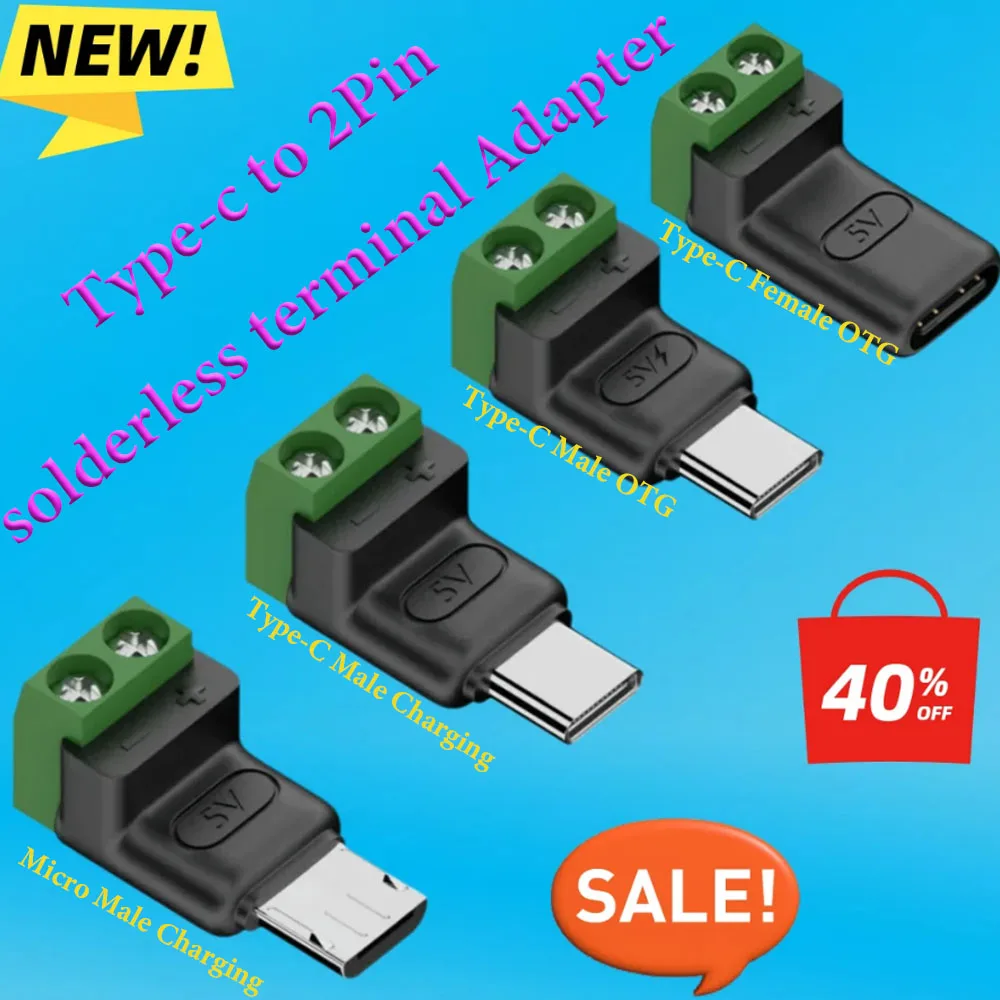
Visible construction implies a focus on practical utility. The green terminal block, a standard in electronics, ensures clear polarity identification. The black housing provides insulation and mechanical protection. These adapters are not merely converters; they are enablers of broader compatibility.
Standard USB cables often come with fixed connectors. These adapters break that mold. They offer unparalleled flexibility.
Each adapter variant in this collection is engineered for specific input/output requirements. For instance, the Type-C Female OTG Power Withdrawal model (Model A) is designed to draw 5V power from a Type-C source, delivering it to a 2-pin terminal. This is ideal for powering non-smart devices like small appliances or custom circuits from a modern USB-C charger. The input terminal accepts a standard Type-C charging wire. The output delivers 15W power at 5V, supporting a maximum of 3A current. This capability extends the utility of existing USB-C infrastructure.
The Micro Male Charging model (Model B) reverses this, taking a 2-pin input to charge devices via a Micro USB male output. It supports 5V, 9V, or 12V power supplies, making it versatile for charging power banks, mobile phones, or even powering heat sinks and routers. A 12V input is suitable for heat sinks. A 5V input is for mobile phones, with a maximum support of 3A. This flexibility is crucial for diverse applications.
Model C, the Type-C Male OTG Power Withdrawal, functions similarly to Model A but with a male Type-C connector for direct insertion into chargers or power banks. It also provides 15W power at 5V, 3A max, for non-smart devices. This variant offers direct integration. It simplifies power distribution.
Finally, Model D, the Type-C Charging model, takes a 2-pin input to charge devices via a Type-C male output. It supports 5V, 9V, or 12V power supplies, suitable for power banks, mobile phones, and laptops. A 12V input connects to laptops. A 5V input connects to mobile phones, supporting a maximum of 3A. These diverse configurations ensure a solution for nearly any common power conversion need.
The specified power ratings across the adapters—typically 5V, 15W, with a maximum current of 3A—are critical for understanding their application scope. These values indicate suitability for a wide range of low-power electronics. For instance, the 3A current capability at 5V is sufficient for charging most smartphones, powering single-board computers like Raspberry Pis, or driving various LED strips and small motors. The ability to handle up to 12V in certain models (B and D) further extends their utility to devices requiring higher voltages, such as some routers or cooling fans.
Maintaining clean signal transmission is paramount in any electrical connection. The solderless screw terminals, when properly tightened, provide a secure mechanical and electrical connection. This minimizes resistance and potential signal degradation, which is often a concern with less robust connection methods. The direct wire-to-terminal interface reduces intermediate connection points. This enhances overall reliability. Users must ensure wires are properly stripped and inserted.
Compared to crimp connectors, screw terminals offer reusability. They are also more forgiving than soldering. This makes them ideal for experimental setups.
From a durability standpoint, the visible materials imply a functional lifespan suitable for repeated use in various environments. The plastic housing, likely ABS or a similar engineering polymer, provides adequate protection against minor impacts and electrical insulation. The metal contacts within the screw terminals are expected to be brass or a similar conductive alloy, offering good conductivity and resistance to corrosion over time. The USB and Micro USB connectors themselves are standard components, their durability largely dependent on the quality of the mating cable and the care taken during insertion and removal.
Long-term reliability of connections is a key assessment point for any electrical component. The screw-terminal mechanism, while convenient, requires proper installation to ensure lasting contact. Over-tightening can strip threads, while under-tightening can lead to intermittent connections or increased resistance. However, when correctly installed, these terminals can provide stable power delivery for extended periods. They resist vibrations better than some quick-connect solutions. Regular inspection of connections is advisable, especially in applications subject to movement or temperature fluctuations.
Unlike flimsy, single-use adapters, these are designed for repeated configuration. Their modular nature extends their practical lifespan. This reduces waste over time.
The true value of these adapters lies in their versatility. For an electronics repair technician, they are invaluable for diagnosing power issues, bypassing damaged charging ports, or providing temporary power to a device during testing. Imagine a scenario where a laptop's Type-C charging port is damaged, but the internal battery can be charged via direct connection to the power rails. A Type-C charging model (Model D) could be used to feed power directly, allowing for data recovery or temporary use until a permanent repair is made. This saves expensive equipment.
For hobbyists and makers, these adapters simplify prototyping. Connecting a USB power bank to a custom circuit board becomes a matter of stripping two wires and tightening two screws, rather than designing a custom PCB with a USB input or soldering directly to a cable. This accelerates development cycles. It lowers the barrier to entry for complex projects. The ability to quickly swap out power sources or connect different devices without permanent modifications is a significant advantage.
These adapters prevent the need for costly, time-consuming custom solutions. They leverage existing power standards. This makes them highly adaptable.
Unlike generic USB cables that offer fixed functionality, these solderless terminal adapters provide a dynamic interface. They allow users to define the power output or input as needed. This flexibility is a significant upgrade from a simple cable. A standard cable is a passive conduit. These adapters are active conversion points. They empower users with greater control over their power delivery systems.
Consider the common issue of a proprietary power connector failing on a small device. Instead of searching for an obscure replacement, these adapters allow for a standard USB-C or Micro USB cable to be adapted to the device's internal 2-pin power input. This extends the life of otherwise functional equipment. It reduces electronic waste. The cost-per-use becomes exceptionally low when considering the alternatives.
These adapters offer a cost-effective solution. They prevent premature device obsolescence. This is smart engineering.
These solderless terminal adapters represent a practical and economical solution for a wide array of electrical connectivity challenges. Their design prioritizes ease of use and reconfigurability, making them indispensable for anyone working with custom electronics, repairs, or prototyping. The range of Type-C and Micro USB options ensures compatibility with most modern portable devices and power sources. This product line offers significant capability enhancement, allowing users to troubleshoot, power, and integrate components faster and more reliably. Imagine the satisfaction of quickly bringing a dormant device back to life with a simple, secure connection, or rapidly iterating on a new project without the hassle of intricate wiring. This is the promise delivered by these versatile adapters.
Bridging Modern Connectivity to Legacy Systems
This adapter collection fundamentally transforms how power and data are managed between disparate systems. Unlike traditional methods that demand intricate soldering or proprietary connectors, these units provide a universal, tool-free terminal block. This allows for rapid prototyping and repair scenarios. The core design centers on a robust screw-terminal interface, eliminating the need for specialized soldering equipment or advanced skills. This is a significant advantage for field repairs or educational projects.
Visible construction implies a focus on practical utility. The green terminal block, a standard in electronics, ensures clear polarity identification. The black housing provides insulation and mechanical protection. These adapters are not merely converters; they are enablers of broader compatibility.
Standard USB cables often come with fixed connectors. These adapters break that mold. They offer unparalleled flexibility.
The Engineering Behind Expedient Connections
Each adapter variant in this collection is engineered for specific input/output requirements. For instance, the Type-C Female OTG Power Withdrawal model (Model A) is designed to draw 5V power from a Type-C source, delivering it to a 2-pin terminal. This is ideal for powering non-smart devices like small appliances or custom circuits from a modern USB-C charger. The input terminal accepts a standard Type-C charging wire. The output delivers 15W power at 5V, supporting a maximum of 3A current. This capability extends the utility of existing USB-C infrastructure.
The Micro Male Charging model (Model B) reverses this, taking a 2-pin input to charge devices via a Micro USB male output. It supports 5V, 9V, or 12V power supplies, making it versatile for charging power banks, mobile phones, or even powering heat sinks and routers. A 12V input is suitable for heat sinks. A 5V input is for mobile phones, with a maximum support of 3A. This flexibility is crucial for diverse applications.
Model C, the Type-C Male OTG Power Withdrawal, functions similarly to Model A but with a male Type-C connector for direct insertion into chargers or power banks. It also provides 15W power at 5V, 3A max, for non-smart devices. This variant offers direct integration. It simplifies power distribution.
Finally, Model D, the Type-C Charging model, takes a 2-pin input to charge devices via a Type-C male output. It supports 5V, 9V, or 12V power supplies, suitable for power banks, mobile phones, and laptops. A 12V input connects to laptops. A 5V input connects to mobile phones, supporting a maximum of 3A. These diverse configurations ensure a solution for nearly any common power conversion need.
Current Pathways and Voltage Integrity
The specified power ratings across the adapters—typically 5V, 15W, with a maximum current of 3A—are critical for understanding their application scope. These values indicate suitability for a wide range of low-power electronics. For instance, the 3A current capability at 5V is sufficient for charging most smartphones, powering single-board computers like Raspberry Pis, or driving various LED strips and small motors. The ability to handle up to 12V in certain models (B and D) further extends their utility to devices requiring higher voltages, such as some routers or cooling fans.
Maintaining clean signal transmission is paramount in any electrical connection. The solderless screw terminals, when properly tightened, provide a secure mechanical and electrical connection. This minimizes resistance and potential signal degradation, which is often a concern with less robust connection methods. The direct wire-to-terminal interface reduces intermediate connection points. This enhances overall reliability. Users must ensure wires are properly stripped and inserted.
Compared to crimp connectors, screw terminals offer reusability. They are also more forgiving than soldering. This makes them ideal for experimental setups.
Durability in the Field and Beyond
From a durability standpoint, the visible materials imply a functional lifespan suitable for repeated use in various environments. The plastic housing, likely ABS or a similar engineering polymer, provides adequate protection against minor impacts and electrical insulation. The metal contacts within the screw terminals are expected to be brass or a similar conductive alloy, offering good conductivity and resistance to corrosion over time. The USB and Micro USB connectors themselves are standard components, their durability largely dependent on the quality of the mating cable and the care taken during insertion and removal.
Long-term reliability of connections is a key assessment point for any electrical component. The screw-terminal mechanism, while convenient, requires proper installation to ensure lasting contact. Over-tightening can strip threads, while under-tightening can lead to intermittent connections or increased resistance. However, when correctly installed, these terminals can provide stable power delivery for extended periods. They resist vibrations better than some quick-connect solutions. Regular inspection of connections is advisable, especially in applications subject to movement or temperature fluctuations.
Unlike flimsy, single-use adapters, these are designed for repeated configuration. Their modular nature extends their practical lifespan. This reduces waste over time.
Versatility in Application: A Technician's Ally
The true value of these adapters lies in their versatility. For an electronics repair technician, they are invaluable for diagnosing power issues, bypassing damaged charging ports, or providing temporary power to a device during testing. Imagine a scenario where a laptop's Type-C charging port is damaged, but the internal battery can be charged via direct connection to the power rails. A Type-C charging model (Model D) could be used to feed power directly, allowing for data recovery or temporary use until a permanent repair is made. This saves expensive equipment.
For hobbyists and makers, these adapters simplify prototyping. Connecting a USB power bank to a custom circuit board becomes a matter of stripping two wires and tightening two screws, rather than designing a custom PCB with a USB input or soldering directly to a cable. This accelerates development cycles. It lowers the barrier to entry for complex projects. The ability to quickly swap out power sources or connect different devices without permanent modifications is a significant advantage.
These adapters prevent the need for costly, time-consuming custom solutions. They leverage existing power standards. This makes them highly adaptable.
The Upgrade Frame: Beyond Standard Cables
Unlike generic USB cables that offer fixed functionality, these solderless terminal adapters provide a dynamic interface. They allow users to define the power output or input as needed. This flexibility is a significant upgrade from a simple cable. A standard cable is a passive conduit. These adapters are active conversion points. They empower users with greater control over their power delivery systems.
Consider the common issue of a proprietary power connector failing on a small device. Instead of searching for an obscure replacement, these adapters allow for a standard USB-C or Micro USB cable to be adapted to the device's internal 2-pin power input. This extends the life of otherwise functional equipment. It reduces electronic waste. The cost-per-use becomes exceptionally low when considering the alternatives.
These adapters offer a cost-effective solution. They prevent premature device obsolescence. This is smart engineering.
Final Assessment: Empowering Connectivity
These solderless terminal adapters represent a practical and economical solution for a wide array of electrical connectivity challenges. Their design prioritizes ease of use and reconfigurability, making them indispensable for anyone working with custom electronics, repairs, or prototyping. The range of Type-C and Micro USB options ensures compatibility with most modern portable devices and power sources. This product line offers significant capability enhancement, allowing users to troubleshoot, power, and integrate components faster and more reliably. Imagine the satisfaction of quickly bringing a dormant device back to life with a simple, secure connection, or rapidly iterating on a new project without the hassle of intricate wiring. This is the promise delivered by these versatile adapters.