Soldering Iron Heat Insert Kit: M2-M8 Threaded Tip Adapter Set
Official Store Deal
Expert Analysis Overview
Precision Fastening for 3D Prints: An Essential Upgrade
The Soldering Iron Heat Insert Kit is a specialized tool set designed for makers and tinkerers who frequently integrate threaded fasteners into 3D printed components. This kit represents a significant upgrade from improvisational methods, offering a structured approach to embedding heat-set inserts. It targets users of popular 936, 937, and 900M series soldering irons, providing a dedicated interface for precise thermal embedding. The core function is straightforward.
The Anatomy of Secure Connections
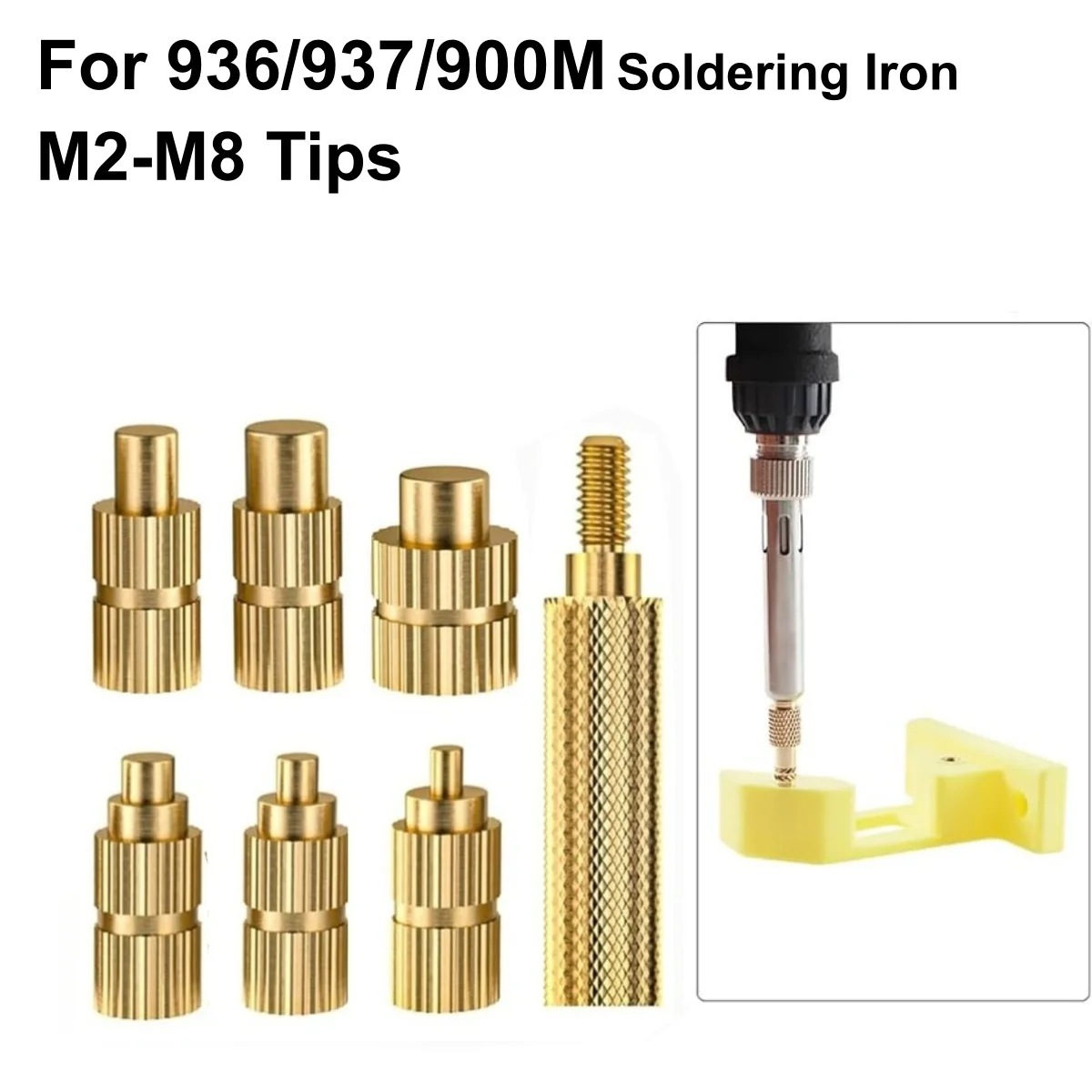
The primary components visible in this kit are a series of brass threaded tips and a main adapter body. These tips range in size, explicitly covering M2, M2.5, M3, M4, M5, M6, and M8 threads. Each tip is meticulously machined, ensuring a snug fit for the corresponding heat-set insert. The main adapter screws directly onto compatible soldering irons. This modular design allows for quick tip changes. It's a system designed for efficiency.
These varied sizes allow a maker to embed a wide array of fasteners into 3D printed parts, providing robust anchoring points where self-tapping screws might strip or weaken the plastic over time. The brass construction of the tips is crucial for effective heat transfer, ensuring the plastic around the insert melts uniformly without excessive localized scorching. This precise material choice directly impacts the quality of the embedded threads.
Unlike simply using a generic soldering iron tip or a crude heat gun, this dedicated set ensures precise temperature transfer and consistent embedment depth, crucial for professional-grade prototypes and functional parts. Generic soldering tips often lack the flat, concentric surface required for straight insert placement, leading to crooked or improperly seated nuts. This kit provides a purpose-built solution, minimizing trial and error. It saves time and material.
Compatibility and Integration
The kit explicitly states compatibility with 936, 937, and 900M soldering irons. These models are ubiquitous in hobbyist and professional electronics workshops, known for their reliability and widespread availability. The adapter is designed for direct screw-on application. This broad compatibility means many existing soldering iron owners can integrate this tool without needing new equipment. It expands current capabilities.
Integration into an existing workflow is seamless. Users simply remove their standard soldering tip and screw on the adapter, then attach the desired threaded tip. This plug-and-play functionality reduces setup time significantly, allowing makers to transition quickly between soldering tasks and heat-insert embedding. The process is intuitive. It minimizes downtime in a project.
Compared to specialized heat insert presses, which can be costly and bulky, this adapter kit offers a highly economical and space-saving alternative. For workshops with limited space or budgets, leveraging an existing soldering iron for this task is a smart decision. It maximizes tool utility. The performance difference is often negligible for most applications.
Achieving Flawless Embedment
The core principle of using this kit involves heating the brass tip, then pressing a heat-set insert into a pre-drilled or pre-modeled hole in a 3D printed part. The heat from the tip melts the surrounding plastic, allowing the insert to be smoothly pushed into place. As the plastic cools, it solidifies around the knurled or barbed exterior of the insert, creating a strong, permanent thread. This method ensures maximum pull-out resistance. Proper technique is key.
For optimal results, the soldering iron temperature must be carefully calibrated to the specific plastic being used (e.g., PLA, ABS, PETG). Too low a temperature results in a difficult, forced insertion, potentially damaging the part. Too high, and the plastic can bubble, discolour, or deform excessively. Experimentation with scrap pieces is recommended to find the ideal temperature setting for each material. Small adjustments make a difference.
This precision stands in stark contrast to attempts with unspecialized tools, where uneven heating or improper force can lead to misaligned inserts, stripped plastic, or even cracked prints. The concentric design of the tips guides the insert straight, ensuring that the embedded nut is perpendicular to the surface. This level of control is invaluable for functional assemblies. It elevates project quality.
Durability and Material Quality
The visible materials imply a construction focused on longevity. The brass tips are inherently durable and resistant to corrosion, capable of withstanding repeated heating cycles. Brass also offers excellent thermal conductivity, which is essential for efficient heat transfer to the plastic. These tips are built to last. They handle workshop demands.
The robust construction of the adapter and tips suggests they can endure the typical stresses of a busy maker's environment. The threaded connections appear solid, indicating a secure interface between the adapter and the soldering iron, and between the adapter and the tips themselves. Loose connections would compromise heat transfer. A stable setup is critical for consistent results.
Unlike lower-quality, generic tools that might use softer metals or poorly machined threads, this kit presents a level of craftsmanship that suggests reliability. The precision in the threads (M2-M8) points to a manufacturing standard that prioritizes accurate fitment. This attention to detail reduces the likelihood of cross-threading or premature wear. It protects the investment in tools.
Value Proposition for the Maker Community
For anyone involved in 3D printing, especially those creating functional prototypes, enclosures, or mechanical assemblies, this kit offers immense value. It solves the perennial problem of weak plastic threads, providing a professional and durable fastening solution. The low price point makes it an accessible upgrade for almost any maker. It is a smart investment.
This tool enables the creation of more robust and serviceable 3D printed parts. Imagine building a complex enclosure where panels need to be repeatedly removed and reattached; heat-set inserts ensure those connection points remain solid over time. This capability extends the lifespan and utility of 3D printed objects. It enhances design possibilities.
Compared to relying solely on self-tapping screws or superglue, this heat insert kit dramatically improves the structural integrity and longevity of 3D printed projects. It allows for modular designs, easy disassembly for maintenance, and robust connections that can withstand greater torque. This is a tool that pays for itself quickly. It unlocks new design potential.
The Tinker's Advantage: Hackability and Customization
From a tinkerer's perspective, this kit is more than just a set of tools; it's an enabler for advanced customization and modification. The ability to reliably embed threaded inserts means custom enclosures can be designed with professional-grade mounting points for PCBs, screens, and other components. It opens up many possibilities.
Community forums and online groups are rich with discussions on optimizing heat insert techniques, sharing tips on print settings, and even custom jigs for perfect alignment. This kit integrates seamlessly into that community-driven knowledge base, allowing users to apply shared best practices directly. It encourages experimentation. Makers learn from each other.
Furthermore, the standardized M-series threads mean that if a specific size tip were ever needed that isn't included, a skilled maker could potentially fabricate a custom tip using brass stock, leveraging the existing adapter. This hackability extends the utility beyond the provided components. It empowers creative problem-solving. The system is inherently adaptable.
Elevating Your Fabrication Game
The Soldering Iron Heat Insert Kit transforms a standard soldering iron into a precision tool for creating robust, threaded connections in 3D printed parts. It offers a tangible upgrade for any maker seeking to improve the durability and professionalism of their projects. The broad compatibility with popular soldering irons ensures easy integration into existing workshops. This kit provides a reliable solution. It is a fundamental enhancement.
Imagine the satisfaction of assembling a complex 3D printed device, knowing every screw point is rock-solid, capable of repeated disassembly and reassembly without wear. This kit allows for the creation of truly functional prototypes and end-use parts, moving beyond fragile, temporary solutions. It means designing with confidence. The difference in quality is palpable. This tool empowers you to build stronger, more reliable creations, pushing the boundaries of what's possible with additive manufacturing.