Soil Moisture Meter for Plant Health Diagnostics
Official Store Deal
Expert Analysis Overview
The Soil Moisture Meter is a fundamental diagnostic tool designed for gardeners and home inspectors to assess soil hydration levels with precision. It offers a straightforward, immediate method for evaluating the subsurface conditions crucial to plant vitality. This device stands as a direct counterpoint to the guesswork often involved in plant care, providing quantifiable data. Its simple design belies its critical function in promoting robust plant health across diverse environments.
The primary utility of this soil moisture meter stems from its singular focus on detecting the volumetric water content within various soil types. A robust, slender metal probe, approximately 17.5 cm (6.9 inches) in length, extends from the main unit, meticulously designed for deep penetration into the critical root zone of plants. This direct contact is essential for accurate readings. The probe's tip, clearly depicted in product imagery as sharply pointed, facilitates effortless insertion into compacted or dense soil without causing undue mechanical stress or significant disturbance to delicate plant root systems. This design consideration is paramount for minimizing plant trauma during diagnostic checks.
The operational principle underpinning this meter's functionality is rooted in a passive electrochemical reaction. When the specialized metal probe is inserted into the soil, it establishes an electrical circuit through the soil medium. The probe acts as an electrode, interacting with the moisture and the dissolved mineral ions naturally present within the soil solution. This interaction generates a minute electrical current, the magnitude of which is directly proportional to the soil's electrical conductivity. Soil conductivity, in turn, is a reliable proxy for its water content; more water and dissolved ions mean higher conductivity. This is a passive measurement, requiring no external power. The meter then translates this generated current into a mechanical deflection of a needle on an analog dial, providing an immediate and intuitive visual representation of the soil's hydration status.
Unlike relying solely on superficial indicators such as wilting leaves, which often signify advanced stages of drought stress, or the visual appearance of dry topsoil, which can be highly misleading, this meter provides an objective, internal measurement. Surface soil, particularly in arid climates or exposed conditions, can dry out rapidly due to evaporation, while deeper soil layers, where the majority of a plant's feeder roots reside, may retain significant moisture. Conversely, a plant might exhibit seemingly healthy foliage but suffer from insidious root rot due to excessive, hidden moisture accumulation below the surface. This diagnostic tool effectively mitigates such ambiguities, offering a clear, data-driven picture of the subterranean environment where roots either thrive or struggle. It's a critical diagnostic step for proactive plant management.
A hallmark feature and significant advantage of this particular soil moisture meter is its entirely mechanical operation, a design choice that completely eliminates the need for any external power source, such as batteries. This fundamental engineering decision simplifies user interaction considerably; there are no power buttons to press, no charging ports to locate, and no cumbersome battery compartments to open or replace. It's truly plug and play. The inherent absence of complex electronic components, beyond the basic electrochemical sensor and the mechanical dial mechanism, translates directly into fewer potential points of failure, thereby enhancing the device's overall reliability and extending its operational lifespan. This also contributes to a reduced environmental footprint, as there are no spent batteries requiring disposal.
The device's physical construction appears to prioritize durability and straightforward utility. It features a visibly robust, deep green casing that ergonomically houses the analog dial display and provides a secure anchor for the elongated metal probe. This visible material strongly implies the use of a high-grade, impact-resistant plastic, most likely Acrylonitrile Butadiene Styrene (ABS). ABS is a common and preferred material for outdoor and garden tools due to its excellent resistance to physical impact, ultraviolet degradation, and various environmental elements. The probe itself is crafted from a specialized metal, engineered not only for repeated, deep insertion into potentially abrasive soil but also for its specific electrochemical properties that enable accurate moisture detection. This ensures longevity and consistent performance. The design ethos clearly prioritizes core functionality over superfluous features, rendering it exceptionally accessible for gardeners and agriculturalists of all experience levels.
When contrasted with more sophisticated digital meters that invariably demand periodic battery replacements or regular recharging, this mechanical variant offers unparalleled operational readiness. Users are never confronted with the frustration of a dead battery interrupting a crucial soil moisture assessment, a common inconvenience with powered devices. This inherent simplicity directly translates to consistent reliability, making it an ideal tool for deployment across diverse outdoor and indoor horticultural environments. Maintenance requirements are notably minimal, typically involving only a quick wipe-down of the probe. The straightforward, non-electronic design also suggests a lower manufacturing complexity and cost, which directly contributes to its highly accessible price point, making professional-grade soil diagnostics available to a broader audience.
The remarkable versatility of this soil moisture meter stands out as a paramount attribute, rendering it exceptionally well-suited for an extensive array of planting scenarios and cultivation environments. Product visuals compellingly illustrate its practical utility across diverse settings, including horticultural gardens, large-scale tree planting initiatives, controlled greenhouse environments, expansive agricultural fields, natural grassland management, and productive orchard operations. This broad scope is impressive, highlighting its adaptability. Regardless of whether one is meticulously managing a small collection of potted herbs on a windowsill or overseeing vast commercial crop fields, the fundamental and unwavering need for accurate, real-time soil moisture data remains a constant and critical requirement for successful plant growth.
In the context of home gardening, which encompasses everything from delicate indoor houseplants to vibrant outdoor flower beds and vegetable patches, the meter proves invaluable. It actively helps prevent the two most common and detrimental pitfalls of amateur plant care: chronic over-watering, which suffocates roots, and persistent under-watering, which leads to dehydration. For larger-scale commercial operations, such as those found in greenhouses or extensive agricultural planting, consistent and precise moisture monitoring can dramatically optimize irrigation schedules. This optimization not only leads to significantly healthier plant yields and improved crop quality but also results in a substantial reduction in water waste, a critical consideration for both environmental sustainability and operational costs. Imagine a thriving orchard, each tree perfectly hydrated.
This meter effectively serves as a universal diagnostic instrument for virtually anyone engaged in the art or science of plant cultivation. Unlike highly specialized equipment that might be designed for a single crop type or a very specific environmental condition, this general-purpose tool provides essential, foundational data across the board. Its compact size and inherent portability allow a single unit to be efficiently deployed across multiple, distinct planting sites, ranging from a small urban balcony garden to a sprawling rural pasture or vineyard. This expansive utility significantly enhances its value proposition, making it an indispensable tool for both amateur enthusiasts and seasoned professionals seeking to maintain optimal soil conditions for their flora.
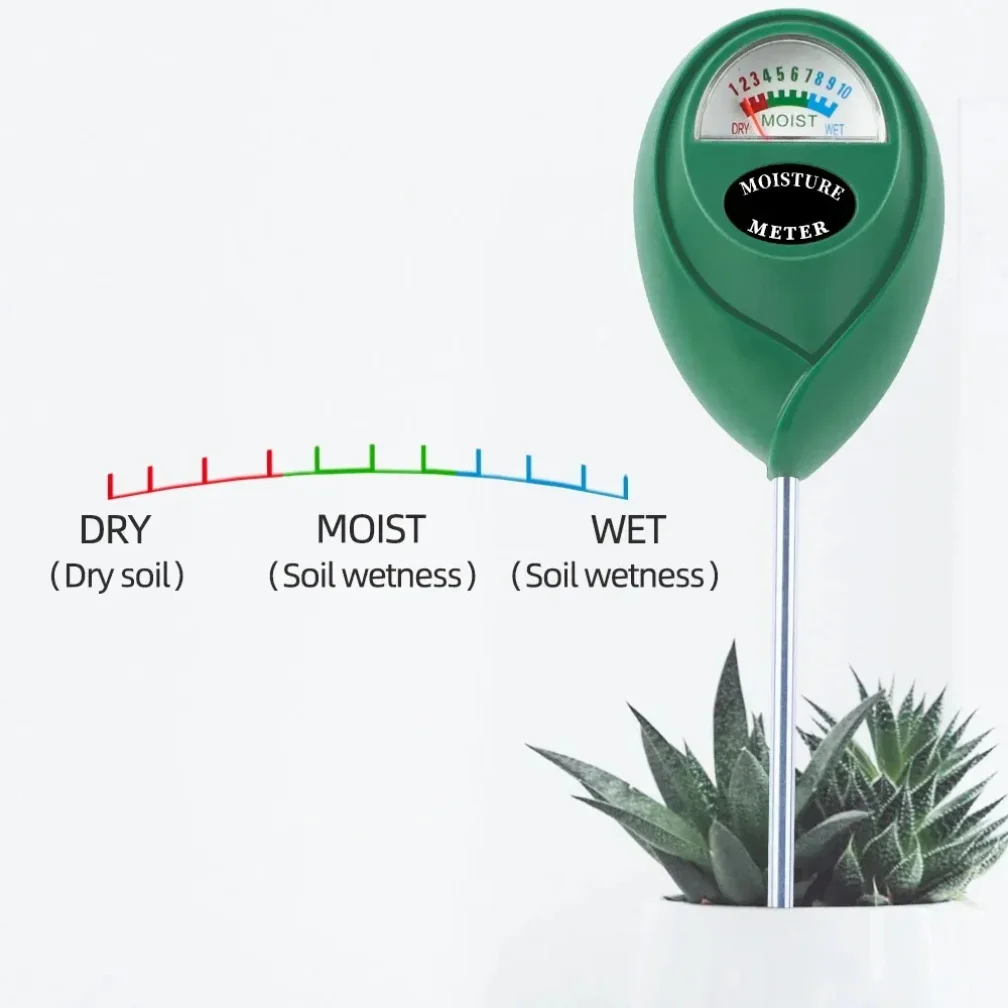
The meter's analog dial is meticulously designed to present soil moisture information in a clear, intuitive, and immediately understandable format, utilizing a distinct color-coded scale. The scale itself spans a numerical range from 1 to 10, which is thoughtfully segmented into three easily discernible zones: a vibrant red section indicating "DRY" conditions, a verdant green section signifying "MOIST" or optimal hydration, and a deep blue section warning of "WET" or excessive moisture. This visual feedback is immediate and unambiguous. Beyond the color coding, the numerical values within each zone offer a more granular and precise understanding of the soil's hydration status, thereby enabling users to make highly informed and finely tuned adjustments to their watering routines.
The red "DRY" zone, typically encompassing readings from 1 to 3 on the scale, serves as a critical alert, indicating a severe lack of available moisture in the soil. This reading signals that the plants are experiencing significant drought stress and require immediate and thorough watering to prevent irreversible damage or death. Conversely, the green "MOIST" zone, generally spanning readings from 4 to 7, represents the ideal and optimal hydration level for the vast majority of plant species. This range indicates that current watering practices are likely sufficient and that the soil provides an excellent balance of water and air for healthy root development. This is the sweet spot for growth. Finally, the blue "WET" zone, corresponding to readings from 8 to 10, acts as a stark warning of excessive moisture accumulation, a perilous condition that can rapidly lead to root rot, the proliferation of detrimental fungal diseases, and severe oxygen deprivation for the plant's root system.
A comprehensive understanding of these distinct zones empowers users to transcend subjective assessments and make truly informed, data-driven decisions regarding plant care. For a home inspector, this means the ability to quickly and accurately identify areas of potential waterlogging in landscape beds or signs of chronic drought stress that could compromise the long-term health and stability of surrounding vegetation. This diagnostic clarity is invaluable for property assessments. Compared to merely observing surface conditions or relying on the often-misleading "finger test," the meter provides a quantifiable, internal snapshot of the soil's hydration status, guiding the implementation of highly effective and preventative plant care strategies that promote sustained vitality and growth.
The strategic acquisition of a reliable soil moisture meter, particularly a durable, battery-free model such as this one, offers a compelling suite of long-term economic advantages for both casual gardeners and professional cultivators. The initial investment is notably minimal, especially when weighed against the potential costs it helps mitigate. By actively preventing the detrimental effects of both chronic over-watering and persistent under-watering, users can effectively circumvent the significant expense and frustration associated with replacing dead or severely struggling plants. Plant loss can be costly, particularly when dealing with valuable ornamental specimens, mature trees, or large-scale agricultural operations where widespread crop failure represents a substantial financial setback and loss of livelihood.
Beyond direct plant replacement costs, optimized watering practices, directly enabled by accurate moisture readings, lead to a substantial reduction in overall water consumption. Over-watering not only inflicts severe harm upon plants by drowning their roots but also represents a considerable waste of a precious natural resource, invariably leading to inflated utility bills. The meter facilitates the precise application of water, ensuring that plants receive the exact volume they require, precisely when they require it, thereby eliminating wasteful excess. This efficiency saves money and conserves resources. For home inspectors, integrating the recommendation of such a tool can be a crucial component of a broader, more sustainable landscape management strategy, effectively reducing excessive water runoff, mitigating erosion, and fostering healthier, more resilient ecosystems around residential and commercial properties.
The meter's inherent durability, coupled with its complete independence from ongoing battery costs, contributes to an exceptionally low cost-per-use over its extended operational lifespan. Unlike consumable garden supplies or electronic devices with a shorter expected lifespan or planned obsolescence, this robust mechanical tool is engineered for sustained and reliable performance year after year. It's a smart, long-term investment. This translates directly into a strong and tangible return on investment (ROI) for any gardener, landscaper, or agricultural professional who is committed to enhancing plant health, optimizing resource efficiency, and minimizing recurring operational expenses without the burden of continuous maintenance or replacement parts.
Imagine a garden where every plant thrives, its foliage vibrant, its blooms abundant, all thanks to perfectly balanced soil moisture. Picture the profound confidence in knowing exactly when to water, effectively eliminating the pervasive guesswork and the underlying anxiety often associated with plant care. This soil moisture meter fundamentally transforms plant maintenance from a speculative endeavor into a precise, data-driven science, consistently ensuring optimal conditions for robust growth and unwavering resilience. It empowers users to cultivate healthier, more productive landscapes, ultimately saving invaluable time, conserving precious water resources, and alleviating the persistent frustration of nurturing struggling plants. The result is a flourishing environment, a testament to informed and intelligent horticultural practices.
Unveiling Subsurface Conditions
The primary utility of this soil moisture meter stems from its singular focus on detecting the volumetric water content within various soil types. A robust, slender metal probe, approximately 17.5 cm (6.9 inches) in length, extends from the main unit, meticulously designed for deep penetration into the critical root zone of plants. This direct contact is essential for accurate readings. The probe's tip, clearly depicted in product imagery as sharply pointed, facilitates effortless insertion into compacted or dense soil without causing undue mechanical stress or significant disturbance to delicate plant root systems. This design consideration is paramount for minimizing plant trauma during diagnostic checks.
The operational principle underpinning this meter's functionality is rooted in a passive electrochemical reaction. When the specialized metal probe is inserted into the soil, it establishes an electrical circuit through the soil medium. The probe acts as an electrode, interacting with the moisture and the dissolved mineral ions naturally present within the soil solution. This interaction generates a minute electrical current, the magnitude of which is directly proportional to the soil's electrical conductivity. Soil conductivity, in turn, is a reliable proxy for its water content; more water and dissolved ions mean higher conductivity. This is a passive measurement, requiring no external power. The meter then translates this generated current into a mechanical deflection of a needle on an analog dial, providing an immediate and intuitive visual representation of the soil's hydration status.
Unlike relying solely on superficial indicators such as wilting leaves, which often signify advanced stages of drought stress, or the visual appearance of dry topsoil, which can be highly misleading, this meter provides an objective, internal measurement. Surface soil, particularly in arid climates or exposed conditions, can dry out rapidly due to evaporation, while deeper soil layers, where the majority of a plant's feeder roots reside, may retain significant moisture. Conversely, a plant might exhibit seemingly healthy foliage but suffer from insidious root rot due to excessive, hidden moisture accumulation below the surface. This diagnostic tool effectively mitigates such ambiguities, offering a clear, data-driven picture of the subterranean environment where roots either thrive or struggle. It's a critical diagnostic step for proactive plant management.
Operational Simplicity and Enduring Design
A hallmark feature and significant advantage of this particular soil moisture meter is its entirely mechanical operation, a design choice that completely eliminates the need for any external power source, such as batteries. This fundamental engineering decision simplifies user interaction considerably; there are no power buttons to press, no charging ports to locate, and no cumbersome battery compartments to open or replace. It's truly plug and play. The inherent absence of complex electronic components, beyond the basic electrochemical sensor and the mechanical dial mechanism, translates directly into fewer potential points of failure, thereby enhancing the device's overall reliability and extending its operational lifespan. This also contributes to a reduced environmental footprint, as there are no spent batteries requiring disposal.
The device's physical construction appears to prioritize durability and straightforward utility. It features a visibly robust, deep green casing that ergonomically houses the analog dial display and provides a secure anchor for the elongated metal probe. This visible material strongly implies the use of a high-grade, impact-resistant plastic, most likely Acrylonitrile Butadiene Styrene (ABS). ABS is a common and preferred material for outdoor and garden tools due to its excellent resistance to physical impact, ultraviolet degradation, and various environmental elements. The probe itself is crafted from a specialized metal, engineered not only for repeated, deep insertion into potentially abrasive soil but also for its specific electrochemical properties that enable accurate moisture detection. This ensures longevity and consistent performance. The design ethos clearly prioritizes core functionality over superfluous features, rendering it exceptionally accessible for gardeners and agriculturalists of all experience levels.
When contrasted with more sophisticated digital meters that invariably demand periodic battery replacements or regular recharging, this mechanical variant offers unparalleled operational readiness. Users are never confronted with the frustration of a dead battery interrupting a crucial soil moisture assessment, a common inconvenience with powered devices. This inherent simplicity directly translates to consistent reliability, making it an ideal tool for deployment across diverse outdoor and indoor horticultural environments. Maintenance requirements are notably minimal, typically involving only a quick wipe-down of the probe. The straightforward, non-electronic design also suggests a lower manufacturing complexity and cost, which directly contributes to its highly accessible price point, making professional-grade soil diagnostics available to a broader audience.
Broad Applicability Across Cultivation Environments
The remarkable versatility of this soil moisture meter stands out as a paramount attribute, rendering it exceptionally well-suited for an extensive array of planting scenarios and cultivation environments. Product visuals compellingly illustrate its practical utility across diverse settings, including horticultural gardens, large-scale tree planting initiatives, controlled greenhouse environments, expansive agricultural fields, natural grassland management, and productive orchard operations. This broad scope is impressive, highlighting its adaptability. Regardless of whether one is meticulously managing a small collection of potted herbs on a windowsill or overseeing vast commercial crop fields, the fundamental and unwavering need for accurate, real-time soil moisture data remains a constant and critical requirement for successful plant growth.
In the context of home gardening, which encompasses everything from delicate indoor houseplants to vibrant outdoor flower beds and vegetable patches, the meter proves invaluable. It actively helps prevent the two most common and detrimental pitfalls of amateur plant care: chronic over-watering, which suffocates roots, and persistent under-watering, which leads to dehydration. For larger-scale commercial operations, such as those found in greenhouses or extensive agricultural planting, consistent and precise moisture monitoring can dramatically optimize irrigation schedules. This optimization not only leads to significantly healthier plant yields and improved crop quality but also results in a substantial reduction in water waste, a critical consideration for both environmental sustainability and operational costs. Imagine a thriving orchard, each tree perfectly hydrated.
This meter effectively serves as a universal diagnostic instrument for virtually anyone engaged in the art or science of plant cultivation. Unlike highly specialized equipment that might be designed for a single crop type or a very specific environmental condition, this general-purpose tool provides essential, foundational data across the board. Its compact size and inherent portability allow a single unit to be efficiently deployed across multiple, distinct planting sites, ranging from a small urban balcony garden to a sprawling rural pasture or vineyard. This expansive utility significantly enhances its value proposition, making it an indispensable tool for both amateur enthusiasts and seasoned professionals seeking to maintain optimal soil conditions for their flora.
Interpreting the Hydration Spectrum
The meter's analog dial is meticulously designed to present soil moisture information in a clear, intuitive, and immediately understandable format, utilizing a distinct color-coded scale. The scale itself spans a numerical range from 1 to 10, which is thoughtfully segmented into three easily discernible zones: a vibrant red section indicating "DRY" conditions, a verdant green section signifying "MOIST" or optimal hydration, and a deep blue section warning of "WET" or excessive moisture. This visual feedback is immediate and unambiguous. Beyond the color coding, the numerical values within each zone offer a more granular and precise understanding of the soil's hydration status, thereby enabling users to make highly informed and finely tuned adjustments to their watering routines.
The red "DRY" zone, typically encompassing readings from 1 to 3 on the scale, serves as a critical alert, indicating a severe lack of available moisture in the soil. This reading signals that the plants are experiencing significant drought stress and require immediate and thorough watering to prevent irreversible damage or death. Conversely, the green "MOIST" zone, generally spanning readings from 4 to 7, represents the ideal and optimal hydration level for the vast majority of plant species. This range indicates that current watering practices are likely sufficient and that the soil provides an excellent balance of water and air for healthy root development. This is the sweet spot for growth. Finally, the blue "WET" zone, corresponding to readings from 8 to 10, acts as a stark warning of excessive moisture accumulation, a perilous condition that can rapidly lead to root rot, the proliferation of detrimental fungal diseases, and severe oxygen deprivation for the plant's root system.
A comprehensive understanding of these distinct zones empowers users to transcend subjective assessments and make truly informed, data-driven decisions regarding plant care. For a home inspector, this means the ability to quickly and accurately identify areas of potential waterlogging in landscape beds or signs of chronic drought stress that could compromise the long-term health and stability of surrounding vegetation. This diagnostic clarity is invaluable for property assessments. Compared to merely observing surface conditions or relying on the often-misleading "finger test," the meter provides a quantifiable, internal snapshot of the soil's hydration status, guiding the implementation of highly effective and preventative plant care strategies that promote sustained vitality and growth.
Economic Benefits in Horticultural Management
The strategic acquisition of a reliable soil moisture meter, particularly a durable, battery-free model such as this one, offers a compelling suite of long-term economic advantages for both casual gardeners and professional cultivators. The initial investment is notably minimal, especially when weighed against the potential costs it helps mitigate. By actively preventing the detrimental effects of both chronic over-watering and persistent under-watering, users can effectively circumvent the significant expense and frustration associated with replacing dead or severely struggling plants. Plant loss can be costly, particularly when dealing with valuable ornamental specimens, mature trees, or large-scale agricultural operations where widespread crop failure represents a substantial financial setback and loss of livelihood.
Beyond direct plant replacement costs, optimized watering practices, directly enabled by accurate moisture readings, lead to a substantial reduction in overall water consumption. Over-watering not only inflicts severe harm upon plants by drowning their roots but also represents a considerable waste of a precious natural resource, invariably leading to inflated utility bills. The meter facilitates the precise application of water, ensuring that plants receive the exact volume they require, precisely when they require it, thereby eliminating wasteful excess. This efficiency saves money and conserves resources. For home inspectors, integrating the recommendation of such a tool can be a crucial component of a broader, more sustainable landscape management strategy, effectively reducing excessive water runoff, mitigating erosion, and fostering healthier, more resilient ecosystems around residential and commercial properties.
The meter's inherent durability, coupled with its complete independence from ongoing battery costs, contributes to an exceptionally low cost-per-use over its extended operational lifespan. Unlike consumable garden supplies or electronic devices with a shorter expected lifespan or planned obsolescence, this robust mechanical tool is engineered for sustained and reliable performance year after year. It's a smart, long-term investment. This translates directly into a strong and tangible return on investment (ROI) for any gardener, landscaper, or agricultural professional who is committed to enhancing plant health, optimizing resource efficiency, and minimizing recurring operational expenses without the burden of continuous maintenance or replacement parts.
Imagine a garden where every plant thrives, its foliage vibrant, its blooms abundant, all thanks to perfectly balanced soil moisture. Picture the profound confidence in knowing exactly when to water, effectively eliminating the pervasive guesswork and the underlying anxiety often associated with plant care. This soil moisture meter fundamentally transforms plant maintenance from a speculative endeavor into a precise, data-driven science, consistently ensuring optimal conditions for robust growth and unwavering resilience. It empowers users to cultivate healthier, more productive landscapes, ultimately saving invaluable time, conserving precious water resources, and alleviating the persistent frustration of nurturing struggling plants. The result is a flourishing environment, a testament to informed and intelligent horticultural practices.