Self-Regulating Pipe Freeze Protection Heating Cable
Official Store Deal
Expert Analysis Overview
The Self-Regulating Pipe Freeze Protection Heating Cable is an essential, intelligent thermal solution for safeguarding critical water infrastructure in diverse environments, particularly valuable for off-grid solar installations where reliability is paramount. This heating cable distinguishes itself through its self-regulating polymer core. Unlike conventional resistive heating elements that maintain a constant power output regardless of ambient temperature, this cable dynamically adjusts its heat generation. Less energy is wasted. This inherent intelligence prevents overheating and ensures optimal power consumption, a critical factor for systems reliant on finite energy sources like solar arrays.
The operational principle involves a conductive polymer that increases its resistance as the temperature rises. This reduces current flow and, consequently, heat output. Conversely, as temperatures drop, the polymer's resistance decreases, allowing more current to pass and generating more heat. This precise thermal management is vital for maintaining fluid temperatures just above freezing without excessive energy draw, directly impacting the longevity and efficiency of a solar-powered system.
Traditional heating cables often require external thermostats or controllers to manage temperature, introducing additional points of failure and complexity. This self-regulating design simplifies installation significantly. It minimizes the need for intricate wiring and control logic, making it an ideal choice for remote or DIY solar projects where simplicity and robustness are highly valued. The system just works.
Operating across a 220V to 240V AC range, this heating cable is designed for standard residential and light commercial power grids. Its 17W/m power rating indicates a moderate energy draw per linear meter. This wattage is sufficient for most pipe diameters encountered in domestic and small-scale agricultural applications.
For solar energy hobbyists, understanding the AC power requirement is crucial. While many solar setups are DC-centric, the widespread availability of 220-240V inverters means this cable can be seamlessly integrated. Calculating the total wattage needed for a specific length allows for precise sizing of the inverter and battery bank, ensuring the heating function does not unduly drain stored solar energy during critical cold periods. An efficient system is key.
Compared to fixed-wattage cables, the self-regulating nature of this unit offers substantial energy savings over a heating season. It only draws the power necessary to prevent freezing, unlike constant wattage cables that would continuously output maximum heat, even when ambient temperatures are only slightly below freezing. This translates directly into reduced load on a solar battery bank, extending its usable life and overall system autonomy.
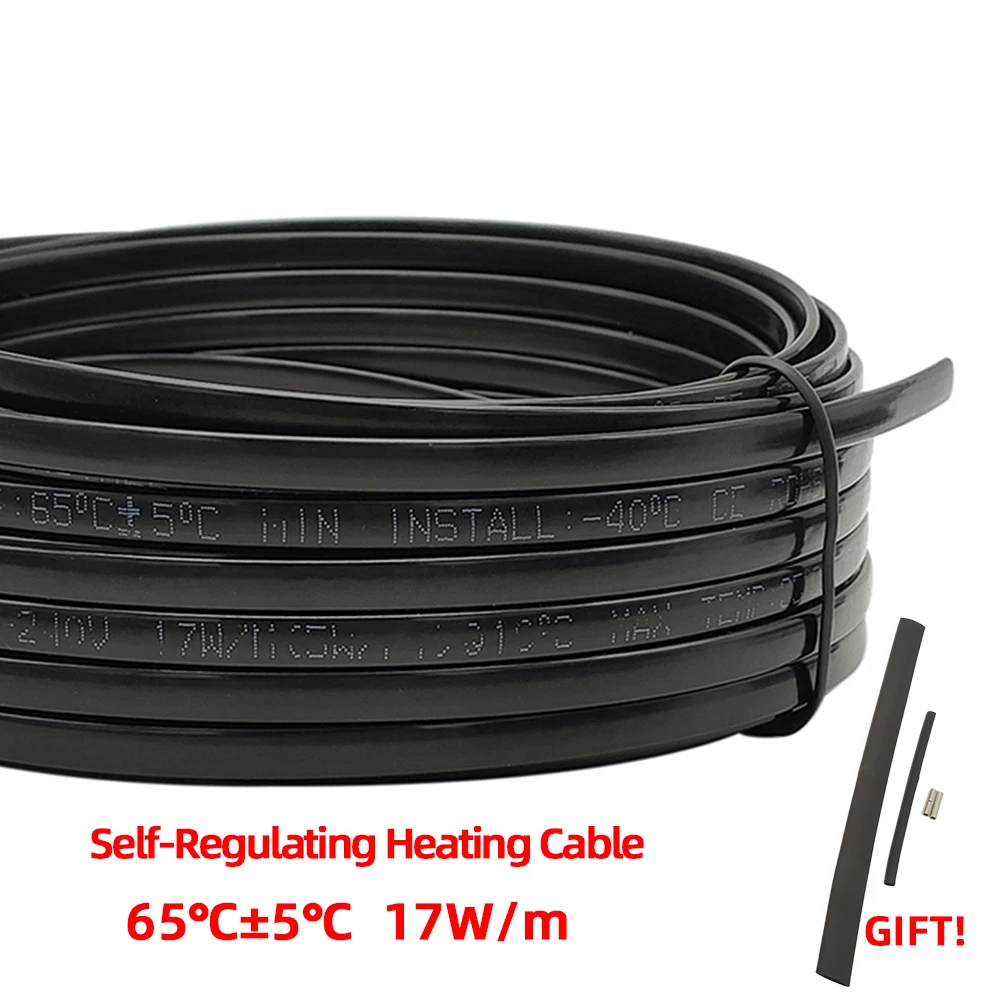
The waterproof construction is evident from the sealed, flat black outer jacket. This robust encapsulation suggests resistance to moisture ingress, a non-negotiable feature for outdoor pipe heating applications. The material appears durable, capable of withstanding environmental exposure.
This level of water resistance is paramount for buried pipes, exposed outdoor plumbing, or even in damp basements where condensation can be an issue. The cable's integrity against moisture ensures consistent performance and prevents short circuits, protecting both the heating element and the power source. Reliability is essential.
Unlike unjacketed or poorly insulated heating tapes, this cable's design minimizes the risk of damage from external elements. Its flat profile also allows for easier installation along pipes, securing it snugly without creating large, unsightly bulges. This contributes to a cleaner, more professional installation that is less prone to accidental damage.
The claim of 'no need controller' simplifies the installation process significantly. Users can connect the cable directly to a power source, provided appropriate overcurrent protection is in place. The included connection accessories, such as heat shrink tubing and crimp connectors, further facilitate a secure and waterproof termination. Installation is straightforward.
For a solar energy setup, this means fewer components to manage and troubleshoot. A direct connection to an inverter output, possibly via a timer or smart switch for additional control, streamlines the system architecture. Simplicity reduces failure points. This ease of integration reduces the overall complexity of adding freeze protection to a remote water system, a common challenge in off-grid living.
Many DIY solar enthusiasts appreciate solutions that minimize electrical complexity. This heating cable fits that philosophy by removing the need for dedicated temperature sensors and control units, which can be costly and add to installation time. It’s a straightforward solution for a critical problem.
The specified operating temperature of 65°C ±5°C indicates the maximum temperature the cable will reach under ideal conditions. This temperature range is well above freezing, providing a substantial buffer to prevent ice formation in pipes. The self-regulating mechanism ensures this temperature is maintained efficiently. It works effectively.
This precise temperature control is beneficial for preventing both freezing and overheating. Overheating could potentially damage certain types of plastic pipes or waste energy. The cable's ability to maintain a consistent, safe temperature ensures optimal protection without unnecessary thermal stress on the plumbing system. It's a smart design.
Compared to older, non-regulating heating cables that might reach excessively high temperatures, this cable offers a safer and more energy-conscious approach. It provides peace of mind that pipes will not freeze, while simultaneously optimizing energy usage, a critical consideration for any off-grid power budget.
For those building or maintaining self-sustaining energy systems, this heating cable presents a compelling value proposition. Its inherent efficiency and simplified installation reduce both initial setup costs and ongoing operational expenses. The durability ensures a long service life. This saves money.
Calculating efficiency losses in a solar system often involves accounting for parasitic loads. This cable's self-regulating feature minimizes its parasitic load, drawing power only when absolutely necessary. This directly contributes to a higher overall system efficiency, ensuring more of the generated solar power is available for essential loads. Every watt counts.
Verifying compatibility with existing solar setups primarily revolves around inverter capacity and battery storage. Given its AC voltage requirement, users need to ensure their inverter can handle the peak wattage of the cable length chosen. However, its 'no controller' design makes it highly adaptable to various inverter types without complex signal integration. This flexibility is a significant advantage for custom solar builds.
Imagine the peace of mind during the harshest winter nights, knowing your critical water lines are protected by an intelligent, energy-efficient system. Envision a self-sufficient homestead where frozen pipes are a distant memory, and your solar energy reserves are managed with optimal precision. This heating cable ensures reliable water flow, even when temperatures plummet, allowing your off-grid system to function flawlessly and your focus to remain on sustainable living, not plumbing emergencies.
The operational principle involves a conductive polymer that increases its resistance as the temperature rises. This reduces current flow and, consequently, heat output. Conversely, as temperatures drop, the polymer's resistance decreases, allowing more current to pass and generating more heat. This precise thermal management is vital for maintaining fluid temperatures just above freezing without excessive energy draw, directly impacting the longevity and efficiency of a solar-powered system.
Traditional heating cables often require external thermostats or controllers to manage temperature, introducing additional points of failure and complexity. This self-regulating design simplifies installation significantly. It minimizes the need for intricate wiring and control logic, making it an ideal choice for remote or DIY solar projects where simplicity and robustness are highly valued. The system just works.
Intelligent Thermal Management for Sustainable Systems
Operating across a 220V to 240V AC range, this heating cable is designed for standard residential and light commercial power grids. Its 17W/m power rating indicates a moderate energy draw per linear meter. This wattage is sufficient for most pipe diameters encountered in domestic and small-scale agricultural applications.
For solar energy hobbyists, understanding the AC power requirement is crucial. While many solar setups are DC-centric, the widespread availability of 220-240V inverters means this cable can be seamlessly integrated. Calculating the total wattage needed for a specific length allows for precise sizing of the inverter and battery bank, ensuring the heating function does not unduly drain stored solar energy during critical cold periods. An efficient system is key.
Compared to fixed-wattage cables, the self-regulating nature of this unit offers substantial energy savings over a heating season. It only draws the power necessary to prevent freezing, unlike constant wattage cables that would continuously output maximum heat, even when ambient temperatures are only slightly below freezing. This translates directly into reduced load on a solar battery bank, extending its usable life and overall system autonomy.
Robustness in Challenging Environments
The waterproof construction is evident from the sealed, flat black outer jacket. This robust encapsulation suggests resistance to moisture ingress, a non-negotiable feature for outdoor pipe heating applications. The material appears durable, capable of withstanding environmental exposure.
This level of water resistance is paramount for buried pipes, exposed outdoor plumbing, or even in damp basements where condensation can be an issue. The cable's integrity against moisture ensures consistent performance and prevents short circuits, protecting both the heating element and the power source. Reliability is essential.
Unlike unjacketed or poorly insulated heating tapes, this cable's design minimizes the risk of damage from external elements. Its flat profile also allows for easier installation along pipes, securing it snugly without creating large, unsightly bulges. This contributes to a cleaner, more professional installation that is less prone to accidental damage.
Streamlined Integration and Operation
The claim of 'no need controller' simplifies the installation process significantly. Users can connect the cable directly to a power source, provided appropriate overcurrent protection is in place. The included connection accessories, such as heat shrink tubing and crimp connectors, further facilitate a secure and waterproof termination. Installation is straightforward.
For a solar energy setup, this means fewer components to manage and troubleshoot. A direct connection to an inverter output, possibly via a timer or smart switch for additional control, streamlines the system architecture. Simplicity reduces failure points. This ease of integration reduces the overall complexity of adding freeze protection to a remote water system, a common challenge in off-grid living.
Many DIY solar enthusiasts appreciate solutions that minimize electrical complexity. This heating cable fits that philosophy by removing the need for dedicated temperature sensors and control units, which can be costly and add to installation time. It’s a straightforward solution for a critical problem.
Optimized Thermal Performance
The specified operating temperature of 65°C ±5°C indicates the maximum temperature the cable will reach under ideal conditions. This temperature range is well above freezing, providing a substantial buffer to prevent ice formation in pipes. The self-regulating mechanism ensures this temperature is maintained efficiently. It works effectively.
This precise temperature control is beneficial for preventing both freezing and overheating. Overheating could potentially damage certain types of plastic pipes or waste energy. The cable's ability to maintain a consistent, safe temperature ensures optimal protection without unnecessary thermal stress on the plumbing system. It's a smart design.
Compared to older, non-regulating heating cables that might reach excessively high temperatures, this cable offers a safer and more energy-conscious approach. It provides peace of mind that pipes will not freeze, while simultaneously optimizing energy usage, a critical consideration for any off-grid power budget.
Maximizing Value for Autonomous Systems
For those building or maintaining self-sustaining energy systems, this heating cable presents a compelling value proposition. Its inherent efficiency and simplified installation reduce both initial setup costs and ongoing operational expenses. The durability ensures a long service life. This saves money.
Calculating efficiency losses in a solar system often involves accounting for parasitic loads. This cable's self-regulating feature minimizes its parasitic load, drawing power only when absolutely necessary. This directly contributes to a higher overall system efficiency, ensuring more of the generated solar power is available for essential loads. Every watt counts.
Verifying compatibility with existing solar setups primarily revolves around inverter capacity and battery storage. Given its AC voltage requirement, users need to ensure their inverter can handle the peak wattage of the cable length chosen. However, its 'no controller' design makes it highly adaptable to various inverter types without complex signal integration. This flexibility is a significant advantage for custom solar builds.
Imagine the peace of mind during the harshest winter nights, knowing your critical water lines are protected by an intelligent, energy-efficient system. Envision a self-sufficient homestead where frozen pipes are a distant memory, and your solar energy reserves are managed with optimal precision. This heating cable ensures reliable water flow, even when temperatures plummet, allowing your off-grid system to function flawlessly and your focus to remain on sustainable living, not plumbing emergencies.