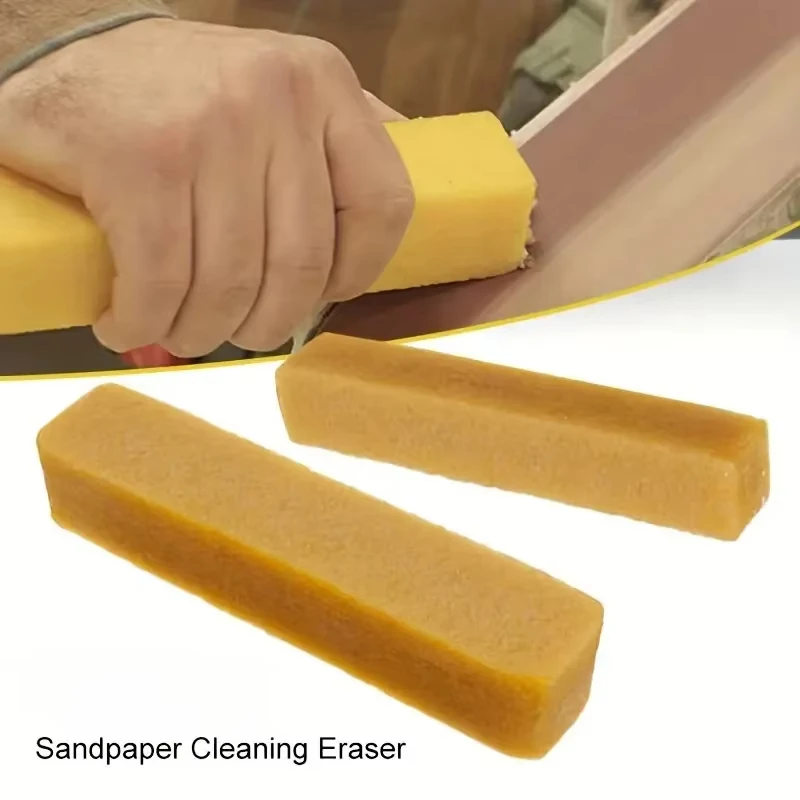
Sandpaper Cleaning Eraser for Belt and Disc Sanders
Official Store Deal
Expert Analysis Overview
The Sandpaper Cleaning Eraser is an essential maintenance tool for any woodworker or DIY enthusiast, specifically engineered to extend the life and efficiency of abrasive surfaces. This simple yet remarkably effective tool addresses one of the most common frustrations in sanding: clogged sandpaper. When abrasive belts, discs, or drums become laden with wood dust, resin, and other debris, their cutting efficiency plummets, leading to slower work, poorer finishes, and premature wear on the abrasive itself. This product offers a straightforward, mechanical solution to this pervasive problem.
Sandpaper, at its core, relies on sharp abrasive particles to cut through material. Over time, these particles become dulled or, more commonly, clogged with the material being sanded. The visible evidence of this clogging is often a dark, smooth appearance on the abrasive surface, as demonstrated in the comparison images. This condition significantly reduces the abrasive's ability to remove material, forcing users to apply more pressure, which generates heat and can damage both the workpiece and the sanding equipment. The eraser acts directly on this issue. It is a simple tool.
This cleaning stick works by physically abrading the surface of the sandpaper, lifting away embedded particles without damaging the grit itself. The material of the eraser is softer than the abrasive grit but tough enough to dislodge wood fibers, pitch, and other residues. This action effectively 're-sharpens' the abrasive by exposing fresh cutting edges, restoring much of its original efficiency. Users will notice an immediate improvement in sanding speed and a reduction in the effort required to achieve desired results. The before-and-after visuals clearly illustrate this restoration, transforming a dark, spent belt into a vibrant, functional abrasive once more.
Compared to simply brushing off sawdust or using compressed air, which primarily removes loose surface dust, this cleaning eraser offers a deeper, more thorough cleaning. Brushing often leaves stubborn resinous deposits intact, while compressed air can scatter fine dust into the air and workshop, posing health and cleanliness concerns. The eraser's method is a targeted, physical removal that ensures the abrasive's pores are truly cleared, providing a level of restoration that extends the usable life of consumables far beyond what superficial cleaning methods can achieve. This saves money in the long run.
Constructed from a specialized natural rubber or polymer compound, the cleaning eraser exhibits remarkable durability and flexibility. The images show a hand bending one of the sticks into a U-shape, highlighting its pliable nature. This flexibility is crucial for adapting to various abrasive surfaces and contours, ensuring effective cleaning across different tools.
This material composition allows the eraser to conform to the shape of sanding belts, discs, and even hand-held sandpaper without tearing or breaking. Its elasticity means it can withstand the friction and heat generated during the cleaning process, slowly wearing down itself while preserving the abrasive. The inherent toughness of the compound ensures that it can effectively scrub away hardened debris without crumbling prematurely. Its resilience is key.
Unlike rigid cleaning blocks or abrasive brushes, which might struggle with uneven surfaces or risk damaging finer grits, the flexible nature of this eraser makes it suitable for a wider range of sanding applications. Its ability to bend and adapt means it can be pressed firmly against a moving belt or disc, ensuring maximum contact and cleaning efficiency without causing undue stress on the abrasive or the sanding machine. This adaptability makes it a superior choice for comprehensive abrasive maintenance.
The Sandpaper Cleaning Eraser is designed for straightforward, intuitive use, making it accessible to both novice and experienced woodworkers. Its application is simple: press the stick firmly against the moving abrasive surface, and watch as it picks up embedded debris. The friction generated by the moving abrasive causes the eraser to wear down slightly, with the worn-off material carrying away the trapped dust and grit. This process is quick and efficient.
The convenience of this tool lies in its ability to be used directly on running machinery, minimizing downtime. There is no need to remove the sanding belt or disc, which streamlines the cleaning process and encourages regular maintenance. This immediate feedback, seeing the abrasive clear up before one's eyes, reinforces the tool's effectiveness. It's a quick fix.
This cleaning method extends beyond just belt and disc sanders, as depicted in the various application images. It is equally effective for drum sanders, spindle sanders, and even hand-sanding blocks. The versatility of the eraser means a single tool can serve multiple functions in a workshop, reducing the need for specialized cleaning solutions for each type of abrasive. This broad utility enhances its value proposition, making it a staple for any serious wood finishing setup. It handles many tasks.
The primary benefit of a clean abrasive is the consistent, high-quality finish it produces. Clogged sandpaper can leave inconsistent scratch patterns, burn marks, and require more passes to achieve a smooth surface. By restoring the abrasive's cutting ability, this eraser helps users achieve finer, more uniform finishes with less effort and in less time. This directly impacts project quality.
Beyond the immediate improvement in finish quality, the use of this cleaning eraser contributes to overall workshop efficiency. Extending the life of sandpaper means fewer interruptions for abrasive changes, less money spent on consumables, and more consistent performance from sanding equipment. This translates into a more productive and cost-effective workflow. It saves valuable time.
Furthermore, by maintaining cleaner abrasives, there is a secondary benefit of potentially reducing airborne dust. While not a dust collection system, a cleaner abrasive surface generates less fine dust from friction and inefficient cutting, contributing to a slightly cleaner working environment. This subtle improvement in air quality, combined with the primary benefits of extended abrasive life and superior finishes, makes the Sandpaper Cleaning Eraser an indispensable tool for anyone serious about woodworking. Imagine effortlessly achieving glass-smooth surfaces on every project, knowing your abrasives are performing at their peak, and enjoying the extended life of your sanding supplies, allowing you to focus more on craftsmanship and less on consumable costs. This tool empowers precision and economy in equal measure.
Reclaiming Abrasive Performance
Sandpaper, at its core, relies on sharp abrasive particles to cut through material. Over time, these particles become dulled or, more commonly, clogged with the material being sanded. The visible evidence of this clogging is often a dark, smooth appearance on the abrasive surface, as demonstrated in the comparison images. This condition significantly reduces the abrasive's ability to remove material, forcing users to apply more pressure, which generates heat and can damage both the workpiece and the sanding equipment. The eraser acts directly on this issue. It is a simple tool.
This cleaning stick works by physically abrading the surface of the sandpaper, lifting away embedded particles without damaging the grit itself. The material of the eraser is softer than the abrasive grit but tough enough to dislodge wood fibers, pitch, and other residues. This action effectively 're-sharpens' the abrasive by exposing fresh cutting edges, restoring much of its original efficiency. Users will notice an immediate improvement in sanding speed and a reduction in the effort required to achieve desired results. The before-and-after visuals clearly illustrate this restoration, transforming a dark, spent belt into a vibrant, functional abrasive once more.
Compared to simply brushing off sawdust or using compressed air, which primarily removes loose surface dust, this cleaning eraser offers a deeper, more thorough cleaning. Brushing often leaves stubborn resinous deposits intact, while compressed air can scatter fine dust into the air and workshop, posing health and cleanliness concerns. The eraser's method is a targeted, physical removal that ensures the abrasive's pores are truly cleared, providing a level of restoration that extends the usable life of consumables far beyond what superficial cleaning methods can achieve. This saves money in the long run.
Engineering for Longevity and Flexibility
Constructed from a specialized natural rubber or polymer compound, the cleaning eraser exhibits remarkable durability and flexibility. The images show a hand bending one of the sticks into a U-shape, highlighting its pliable nature. This flexibility is crucial for adapting to various abrasive surfaces and contours, ensuring effective cleaning across different tools.
This material composition allows the eraser to conform to the shape of sanding belts, discs, and even hand-held sandpaper without tearing or breaking. Its elasticity means it can withstand the friction and heat generated during the cleaning process, slowly wearing down itself while preserving the abrasive. The inherent toughness of the compound ensures that it can effectively scrub away hardened debris without crumbling prematurely. Its resilience is key.
Unlike rigid cleaning blocks or abrasive brushes, which might struggle with uneven surfaces or risk damaging finer grits, the flexible nature of this eraser makes it suitable for a wider range of sanding applications. Its ability to bend and adapt means it can be pressed firmly against a moving belt or disc, ensuring maximum contact and cleaning efficiency without causing undue stress on the abrasive or the sanding machine. This adaptability makes it a superior choice for comprehensive abrasive maintenance.
Operational Simplicity and Broad Utility
The Sandpaper Cleaning Eraser is designed for straightforward, intuitive use, making it accessible to both novice and experienced woodworkers. Its application is simple: press the stick firmly against the moving abrasive surface, and watch as it picks up embedded debris. The friction generated by the moving abrasive causes the eraser to wear down slightly, with the worn-off material carrying away the trapped dust and grit. This process is quick and efficient.
The convenience of this tool lies in its ability to be used directly on running machinery, minimizing downtime. There is no need to remove the sanding belt or disc, which streamlines the cleaning process and encourages regular maintenance. This immediate feedback, seeing the abrasive clear up before one's eyes, reinforces the tool's effectiveness. It's a quick fix.
This cleaning method extends beyond just belt and disc sanders, as depicted in the various application images. It is equally effective for drum sanders, spindle sanders, and even hand-sanding blocks. The versatility of the eraser means a single tool can serve multiple functions in a workshop, reducing the need for specialized cleaning solutions for each type of abrasive. This broad utility enhances its value proposition, making it a staple for any serious wood finishing setup. It handles many tasks.
Enhancing Finish Quality and Workshop Efficiency
The primary benefit of a clean abrasive is the consistent, high-quality finish it produces. Clogged sandpaper can leave inconsistent scratch patterns, burn marks, and require more passes to achieve a smooth surface. By restoring the abrasive's cutting ability, this eraser helps users achieve finer, more uniform finishes with less effort and in less time. This directly impacts project quality.
Beyond the immediate improvement in finish quality, the use of this cleaning eraser contributes to overall workshop efficiency. Extending the life of sandpaper means fewer interruptions for abrasive changes, less money spent on consumables, and more consistent performance from sanding equipment. This translates into a more productive and cost-effective workflow. It saves valuable time.
Furthermore, by maintaining cleaner abrasives, there is a secondary benefit of potentially reducing airborne dust. While not a dust collection system, a cleaner abrasive surface generates less fine dust from friction and inefficient cutting, contributing to a slightly cleaner working environment. This subtle improvement in air quality, combined with the primary benefits of extended abrasive life and superior finishes, makes the Sandpaper Cleaning Eraser an indispensable tool for anyone serious about woodworking. Imagine effortlessly achieving glass-smooth surfaces on every project, knowing your abrasives are performing at their peak, and enjoying the extended life of your sanding supplies, allowing you to focus more on craftsmanship and less on consumable costs. This tool empowers precision and economy in equal measure.