RMA-223 Solder Flux Paste Syringes for SMD Rework
Official Store Deal
Expert Analysis Overview
The RMA-223 Solder Flux Paste Syringes are a practical, high-viscosity flux solution tailored for precision electronics rework, particularly beneficial for technicians engaged in SMD and BGA soldering tasks. This formulation, categorized as Rosin Mildly Activated (RMA), is engineered to provide excellent wetting characteristics while minimizing residue, a critical factor in maintaining the integrity and appearance of electronic assemblies. Its design addresses common frustrations associated with traditional flux application methods, offering a streamlined and efficient approach to intricate soldering.
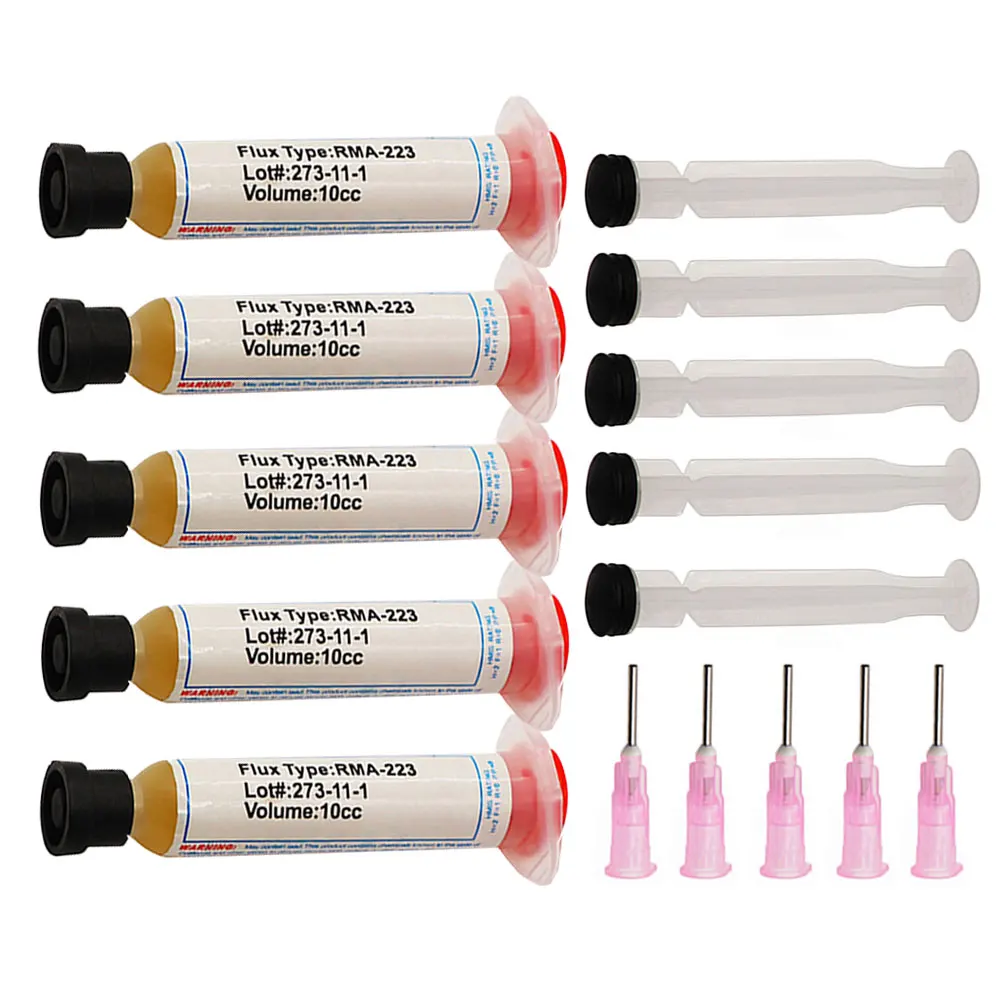
The primary advantage of the RMA-223 flux in a syringe format lies in its controlled dispensing. Each syringe contains 10 cubic centimeters (10cc) of flux, a volume optimized for repeated, small-scale applications. This precise delivery system is crucial when working with densely packed circuit boards, such as those found in mobile phones, where accidental overflow of flux can lead to bridging or contamination of adjacent components. The included plungers ensure that the entire volume of flux can be extracted efficiently, preventing waste.
Flux plays an indispensable role in the soldering process by preparing metal surfaces for a strong, reliable bond. Its main function is to clean the metallic surfaces of components and PCBs by chemically removing oxides and other contaminants that naturally form when metals are exposed to air. Without flux, solder would struggle to adhere properly, resulting in cold joints, poor electrical conductivity, and mechanical weakness. The RMA-223 type is specifically formulated to be mildly active, meaning it provides sufficient cleaning power without being overly aggressive, which could damage sensitive components.
Unlike traditional paste fluxes that can dry out quickly in open containers, the syringe packaging of the RMA-223 ensures prolonged shelf life and precise, controlled dispensing, minimizing waste and maintaining consistent flux activity. This prevents the common issue of flux hardening, which renders it unusable. The sealed environment within the syringe protects the flux from atmospheric exposure, maintaining its optimal viscosity and chemical properties over time. This consistency is vital for repeatable, high-quality solder joints, especially in professional repair environments where reliability is paramount.
Visually, the RMA-223 flux presents as a yellow paste, a common indicator of its rosin-based composition. This paste consistency is a deliberate choice, offering a balance between ease of application and staying power on the target area. A thin, even layer is easily achievable. The viscosity is engineered to allow smooth flow through the dispensing tips while preventing excessive spreading once applied to the PCB. This characteristic is particularly valuable for BGA (Ball Grid Array) rework, where precise placement of flux beneath components is essential for successful reballing and reflow processes.
Flux viscosity refers to its resistance to flow. For electronic rework, an ideal viscosity ensures that the flux stays where it is applied without running off, yet is fluid enough to be easily dispensed through fine needles. If the flux is too thin, it may spread excessively, contaminating areas not intended for soldering. If it is too thick, it can be difficult to dispense evenly, leading to inconsistent application and potentially poor solder joints. The RMA-223's paste-like consistency strikes this balance, offering predictable behavior during application. This is a crucial detail for anyone performing delicate work.
When comparing this syringe-based paste flux to liquid fluxes, the difference in viscosity is immediately apparent. Liquid fluxes, while excellent for wave soldering or spray applications, offer less control for pinpoint rework. Paste fluxes, like the RMA-223, provide a localized application, ensuring that the flux is concentrated exactly where it is needed. This targeted approach reduces the amount of post-soldering cleanup required and minimizes the risk of flux residue affecting other parts of the circuit board. The controlled nature of the paste is a distinct advantage for manual rework.
The product includes not only the flux syringes but also plungers and dispensing needles/tips. These accessories are integral to the system, transforming the syringe barrel into a complete, ready-to-use application tool. The plungers facilitate smooth and consistent extrusion of the flux, ensuring that the user can apply a steady bead or dot without interruption. The dispensing tips, often made of plastic with a fine metal needle, allow for extremely precise placement, even on very small pads or component leads.
Good syringe design in this context means robust construction that can withstand repeated use without leaking or seizing. The clear barrel allows technicians to monitor the remaining flux volume, preventing unexpected depletion during a critical repair. The black caps provide a secure seal, protecting the flux from air exposure and contamination when not in use. This attention to detail in the packaging ensures that the product remains effective throughout its shelf life, offering consistent performance from the first application to the last. This matters for reliability.
Unlike bulk flux containers that require separate applicators, the integrated syringe system simplifies the entire process. Users do not need to transfer flux from one container to another, which reduces exposure to air and potential contamination. This integrated approach also makes the flux more portable and convenient for technicians who might work across multiple workstations or perform on-site repairs. The self-contained nature of the syringe system is a significant upgrade in terms of user convenience and operational efficiency, directly contributing to faster and more reliable repairs.
The stability of RMA-223 flux is enhanced by its syringe packaging. Proper storage is key to maximizing its shelf life, which is typically up to 12 months when sealed. Storing the syringes upright in a cool, dry place, away from direct sunlight and extreme temperatures, helps maintain the flux's optimal viscosity and chemical activity. Fluctuations in temperature can affect the consistency of the paste, potentially making it either too thick or too runny, which can impair dispensing accuracy and soldering performance. This simple storage guidance ensures peak performance.
Flux degradation primarily occurs through oxidation and solvent evaporation. The sealed syringe acts as a barrier against these environmental factors. When flux degrades, its ability to clean surfaces and promote solder flow diminishes, leading to poor quality joints. Technicians should always ensure the cap is securely replaced after each use to prevent unnecessary exposure to air. A small amount of care in storage can significantly extend the usable life of the product, providing a better return on investment over time. This is a simple step for consistent results.
Compared to open-pot fluxes, which are highly susceptible to drying out and contamination, the syringe format offers superior protection. An open container of flux can quickly become unusable, leading to wasted material and increased operational costs. The RMA-223 syringe system mitigates these issues by providing a controlled environment for the flux. This design choice translates directly into cost savings and greater reliability for the user, as the flux remains active and ready for use whenever needed, without the concern of premature degradation. It is a smart design choice.
As with any chemical product used in electronics repair, safety protocols are paramount. The RMA-223 flux, while mildly activated, still produces fumes when heated during soldering. These fumes can be irritating to the respiratory system and eyes. Therefore, adequate ventilation, such as a fume extractor or working in a well-ventilated area, is not merely recommended but essential. Personal protective equipment (PPE), including safety glasses and gloves, should always be worn to prevent skin and eye contact, which can cause irritation.
Effective ventilation systems draw soldering fumes away from the user's breathing zone, minimizing exposure to potentially harmful airborne particles. For hobbyists or those working occasionally, ensuring good airflow by opening windows and using a small fan can be sufficient. Professionals, however, should invest in dedicated fume extraction units. Gloves protect the skin from direct contact with the flux, which, while not highly corrosive, can cause mild irritation or allergic reactions in sensitive individuals. Safety glasses shield the eyes from splashes or stray solder, a fundamental safety measure.
Unlike some highly corrosive industrial fluxes, the RMA-223 is designed for electronic applications where component integrity is critical. However, this does not negate the need for safety precautions. The mild activation means less aggressive chemical action, but the heated fumes still pose a risk. Ignoring these safety guidelines can lead to discomfort, respiratory issues, or skin irritation over prolonged exposure. Prioritizing safety ensures a healthier working environment and protects the user from preventable harm, making it a non-negotiable aspect of using this product.
The RMA-223 Solder Flux Paste Syringes offer a compelling value proposition for anyone involved in electronic repair. The combination of precise application, effective oxide removal, and extended shelf life contributes to more efficient and successful repairs. For mobile phone repair, PCB rework, and IC soldering, where precision is non-negotiable, this product helps achieve clean, strong solder joints consistently. This translates directly into reduced rework time and improved customer satisfaction for professional technicians. The cost-per-use is low.
Considering the price point and the benefits of reduced waste and higher success rates in repairs, the RMA-223 flux proves to be a cost-effective solution. Avoiding failed repairs due to poor flux application saves both time and expensive components. The ability to precisely apply flux means less material is used per job, extending the life of each syringe. This efficiency contributes to the overall profitability of repair operations, making it a smart investment for both small repair shops and individual hobbyists. Every drop counts.
Imagine completing complex BGA reworks with confidence, knowing that your flux application is perfectly controlled, leading to flawless solder joints every time. Picture the satisfaction of clients receiving their repaired devices, free from the common issues of cold joints or solder bridges. This RMA-223 flux system empowers technicians to achieve professional-grade results consistently, streamlining workflows and enhancing the quality of every repair. It is a tool that elevates the craft, allowing for greater precision and reliability in the intricate world of micro-electronics repair. This is an indispensable addition to any serious electronics repair toolkit, ensuring that every soldering task is met with optimal conditions for success.
Precision Application for Micro-Electronics
The primary advantage of the RMA-223 flux in a syringe format lies in its controlled dispensing. Each syringe contains 10 cubic centimeters (10cc) of flux, a volume optimized for repeated, small-scale applications. This precise delivery system is crucial when working with densely packed circuit boards, such as those found in mobile phones, where accidental overflow of flux can lead to bridging or contamination of adjacent components. The included plungers ensure that the entire volume of flux can be extracted efficiently, preventing waste.
The Role of Flux in Soldering
Flux plays an indispensable role in the soldering process by preparing metal surfaces for a strong, reliable bond. Its main function is to clean the metallic surfaces of components and PCBs by chemically removing oxides and other contaminants that naturally form when metals are exposed to air. Without flux, solder would struggle to adhere properly, resulting in cold joints, poor electrical conductivity, and mechanical weakness. The RMA-223 type is specifically formulated to be mildly active, meaning it provides sufficient cleaning power without being overly aggressive, which could damage sensitive components.
Unlike traditional paste fluxes that can dry out quickly in open containers, the syringe packaging of the RMA-223 ensures prolonged shelf life and precise, controlled dispensing, minimizing waste and maintaining consistent flux activity. This prevents the common issue of flux hardening, which renders it unusable. The sealed environment within the syringe protects the flux from atmospheric exposure, maintaining its optimal viscosity and chemical properties over time. This consistency is vital for repeatable, high-quality solder joints, especially in professional repair environments where reliability is paramount.
Consistency and Flow Characteristics
Visually, the RMA-223 flux presents as a yellow paste, a common indicator of its rosin-based composition. This paste consistency is a deliberate choice, offering a balance between ease of application and staying power on the target area. A thin, even layer is easily achievable. The viscosity is engineered to allow smooth flow through the dispensing tips while preventing excessive spreading once applied to the PCB. This characteristic is particularly valuable for BGA (Ball Grid Array) rework, where precise placement of flux beneath components is essential for successful reballing and reflow processes.
Understanding Flux Viscosity
Flux viscosity refers to its resistance to flow. For electronic rework, an ideal viscosity ensures that the flux stays where it is applied without running off, yet is fluid enough to be easily dispensed through fine needles. If the flux is too thin, it may spread excessively, contaminating areas not intended for soldering. If it is too thick, it can be difficult to dispense evenly, leading to inconsistent application and potentially poor solder joints. The RMA-223's paste-like consistency strikes this balance, offering predictable behavior during application. This is a crucial detail for anyone performing delicate work.
When comparing this syringe-based paste flux to liquid fluxes, the difference in viscosity is immediately apparent. Liquid fluxes, while excellent for wave soldering or spray applications, offer less control for pinpoint rework. Paste fluxes, like the RMA-223, provide a localized application, ensuring that the flux is concentrated exactly where it is needed. This targeted approach reduces the amount of post-soldering cleanup required and minimizes the risk of flux residue affecting other parts of the circuit board. The controlled nature of the paste is a distinct advantage for manual rework.
Essential Components for Rework Stations
The product includes not only the flux syringes but also plungers and dispensing needles/tips. These accessories are integral to the system, transforming the syringe barrel into a complete, ready-to-use application tool. The plungers facilitate smooth and consistent extrusion of the flux, ensuring that the user can apply a steady bead or dot without interruption. The dispensing tips, often made of plastic with a fine metal needle, allow for extremely precise placement, even on very small pads or component leads.
Syringe Design and Dispensing Control
Good syringe design in this context means robust construction that can withstand repeated use without leaking or seizing. The clear barrel allows technicians to monitor the remaining flux volume, preventing unexpected depletion during a critical repair. The black caps provide a secure seal, protecting the flux from air exposure and contamination when not in use. This attention to detail in the packaging ensures that the product remains effective throughout its shelf life, offering consistent performance from the first application to the last. This matters for reliability.
Unlike bulk flux containers that require separate applicators, the integrated syringe system simplifies the entire process. Users do not need to transfer flux from one container to another, which reduces exposure to air and potential contamination. This integrated approach also makes the flux more portable and convenient for technicians who might work across multiple workstations or perform on-site repairs. The self-contained nature of the syringe system is a significant upgrade in terms of user convenience and operational efficiency, directly contributing to faster and more reliable repairs.
Longevity and Storage Considerations
The stability of RMA-223 flux is enhanced by its syringe packaging. Proper storage is key to maximizing its shelf life, which is typically up to 12 months when sealed. Storing the syringes upright in a cool, dry place, away from direct sunlight and extreme temperatures, helps maintain the flux's optimal viscosity and chemical activity. Fluctuations in temperature can affect the consistency of the paste, potentially making it either too thick or too runny, which can impair dispensing accuracy and soldering performance. This simple storage guidance ensures peak performance.
Preventing Flux Degradation
Flux degradation primarily occurs through oxidation and solvent evaporation. The sealed syringe acts as a barrier against these environmental factors. When flux degrades, its ability to clean surfaces and promote solder flow diminishes, leading to poor quality joints. Technicians should always ensure the cap is securely replaced after each use to prevent unnecessary exposure to air. A small amount of care in storage can significantly extend the usable life of the product, providing a better return on investment over time. This is a simple step for consistent results.
Compared to open-pot fluxes, which are highly susceptible to drying out and contamination, the syringe format offers superior protection. An open container of flux can quickly become unusable, leading to wasted material and increased operational costs. The RMA-223 syringe system mitigates these issues by providing a controlled environment for the flux. This design choice translates directly into cost savings and greater reliability for the user, as the flux remains active and ready for use whenever needed, without the concern of premature degradation. It is a smart design choice.
Safety Protocols and Best Practices
As with any chemical product used in electronics repair, safety protocols are paramount. The RMA-223 flux, while mildly activated, still produces fumes when heated during soldering. These fumes can be irritating to the respiratory system and eyes. Therefore, adequate ventilation, such as a fume extractor or working in a well-ventilated area, is not merely recommended but essential. Personal protective equipment (PPE), including safety glasses and gloves, should always be worn to prevent skin and eye contact, which can cause irritation.
Ventilation and Personal Protective Equipment
Effective ventilation systems draw soldering fumes away from the user's breathing zone, minimizing exposure to potentially harmful airborne particles. For hobbyists or those working occasionally, ensuring good airflow by opening windows and using a small fan can be sufficient. Professionals, however, should invest in dedicated fume extraction units. Gloves protect the skin from direct contact with the flux, which, while not highly corrosive, can cause mild irritation or allergic reactions in sensitive individuals. Safety glasses shield the eyes from splashes or stray solder, a fundamental safety measure.
Unlike some highly corrosive industrial fluxes, the RMA-223 is designed for electronic applications where component integrity is critical. However, this does not negate the need for safety precautions. The mild activation means less aggressive chemical action, but the heated fumes still pose a risk. Ignoring these safety guidelines can lead to discomfort, respiratory issues, or skin irritation over prolonged exposure. Prioritizing safety ensures a healthier working environment and protects the user from preventable harm, making it a non-negotiable aspect of using this product.
Value Proposition for Technicians
The RMA-223 Solder Flux Paste Syringes offer a compelling value proposition for anyone involved in electronic repair. The combination of precise application, effective oxide removal, and extended shelf life contributes to more efficient and successful repairs. For mobile phone repair, PCB rework, and IC soldering, where precision is non-negotiable, this product helps achieve clean, strong solder joints consistently. This translates directly into reduced rework time and improved customer satisfaction for professional technicians. The cost-per-use is low.
Cost-Effectiveness in Repair Operations
Considering the price point and the benefits of reduced waste and higher success rates in repairs, the RMA-223 flux proves to be a cost-effective solution. Avoiding failed repairs due to poor flux application saves both time and expensive components. The ability to precisely apply flux means less material is used per job, extending the life of each syringe. This efficiency contributes to the overall profitability of repair operations, making it a smart investment for both small repair shops and individual hobbyists. Every drop counts.
Imagine completing complex BGA reworks with confidence, knowing that your flux application is perfectly controlled, leading to flawless solder joints every time. Picture the satisfaction of clients receiving their repaired devices, free from the common issues of cold joints or solder bridges. This RMA-223 flux system empowers technicians to achieve professional-grade results consistently, streamlining workflows and enhancing the quality of every repair. It is a tool that elevates the craft, allowing for greater precision and reliability in the intricate world of micro-electronics repair. This is an indispensable addition to any serious electronics repair toolkit, ensuring that every soldering task is met with optimal conditions for success.