RG178 U.FL to N-Type Female Coaxial Cable Assembly
Official Store Deal
Expert Analysis Overview
The RG178 U.FL to N-Type Female Coaxial Cable Assembly is a specialized RF interconnect solution engineered for reliable signal transmission in compact wireless applications. This assembly targets system integrators and DIY enthusiasts requiring a robust link between internal wireless modules and external N-Type antennas. Its design prioritizes signal integrity and mechanical durability, crucial for maintaining consistent wireless performance.
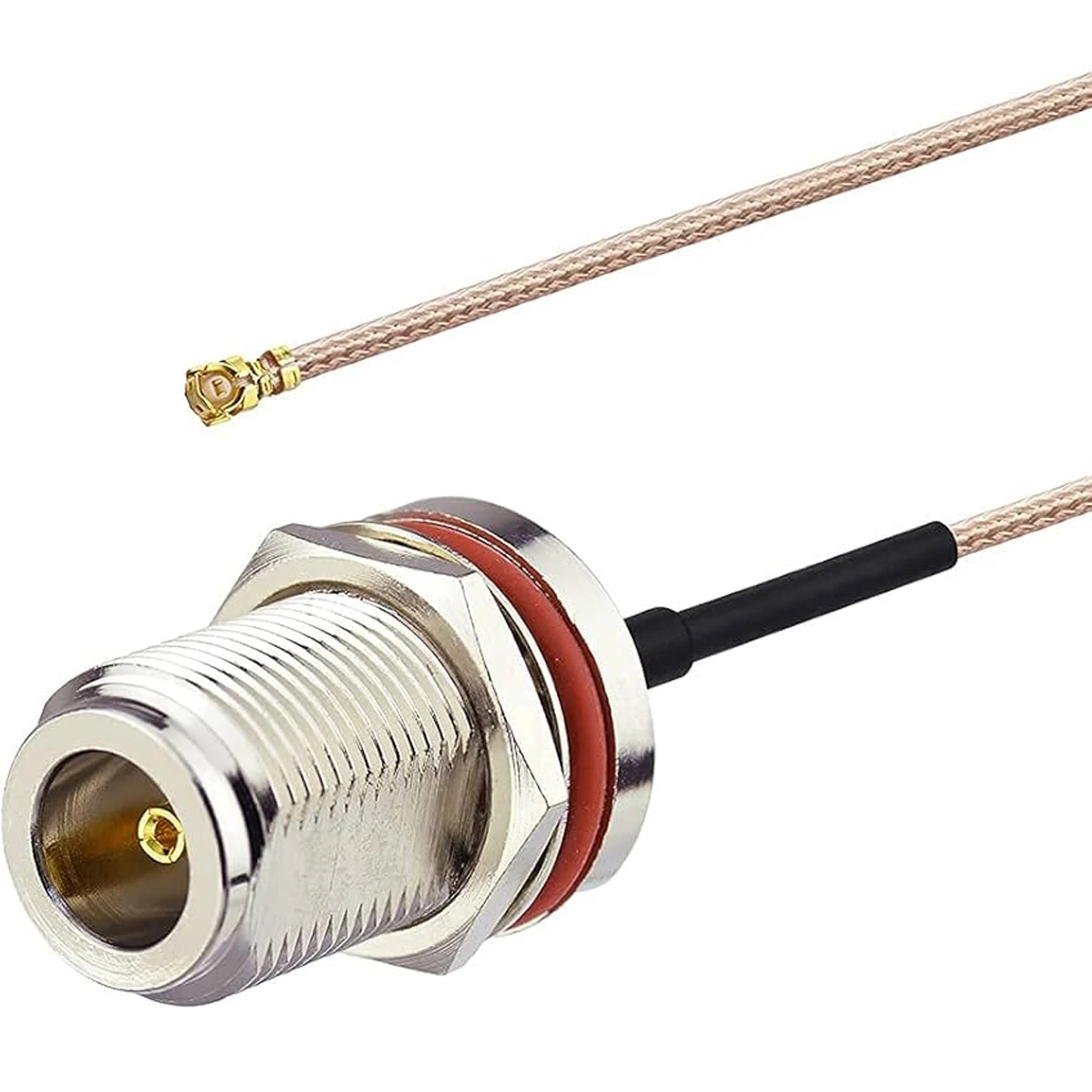
This coaxial cable assembly features an N-Type female bulkhead connector on one end and a U.FL (MHF1) connector on the other, interconnected by RG178 coaxial cable. The N-Type connector, visible with its threaded, robust metallic construction and internal gold-plated pin, ensures a secure and low-loss connection to external antennas. Its design is inherently resistant to environmental ingress when properly installed. The U.FL connector, a miniature snap-on type, provides a compact interface for internal wireless cards, such as Mini PCIE modules. This small connector is critical for tight spaces.
The N-Type connector's threaded barrel and hexagonal nut suggest a secure panel-mount installation. This prevents accidental disconnections. The gold plating on the center conductor of both connectors minimizes oxidation and ensures optimal conductivity, a critical factor for high-frequency signals. Signal degradation is a common issue with inferior connectors.
Compared to standard, unshielded internal antenna wires, this assembly offers significantly improved shielding and mechanical stability. The robust N-Type interface provides a much more durable and weather-resistant connection point than a simple SMA or RP-SMA connector, especially for outdoor antenna applications. This is a substantial upgrade for long-term reliability.
The core of this assembly is the RG178 coaxial cable. This cable type is known for its small diameter and flexibility, making it ideal for routing within confined enclosures. RG178 cable typically features a silver-plated copper-clad steel center conductor, a PTFE (Polytetrafluoroethylene) dielectric, a silver-plated copper braid shield, and a FEP (Fluorinated Ethylene Propylene) jacket. Its impedance is precisely 50 ohms.
While RG178 is thin, its construction is optimized for high-frequency applications where space is at a premium. The PTFE dielectric offers excellent electrical properties, including low dielectric loss and a stable dielectric constant across a wide temperature range. This ensures minimal signal attenuation and phase distortion, even in demanding operational environments. The silver-plated braid provides effective electromagnetic interference (EMI) shielding. This protects the signal from external noise.
Compared to larger diameter cables like RG58 or LMR-200, RG178 has higher attenuation per unit length due to its smaller conductor and dielectric. However, its flexibility and miniature size are unparalleled for short runs inside devices. For applications where cable runs are typically under 1-2 meters, the increased attenuation is negligible, and the benefits of its small form factor outweigh this trade-off. This cable is not for long runs.
This cable assembly is specifically designed to bridge the gap between internal wireless modules, such as those found on Mini PCIE cards or embedded LoRa/Wi-Fi modules, and external antennas. The N-Type female bulkhead connector allows for secure mounting through a chassis or enclosure panel, providing a professional and durable external antenna port. The U.FL connector then snaps directly onto the corresponding male U.FL port on the wireless module. Proper seating is essential.
Consider a scenario where a T-Mobile router or a custom IoT gateway requires an external high-gain antenna for extended range or improved signal penetration. This cable assembly facilitates that connection, transforming an internal-only device into a powerful, externally-connected system. The installation process is straightforward for those familiar with RF connectors. No specialized Tools are typically required for the U.FL connection, though a torque wrench for the N-Type might be beneficial for critical installations.
Unlike generic internal antenna wires that often lack proper shielding and are prone to damage, this assembly provides a standardized, robust, and electrically sound pathway. The ability to securely mount the N-Type connector prevents stress on the internal module's U.FL port, which is a common point of failure in less robust setups. This enhances the overall system's longevity. It's a reliable link.
The materials chosen for this cable assembly contribute to its overall durability. The N-Type connector's nickel-plated brass body offers excellent corrosion resistance and mechanical strength. The internal gold plating on the contacts ensures consistent electrical performance over time, resisting oxidation that can degrade signal quality. The RG178 cable's FEP jacket provides good abrasion resistance and a wide operating temperature range, making it suitable for various environments.
Regular inspection of the cable and connectors is always recommended, especially in installations exposed to vibration or extreme temperatures. The threaded N-Type connection, when properly tightened, forms a secure mechanical and electrical bond. The U.FL connector, while small, provides a surprisingly resilient connection when not subjected to repeated disconnections and reconnections. Its snap-on design is convenient.
Compared to cheaper, unbranded alternatives, the visible quality of the N-Type connector's machining and plating suggests a higher standard of manufacturing. This translates directly into a longer service life and more consistent RF performance, reducing the need for costly replacements or troubleshooting down the line. Investing in quality components prevents future headaches.
For any RF system, the quality of the interconnecting cables is paramount to overall performance. This RG178 assembly, with its 50-ohm impedance, ensures proper impedance matching throughout the signal path, from the wireless module to the antenna. Impedance mismatches lead to signal reflections (high VSWR), which reduce effective radiated power and can even damage RF front-ends over time. A good match is vital.
The low-loss characteristics of the PTFE dielectric and the effective shielding of the silver-plated braid minimize signal attenuation and external interference pickup. This is particularly important for sensitive applications like LoRa, where every decibel of signal strength matters. A clean signal path directly translates to better range and data rates. This cable delivers a clean signal.
Imagine deploying a remote sensor network where reliable communication is critical. Using a high-quality cable assembly like this ensures that the antenna is receiving and transmitting signals with maximum efficiency, minimizing packet loss and maximizing throughput. This directly impacts the operational success of the entire system. It's a small component with a big impact.
This RG178 U.FL to N-Type Female Coaxial Cable Assembly provides a dependable and high-performance solution for integrating external antennas with internal wireless modules. Its robust construction, precise impedance matching, and quality materials ensure optimal signal transmission and long-term reliability. Picture your wireless devices achieving their full potential, extending their reach and maintaining stable connections, all thanks to a meticulously engineered interconnect. This cable assembly is the silent workhorse that makes it happen, delivering consistent performance where it matters most.
Precision Engineering for Signal Integrity
This coaxial cable assembly features an N-Type female bulkhead connector on one end and a U.FL (MHF1) connector on the other, interconnected by RG178 coaxial cable. The N-Type connector, visible with its threaded, robust metallic construction and internal gold-plated pin, ensures a secure and low-loss connection to external antennas. Its design is inherently resistant to environmental ingress when properly installed. The U.FL connector, a miniature snap-on type, provides a compact interface for internal wireless cards, such as Mini PCIE modules. This small connector is critical for tight spaces.
The N-Type connector's threaded barrel and hexagonal nut suggest a secure panel-mount installation. This prevents accidental disconnections. The gold plating on the center conductor of both connectors minimizes oxidation and ensures optimal conductivity, a critical factor for high-frequency signals. Signal degradation is a common issue with inferior connectors.
Compared to standard, unshielded internal antenna wires, this assembly offers significantly improved shielding and mechanical stability. The robust N-Type interface provides a much more durable and weather-resistant connection point than a simple SMA or RP-SMA connector, especially for outdoor antenna applications. This is a substantial upgrade for long-term reliability.
The RG178 Coaxial Cable: A Closer Look
The core of this assembly is the RG178 coaxial cable. This cable type is known for its small diameter and flexibility, making it ideal for routing within confined enclosures. RG178 cable typically features a silver-plated copper-clad steel center conductor, a PTFE (Polytetrafluoroethylene) dielectric, a silver-plated copper braid shield, and a FEP (Fluorinated Ethylene Propylene) jacket. Its impedance is precisely 50 ohms.
While RG178 is thin, its construction is optimized for high-frequency applications where space is at a premium. The PTFE dielectric offers excellent electrical properties, including low dielectric loss and a stable dielectric constant across a wide temperature range. This ensures minimal signal attenuation and phase distortion, even in demanding operational environments. The silver-plated braid provides effective electromagnetic interference (EMI) shielding. This protects the signal from external noise.
Compared to larger diameter cables like RG58 or LMR-200, RG178 has higher attenuation per unit length due to its smaller conductor and dielectric. However, its flexibility and miniature size are unparalleled for short runs inside devices. For applications where cable runs are typically under 1-2 meters, the increased attenuation is negligible, and the benefits of its small form factor outweigh this trade-off. This cable is not for long runs.
Installation and Application Versatility
This cable assembly is specifically designed to bridge the gap between internal wireless modules, such as those found on Mini PCIE cards or embedded LoRa/Wi-Fi modules, and external antennas. The N-Type female bulkhead connector allows for secure mounting through a chassis or enclosure panel, providing a professional and durable external antenna port. The U.FL connector then snaps directly onto the corresponding male U.FL port on the wireless module. Proper seating is essential.
Consider a scenario where a T-Mobile router or a custom IoT gateway requires an external high-gain antenna for extended range or improved signal penetration. This cable assembly facilitates that connection, transforming an internal-only device into a powerful, externally-connected system. The installation process is straightforward for those familiar with RF connectors. No specialized Tools are typically required for the U.FL connection, though a torque wrench for the N-Type might be beneficial for critical installations.
Unlike generic internal antenna wires that often lack proper shielding and are prone to damage, this assembly provides a standardized, robust, and electrically sound pathway. The ability to securely mount the N-Type connector prevents stress on the internal module's U.FL port, which is a common point of failure in less robust setups. This enhances the overall system's longevity. It's a reliable link.
Durability and Longevity in Operation
The materials chosen for this cable assembly contribute to its overall durability. The N-Type connector's nickel-plated brass body offers excellent corrosion resistance and mechanical strength. The internal gold plating on the contacts ensures consistent electrical performance over time, resisting oxidation that can degrade signal quality. The RG178 cable's FEP jacket provides good abrasion resistance and a wide operating temperature range, making it suitable for various environments.
Regular inspection of the cable and connectors is always recommended, especially in installations exposed to vibration or extreme temperatures. The threaded N-Type connection, when properly tightened, forms a secure mechanical and electrical bond. The U.FL connector, while small, provides a surprisingly resilient connection when not subjected to repeated disconnections and reconnections. Its snap-on design is convenient.
Compared to cheaper, unbranded alternatives, the visible quality of the N-Type connector's machining and plating suggests a higher standard of manufacturing. This translates directly into a longer service life and more consistent RF performance, reducing the need for costly replacements or troubleshooting down the line. Investing in quality components prevents future headaches.
Ensuring Signal Pathway Reliability
For any RF system, the quality of the interconnecting cables is paramount to overall performance. This RG178 assembly, with its 50-ohm impedance, ensures proper impedance matching throughout the signal path, from the wireless module to the antenna. Impedance mismatches lead to signal reflections (high VSWR), which reduce effective radiated power and can even damage RF front-ends over time. A good match is vital.
The low-loss characteristics of the PTFE dielectric and the effective shielding of the silver-plated braid minimize signal attenuation and external interference pickup. This is particularly important for sensitive applications like LoRa, where every decibel of signal strength matters. A clean signal path directly translates to better range and data rates. This cable delivers a clean signal.
Imagine deploying a remote sensor network where reliable communication is critical. Using a high-quality cable assembly like this ensures that the antenna is receiving and transmitting signals with maximum efficiency, minimizing packet loss and maximizing throughput. This directly impacts the operational success of the entire system. It's a small component with a big impact.
This RG178 U.FL to N-Type Female Coaxial Cable Assembly provides a dependable and high-performance solution for integrating external antennas with internal wireless modules. Its robust construction, precise impedance matching, and quality materials ensure optimal signal transmission and long-term reliability. Picture your wireless devices achieving their full potential, extending their reach and maintaining stable connections, all thanks to a meticulously engineered interconnect. This cable assembly is the silent workhorse that makes it happen, delivering consistent performance where it matters most.