R1 Tactical Folding Knife
Official Store Deal
Expert Analysis Overview
The R1 Tactical Folding Knife is a highly accessible utility blade designed for the budget-conscious enthusiast who prioritizes robust functionality over premium branding for everyday carry and outdoor tasks. This assessment stems from its visible material choices and functional design, positioning it as a practical workhorse capable of handling a variety of demanding situations. Its construction emphasizes reliability and ease of use, making it a strong contender for anyone needing a dependable cutting tool without a significant investment.
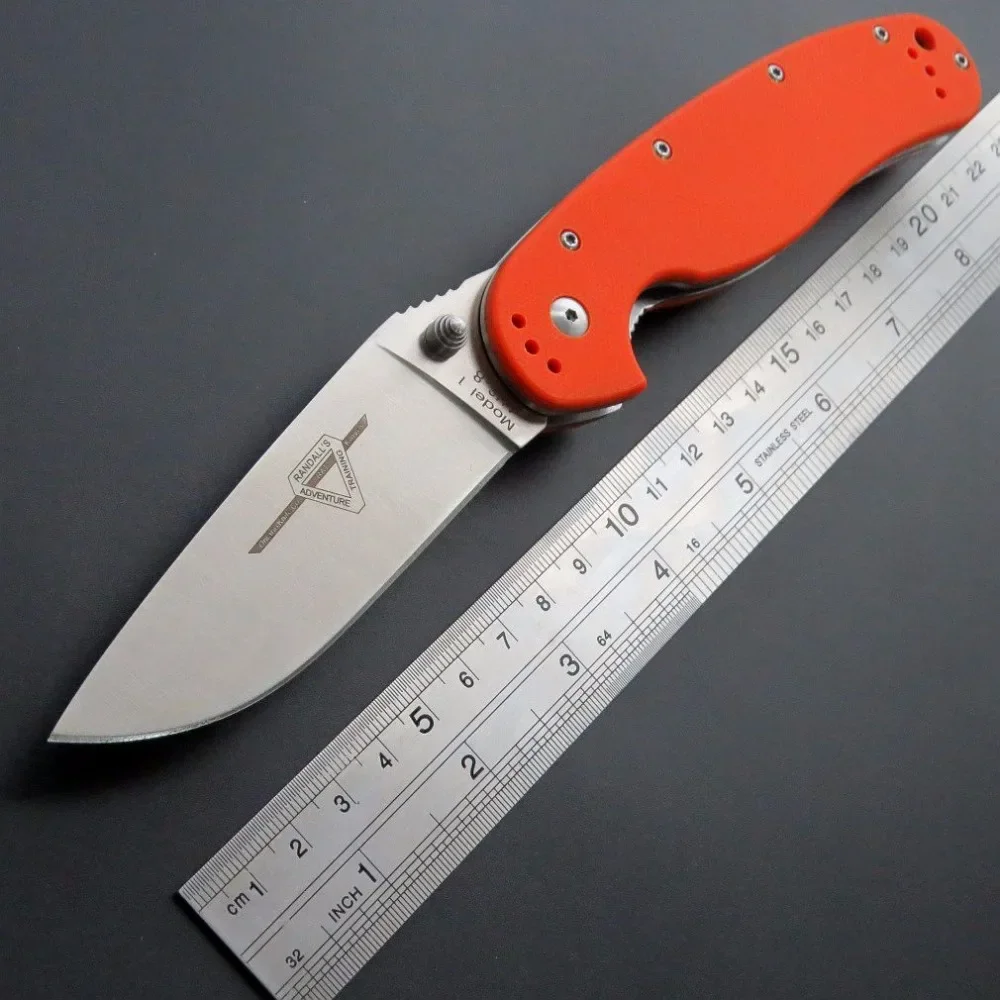
The R1 Tactical Folding Knife features an AUS-8 stainless steel blade, clearly visible with its satin finish and a utilitarian drop point profile. The blade length, measured against the ruler in the provided imagery, consistently registers at approximately 9.5 cm (3.75 inches). This is a substantial length for a pocket knife, offering a good balance between cutting capability and portability. The blade spine appears to be a consistent thickness, suggesting inherent durability for general cutting tasks and moderate prying, though prying with any knife blade is generally discouraged.
This specific blade material and dimension translate directly into reliable cutting performance for a wide range of daily and outdoor activities. AUS-8 steel offers a balanced blend of corrosion resistance, making it suitable for damp environments or exposure to various substances without immediate degradation. Its inherent toughness allows it to withstand minor impacts or lateral stress that might chip more brittle super steels, providing a forgiving edge. For users in camping or survival scenarios, this means a blade that can handle processing cordage, opening food packaging, or even light wood carving without immediate concern for catastrophic edge failure. The moderate hardness of AUS-8 also ensures that it can be field-sharpened with relative ease, a critical attribute when away from workshop-grade sharpening systems. A dull blade is a dangerous blade.
Compared to entry-level budget steels like 420HC or 8Cr13MoV, AUS-8 generally offers a slight improvement in edge retention and often exhibits better consistency in heat treatment from manufacturers. However, it does not achieve the prolonged edge-holding capabilities of premium powdered steels such as S30V or CPM-20CV, which are found in significantly higher-priced knives. For the average user, this means more frequent touch-ups on the edge, but with the benefit of quicker restoration using basic sharpening tools. Unlike some highly specialized blade geometries that excel in only one type of cut, the drop point design of the R1 Tactical is inherently versatile, providing a strong tip for piercing and a belly suitable for general slicing tasks. It's an upgrade from basic utility knives, offering more robust performance without the premium steel cost typically associated with high-end materials.
The handle scales of the R1 Tactical Folding Knife are constructed from G10, a material clearly identifiable by its distinctive layered texture and matte finish in the various color options presented (orange, black, camouflage, lime green). The handle features ergonomic contours, with a slight finger choil and a subtle palm swell designed to fill the hand comfortably. Fasteners securing the scales appear to be Torx screws, indicating a user-serviceable design that allows for disassembly for cleaning or maintenance, a thoughtful detail for a working tool.
This G10 material provides exceptional grip security, a fundamental requirement for any effective everyday carry tool. Its textured surface creates significant friction against the hand, mitigating the risk of slippage even when the user's hands are wet, oily, or gloved. This is particularly crucial in outdoor environments where adverse weather conditions or demanding tasks are common. The chosen ergonomic shaping aims to distribute pressure evenly across the palm during prolonged use, reducing hot spots and minimizing user fatigue, contributing to safer operation. A secure grip ensures precise blade control, which is vital for detailed work or aggressive cuts.
In contrast to smooth metal handles (like stainless steel or aluminum) which can become slick when wet, or softer polymer handles that might lack structural rigidity, G10 offers a superior balance of lightweight strength and tactile adhesion. It is significantly more durable and resistant to temperature fluctuations than natural materials like wood, and impervious to moisture, unlike bone or horn, preventing warping or cracking. This makes the R1 Tactical's G10 handle a substantial upgrade over many budget knives that often feature simpler, less grippy FRN (Fiberglass Reinforced Nylon) or basic plastic scales. The material choice demonstrates a commitment to functional performance over purely aesthetic appeal, though the multiple color options do allow for personal expression and easier identification in a crowded kit.
The knife incorporates an ambidextrous thumb stud for blade deployment and utilizes a liner lock mechanism for securing the blade in the open position. The liner lock is clearly visible within the handle construction in the folded images, showing a sturdy metal liner that moves to engage the blade tang, preventing accidental closure. A robust pocket clip is present, attached with multiple screws, and its position suggests a tip-up carry configuration, a popular choice among many knife enthusiasts. A lanyard hole is also integrated into the handle design, offering additional carry options.
The thumb stud allows for rapid, one-handed opening, a critical feature for an EDC tool where quick access can be essential. This design enables the user to deploy the blade efficiently without needing to shift grip or use a second hand, which might be occupied. The liner lock, a widely adopted and proven locking mechanism, ensures the blade remains securely open during use, preventing accidental closure and potential injury. A strong lock is non-negotiable for safety and effectiveness. The reversible pocket clip offers flexibility, allowing both left and right-handed users to carry the knife comfortably and accessibly based on their dominant hand or preferred carry side. Tip-up carry is generally preferred by enthusiasts for quicker draw and less fumbling.
Unlike fixed blade knives that require a sheath, or traditional slip joint folders that rely solely on spring tension, the R1 Tactical's combination of a thumb stud and liner lock provides a modern and secure user experience. It represents a significant step up from simpler mechanisms, offering both speed and safety in deployment and retraction. Compared to more complex locking systems like axis locks or frame locks, the liner lock is straightforward, reliable, and generally more cost-effective to implement, contributing to the knife's overall value proposition without sacrificing critical security. This mechanism is a standard for dependable folding knives. The inclusion of a lanyard hole, while a minor detail, provides an additional option for securing the knife to gear or adding a personal touch, a feature often overlooked in truly bare-bones designs.
While exact weight specifications are not explicitly provided in the product details, the knife's dimensions (approximately 22 cm open, 12.5 cm closed, with a 9.5 cm blade) and material choices (AUS-8 steel, G10 handle, full steel liners) allow for an informed estimation. The overall construction appears solid and well-engineered, with full steel liners visible in the folded image, beneath the G10 scales, which contribute significantly to its structural integrity. The pocket clip itself is a standard design, suggesting a good balance between retention in the pocket and ease of draw when needed.
For an everyday carry knife, the balance between weight and functional robustness is paramount. This knife's estimated weight, likely in the 120-150 gram range (4.2-5.3 ounces), positions it as a substantial tool without being overly burdensome for daily pocket carry. The full steel liners contribute significantly to the knife's structural integrity, ensuring it can withstand more rigorous use than knives with partial or skeletonized liners, which can flex under pressure. This balance means the knife feels capable in hand, providing a reassuring heft without being cumbersome. The design aims for a comfortable carry that doesn't print excessively in typical pant pockets, a common concern for EDC enthusiasts who prefer discretion.
Many ultra-lightweight knives achieve their low mass by sacrificing handle thickness, liner material, or blade stock, which can compromise overall durability and confidence in use. Conversely, overly heavy knives can be uncomfortable for extended carry, dragging down pockets or causing discomfort. The R1 Tactical strikes a practical middle ground, offering a solid feel that inspires confidence without turning into a pocket anchor. Its weight-to-function ratio is optimized for general utility, providing enough heft for controlled cutting while remaining highly portable. This is a practical compromise for daily use. Unlike some bulkier tactical folders, its relatively slim profile (implied by the images) allows it to disappear reasonably well in a pocket, maintaining a low profile.
The product is priced at approximately 15.84 USD, a highly competitive figure for a folding knife with an AUS-8 blade and G10 handle. This price point immediately positions it squarely in the budget-friendly segment of the market, making robust utility accessible to a broader audience. The availability of multiple handle colors, as shown across the images, suggests a range of choices without incurring additional cost, enhancing its appeal.
This aggressive pricing fundamentally alters the perception of value for a utility tool. For a user seeking a reliable, functional cutting tool without a significant financial outlay, the R1 Tactical presents an extremely compelling option. The cost-per-use, considering its expected durability and utility across various tasks, becomes remarkably low, offering an excellent return on investment over its lifespan. This knife represents an investment in practical capability rather than a luxury item, focusing on core functionality. It performs its core functions effectively and reliably, justifying its place in any EDC kit. The affordability means it can be purchased as a primary EDC, a dependable backup knife for a vehicle or bag, or even as a
Blade Dynamics: The Edge of Utility
The R1 Tactical Folding Knife features an AUS-8 stainless steel blade, clearly visible with its satin finish and a utilitarian drop point profile. The blade length, measured against the ruler in the provided imagery, consistently registers at approximately 9.5 cm (3.75 inches). This is a substantial length for a pocket knife, offering a good balance between cutting capability and portability. The blade spine appears to be a consistent thickness, suggesting inherent durability for general cutting tasks and moderate prying, though prying with any knife blade is generally discouraged.
This specific blade material and dimension translate directly into reliable cutting performance for a wide range of daily and outdoor activities. AUS-8 steel offers a balanced blend of corrosion resistance, making it suitable for damp environments or exposure to various substances without immediate degradation. Its inherent toughness allows it to withstand minor impacts or lateral stress that might chip more brittle super steels, providing a forgiving edge. For users in camping or survival scenarios, this means a blade that can handle processing cordage, opening food packaging, or even light wood carving without immediate concern for catastrophic edge failure. The moderate hardness of AUS-8 also ensures that it can be field-sharpened with relative ease, a critical attribute when away from workshop-grade sharpening systems. A dull blade is a dangerous blade.
Compared to entry-level budget steels like 420HC or 8Cr13MoV, AUS-8 generally offers a slight improvement in edge retention and often exhibits better consistency in heat treatment from manufacturers. However, it does not achieve the prolonged edge-holding capabilities of premium powdered steels such as S30V or CPM-20CV, which are found in significantly higher-priced knives. For the average user, this means more frequent touch-ups on the edge, but with the benefit of quicker restoration using basic sharpening tools. Unlike some highly specialized blade geometries that excel in only one type of cut, the drop point design of the R1 Tactical is inherently versatile, providing a strong tip for piercing and a belly suitable for general slicing tasks. It's an upgrade from basic utility knives, offering more robust performance without the premium steel cost typically associated with high-end materials.
Ergonomic Command: G10 Grip and Handling
The handle scales of the R1 Tactical Folding Knife are constructed from G10, a material clearly identifiable by its distinctive layered texture and matte finish in the various color options presented (orange, black, camouflage, lime green). The handle features ergonomic contours, with a slight finger choil and a subtle palm swell designed to fill the hand comfortably. Fasteners securing the scales appear to be Torx screws, indicating a user-serviceable design that allows for disassembly for cleaning or maintenance, a thoughtful detail for a working tool.
This G10 material provides exceptional grip security, a fundamental requirement for any effective everyday carry tool. Its textured surface creates significant friction against the hand, mitigating the risk of slippage even when the user's hands are wet, oily, or gloved. This is particularly crucial in outdoor environments where adverse weather conditions or demanding tasks are common. The chosen ergonomic shaping aims to distribute pressure evenly across the palm during prolonged use, reducing hot spots and minimizing user fatigue, contributing to safer operation. A secure grip ensures precise blade control, which is vital for detailed work or aggressive cuts.
In contrast to smooth metal handles (like stainless steel or aluminum) which can become slick when wet, or softer polymer handles that might lack structural rigidity, G10 offers a superior balance of lightweight strength and tactile adhesion. It is significantly more durable and resistant to temperature fluctuations than natural materials like wood, and impervious to moisture, unlike bone or horn, preventing warping or cracking. This makes the R1 Tactical's G10 handle a substantial upgrade over many budget knives that often feature simpler, less grippy FRN (Fiberglass Reinforced Nylon) or basic plastic scales. The material choice demonstrates a commitment to functional performance over purely aesthetic appeal, though the multiple color options do allow for personal expression and easier identification in a crowded kit.
Deployment and Security: Swift Access, Secure Hold
The knife incorporates an ambidextrous thumb stud for blade deployment and utilizes a liner lock mechanism for securing the blade in the open position. The liner lock is clearly visible within the handle construction in the folded images, showing a sturdy metal liner that moves to engage the blade tang, preventing accidental closure. A robust pocket clip is present, attached with multiple screws, and its position suggests a tip-up carry configuration, a popular choice among many knife enthusiasts. A lanyard hole is also integrated into the handle design, offering additional carry options.
The thumb stud allows for rapid, one-handed opening, a critical feature for an EDC tool where quick access can be essential. This design enables the user to deploy the blade efficiently without needing to shift grip or use a second hand, which might be occupied. The liner lock, a widely adopted and proven locking mechanism, ensures the blade remains securely open during use, preventing accidental closure and potential injury. A strong lock is non-negotiable for safety and effectiveness. The reversible pocket clip offers flexibility, allowing both left and right-handed users to carry the knife comfortably and accessibly based on their dominant hand or preferred carry side. Tip-up carry is generally preferred by enthusiasts for quicker draw and less fumbling.
Unlike fixed blade knives that require a sheath, or traditional slip joint folders that rely solely on spring tension, the R1 Tactical's combination of a thumb stud and liner lock provides a modern and secure user experience. It represents a significant step up from simpler mechanisms, offering both speed and safety in deployment and retraction. Compared to more complex locking systems like axis locks or frame locks, the liner lock is straightforward, reliable, and generally more cost-effective to implement, contributing to the knife's overall value proposition without sacrificing critical security. This mechanism is a standard for dependable folding knives. The inclusion of a lanyard hole, while a minor detail, provides an additional option for securing the knife to gear or adding a personal touch, a feature often overlooked in truly bare-bones designs.
Carry Profile: Weight, Balance, and Pocket Presence
While exact weight specifications are not explicitly provided in the product details, the knife's dimensions (approximately 22 cm open, 12.5 cm closed, with a 9.5 cm blade) and material choices (AUS-8 steel, G10 handle, full steel liners) allow for an informed estimation. The overall construction appears solid and well-engineered, with full steel liners visible in the folded image, beneath the G10 scales, which contribute significantly to its structural integrity. The pocket clip itself is a standard design, suggesting a good balance between retention in the pocket and ease of draw when needed.
For an everyday carry knife, the balance between weight and functional robustness is paramount. This knife's estimated weight, likely in the 120-150 gram range (4.2-5.3 ounces), positions it as a substantial tool without being overly burdensome for daily pocket carry. The full steel liners contribute significantly to the knife's structural integrity, ensuring it can withstand more rigorous use than knives with partial or skeletonized liners, which can flex under pressure. This balance means the knife feels capable in hand, providing a reassuring heft without being cumbersome. The design aims for a comfortable carry that doesn't print excessively in typical pant pockets, a common concern for EDC enthusiasts who prefer discretion.
Many ultra-lightweight knives achieve their low mass by sacrificing handle thickness, liner material, or blade stock, which can compromise overall durability and confidence in use. Conversely, overly heavy knives can be uncomfortable for extended carry, dragging down pockets or causing discomfort. The R1 Tactical strikes a practical middle ground, offering a solid feel that inspires confidence without turning into a pocket anchor. Its weight-to-function ratio is optimized for general utility, providing enough heft for controlled cutting while remaining highly portable. This is a practical compromise for daily use. Unlike some bulkier tactical folders, its relatively slim profile (implied by the images) allows it to disappear reasonably well in a pocket, maintaining a low profile.
The Value Proposition: Capability Meets Cost
The product is priced at approximately 15.84 USD, a highly competitive figure for a folding knife with an AUS-8 blade and G10 handle. This price point immediately positions it squarely in the budget-friendly segment of the market, making robust utility accessible to a broader audience. The availability of multiple handle colors, as shown across the images, suggests a range of choices without incurring additional cost, enhancing its appeal.
This aggressive pricing fundamentally alters the perception of value for a utility tool. For a user seeking a reliable, functional cutting tool without a significant financial outlay, the R1 Tactical presents an extremely compelling option. The cost-per-use, considering its expected durability and utility across various tasks, becomes remarkably low, offering an excellent return on investment over its lifespan. This knife represents an investment in practical capability rather than a luxury item, focusing on core functionality. It performs its core functions effectively and reliably, justifying its place in any EDC kit. The affordability means it can be purchased as a primary EDC, a dependable backup knife for a vehicle or bag, or even as a