QUIE Compact No-Strip Wire Connectors
Official Store Deal
Expert Analysis Overview
Revolutionizing Low-Voltage Connections
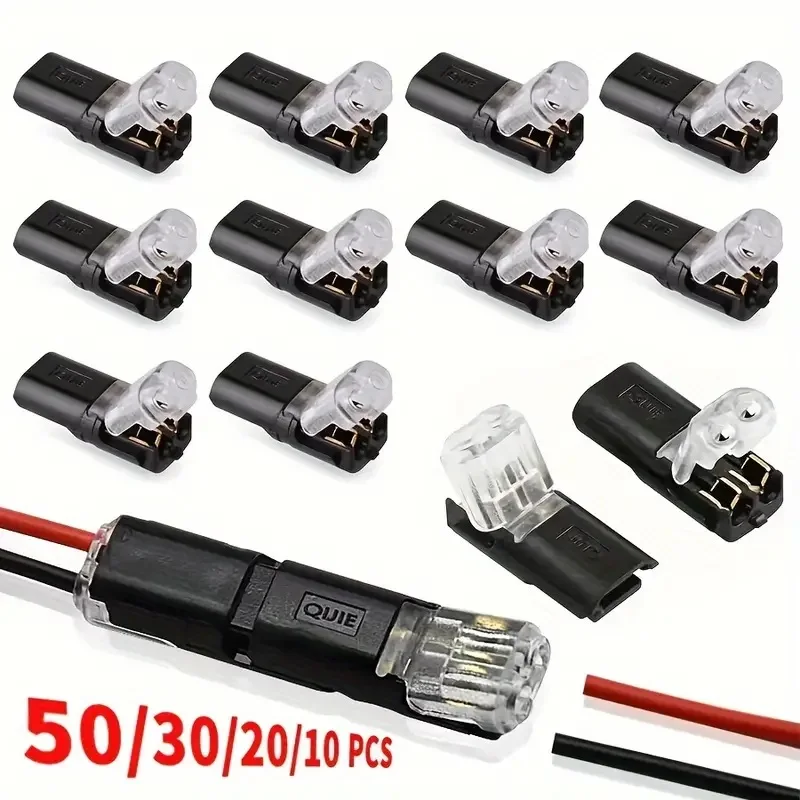
The QUIE Compact No-Strip Wire Connectors are an ingenious electrical solution designed for solar energy enthusiasts and DIYers seeking rapid, reliable, and tool-free connections. This product fundamentally redefines how low-voltage DC wiring is approached, particularly within compact or temporary solar setups. It eliminates the tedious and often inconsistent process of wire stripping, offering a streamlined alternative.
The Challenge of Traditional Wiring
Many solar hobbyists encounter a common frustration: the time-consuming and error-prone nature of traditional wire connections. Stripping insulation, twisting wires, and then securing them with electrical tape or crimp connectors can introduce points of failure. These methods often lead to inconsistent contact, increased resistance, and potential efficiency losses in a solar energy system. A poor connection can significantly degrade power output.
Traditional methods also demand a specific set of Tools. Wire strippers, crimpers, and often soldering irons are standard kit. This adds to the complexity and cost for beginners. Furthermore, making modifications or repairs can be a destructive process, requiring cutting and re-stripping wires.
This is where the no-strip design offers a clear advantage. It simplifies the entire wiring workflow.
Ingenious Design for Efficiency
At its core, this connector utilizes a piercing contact mechanism. Wires are simply inserted, and a pressing action with pliers creates a secure electrical connection through the insulation. This design choice is critical for maintaining system efficiency.
For solar applications, every millivolt counts. Poor connections can introduce resistance, leading to voltage drop and power loss. The direct piercing contact aims to minimize this by ensuring a consistent connection point. The transparent housing on one end allows for visual confirmation of the wire's proper seating, a small but significant detail for troubleshooting.
Compared to screw terminals, which can loosen over time due to vibration or thermal expansion, these connectors provide a more fixed and potentially more reliable contact. They are designed for quick deployment.
Streamlined Installation Protocol
Installation is remarkably straightforward. The process involves four simple steps, making these connectors accessible even to those with minimal electrical experience. First, the unstripped wire is inserted into the designated slot. Second, the connector's cap is pressed down with standard pliers, which simultaneously pierces the wire's insulation and secures the conductor. Third, the two halves of the connector are brought together, forming a complete circuit. Finally, the connection is ready for use.
This ease of installation directly translates to significant time savings for solar projects. Imagine setting up a new string of LED lights powered by a small solar panel. The entire wiring process can be completed in minutes per connection. This rapid deployment is invaluable for experimental setups or temporary installations.
Traditional crimping requires specific crimping tools and matching terminals. This connector bypasses that entirely.
Compact Footprint for Discreet Integration
The physical dimensions of these connectors are impressively small. Measuring approximately 2.21 cm in length and 0.97 cm in width for a single unit, and a connected length of about 3.8 cm, they occupy minimal space. This compact form factor is particularly advantageous for solar energy systems where space is often at a premium.
Consider a scenario involving small solar panels on an RV or boat, where wiring needs to be routed through tight conduits or hidden within confined compartments. The reduced bulk of these connectors allows for cleaner installations and less visual clutter. Larger, traditional connectors can be cumbersome.
Their small size also contributes to a lower profile. This is beneficial for applications where aesthetics matter, such as integrated solar lighting or discreet sensor networks. It is a significant improvement over bulkier alternatives.
Versatility Across Wire Types
These connectors are compatible with both solid wire and stranded wire within the 22-20 AWG range. This versatility is crucial for solar hobbyists who often work with various wire types depending on the application. Solid wire is frequently used for permanent installations due to its rigidity, while stranded wire offers greater flexibility for movable components or connections subject to vibration.
This broad compatibility means users do not need to stock different types of connectors for different wire constructions. It simplifies inventory and ensures project flexibility. The internal contact mechanism is designed to create a reliable connection regardless of the wire's internal structure. This adaptability is key for diverse projects.
Many specialized connectors are limited to one wire type. This broadens the application scope.
Durability and Reusability Considerations
The visible construction suggests a robust plastic housing designed for repeated use. While the product title emphasizes pluggability, the primary connection method involves a one-time piercing action. However, the ability to disconnect and reconnect the two halves offers a degree of reusability for the overall circuit, not necessarily for the individual wire-to-connector interface.
For solar setups that require occasional reconfiguration or troubleshooting, the pluggable nature is a distinct advantage. It allows for modularity, enabling components to be easily added, removed, or swapped without cutting and re-splicing wires. This modularity reduces waste and enhances the longevity of wiring components.
This contrasts sharply with soldered connections, which are permanent. The pluggable design offers flexibility.
Optimizing Solar System Performance
When building a self-sustaining energy system, every component's contribution to overall efficiency is scrutinized. These connectors, by ensuring a quick and reliable electrical contact, help minimize potential points of resistance. Resistance in wiring translates directly to heat loss and reduced power delivery to the load or battery bank.
For low-voltage DC systems, which are common in hobbyist solar projects, maintaining voltage integrity is paramount. Even small voltage drops across multiple connections can accumulate, significantly impacting the performance of sensitive electronics or the charging efficiency of batteries. These connectors help preserve the generated power.
Their design supports consistent power flow. This is a critical factor for long-term system health.
Compatibility with Existing Solar Setups
Given their 2-pin, 2-way design and specified wire gauge, these connectors are highly compatible with many existing low-voltage DC solar setups. They are ideal for connecting small solar panels to charge controllers, linking LED lighting strips, or integrating various 12V accessories. The 22-20 AWG range covers common wiring for these applications.
Before integration, users should verify that the current draw of their components falls within the safe operating limits for 20-22 AWG wire. While the connectors themselves facilitate a connection, the wire gauge ultimately dictates the maximum safe current. This ensures system stability and safety.
They integrate seamlessly into many low-power DC circuits. This broadens their appeal.
Off-Grid Potential
For off-grid solar applications, reliability and ease of maintenance are paramount. These connectors contribute to both. Their no-strip design means fewer tools are needed for field repairs or expansions, a significant advantage when operating in remote locations. The quick connect/disconnect feature simplifies troubleshooting should a component fail.
Imagine needing to quickly replace a faulty LED light in an off-grid cabin. With these connectors, it's a matter of unplugging and plugging in a new unit, rather than fumbling with wire strippers and crimpers in potentially adverse conditions. This reduces downtime and complexity. Off-grid systems benefit from simplicity.
Their robust connection also minimizes the risk of intermittent faults. This enhances system uptime.
Value Proposition and Long-Term Savings
The initial cost of these connectors is offset by the significant time savings during installation and the reduced likelihood of connection failures. By minimizing the need for specialized tools and simplifying the wiring process, they reduce the overall labor cost of a project. This makes them a cost-effective solution in the long run.
Furthermore, the reusability of the pluggable connection points means less waste from discarded wires or damaged terminals during modifications. This contributes to a more sustainable and economical approach to electrical projects. The investment yields returns in efficiency and convenience. Less time spent on wiring means more time for other tasks.
This product offers excellent return on investment for frequent DIYers.
Final Thoughts on Integration
These QUIE Compact No-Strip Wire Connectors represent a significant step forward for hobbyist electrical work, especially within the solar energy domain. Their design addresses key pain points associated with traditional wiring methods, offering a faster, simpler, and potentially more reliable alternative for low-voltage DC applications. The ability to quickly assemble and reconfigure circuits without specialized tools makes them an invaluable asset for anyone building or maintaining a small-scale solar power system. Imagine the satisfaction of completing a complex wiring task in a fraction of the usual time, with confidence in every connection, knowing your solar array is operating at peak efficiency, silently powering your projects with minimal fuss. This is the future of accessible electrical work.