Quick Splice Wire Connectors (AWG 22-10)
Official Store Deal
Expert Analysis Overview
Precision Electrical Connections: An Expert's Review of Quick Splice Terminals
Quick splice wire connectors are essential components for rapidly establishing secure electrical connections without the need for stripping or soldering. These particular terminals, designed for AWG 22-10 gauge wires, offer a non-destructive method for branching off existing circuits, a critical capability for automotive, marine, and low-voltage residential applications. Their utility lies in simplifying complex wiring tasks, reducing installation time, and minimizing the potential for conductor damage often associated with traditional methods. The design prioritizes both speed and a degree of mechanical integrity, making them a common choice for quick modifications or additions to electrical systems where permanent, soldered connections are impractical or unnecessary.
The Engineering Behind Rapid Branching
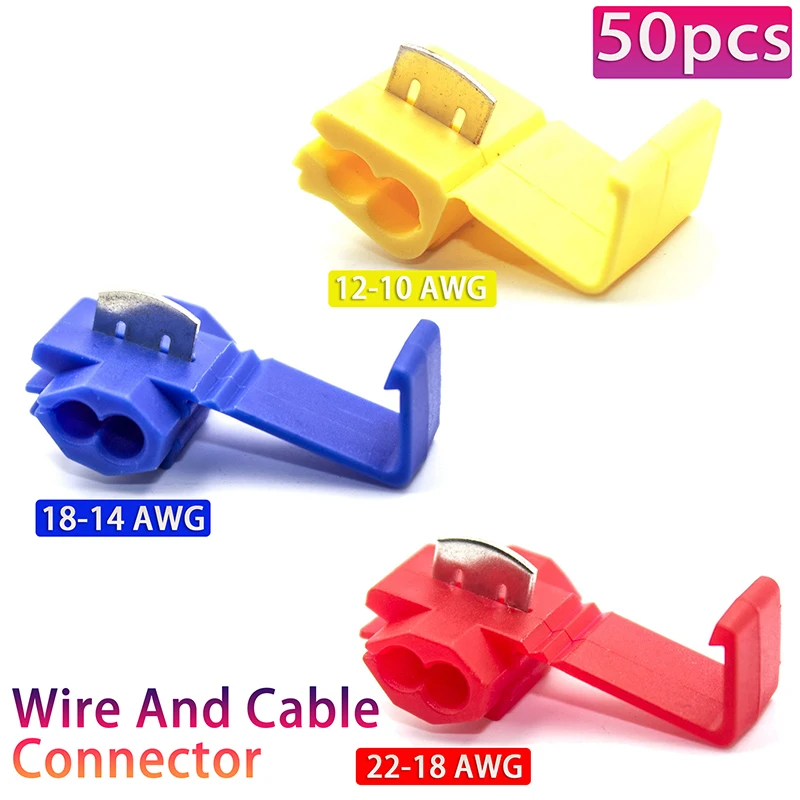
These quick splice connectors utilize a U-shaped metal contact that pierces the insulation of the main wire, establishing an electrical connection. A secondary slot then accommodates a branch wire, which is similarly secured by the same contact when the protective cover is closed. This mechanism bypasses the labor-intensive process of cutting, stripping, twisting, and taping, which can be time-consuming and introduce points of failure if not executed perfectly. The internal metal contact, visible in the product imagery, appears to be a tinned copper alloy, a standard material chosen for its conductivity and corrosion resistance. Proper material selection is paramount for long-term electrical stability.
Unlike inferior plastic connectors that can deform under pressure, these units feature a robust polymer housing. This housing provides insulation and mechanical protection for the connection. The color-coding—red for 22-18 AWG, blue for 18-14 AWG, and yellow for 12-10 AWG—is an industry-standard practice that significantly reduces the risk of misapplication. Using the correct gauge connector for the wire prevents both loose connections, which can lead to arcing and overheating, and overly tight connections that can damage the wire strands. This color-coding system is a simple yet effective safety feature.
Gauge Compatibility and Current Carrying Capacity
Accurate wire gauge compatibility is non-negotiable for electrical safety. The product explicitly states support for AWG 22-18 (0.5-1.0mm²), AWG 18-14 (0.75-2.5mm²), and AWG 12-10 (4-6mm²) wires. These ranges are standard for quick splice connectors and cover a broad spectrum of low-voltage DC and light-duty AC applications. It is crucial to understand that while these connectors facilitate a connection, the overall current carrying capacity of the circuit remains dictated by the smallest gauge wire in the system. Overloading a circuit with an undersized wire, even with a correctly sized connector, poses a significant fire risk. Always verify the amperage requirements of the load.
For instance, a 22 AWG wire is typically rated for only a few amps, while a 10 AWG wire can handle significantly more. The connector itself must be capable of safely transmitting the current without excessive resistance or heat generation. The visible metal contact appears substantial enough for the specified AWG ranges, suggesting adequate surface area for current transfer. However, without specific material composition and thickness data, precise current ratings for the connectors themselves cannot be definitively assessed. Users must exercise caution and adhere to the lowest common denominator in the circuit.
Compared to soldered connections, which offer superior conductivity and mechanical strength, quick splices introduce a slightly higher resistance due to the piercing contact method. This increased resistance can lead to minor voltage drops and heat generation, especially under continuous high current loads. For critical applications or circuits carrying near their maximum rated current, a soldered and heat-shrunk connection remains the gold standard. These quick splices are best suited for intermittent loads or circuits well within their current limits, where the convenience factor outweighs the marginal electrical performance difference.
Installation Methodology and Reliability
Installation is straightforward. The process involves inserting the main line into the terminal hole, then the branch line into the inner slot. A standard pair of pliers is then used to press the metal contact sheet tightly, ensuring a secure connection. Finally, the protective cover is locked into place. This five-step method is intuitive. It minimizes the potential for installation errors, a common issue with more complex wiring procedures. The visual guide provided clearly illustrates each stage, making it accessible even for novice users.
However, the reliability of the connection heavily depends on the installer's technique. Insufficient pressure during the crimping step can result in a poor electrical contact, leading to intermittent power, increased resistance, and potential arcing. Conversely, excessive force can damage the wire strands or the connector housing. A firm, decisive crimp is necessary. The plastic locking cover provides an additional layer of mechanical stability, preventing accidental dislodgement of the wires once connected. This design feature enhances the overall robustness of the splice.
Traditional crimp connectors, which require specialized crimping tools and often involve stripping insulation, offer a more controlled and generally more robust connection. However, they are also more time-consuming to install and require a higher skill level. These quick splices bridge the gap, offering a balance between ease of use and acceptable performance for non-critical applications. Their non-destructive nature, meaning the main wire does not need to be cut, is a significant advantage when modifying existing circuits without interrupting the primary conductor. This preserves the integrity of the original wiring harness.
Material Integrity and Environmental Considerations
The connectors are constructed from a durable plastic polymer, likely nylon or polypropylene, which provides good electrical insulation and resistance to common automotive fluids and environmental factors. The color-coding is molded into the plastic, ensuring long-term visibility. The metal contact is typically brass or copper, often tin-plated for enhanced corrosion resistance. This plating is crucial for maintaining conductivity in humid or corrosive environments, such as engine compartments or marine applications. Without proper plating, the metal contact can oxidize, leading to increased resistance and eventual connection failure. Material quality directly impacts longevity.
While these connectors offer good protection against incidental contact, they are not inherently waterproof or sealed against moisture ingress. In environments exposed to water, condensation, or high humidity, additional sealing measures, such as heat-shrink tubing with adhesive lining, are strongly recommended. Failure to adequately protect the connection from moisture can lead to corrosion of the metal contact, short circuits, or ground faults. The open design of the splice, while facilitating quick installation, does not provide the same environmental sealing as fully encapsulated connectors.
Compared to heat-shrink butt connectors, which provide a fully sealed and insulated connection, these quick splices are less suitable for harsh outdoor or marine environments without supplementary protection. However, for interior applications, such as inside a vehicle cabin or within a junction box, their inherent insulation is generally sufficient. The choice of connector type should always align with the environmental conditions of the installation. Prioritizing safety and longevity is paramount.
Wire Type Compatibility and Application Scope
The product imagery specifically indicates compatibility with BV (solid core) and RV (stranded) wires, while explicitly stating incompatibility with BVR (multi-stranded) wires. This distinction is critical. Solid core and standard stranded wires allow the U-shaped contact to effectively pierce and establish a connection. Multi-stranded wires, with their finer, more numerous strands, may not be reliably contacted by the piercing element, leading to poor electrical continuity or damage to the individual strands. Always verify wire type before use. This limitation is a key consideration for electricians working with diverse wire types.
These connectors excel in applications where a quick, temporary, or non-permanent branch connection is needed. Examples include adding accessories to a vehicle's electrical system, tapping into existing wiring for lighting or sensors, or making diagnostic connections. Their non-destructive nature means the original wire remains intact, which can be beneficial for warranty purposes or when future modifications are anticipated. They are not designed for high-vibration environments or applications where the connection will be subjected to significant mechanical stress. For such scenarios, crimped terminals with proper strain relief or soldered connections are superior.
Consider the specific demands of the circuit. For low-power LED lighting, auxiliary power outlets, or sensor wiring, these connectors offer a practical and efficient solution. For high-current circuits, such as starter motors or main power feeds, their use is strongly discouraged due to the potential for overheating and fire. Understanding the limitations of any electrical component is fundamental to safe installation. Always adhere to best practices and local electrical codes.
The Value Proposition for the Modern Electrician
These quick splice connectors represent a significant time-saving tool for electricians and DIY enthusiasts alike. The ability to quickly tap into an existing line without cutting or stripping streamlines installation processes, particularly in confined spaces or when working on intricate wiring harnesses. The cost-effectiveness of these connectors, especially when purchased in bulk, further enhances their appeal. For a small investment, users gain a versatile solution for numerous low-voltage wiring tasks. This efficiency translates directly into reduced labor costs for professionals and less frustration for hobbyists.
However, the perceived value must be balanced against the inherent limitations of the piercing contact method. While convenient, it does not offer the same long-term reliability or current carrying capacity as a properly crimped or soldered connection. The trade-off is speed and ease of installation versus ultimate electrical integrity. For applications where absolute reliability is paramount, such as critical safety systems or high-current power distribution, alternative connection methods should be prioritized. These connectors are a tool for specific applications, not a universal solution.
Imagine completing complex wiring modifications in a fraction of the time, confidently adding new components to your vehicle or home automation system without the tedious process of stripping and soldering. These quick splice connectors empower users to tackle electrical projects with greater efficiency and less specialized equipment, ensuring a clean and functional outcome for appropriate applications. Their simplicity and effectiveness make them an invaluable addition to any electrical toolkit, ready to streamline your next wiring challenge and provide reliable power where it's needed most.