QIDI Q2/Q2C Bimetallic Hotend Nozzle
Official Store Deal
Expert Analysis Overview
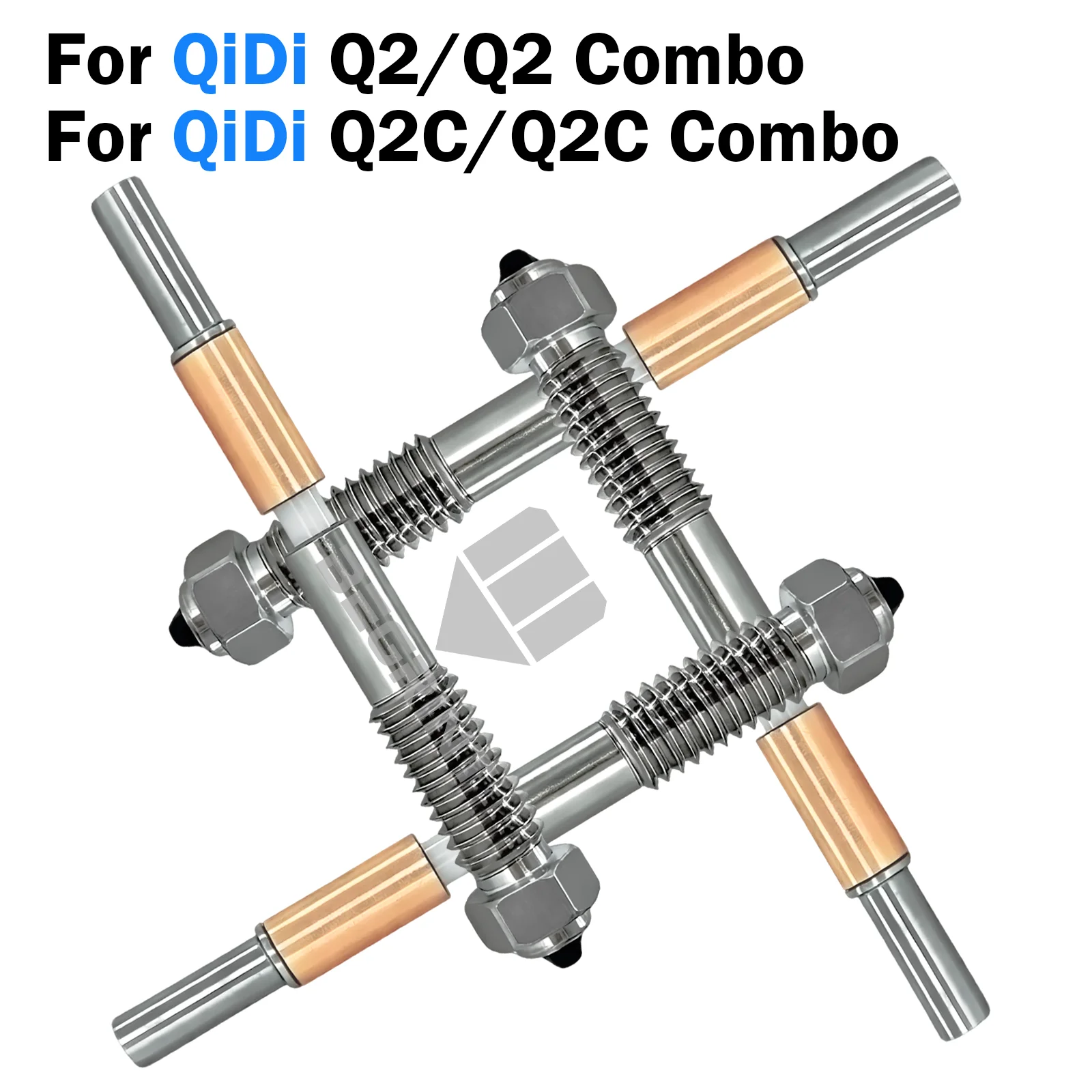
The QIDI Q2/Q2C Bimetallic Hotend Nozzle is a precision-engineered upgrade designed for the demanding environment of modern 3D printing, specifically tailored for QIDI Q2, Q2 Combo, Q2C, and Q2C Combo 3D printers. This component is crucial for educators and serious hobbyists seeking enhanced material compatibility and consistent print quality, especially when working with advanced filaments.
The nozzle features a bimetallic construction, a significant advancement over traditional single-material hotends. This design strategically separates the heating zone from the cooling zone, minimizing heat creep. Heat creep is a common issue where heat travels up the hotend, causing filament to soften prematurely and lead to clogs. This bimetallic approach ensures the filament melts only when it reaches the nozzle tip.
For a student learning 3D printing, understanding the thermal dynamics of a hotend is fundamental. This design provides a practical example of how material science directly impacts print reliability. It reduces the likelihood of frustrating clogs, allowing for more successful print outcomes and a smoother learning curve.
Compared to standard brass nozzles, which often struggle with consistent thermal regulation, the bimetallic design offers superior control. This translates directly into more predictable filament flow, a critical factor for achieving high-quality prints without constant adjustment.
The nozzle tip itself is crafted from nickel-plated hardened steel. Hardened steel is chosen for its exceptional wear resistance. Many advanced 3D printing filaments, particularly those infused with carbon fiber, glass fiber, or metal particles, are highly abrasive. These materials can rapidly wear down softer brass nozzles, leading to increased nozzle diameter and degraded print quality over time. Hardened steel resists this abrasion effectively.
This material choice extends the nozzle's operational lifespan significantly. For institutions or individuals frequently experimenting with composite filaments, this durability translates into fewer nozzle replacements and reduced maintenance downtime. It is a smart investment.
Standard brass nozzles, while excellent for basic filaments like PLA, quickly degrade when exposed to abrasive materials. The hardened steel alternative provides a robust solution, expanding the range of printable materials without compromising the nozzle's integrity. This is a clear upgrade.
Integrated within the bimetallic structure is a ceramic insulation component. Ceramics are renowned for their excellent thermal insulation properties. This material acts as a barrier, preventing heat from escaping prematurely and ensuring that the nozzle maintains a stable, high temperature at its tip. This focused heat application is vital for melting high-temperature filaments efficiently.
Effective insulation contributes to the ultra-high heating efficiency advertised. The nozzle temperature can reach up to 370°C. Such capabilities are essential for processing engineering-grade polymers that require significantly higher melting points than common PLA or ABS. Stable heat is paramount.
Without proper insulation, a significant amount of heat would dissipate into the surrounding hotend components. This would necessitate higher heater cartridge power and lead to less precise temperature control, making it difficult to print challenging materials consistently. The ceramic element optimizes the heating process.
The nozzle's overall construction emphasizes precision craftsmanship. The images highlight a tight fit and a rounded chamfer design. A tight fit between components is critical for preventing filament leakage, which can cause messy prints and damage to the hotend assembly. No leakage means cleaner prints.
The rounded chamfer design on the nozzle tip is not merely aesthetic; it serves a functional purpose. This design helps in smoothing out the extruded filament, preventing rough edges and improving layer adhesion. It also reduces the chances of filament snagging or accumulating around the nozzle, contributing to cleaner, more consistent extrusion.
Many generic nozzles often feature less refined geometries, which can lead to minor imperfections in the print surface. The attention to detail in this nozzle's design suggests a focus on achieving optimal print quality, even at microscopic levels. Small details matter.
This nozzle is explicitly designed to be compatible with higher temperature and fiber consumables. The maximum temperature capability of 370°C allows for printing a wide array of advanced materials, including PPS-CF (Polyphenylene SulfideCarbon Fiber). This broadens the educational and experimental scope for users.
Users can confidently print with common filaments like PLA, PETG, and ABS, but the true advantage lies in its capacity for more demanding materials. This includes engineering plastics that offer superior mechanical properties, chemical resistance, or heat deflection. Expand your material options.
Many entry-level hotends are limited to temperatures around 250-260°C, restricting them to basic plastics. This nozzle's higher temperature ceiling positions it as a versatile tool for advanced material research and application, making it suitable for a wide range of projects.
Beyond just temperature, the nozzle offers abrasive resistance and excellent thermal conductivity. The hardened steel tip handles abrasive filaments without significant wear. This is crucial for maintaining consistent extrusion over many hours of printing, especially with composite materials.
Excellent thermal conductivity ensures that heat transfers rapidly and uniformly to the filament as it passes through the nozzle. This quick and even heating prevents localized cold spots, which can lead to inconsistent extrusion and weak layer adhesion. Fast heat transfer is key.
In contrast, nozzles with poor thermal conductivity might struggle to melt filament uniformly, especially at higher print speeds. This can result in under-extrusion or inconsistent line widths. The optimized thermal properties of this nozzle contribute to a more reliable and efficient printing process.
The integrated design and robust material choices contribute to the nozzle's durable nature. The combination of nickel-plated hardened steel, brass, and ceramics in a single, well-crafted unit suggests a component built for extended use. This durability is particularly valuable in educational settings where equipment sees frequent use.
Minimizing wear and tear on critical components like the nozzle reduces the overall cost of ownership for a 3D printer. A durable nozzle means less frequent replacement, fewer interruptions to printing projects, and more consistent output. Invest in reliability.
Unlike softer brass nozzles that might require replacement after printing only a few spools of abrasive filament, this hardened steel variant offers significantly longer service intervals. This longevity ensures that the printer remains operational and productive for longer periods, maximizing its utility.
For educators, simplifying the slicing workflow and ensuring safe operation are paramount. This nozzle's consistent performance across a wide range of filaments means fewer profile adjustments in the slicer software. Once a profile is dialed in for a specific material, it remains reliable, reducing the need for constant tweaking. This consistency saves time.
The robust construction and high-temperature capabilities also contribute to safer operation. By providing a stable and reliable melting environment, the risk of filament jams or thermal runaway events caused by component failure is reduced. This is a critical safety consideration in a classroom or workshop environment.
Compared to systems that require frequent hotend maintenance or struggle with specific filament types, this nozzle offers a more 'set-and-forget' experience. This allows students and users to focus more on design and application rather than troubleshooting hardware issues. Learning becomes the focus.
Considering its advanced material composition and high-performance capabilities, this nozzle represents a strategic investment for QIDI Q2/Q2C owners. It transforms the printer's capabilities, allowing it to handle a broader spectrum of materials and achieve higher quality prints with less fuss. The initial cost is offset by long-term benefits.
This is not merely a replacement part; it is an upgrade that enhances the versatility and reliability of the 3D printer. For those pushing the boundaries of what their QIDI machine can do, or for educators needing a dependable tool for diverse student projects, this nozzle is a foundational component. It expands possibilities.
Imagine a classroom where students can confidently experiment with engineering-grade materials, producing strong, functional prototypes without the frustration of constant nozzle clogs or premature wear. Picture a workshop where complex, high-temperature prints are achieved with consistent success, opening new avenues for innovation. This nozzle makes those scenarios a reality, delivering reliable performance and expanding creative horizons for every print. The potential for learning and creation grows significantly. This component empowers users to achieve more with their QIDI 3D printers, fostering an environment of experimentation and high-quality output. It truly enhances the printing experience.
Engineering the Thermal Pathway
The nozzle features a bimetallic construction, a significant advancement over traditional single-material hotends. This design strategically separates the heating zone from the cooling zone, minimizing heat creep. Heat creep is a common issue where heat travels up the hotend, causing filament to soften prematurely and lead to clogs. This bimetallic approach ensures the filament melts only when it reaches the nozzle tip.
For a student learning 3D printing, understanding the thermal dynamics of a hotend is fundamental. This design provides a practical example of how material science directly impacts print reliability. It reduces the likelihood of frustrating clogs, allowing for more successful print outcomes and a smoother learning curve.
Compared to standard brass nozzles, which often struggle with consistent thermal regulation, the bimetallic design offers superior control. This translates directly into more predictable filament flow, a critical factor for achieving high-quality prints without constant adjustment.
Material Science for High Performance
The nozzle tip itself is crafted from nickel-plated hardened steel. Hardened steel is chosen for its exceptional wear resistance. Many advanced 3D printing filaments, particularly those infused with carbon fiber, glass fiber, or metal particles, are highly abrasive. These materials can rapidly wear down softer brass nozzles, leading to increased nozzle diameter and degraded print quality over time. Hardened steel resists this abrasion effectively.
This material choice extends the nozzle's operational lifespan significantly. For institutions or individuals frequently experimenting with composite filaments, this durability translates into fewer nozzle replacements and reduced maintenance downtime. It is a smart investment.
Standard brass nozzles, while excellent for basic filaments like PLA, quickly degrade when exposed to abrasive materials. The hardened steel alternative provides a robust solution, expanding the range of printable materials without compromising the nozzle's integrity. This is a clear upgrade.
Ceramic Insulation: The Core of Efficiency
Integrated within the bimetallic structure is a ceramic insulation component. Ceramics are renowned for their excellent thermal insulation properties. This material acts as a barrier, preventing heat from escaping prematurely and ensuring that the nozzle maintains a stable, high temperature at its tip. This focused heat application is vital for melting high-temperature filaments efficiently.
Effective insulation contributes to the ultra-high heating efficiency advertised. The nozzle temperature can reach up to 370°C. Such capabilities are essential for processing engineering-grade polymers that require significantly higher melting points than common PLA or ABS. Stable heat is paramount.
Without proper insulation, a significant amount of heat would dissipate into the surrounding hotend components. This would necessitate higher heater cartridge power and lead to less precise temperature control, making it difficult to print challenging materials consistently. The ceramic element optimizes the heating process.
Precision Manufacturing and Design
The nozzle's overall construction emphasizes precision craftsmanship. The images highlight a tight fit and a rounded chamfer design. A tight fit between components is critical for preventing filament leakage, which can cause messy prints and damage to the hotend assembly. No leakage means cleaner prints.
The rounded chamfer design on the nozzle tip is not merely aesthetic; it serves a functional purpose. This design helps in smoothing out the extruded filament, preventing rough edges and improving layer adhesion. It also reduces the chances of filament snagging or accumulating around the nozzle, contributing to cleaner, more consistent extrusion.
Many generic nozzles often feature less refined geometries, which can lead to minor imperfections in the print surface. The attention to detail in this nozzle's design suggests a focus on achieving optimal print quality, even at microscopic levels. Small details matter.
Broad Filament Compatibility
This nozzle is explicitly designed to be compatible with higher temperature and fiber consumables. The maximum temperature capability of 370°C allows for printing a wide array of advanced materials, including PPS-CF (Polyphenylene Sulfide
Users can confidently print with common filaments like PLA, PETG, and ABS, but the true advantage lies in its capacity for more demanding materials. This includes engineering plastics that offer superior mechanical properties, chemical resistance, or heat deflection. Expand your material options.
Many entry-level hotends are limited to temperatures around 250-260°C, restricting them to basic plastics. This nozzle's higher temperature ceiling positions it as a versatile tool for advanced material research and application, making it suitable for a wide range of projects.
Abrasive Resistance and Thermal Conductivity
Beyond just temperature, the nozzle offers abrasive resistance and excellent thermal conductivity. The hardened steel tip handles abrasive filaments without significant wear. This is crucial for maintaining consistent extrusion over many hours of printing, especially with composite materials.
Excellent thermal conductivity ensures that heat transfers rapidly and uniformly to the filament as it passes through the nozzle. This quick and even heating prevents localized cold spots, which can lead to inconsistent extrusion and weak layer adhesion. Fast heat transfer is key.
In contrast, nozzles with poor thermal conductivity might struggle to melt filament uniformly, especially at higher print speeds. This can result in under-extrusion or inconsistent line widths. The optimized thermal properties of this nozzle contribute to a more reliable and efficient printing process.
Durability and Longevity for Continuous Operation
The integrated design and robust material choices contribute to the nozzle's durable nature. The combination of nickel-plated hardened steel, brass, and ceramics in a single, well-crafted unit suggests a component built for extended use. This durability is particularly valuable in educational settings where equipment sees frequent use.
Minimizing wear and tear on critical components like the nozzle reduces the overall cost of ownership for a 3D printer. A durable nozzle means less frequent replacement, fewer interruptions to printing projects, and more consistent output. Invest in reliability.
Unlike softer brass nozzles that might require replacement after printing only a few spools of abrasive filament, this hardened steel variant offers significantly longer service intervals. This longevity ensures that the printer remains operational and productive for longer periods, maximizing its utility.
Simplified Slicing Workflow and Safe Operation
For educators, simplifying the slicing workflow and ensuring safe operation are paramount. This nozzle's consistent performance across a wide range of filaments means fewer profile adjustments in the slicer software. Once a profile is dialed in for a specific material, it remains reliable, reducing the need for constant tweaking. This consistency saves time.
The robust construction and high-temperature capabilities also contribute to safer operation. By providing a stable and reliable melting environment, the risk of filament jams or thermal runaway events caused by component failure is reduced. This is a critical safety consideration in a classroom or workshop environment.
Compared to systems that require frequent hotend maintenance or struggle with specific filament types, this nozzle offers a more 'set-and-forget' experience. This allows students and users to focus more on design and application rather than troubleshooting hardware issues. Learning becomes the focus.
The Investment in Advanced Printing
Considering its advanced material composition and high-performance capabilities, this nozzle represents a strategic investment for QIDI Q2/Q2C owners. It transforms the printer's capabilities, allowing it to handle a broader spectrum of materials and achieve higher quality prints with less fuss. The initial cost is offset by long-term benefits.
This is not merely a replacement part; it is an upgrade that enhances the versatility and reliability of the 3D printer. For those pushing the boundaries of what their QIDI machine can do, or for educators needing a dependable tool for diverse student projects, this nozzle is a foundational component. It expands possibilities.
Imagine a classroom where students can confidently experiment with engineering-grade materials, producing strong, functional prototypes without the frustration of constant nozzle clogs or premature wear. Picture a workshop where complex, high-temperature prints are achieved with consistent success, opening new avenues for innovation. This nozzle makes those scenarios a reality, delivering reliable performance and expanding creative horizons for every print. The potential for learning and creation grows significantly. This component empowers users to achieve more with their QIDI 3D printers, fostering an environment of experimentation and high-quality output. It truly enhances the printing experience.