Precision Power Regulation: The 200W DC-DC Step-Down Module
Official Store Deal
Expert Analysis Overview
The 200W 15A DC-DC Buck Converter is a robust power regulation instrument engineered for applications demanding precise voltage step-down from higher DC sources. This module provides a critical interface for adapting power supplies to specific load requirements, ensuring operational stability across various electronic systems.
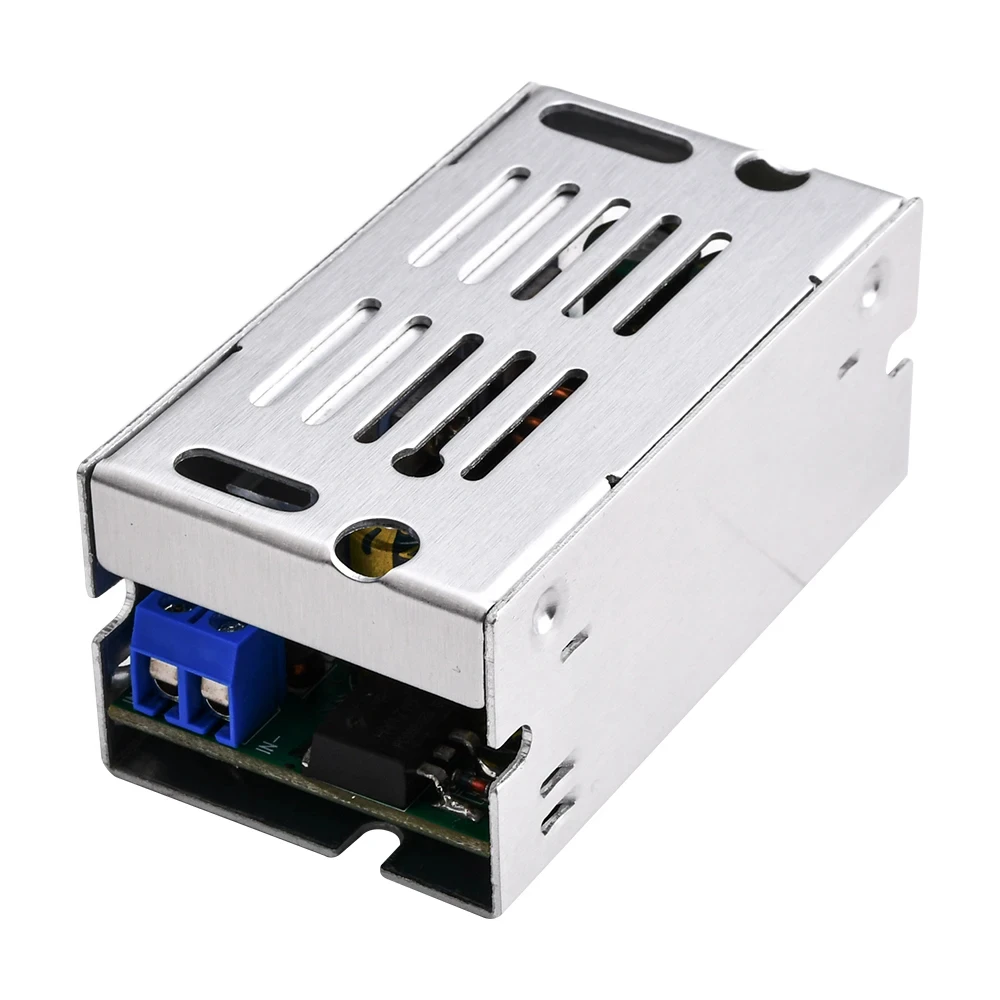
This buck converter module is housed within a perforated metal enclosure, a design choice that immediately suggests a focus on passive thermal management and component protection. The enclosure features numerous ventilation slots across its top and sides. This allows for convective airflow.
Such a design is crucial for dissipating heat generated during the voltage conversion process, particularly when operating at higher power levels or sustained loads. The metal casing also offers a degree of physical protection against accidental contact with live circuitry and minor mechanical impacts, enhancing the module's durability in industrial or hobbyist settings. It is a practical choice for longevity.
Unlike bare PCB modules, which offer minimal protection and rely entirely on external cooling solutions, this enclosed unit provides a baseline of safety and thermal consideration. This integrated approach simplifies deployment for users who might not have dedicated enclosures or advanced thermal management systems readily available.
Central to this module's utility are its specified electrical parameters: a 200W power rating and a 15A maximum current capacity. The input voltage range spans from 8V to 55V, accommodating common power sources such as 12V, 24V, and 48V battery systems or power supplies. The output is adjustable from 1V to 36V.
These specifications enable the module to power a wide array of devices, from low-voltage microcontrollers requiring 5V to more demanding systems needing 12V, 19V, or 24V. The 200W capacity means it can handle significant loads, making it suitable for applications like LED lighting arrays, motor control, or charging various battery types. It delivers consistent power.
Compared to traditional linear regulators, which dissipate excess voltage as heat, this buck converter operates on a switching principle, resulting in significantly higher efficiency. This efficiency translates directly into less wasted energy, reduced heat generation, and a smaller overall footprint for the power solution. It is a more efficient choice.
The ability to adjust the output voltage from 1V to 36V is a key feature, providing fine-grained control over the power delivered to the load. This adjustability is typically achieved via an onboard potentiometer, allowing users to dial in the exact voltage required for their specific application. Precision is paramount.
Maintaining a stable output voltage is critical for the reliable operation and longevity of sensitive electronic components. Voltage fluctuations, often referred to as ripple, can lead to erratic behavior or even damage. A well-designed buck converter minimizes this ripple, ensuring a clean and consistent power supply. This module aims for stability.
Fixed-output converters, while simpler, lack the adaptability of this adjustable module. The flexibility to set a precise output voltage means this single unit can replace multiple fixed-voltage regulators, streamlining inventory and offering greater utility across diverse projects. It offers broad utility.
Visible within the module's open-frame view are several key thermal components, including a prominent heatsink attached to the switching components and an inductor coil. These elements are fundamental to the module's ability to sustain its rated power output without overheating. Heat management is essential.
The heatsink works by increasing the surface area available for heat dissipation, drawing thermal energy away from the power transistors that perform the switching action. The ventilation slots in the metal casing then facilitate the removal of this heat through natural convection. This system prevents thermal runaway.
Without adequate thermal management, power electronics can quickly exceed their operational temperature limits, leading to reduced efficiency, premature component failure, or even catastrophic damage. The integrated heatsink and ventilated enclosure provide a foundational level of thermal resilience, though external airflow might be beneficial for continuous high-load operation. It protects internal components.
The module features blue screw terminal blocks for both input and output connections. This type of terminal provides a secure and reliable connection for various wire gauges, ensuring good electrical contact and minimizing the risk of accidental disconnections. Secure connections are vital.
This design choice makes the module highly versatile for integration into a multitude of projects, from DIY electronics and robotics to industrial control systems and automotive applications. The clear labeling (though not explicitly visible in all images, implied by standard practice) of input and output terminals simplifies wiring. It supports diverse projects.
Compared to soldering directly to a PCB, screw terminals offer ease of installation, modification, and maintenance. This user-friendly interface reduces the barrier to entry for hobbyists while providing the robustness required for more professional installations. It simplifies setup.
Imagine powering your custom robotics project with a perfectly stable 12V supply, knowing that the buck converter is efficiently stepping down from a 24V battery without excessive heat. Envision your LED lighting array shining consistently bright, free from the flickering caused by unstable voltage. This module provides the foundational power stability needed to bring your electronic designs to life, ensuring reliable operation and protecting your valuable components from power fluctuations.
The Architecture of Regulation
This buck converter module is housed within a perforated metal enclosure, a design choice that immediately suggests a focus on passive thermal management and component protection. The enclosure features numerous ventilation slots across its top and sides. This allows for convective airflow.
Such a design is crucial for dissipating heat generated during the voltage conversion process, particularly when operating at higher power levels or sustained loads. The metal casing also offers a degree of physical protection against accidental contact with live circuitry and minor mechanical impacts, enhancing the module's durability in industrial or hobbyist settings. It is a practical choice for longevity.
Unlike bare PCB modules, which offer minimal protection and rely entirely on external cooling solutions, this enclosed unit provides a baseline of safety and thermal consideration. This integrated approach simplifies deployment for users who might not have dedicated enclosures or advanced thermal management systems readily available.
Calibrated Energy Transformation
Central to this module's utility are its specified electrical parameters: a 200W power rating and a 15A maximum current capacity. The input voltage range spans from 8V to 55V, accommodating common power sources such as 12V, 24V, and 48V battery systems or power supplies. The output is adjustable from 1V to 36V.
These specifications enable the module to power a wide array of devices, from low-voltage microcontrollers requiring 5V to more demanding systems needing 12V, 19V, or 24V. The 200W capacity means it can handle significant loads, making it suitable for applications like LED lighting arrays, motor control, or charging various battery types. It delivers consistent power.
Compared to traditional linear regulators, which dissipate excess voltage as heat, this buck converter operates on a switching principle, resulting in significantly higher efficiency. This efficiency translates directly into less wasted energy, reduced heat generation, and a smaller overall footprint for the power solution. It is a more efficient choice.
Precision in Output Delivery
The ability to adjust the output voltage from 1V to 36V is a key feature, providing fine-grained control over the power delivered to the load. This adjustability is typically achieved via an onboard potentiometer, allowing users to dial in the exact voltage required for their specific application. Precision is paramount.
Maintaining a stable output voltage is critical for the reliable operation and longevity of sensitive electronic components. Voltage fluctuations, often referred to as ripple, can lead to erratic behavior or even damage. A well-designed buck converter minimizes this ripple, ensuring a clean and consistent power supply. This module aims for stability.
Fixed-output converters, while simpler, lack the adaptability of this adjustable module. The flexibility to set a precise output voltage means this single unit can replace multiple fixed-voltage regulators, streamlining inventory and offering greater utility across diverse projects. It offers broad utility.
Thermal Management and Operational Integrity
Visible within the module's open-frame view are several key thermal components, including a prominent heatsink attached to the switching components and an inductor coil. These elements are fundamental to the module's ability to sustain its rated power output without overheating. Heat management is essential.
The heatsink works by increasing the surface area available for heat dissipation, drawing thermal energy away from the power transistors that perform the switching action. The ventilation slots in the metal casing then facilitate the removal of this heat through natural convection. This system prevents thermal runaway.
Without adequate thermal management, power electronics can quickly exceed their operational temperature limits, leading to reduced efficiency, premature component failure, or even catastrophic damage. The integrated heatsink and ventilated enclosure provide a foundational level of thermal resilience, though external airflow might be beneficial for continuous high-load operation. It protects internal components.
Integration and Application Versatility
The module features blue screw terminal blocks for both input and output connections. This type of terminal provides a secure and reliable connection for various wire gauges, ensuring good electrical contact and minimizing the risk of accidental disconnections. Secure connections are vital.
This design choice makes the module highly versatile for integration into a multitude of projects, from DIY electronics and robotics to industrial control systems and automotive applications. The clear labeling (though not explicitly visible in all images, implied by standard practice) of input and output terminals simplifies wiring. It supports diverse projects.
Compared to soldering directly to a PCB, screw terminals offer ease of installation, modification, and maintenance. This user-friendly interface reduces the barrier to entry for hobbyists while providing the robustness required for more professional installations. It simplifies setup.
Imagine powering your custom robotics project with a perfectly stable 12V supply, knowing that the buck converter is efficiently stepping down from a 24V battery without excessive heat. Envision your LED lighting array shining consistently bright, free from the flickering caused by unstable voltage. This module provides the foundational power stability needed to bring your electronic designs to life, ensuring reliable operation and protecting your valuable components from power fluctuations.