Precision Digital Water Quality Tester Kit
Official Store Deal
Expert Analysis Overview
Unveiling Water's Hidden Truths: A Home Inspector's Perspective
The Precision Digital Water Quality Tester Kit is an essential diagnostic tool for homeowners and professionals seeking accurate, immediate insights into water chemistry. This dual-meter system, comprising a dedicated pH meter and a TDS/EC meter, provides critical data points that are often overlooked in routine home inspections but are vital for long-term property health and occupant well-being. Its compact design ensures portability. The kit allows for rapid assessment of water quality parameters, crucial for identifying potential issues before they escalate into significant problems.
The pH Meter: Gauging Acidity and Alkalinity
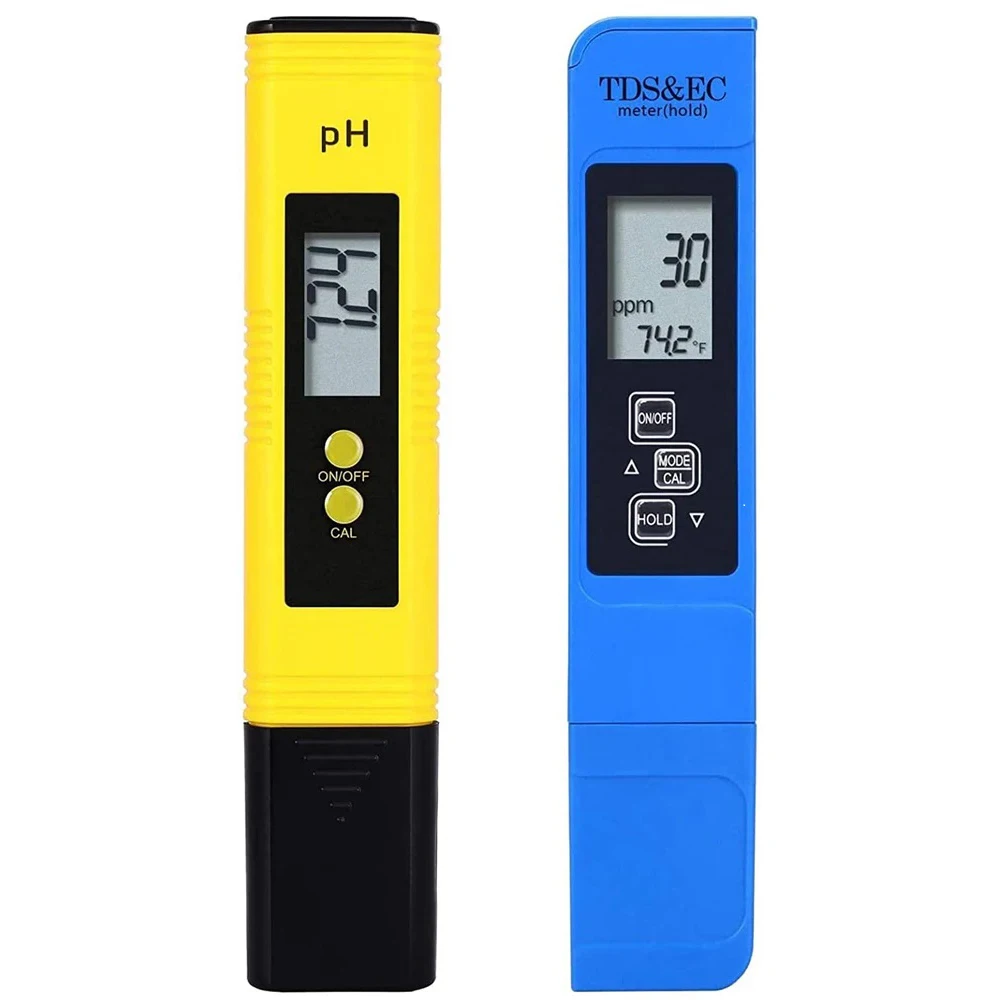
The yellow pH meter offers a measurement range of 0.00 to 14.00 pH, with a resolution of 0.01 pH. This fine granularity ensures that even subtle shifts in acidity or alkalinity are detectable. Calibration is a straightforward, automatic process, typically requiring buffer solutions at pH 4.01, 6.86, and 9.18 to maintain accuracy over time. The device features a clear LCD display for easy reading and a simple two-button interface for power and calibration.
For a home inspector, understanding the pH of water is paramount. Highly acidic water (low pH) can be corrosive to plumbing, leading to leaks, premature pipe failure, and the leaching of heavy metals like copper and lead into the drinking supply. Conversely, excessively alkaline water (high pH) can contribute to scale buildup in pipes and appliances, reducing efficiency and lifespan. This meter provides an immediate indicator of such conditions, prompting further investigation into the water source or treatment systems. It offers a quick, definitive answer.
Compared to traditional litmus paper tests, which provide only a broad range and are subject to visual interpretation, this digital pH meter delivers an exact numerical value. This precision eliminates guesswork, offering consistent and repeatable results that are indispensable for professional reporting. The digital readout ensures objective data collection, a significant upgrade from qualitative methods.
The TDS/EC Meter: Dissolved Solids and Electrical Conductivity
The blue TDS/EC meter measures Total Dissolved Solids (TDS) in parts per million (ppm) and Electrical Conductivity (EC) in microsiemens per centimeter (µS/cm), alongside temperature. The TDS range typically extends from 0 to 9990 ppm, with EC often mirroring this range in µS/cm. Temperature compensation is often automatic, ensuring accurate readings regardless of water temperature fluctuations. This device also features a hold function to lock readings on the display, which is convenient for recording data.
Total Dissolved Solids (TDS) represent the concentration of all inorganic and organic substances present in water. High TDS levels can indicate hard water, mineral contamination, or the presence of pollutants. While not inherently harmful in all cases, elevated TDS can affect the taste of drinking water, interfere with appliance performance, and impact the health of aquatic ecosystems. Electrical Conductivity (EC) directly correlates with the concentration of ionized substances in water; the more ions, the higher the conductivity. For a home inspector, monitoring TDS and EC is critical for evaluating the effectiveness of water filtration systems, identifying potential issues with well water, or assessing the quality of water used in pools and spas. It provides a snapshot of water purity.
Older, less sophisticated methods for assessing dissolved solids often involved evaporation and gravimetric analysis, a time-consuming and impractical process for on-site inspections. This digital TDS/EC meter provides instant, actionable data, allowing inspectors to quickly identify water quality anomalies. This immediate feedback streamlines the diagnostic process, enabling faster recommendations for homeowners. It's a significant time-saver.
Construction and Ergonomics: Built for the Field
Both meters feature a pen-style form factor, making them highly portable and easy to handle in various inspection environments. The plastic casing, likely ABS, provides a lightweight yet reasonably durable shell that resists minor impacts and splashes. The yellow and blue colors offer clear differentiation between the two instruments, preventing confusion during rapid testing. The matte finish on the plastic bodies enhances grip, reducing the chance of accidental drops, even with wet hands. Buttons are responsive. Each meter includes a protective cap for its sensing electrode, a critical component that safeguards the delicate sensor from damage and keeps it moist for optimal performance. The battery compartment is easily accessible, facilitating quick battery changes when needed. The overall construction prioritizes utility and ease of use.
Consider a scenario where an inspector is evaluating multiple water sources within a property – tap water, well water, and perhaps a hot tub. The compact size of these meters allows them to be carried effortlessly in a toolbelt or pocket, ready for immediate deployment. Their simple operation minimizes setup time, enabling a rapid succession of tests across different locations. This efficiency is invaluable for a busy schedule.
Compared to bulkier, benchtop laboratory equipment, these handheld meters offer unparalleled convenience for field use. While laboratory instruments might offer higher precision and advanced features, their lack of portability makes them unsuitable for on-site diagnostics. This kit strikes an excellent balance between accuracy and practical application for home inspections. It fits perfectly in hand.
Operational Simplicity and Calibration Assurance
Operating these meters is intuitive, designed for quick and reliable readings. For the pH meter, the process involves removing the protective cap, rinsing the electrode with distilled water, immersing it in the sample, and waiting for the reading to stabilize. The TDS/EC meter follows a similar procedure. Both units typically feature automatic temperature compensation (ATC), which adjusts readings based on the water's temperature, ensuring accuracy across varying conditions. This automatic feature removes a significant variable from manual calculations, simplifying the testing process for the user. Calibration is crucial for maintaining accuracy.
Regular calibration is essential for any digital water quality tester. The pH meter often supports 3-point automatic calibration, recognizing standard buffer solutions. For the TDS/EC meter, calibration is usually performed with a single standard solution, such as 1413 µS/cm or 1000 ppm. The process is typically guided by the device itself, often involving a simple button press while immersed in the calibration solution. This user-friendly calibration ensures that the meters remain reliable Tools over their lifespan, providing trustworthy data for critical assessments. It's a simple, necessary step.
Unlike older analog meters that required manual temperature adjustments and complex calibration procedures, these digital units streamline the entire process. The automatic calibration and temperature compensation features significantly reduce the potential for user error, making them accessible even to those without extensive scientific backgrounds. This ease of use enhances their utility for a broad range of users, from hobbyists to professionals. Simplicity is key here.
Real-World Applications for the Home Inspector
These meters are indispensable for a home inspector. They can quickly identify potential issues with drinking water quality, providing immediate feedback to homeowners about their tap water. High TDS readings might suggest the need for a reverse osmosis system, while abnormal pH levels could indicate plumbing corrosion or a need for water treatment. This information helps generate client reports with concrete data.
Beyond drinking water, these tools are excellent for assessing water in various household systems. For aquariums, maintaining stable pH and low TDS is critical for fish health; sudden changes can be fatal. For swimming pools and spas, these meters help ensure proper chemical balance, preventing skin irritation, equipment damage, and algae growth. In hydroponic setups, precise pH and EC measurements are vital for nutrient uptake and plant health. The applications are broad.
Imagine an inspector encountering a home with persistent plumbing issues or unexplained appliance failures. A quick test with these meters could reveal highly corrosive water (low pH) or excessive mineral content (high TDS), immediately pointing towards the root cause. This diagnostic capability allows for targeted recommendations, saving homeowners from costly trial-and-error repairs. It offers clear answers.
The Value Proposition: Informed Decisions
Investing in this digital water quality tester kit is an investment in informed decision-making regarding property maintenance and personal health. The relatively low cost of these instruments belies their significant utility in preventing potentially expensive problems down the line. Early detection of water quality issues can save thousands in plumbing repairs, appliance replacements, or health-related expenses. This kit provides an excellent return on investment.
For the home inspector, adding these tools to their kit enhances their professional offering, providing clients with a more comprehensive assessment of their property. The ability to provide objective, data-driven insights into water quality differentiates an inspector and builds client trust. It adds a layer of professionalism. The compact size and ease of use mean these tools can be integrated into any inspection routine without adding significant bulk or complexity.
Compared to relying solely on visual inspection or anecdotal evidence, these meters provide empirical data that supports recommendations and validates concerns. They empower both the inspector and the homeowner with tangible information, facilitating proactive maintenance and ensuring a safer, healthier living environment. The value is undeniable. This kit helps detect hidden issues.
Picture the peace of mind knowing the water flowing through a home is safe and balanced, free from hidden corrosives or excessive contaminants. Imagine the confidence in making informed decisions about water filtration systems or plumbing upgrades, backed by precise, digital readings. This kit empowers users to take control of their water quality, ensuring the longevity of their home's infrastructure and the well-being of its occupants. It's about proactive care.
Final Thoughts on Water Quality Monitoring
This dual water quality testing kit is a practical and effective solution for anyone needing to monitor water parameters. Its straightforward operation and clear digital displays make it accessible for both novices and experienced users. The robust plastic construction ensures it can withstand regular field use, while the protective caps safeguard the sensitive electrodes. For home inspectors, these tools are invaluable for generating client reports and identifying potential issues early. The ability to quickly assess pH, TDS, and EC levels provides a comprehensive overview of water health, enabling proactive maintenance and informed decisions. This kit truly simplifies water analysis.