PowMr 80A MPPT Solar Charge Controller for 12V-48V Systems
Official Store Deal
Expert Analysis Overview
Precision Power Management for Off-Grid Systems
The PowMr 80A MPPT Solar Charge Controller is a critical power management device engineered for robust off-grid and hybrid solar installations, targeting users who demand high efficiency and system scalability. This unit serves as the intelligent intermediary between a solar photovoltaic (PV) array and a battery bank, optimizing power transfer to ensure maximum energy harvest and battery longevity. Its design prioritizes stable operation across various system voltages and battery chemistries, a fundamental requirement for reliable solar power.
Advanced MPPT Tracking for Optimal Yield
This controller utilizes Maximum Power Point Tracking (MPPT) technology, a sophisticated algorithm that continuously adjusts the electrical load presented to the solar panels. The goal is to extract the maximum possible power under varying sunlight conditions. Unlike simpler Pulse Width Modulation (PWM) controllers, MPPT units can convert excess voltage into additional current, significantly improving charging efficiency, especially in cooler temperatures or when panel voltage exceeds battery voltage. This is a crucial distinction.
The visual data indicates a high tracking efficiency of up to 99% and a peak conversion efficiency of up to 97%. These figures are competitive within the MPPT controller market. Such high efficiencies mean more of the solar energy generated by the panels is actually delivered to the batteries, reducing energy waste. For a system with a maximum PV array open-circuit voltage of 160V, this efficiency translates directly into more usable power. Users will experience faster battery charging and greater overall energy availability from their solar array.
Compared to standard PWM controllers, which essentially act as a switch, the PowMr MPPT's ability to dynamically adjust its operating point provides a substantial advantage. This translates to a tangible increase in daily energy yield, particularly beneficial for systems where every watt-hour counts. The investment in MPPT technology often pays for itself through increased power generation over the system's lifespan. It is a smart upgrade.
Versatile Battery Compatibility and System Integration
The PowMr 80A controller supports a wide range of battery types, including Sealed Lead-Acid (SLA), Gel Lead-Acid (GSL), Flooded Lead-Acid (FLB), LiFePO4 (LI), Lithium-ion (LN), and user-defined (USE) settings. This broad compatibility makes it suitable for diverse energy storage solutions, from traditional lead-acid setups to modern lithium battery banks. The inclusion of auto lithium battery activation is a significant convenience feature, simplifying the initial setup process for these sensitive battery types. System voltage compatibility spans 12V, 24V, 36V, and 48V, offering flexibility for various application sizes.
This adaptability means that as energy storage technology evolves or as a user's needs change, the controller can often be retained, reducing the need for complete system overhauls. For instance, a user starting with a 12V lead-acid system can later upgrade to a 48V lithium system without replacing the core charge controller. This future-proofing aspect adds considerable value. The controller adapts to the battery.
Many entry-level controllers are limited to one or two battery chemistries and fixed system voltages. The PowMr's comprehensive support for multiple battery types and auto-detection of system voltage (or user-defined settings) positions it as a more robust and adaptable solution. This flexibility is particularly valuable for installers or users who may work with different battery technologies. It simplifies inventory and system design.
Scalable Parallel Operation for Enhanced Power Capacity
One of the standout features is its support for parallel operation, allowing up to 12 units to be connected together. This capability is critical for expanding system capacity as energy demands grow. By connecting multiple controllers, the total charging current can be significantly increased, accommodating larger solar arrays and enabling faster charging of substantial battery banks. The parallel communication cable ensures synchronized operation across all connected units.
In practical terms, this means a small initial solar setup can be incrementally expanded without having to discard the original charge controller. For example, if a user initially needs 80A of charging current but later requires 240A, they can simply add two more 80A units in parallel. This modular approach to system design is highly efficient and cost-effective. It prevents premature obsolescence.
Generic charge controllers typically lack parallel operation capabilities, forcing users to purchase a single, larger, and often more expensive unit when expanding. The PowMr's parallel functionality provides a distinct advantage in terms of scalability and cost management for growing solar installations. This modularity is a key differentiator.
Comprehensive Multi-Protection Functions
Safety is paramount in any electrical system, especially those involving high-voltage solar arrays and battery banks. This controller integrates multiple protection functions to safeguard both the device and the connected components. These include photovoltaic input overcurrent protection, photovoltaic array short-circuit protection, reversed photovoltaic polarity protection, overvoltage protection for batteries, overdischarge protection for batteries, and over-temperature protection. These mechanisms are designed to prevent damage from common electrical faults and operational anomalies.
These protections ensure the longevity of the entire solar power system and, more importantly, mitigate potential hazards such as electrical fires or component failure. For instance, reversed polarity, a common installation error, is immediately addressed, preventing damage to the controller and batteries. Over-temperature protection prevents thermal runaway, a critical safety feature for high-current devices. The system remains secure.
Unlike controllers with minimal or basic protection circuits, the PowMr's comprehensive suite of safeguards offers a higher degree of operational reliability and user safety. This robust protection scheme reduces the risk of costly equipment damage and provides peace of mind. It is a non-negotiable feature for any serious solar installation.
Intuitive Backlit LCD Screen and Monitoring
The unit features a backlit LCD screen that provides real-time operational data. Key indicators include day/night status, battery capacity, charging in progress, PV parameters (voltage, current, power), and battery parameters (voltage, current, temperature). This clear display allows users to monitor the system's performance at a glance, facilitating troubleshooting and optimization. The interface is straightforward.
This immediate feedback is invaluable for understanding how the solar system is performing and for identifying any potential issues. For example, observing PV parameters can help determine if panels are underperforming due to shading or dirt. Monitoring battery parameters ensures proper charging and prevents over-discharge. Users gain full visibility.
Many basic controllers offer only rudimentary LED indicators, providing limited insight into system status. The detailed information presented on the PowMr's LCD screen empowers users with the data needed for informed decision-making and proactive system management. This level of detail is a significant user experience enhancement.
Robust Construction and Electrical Integrity
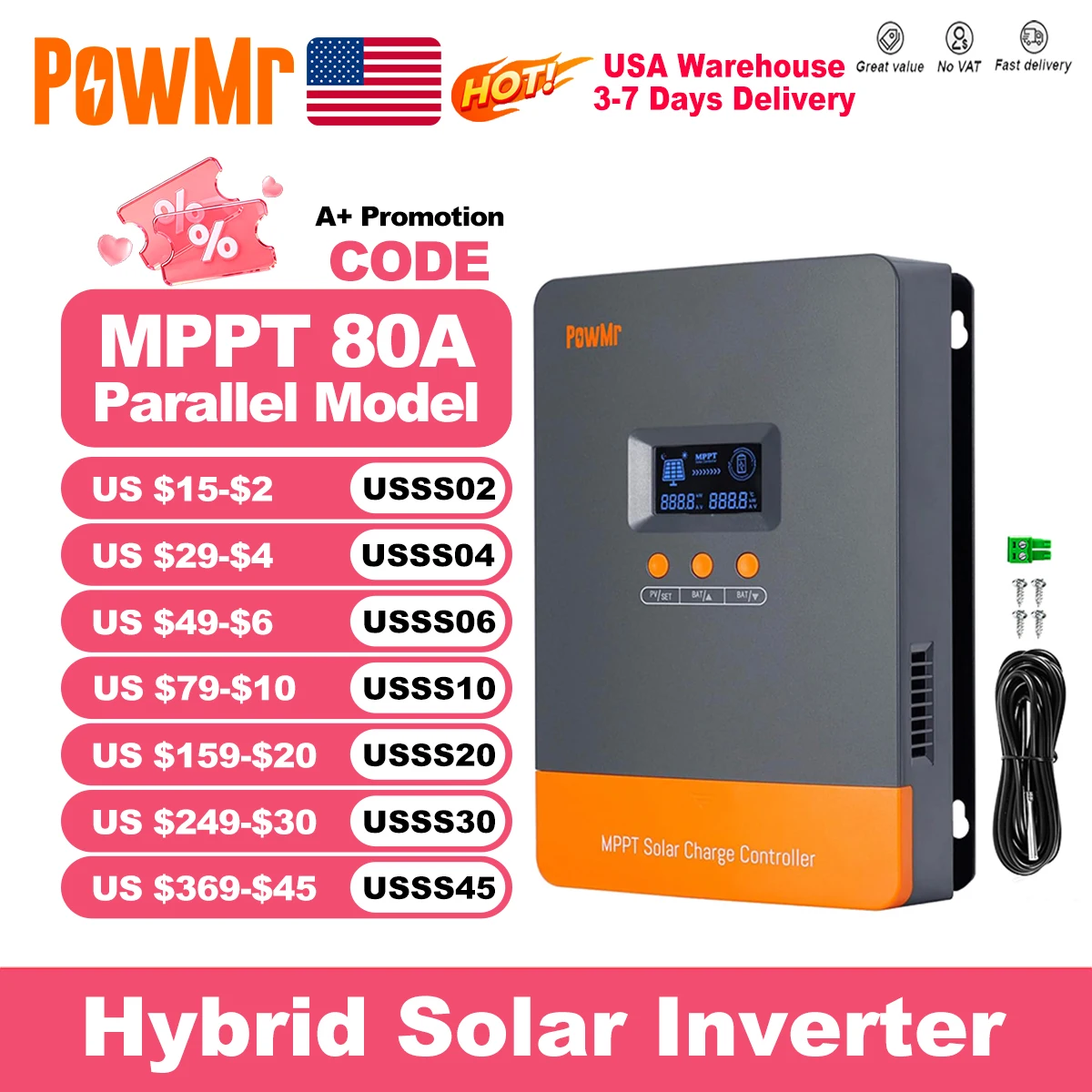
Visually, the controller presents a sturdy, enclosed design, suggesting durability for its intended environment. The terminal blocks, where wiring connections are made, appear robust enough to handle the specified 80A current. For an 80A system, proper wire sizing is critical; a minimum of 6 AWG copper wire is recommended for the battery and PV connections to prevent excessive voltage drop and heat generation. The cooling fins visible on the side indicate a passive heat dissipation design, essential for maintaining optimal operating temperatures under load.
Ensuring secure and correctly sized wiring connections is paramount for both performance and safety. Loose or undersized wires can lead to resistive heating, potential fire hazards, and inefficient power transfer. The quality of the terminal connections directly impacts the system's reliability. Proper installation is key.
Compared to controllers with flimsy plastic terminals or inadequate heat sinking, the visible design elements of the PowMr suggest a commitment to electrical integrity. The robust enclosure protects internal components from environmental factors, contributing to the unit's longevity. This attention to physical design is crucial for long-term reliability.
The Long-Term Value of Efficient Power Management
Investing in a high-quality MPPT charge controller like the PowMr 80A is an investment in the efficiency and reliability of an entire solar power system. The initial cost is offset by increased energy harvest, extended battery life, and the peace of mind provided by comprehensive safety features. Its scalability ensures that the system can grow with evolving energy needs, preventing the need for costly replacements down the line. This controller delivers consistent performance.
Imagine a scenario where your off-grid cabin consistently has fully charged batteries, even on partly cloudy days, thanks to the controller's superior MPPT efficiency. Picture the confidence of knowing your expensive battery bank is protected from overcharging and over-discharging, extending its operational lifespan by years. Envision the flexibility to expand your solar array without replacing your core power electronics, simply by adding more units in parallel. This controller provides the foundation for a truly resilient and adaptable solar energy system, ensuring reliable power for years to come.