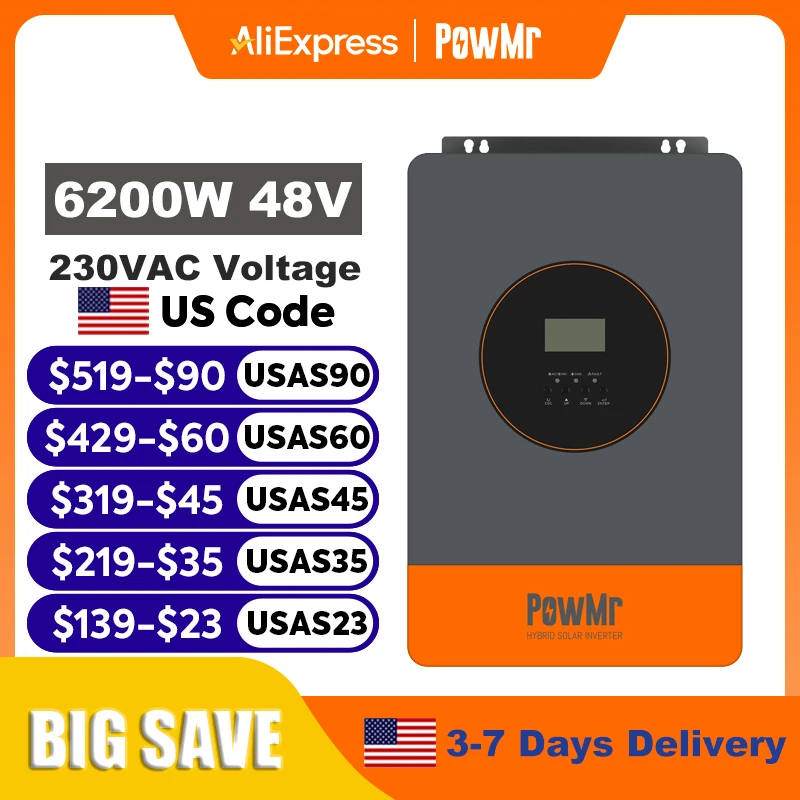
PowMr 6200W Hybrid Solar Inverter with MPPT 120A Charger
Official Store Deal
Expert Analysis Overview
The PowMr 6200W Hybrid Solar Inverter is a robust power management unit designed for enthusiasts and homeowners aiming for energy independence through advanced off-grid and hybrid solar systems. This inverter integrates an MPPT 120A solar charger and a pure sine wave inverter, offering a comprehensive solution for managing solar input, battery storage, and AC output. It allows for flexible system configurations, including operation without batteries and parallel scalability, making it suitable for evolving energy needs.
The PowMr 6200W inverter delivers a 6200W continuous power output at 230VAC, catering to standard household appliances. This capacity ensures that essential loads, from refrigerators to power tools, receive stable and clean power. The pure sine wave output is critical for sensitive electronics, preventing potential damage or erratic operation often associated with modified sine wave inverters. Unlike basic inverters that only provide power from batteries, this hybrid unit can intelligently draw power from solar, battery, or the utility grid, optimizing energy usage based on availability and cost.
Its 230VAC output is a standard for many regions, ensuring broad compatibility. The system's ability to operate in a single-phase 230V configuration or be scaled for three-phase applications with multiple units provides significant flexibility. This adaptability is a key differentiator for users planning future expansions or requiring more complex power distribution.
Compared to entry-level grid-tie inverters, which primarily focus on feeding excess solar power back to the grid, this hybrid inverter offers greater control over energy flow. It prioritizes self-consumption, storing surplus solar energy in batteries or directly powering loads, reducing reliance on the utility. This capability is invaluable for mitigating peak demand charges and enhancing energy security.
The integrated MPPT (Maximum Power Point Tracking) solar charger boasts a 120A maximum charging current and supports a PV array input up to 8500W. MPPT technology is crucial for maximizing energy harvest from solar panels. It continuously adjusts the electrical load presented to the solar array, ensuring the panels operate at their peak power output regardless of temperature or irradiance conditions. This translates directly into more usable energy throughout the day. More power. Higher efficiency.
The wide PV array MPPT voltage range of 60-500VDC and a maximum VOC (Open Circuit Voltage) of 500VDC allows for greater flexibility in solar panel string configurations. This broad range simplifies system design, enabling longer strings of panels, which can reduce wiring losses and installation complexity. For instance, if a user has a diverse set of panels, this inverter can often accommodate them without extensive re-wiring.
Generic PWM (Pulse Width Modulation) charge controllers, common in less sophisticated systems, simply reduce the voltage from the solar panels to match the battery voltage. This method often results in significant power loss, especially when the panel voltage greatly exceeds the battery voltage. The MPPT controller, by contrast, converts excess voltage into additional current, delivering up to 30% more power to the batteries or loads compared to PWM controllers under varying conditions. This efficiency gain directly impacts the return on investment for a solar setup.
This inverter is engineered to integrate multiple power sources seamlessly. It can accept input from solar panels, a generator, or the utility grid. This multi-source capability ensures continuous power supply, even during extended periods of low solar irradiance or grid outages. The system intelligently switches between sources, prioritizing solar power when available, then batteries, and finally the grid or generator as backup. This hierarchy ensures optimal energy utilization and cost savings.
The system connection diagram illustrates how the inverter acts as the central hub, distributing power to various home appliances such as refrigerators, lights, and laptops. Its ability to work without a battery, directly powering loads from solar and/or the grid, is a significant advantage for users looking to reduce initial investment costs or those with fluctuating energy demands. This direct solar-to-load functionality minimizes conversion losses and maximizes immediate self-consumption.
Unlike simpler off-grid inverters that require a battery bank for operation, this unit's capability to run directly from solar and/or grid input offers enhanced operational flexibility. This means a user can start with a solar array and the inverter, adding batteries later as budget or energy storage needs evolve. It's a scalable starting point.
A standout feature is the inverter's capability for parallel operation, supporting up to 9 units. This allows for significant expansion of both power output and charging capacity. By connecting multiple inverters, users can create larger single-phase systems or even three-phase systems, adapting to growing energy demands or supporting larger loads. The parallel operation can be configured for either single or three-phase output, providing versatility for various residential and commercial applications. This scalability future-proofs the investment.
Parallel connection involves intricate communication between units to ensure synchronized power delivery and load sharing. The visual input shows a clear communication connection setup, indicating a well-engineered system for multi-unit deployment. This is not a trivial feature; it requires robust internal control logic and communication protocols to maintain stability and efficiency across the entire array of inverters.
Many standard inverters are designed as standalone units, lacking the internal architecture for seamless parallel integration. The PowMr's ability to operate up to 9 units in parallel positions it as a superior choice for those anticipating future power needs or requiring high-capacity systems from the outset. This modular approach allows for phased upgrades, spreading out the investment over time.
The inverter demonstrates compatibility with multiple battery types, including AGM, GEL, FLD, LI (Lithium), and SLD, with a user-defined option. This broad compatibility is critical for solar energy systems, as battery technology continues to evolve. Users can select the battery chemistry that best fits their budget, lifespan requirements, and performance expectations. The maximum battery charging current of 120A ensures rapid and efficient charging of even large battery banks.
For lithium batteries, a specific activation sequence is noted: setting the battery type to LIB and activating the lithium battery by solar energy after 3 seconds. This detail highlights the inverter's intelligent battery management system, designed to safely and efficiently handle the unique charging characteristics of lithium-ion batteries. Proper battery management extends battery lifespan and ensures optimal performance.
Cheaper inverters often have limited battery compatibility, forcing users into specific, sometimes more expensive or less efficient, battery chemistries. This PowMr unit's wide support allows for greater choice and potentially lower overall system costs, as users can select batteries based on market availability and personal preference rather than inverter limitations. It empowers the user.
The inverter features a front-mounted LCD display and control buttons, providing immediate access to system status and operational parameters. This local interface allows users to monitor critical information such as battery voltage, solar input, AC output, and fault codes without needing external devices. Such direct feedback is essential for troubleshooting and ensuring the system operates as intended. The display is clear and easy to read.
Beyond the physical display, the presence of communication ports (RS485, USB, CAN, dry contact) suggests advanced monitoring and control capabilities. These ports typically allow for connection to external monitoring software or smart home systems, enabling remote data logging, performance analysis, and system configuration. This level of connectivity is expected in modern solar power solutions, offering users comprehensive oversight of their energy production and consumption.
Unlike older or more basic inverters that might only offer rudimentary LED indicators, this unit provides detailed digital readouts and connectivity options. This comprehensive monitoring capability allows for proactive maintenance and performance optimization, ensuring the solar investment yields maximum returns. Understanding system performance is key to long-term satisfaction.
The inverter's robust construction, visible in the product images, suggests a design intended for longevity in various environments. The IP21 protection degree indicates protection against solid objects larger than 12.5mm and vertically falling drops of water, making it suitable for indoor or sheltered outdoor installations. The operating temperature range of 10-50°C covers typical ambient conditions for residential solar setups. This unit is built to last.
Installation flexibility is enhanced by its wall-mountable design, as depicted in the images. This allows for clean, space-saving integration into utility rooms, garages, or dedicated power sheds. Proper ventilation and adherence to installation guidelines are crucial for optimal performance and lifespan, especially given its power output and charging capabilities.
Many consumer-grade electronic devices are not designed for the continuous, high-power operation required of a solar inverter. This unit's specifications and visible build quality suggest it is engineered for the demanding environment of a renewable energy system, offering greater reliability than less specialized alternatives. It's a professional-grade component for home use.
Investing in a hybrid solar inverter like the PowMr 6200W represents a significant step towards energy independence and reduced carbon footprint. By efficiently converting solar energy into usable electricity and managing multiple power sources, it empowers users to take control of their energy consumption. The ability to work without batteries, coupled with parallel scalability, makes it a flexible foundation for any solar journey, from initial setup to a fully self-sufficient home. This system isn't just about saving money; it's about building resilience and contributing to a sustainable future.
Imagine a home where the hum of the refrigerator, the glow of the lights, and the power for your devices come directly from the sun, seamlessly managed by an intelligent system. Picture the peace of mind knowing your essential appliances will continue to run during a grid outage, fueled by stored solar energy or a reliable backup generator. Envision the satisfaction of seeing your electricity bill shrink, month after month, as your dependence on utility providers diminishes. This inverter provides the core capability to realize such a vision, offering not just power, but true energy autonomy and a tangible contribution to a greener planet. It's an investment in a smarter, more sustainable lifestyle. This is the future of home energy.```
Core Power Management Capabilities
Inverter Output and Grid Integration
The PowMr 6200W inverter delivers a 6200W continuous power output at 230VAC, catering to standard household appliances. This capacity ensures that essential loads, from refrigerators to power tools, receive stable and clean power. The pure sine wave output is critical for sensitive electronics, preventing potential damage or erratic operation often associated with modified sine wave inverters. Unlike basic inverters that only provide power from batteries, this hybrid unit can intelligently draw power from solar, battery, or the utility grid, optimizing energy usage based on availability and cost.
Its 230VAC output is a standard for many regions, ensuring broad compatibility. The system's ability to operate in a single-phase 230V configuration or be scaled for three-phase applications with multiple units provides significant flexibility. This adaptability is a key differentiator for users planning future expansions or requiring more complex power distribution.
Compared to entry-level grid-tie inverters, which primarily focus on feeding excess solar power back to the grid, this hybrid inverter offers greater control over energy flow. It prioritizes self-consumption, storing surplus solar energy in batteries or directly powering loads, reducing reliance on the utility. This capability is invaluable for mitigating peak demand charges and enhancing energy security.
Solar Charging Efficiency with MPPT
The integrated MPPT (Maximum Power Point Tracking) solar charger boasts a 120A maximum charging current and supports a PV array input up to 8500W. MPPT technology is crucial for maximizing energy harvest from solar panels. It continuously adjusts the electrical load presented to the solar array, ensuring the panels operate at their peak power output regardless of temperature or irradiance conditions. This translates directly into more usable energy throughout the day. More power. Higher efficiency.
The wide PV array MPPT voltage range of 60-500VDC and a maximum VOC (Open Circuit Voltage) of 500VDC allows for greater flexibility in solar panel string configurations. This broad range simplifies system design, enabling longer strings of panels, which can reduce wiring losses and installation complexity. For instance, if a user has a diverse set of panels, this inverter can often accommodate them without extensive re-wiring.
Generic PWM (Pulse Width Modulation) charge controllers, common in less sophisticated systems, simply reduce the voltage from the solar panels to match the battery voltage. This method often results in significant power loss, especially when the panel voltage greatly exceeds the battery voltage. The MPPT controller, by contrast, converts excess voltage into additional current, delivering up to 30% more power to the batteries or loads compared to PWM controllers under varying conditions. This efficiency gain directly impacts the return on investment for a solar setup.
System Architecture and Scalability
Flexible Power Sources and Load Management
This inverter is engineered to integrate multiple power sources seamlessly. It can accept input from solar panels, a generator, or the utility grid. This multi-source capability ensures continuous power supply, even during extended periods of low solar irradiance or grid outages. The system intelligently switches between sources, prioritizing solar power when available, then batteries, and finally the grid or generator as backup. This hierarchy ensures optimal energy utilization and cost savings.
The system connection diagram illustrates how the inverter acts as the central hub, distributing power to various home appliances such as refrigerators, lights, and laptops. Its ability to work without a battery, directly powering loads from solar and/or the grid, is a significant advantage for users looking to reduce initial investment costs or those with fluctuating energy demands. This direct solar-to-load functionality minimizes conversion losses and maximizes immediate self-consumption.
Unlike simpler off-grid inverters that require a battery bank for operation, this unit's capability to run directly from solar and/or grid input offers enhanced operational flexibility. This means a user can start with a solar array and the inverter, adding batteries later as budget or energy storage needs evolve. It's a scalable starting point.
Parallel Operation for Enhanced Capacity
A standout feature is the inverter's capability for parallel operation, supporting up to 9 units. This allows for significant expansion of both power output and charging capacity. By connecting multiple inverters, users can create larger single-phase systems or even three-phase systems, adapting to growing energy demands or supporting larger loads. The parallel operation can be configured for either single or three-phase output, providing versatility for various residential and commercial applications. This scalability future-proofs the investment.
Parallel connection involves intricate communication between units to ensure synchronized power delivery and load sharing. The visual input shows a clear communication connection setup, indicating a well-engineered system for multi-unit deployment. This is not a trivial feature; it requires robust internal control logic and communication protocols to maintain stability and efficiency across the entire array of inverters.
Many standard inverters are designed as standalone units, lacking the internal architecture for seamless parallel integration. The PowMr's ability to operate up to 9 units in parallel positions it as a superior choice for those anticipating future power needs or requiring high-capacity systems from the outset. This modular approach allows for phased upgrades, spreading out the investment over time.
Battery Compatibility and System Monitoring
Broad Battery Chemistry Support
The inverter demonstrates compatibility with multiple battery types, including AGM, GEL, FLD, LI (Lithium), and SLD, with a user-defined option. This broad compatibility is critical for solar energy systems, as battery technology continues to evolve. Users can select the battery chemistry that best fits their budget, lifespan requirements, and performance expectations. The maximum battery charging current of 120A ensures rapid and efficient charging of even large battery banks.
For lithium batteries, a specific activation sequence is noted: setting the battery type to LIB and activating the lithium battery by solar energy after 3 seconds. This detail highlights the inverter's intelligent battery management system, designed to safely and efficiently handle the unique charging characteristics of lithium-ion batteries. Proper battery management extends battery lifespan and ensures optimal performance.
Cheaper inverters often have limited battery compatibility, forcing users into specific, sometimes more expensive or less efficient, battery chemistries. This PowMr unit's wide support allows for greater choice and potentially lower overall system costs, as users can select batteries based on market availability and personal preference rather than inverter limitations. It empowers the user.
Intuitive Monitoring and Control
The inverter features a front-mounted LCD display and control buttons, providing immediate access to system status and operational parameters. This local interface allows users to monitor critical information such as battery voltage, solar input, AC output, and fault codes without needing external devices. Such direct feedback is essential for troubleshooting and ensuring the system operates as intended. The display is clear and easy to read.
Beyond the physical display, the presence of communication ports (RS485, USB, CAN, dry contact) suggests advanced monitoring and control capabilities. These ports typically allow for connection to external monitoring software or smart home systems, enabling remote data logging, performance analysis, and system configuration. This level of connectivity is expected in modern solar power solutions, offering users comprehensive oversight of their energy production and consumption.
Unlike older or more basic inverters that might only offer rudimentary LED indicators, this unit provides detailed digital readouts and connectivity options. This comprehensive monitoring capability allows for proactive maintenance and performance optimization, ensuring the solar investment yields maximum returns. Understanding system performance is key to long-term satisfaction.
Long-Term Value and Environmental Impact
Durability and Installation Considerations
The inverter's robust construction, visible in the product images, suggests a design intended for longevity in various environments. The IP21 protection degree indicates protection against solid objects larger than 12.5mm and vertically falling drops of water, making it suitable for indoor or sheltered outdoor installations. The operating temperature range of 10-50°C covers typical ambient conditions for residential solar setups. This unit is built to last.
Installation flexibility is enhanced by its wall-mountable design, as depicted in the images. This allows for clean, space-saving integration into utility rooms, garages, or dedicated power sheds. Proper ventilation and adherence to installation guidelines are crucial for optimal performance and lifespan, especially given its power output and charging capabilities.
Many consumer-grade electronic devices are not designed for the continuous, high-power operation required of a solar inverter. This unit's specifications and visible build quality suggest it is engineered for the demanding environment of a renewable energy system, offering greater reliability than less specialized alternatives. It's a professional-grade component for home use.
The Path to Energy Independence
Investing in a hybrid solar inverter like the PowMr 6200W represents a significant step towards energy independence and reduced carbon footprint. By efficiently converting solar energy into usable electricity and managing multiple power sources, it empowers users to take control of their energy consumption. The ability to work without batteries, coupled with parallel scalability, makes it a flexible foundation for any solar journey, from initial setup to a fully self-sufficient home. This system isn't just about saving money; it's about building resilience and contributing to a sustainable future.
Imagine a home where the hum of the refrigerator, the glow of the lights, and the power for your devices come directly from the sun, seamlessly managed by an intelligent system. Picture the peace of mind knowing your essential appliances will continue to run during a grid outage, fueled by stored solar energy or a reliable backup generator. Envision the satisfaction of seeing your electricity bill shrink, month after month, as your dependence on utility providers diminishes. This inverter provides the core capability to realize such a vision, offering not just power, but true energy autonomy and a tangible contribution to a greener planet. It's an investment in a smarter, more sustainable lifestyle. This is the future of home energy.```