PowMr 4.2KW Hybrid Solar Inverter Charger
Official Store Deal
Expert Analysis Overview
Robust Off-Grid Power Management
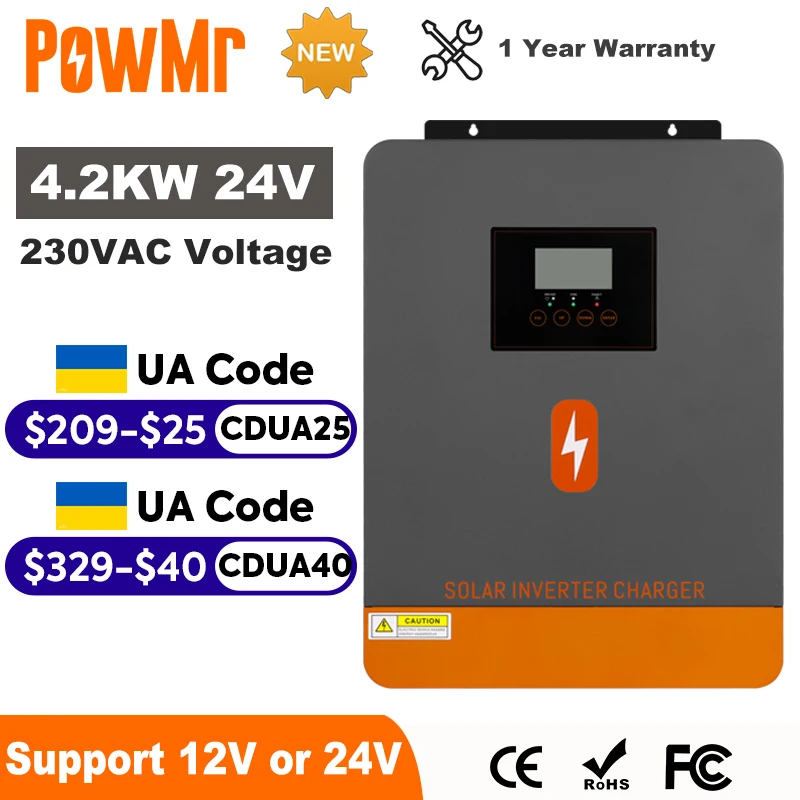
The PowMr 4.2KW Hybrid Solar Inverter Charger is a high-capacity power management unit designed for comprehensive off-grid and hybrid solar installations. It integrates a pure sine wave inverter, an MPPT solar charge controller, and a battery charger into a single, compact enclosure. This unit targets users seeking reliable, stable power delivery for residential or small commercial applications where grid independence or backup power is paramount.
Delivering Consistent Energy Flow
The inverter boasts a 4.2KW rated power output at a 24V system voltage, providing a stable 230VAC output. This capacity is substantial. It handles significant loads for typical household appliances. The pure sine wave output ensures compatibility with sensitive electronics, preventing potential damage or operational issues often associated with modified sine wave inverters. This is a critical distinction for modern electronics.
Unlike many entry-level inverters that produce a modified sine wave, this unit's pure sine wave output mirrors utility-grade electricity. This ensures that motors run cooler, sensitive audio/video equipment operates without interference, and critical medical devices function reliably. The consistent waveform minimizes harmonic distortion, extending the lifespan of connected appliances and reducing energy waste.
Versatile Energy Storage Integration
Central to its functionality is the integrated MPPT 100A solar charge controller. This advanced controller maximizes power harvest from solar panels by dynamically tracking the maximum power point of the PV array. The maximum solar voltage (VOC) of 500VDC and an MPPT voltage range of 55-500VDC allow for flexible solar panel configurations, accommodating higher voltage strings for improved efficiency and reduced wiring losses. A 100A charging current is robust.
This MPPT technology significantly outperforms older PWM (Pulse Width Modulation) controllers, especially in varying light conditions. It can extract up to 30% more power from solar panels, translating directly into faster battery charging and greater energy availability. For systems with substantial solar arrays, this efficiency gain is economically significant over the system's lifetime.
The unit supports multiple battery types, including AGM, GEL, FLD, LI (Lithium), SLD, and USER-defined settings. This broad compatibility ensures flexibility for various energy storage solutions, from traditional lead-acid to modern lithium-ion batteries. The maximum battery charging current is 100A, facilitating rapid replenishment of energy reserves. Proper battery selection is vital.
In a scenario where a user upgrades their battery bank from lead-acid to lithium, this inverter's adaptability prevents the need for a complete system overhaul. The ability to customize charging parameters for USER-defined battery types allows for fine-tuning to specific battery chemistries, optimizing performance and extending battery longevity. This flexibility reduces long-term system costs and enhances user control.
System Connectivity and Monitoring
The inclusion of built-in WIFI for monitoring is a significant convenience feature. This allows users to remotely monitor system performance, battery status, and energy production via a smartphone application or web interface. Real-time data access is crucial for system optimization. This enhances user experience.
Remote monitoring capabilities mean that system owners can check on their power system from anywhere, identifying potential issues or optimizing settings without needing to be physically present. This is particularly beneficial for off-grid cabins or remote installations where constant physical oversight is impractical. The data provided can inform decisions on energy consumption and generation, leading to more efficient power management.
Structural Integrity and Thermal Management
The inverter's casing, visible in the provided images, appears to be constructed from a durable metal alloy, likely aluminum, with a powder-coated finish. This robust construction provides essential protection for the internal electronics against environmental factors and physical impact. A sturdy enclosure is non-negotiable for outdoor or utility room installations. The unit is built to last.
Effective thermal management is evident through the presence of dual cooling fans on the side panel. These fans are critical for dissipating heat generated during operation, especially under heavy loads or in warmer climates. Proper cooling prevents overheating, which can lead to reduced efficiency, premature component failure, and potential safety hazards. Consistent airflow is maintained.
Unlike passively cooled inverters that rely solely on convection, active fan cooling allows this unit to sustain higher power outputs for longer durations without derating. This is particularly important for continuous operation in demanding off-grid environments where consistent power delivery is expected. The design prioritizes operational stability.
Electrical Safety and Installation Considerations
From an electrical safety perspective, the unit's IP21 ingress protection rating indicates protection against solid objects larger than 12.5mm and vertically falling water drops. While suitable for indoor installations or sheltered outdoor locations, it is not designed for direct exposure to heavy rain or dust. Proper installation location is therefore critical. Adherence to local electrical codes is mandatory.
The terminal block connections for PV input, AC input/output, and battery connections are clearly labeled. The quality of these terminals is paramount for secure and low-resistance electrical connections. Loose or corroded terminals can lead to arcing, overheating, and potential fire hazards. Proper wire gauge selection for all connections, based on current draw and distance, is essential to prevent voltage drop and overheating. An electrician must verify all connections.
For a 4.2KW inverter, the current draw on the DC side (24V battery) can be substantial, especially during peak loads. Therefore, heavy-gauge battery cables with appropriate fusing are absolutely necessary. The AC output wiring must also be sized correctly for the maximum output current (18.2A at 230VAC) to prevent overheating and comply with safety standards. Overcurrent protection devices, such as circuit breakers or fuses, must be installed on both the DC and AC sides of the system. This protects the inverter and connected loads.
Operational Flexibility and Dual Output
The inverter features a dual output capability, which can be beneficial for managing different load priorities. This allows for segregation of critical loads from non-critical ones, ensuring essential appliances remain powered even when battery capacity is low. This intelligent load management enhances system resilience. Power distribution is optimized.
This dual output functionality provides an advantage over single-output inverters, offering more granular control over power distribution. For instance, one output could power essential lighting and communication, while the other handles larger, intermittent loads like water pumps or power tools. This strategic power allocation maximizes the utility of stored energy and extends backup time for critical systems.
Long-Term Value and Reliability
The PowMr 4.2KW Hybrid Solar Inverter Charger represents a significant investment in energy independence. Its robust feature set, including pure sine wave output, efficient MPPT charging, broad battery compatibility, and remote monitoring, positions it as a reliable solution for demanding off-grid applications. The visible build quality and attention to thermal management suggest a product designed for longevity. This unit offers substantial value.
Imagine the peace of mind that comes with a reliable power source, knowing your essential appliances will continue to operate during grid outages. Envision the financial savings from reduced electricity bills and the environmental benefit of harnessing solar energy. This inverter provides the foundation for a resilient and sustainable energy future, empowering users with consistent, clean power for years to come. It is a smart energy choice.