OMCH XT60 to M8 Terminal Connector Cable (10/12AWG, 50cm)
Official Store Deal
Expert Analysis Overview
The OMCH XT60 to M8 Connector Cable is a specialized power conduit engineered for robust, high-current applications in marine, automotive, and solar systems. This pre-assembled cable offers a critical solution for users requiring reliable, high-amperage connections between power sources and loads. Its design prioritizes both electrical efficiency and mechanical durability, addressing common pain points associated with DIY wiring solutions.
The visible conductor within these cables is specified as tinned copper. This material choice is not merely a premium feature; it is a fundamental engineering decision for longevity and performance. Tinned copper offers superior corrosion resistance compared to bare copper, especially in humid or marine environments. This resistance prevents oxidation, which can lead to increased electrical resistance over time.
Increased resistance translates directly to power loss and heat generation, diminishing system efficiency. For critical power pathways, maintaining low resistance is paramount. The tinned copper ensures consistent current flow.
Compared to standard untinned copper wires, the anti-oxidation properties of tinned copper significantly extend the cable's operational lifespan. This mitigates the need for frequent replacements or troubleshooting due to degraded connections, offering substantial long-term value.
The cable features a silicone outer layer for its insulation. Silicone is renowned for its flexibility across a wide temperature range, from extreme cold to high heat. This flexibility is crucial in applications where cables might experience movement or vibration, such as in vehicles or marine vessels.
Unlike PVC insulation, which can become brittle in cold temperatures or soften excessively under heat, silicone maintains its structural integrity. This prevents insulation cracking or melting, which could expose live conductors and create significant safety hazards. The material provides excellent electrical isolation.
This choice of insulation directly impacts the cable's reliability in harsh environments. Users can expect consistent performance whether the cable is installed in a frigid winter climate or a scorching engine bay, a clear upgrade from less resilient alternatives.
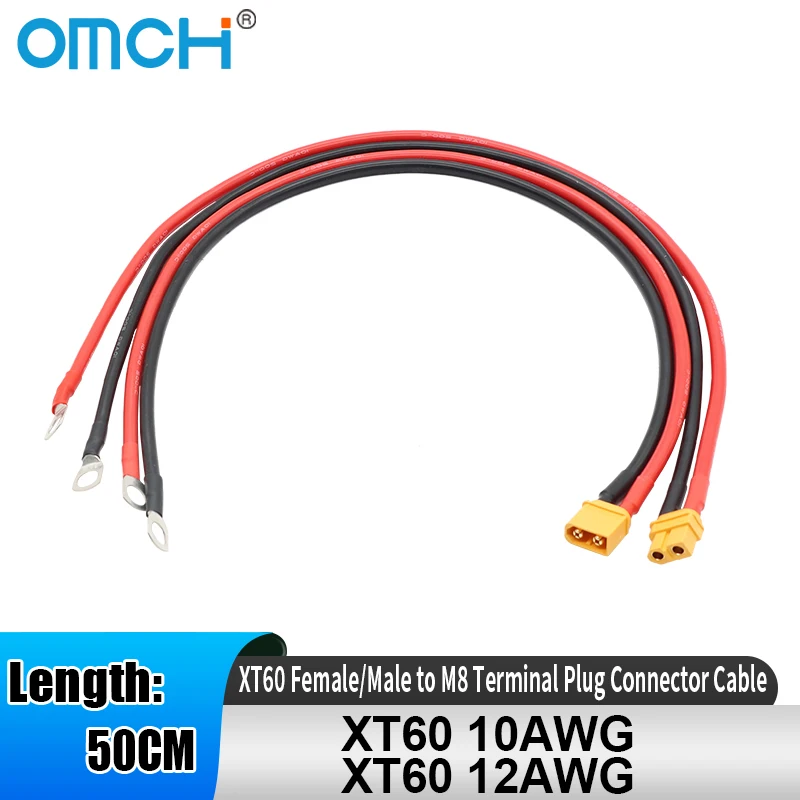
This cable integrates XT60 male and female connectors on one end and M8 ring terminals on the other. The XT60 connector is a widely adopted standard in the RC hobby and portable power communities, known for its secure, low-resistance connection and high current handling capabilities. Its distinctive yellow housing and polarized design prevent incorrect connections.
The M8 ring terminals are designed for secure attachment to battery posts, bus bars, or other screw-down terminals. The M8 designation refers to the 8mm diameter of the bolt hole, a common size for many automotive, marine, and solar panel connections. These terminals are typically crimped and often soldered for maximum conductivity and mechanical strength.
This combination provides a versatile interface, allowing for quick-disconnect functionality via the XT60 while offering a robust, permanent connection through the M8 terminals. This dual-purpose design simplifies power management for diverse setups, offering a significant advantage over systems requiring multiple adapters or custom wiring.
The product offers options for both 10AWG and 12AWG wire gauges. AWG (American Wire Gauge) is a standard for measuring wire diameter; a lower AWG number indicates a thicker wire. Thicker wires have lower electrical resistance and can safely carry higher currents without excessive voltage drop or overheating.
For instance, 10AWG wire can handle significantly more continuous current than 12AWG wire. This makes the 10AWG option suitable for higher-power applications, such as connecting larger solar panels to charge controllers or powering high-draw marine electronics. Selecting the correct gauge is critical.
Choosing the appropriate wire gauge prevents thermal overload and ensures efficient power delivery. Users must match the wire gauge to the expected current draw of their application to avoid potential fire hazards or inefficient system operation, a crucial consideration for any electrical setup.
Each cable measures 50cm (approximately 19.69 inches) in length. This specific length is often ideal for compact installations where components are in close proximity, minimizing excess cable slack. Shorter runs inherently reduce voltage drop, which is beneficial for maintaining power efficiency.
While 50cm might be too short for some extended applications, it is a practical length for many direct connections, such as linking a portable solar panel to a battery bank or connecting a car battery to an inverter in a tight space. The fixed length simplifies installation planning.
For scenarios requiring longer runs, multiple cables can be connected in series using appropriate XT60 extensions, though this introduces additional connection points. The 50cm length is optimized for direct, high-current links where minimal resistance is desired, differentiating it from bulk wire purchases.
The visual evidence suggests a focus on robust construction. The crimped and potentially soldered connections at both the XT60 and M8 terminals are critical indicators of quality. Properly executed crimps ensure a low-resistance electrical connection and strong mechanical bond, preventing wires from pulling out under stress.
Heat shrink tubing is visible at the junctions where the wires enter the XT60 connectors and where they meet the M8 terminals. This tubing provides strain relief and additional insulation, protecting the connection from environmental ingress and mechanical damage. Such attention to detail enhances long-term reliability.
Unlike hastily assembled DIY cables that may suffer from poor crimps or inadequate insulation, these factory-produced cables offer a higher degree of consistency and safety. This reduces the risk of intermittent connections or electrical failures, a common issue with sub-standard wiring.
This OMCH cable offers significant value by providing a pre-fabricated, high-quality solution for common power connection needs. The cost of individual components (XT60 connectors, M8 terminals, tinned copper silicone wire) plus the labor involved in proper assembly can quickly exceed the price of this ready-to-use cable. It saves time and ensures professional-grade connections.
For enthusiasts and professionals alike, the convenience of a plug-and-play solution that meets high electrical standards is invaluable. It eliminates the need for specialized tools like crimpers and soldering irons, lowering the barrier to entry for complex electrical projects. This product simplifies system integration.
Ultimately, investing in a pre-made cable like this minimizes the potential for human error in wiring, which can lead to costly damage to expensive equipment or even safety hazards. It represents a smart investment in reliability and peace of mind, allowing users to focus on their projects rather than worrying about their power connections.
Imagine the ease of quickly connecting your solar panel to your portable power station before a camping trip, knowing the power transfer is efficient and secure. Picture the confidence in your marine electronics, powered by connections that resist corrosion and withstand vibration. Envision the streamlined setup of your RC charging station, free from the clutter and unreliability of makeshift wiring. This cable delivers dependable power, allowing you to focus on the task at hand, whether on land or at sea.
Conductor Material and Gauge Integrity
The visible conductor within these cables is specified as tinned copper. This material choice is not merely a premium feature; it is a fundamental engineering decision for longevity and performance. Tinned copper offers superior corrosion resistance compared to bare copper, especially in humid or marine environments. This resistance prevents oxidation, which can lead to increased electrical resistance over time.
Increased resistance translates directly to power loss and heat generation, diminishing system efficiency. For critical power pathways, maintaining low resistance is paramount. The tinned copper ensures consistent current flow.
Compared to standard untinned copper wires, the anti-oxidation properties of tinned copper significantly extend the cable's operational lifespan. This mitigates the need for frequent replacements or troubleshooting due to degraded connections, offering substantial long-term value.
Insulation and Environmental Resilience
The cable features a silicone outer layer for its insulation. Silicone is renowned for its flexibility across a wide temperature range, from extreme cold to high heat. This flexibility is crucial in applications where cables might experience movement or vibration, such as in vehicles or marine vessels.
Unlike PVC insulation, which can become brittle in cold temperatures or soften excessively under heat, silicone maintains its structural integrity. This prevents insulation cracking or melting, which could expose live conductors and create significant safety hazards. The material provides excellent electrical isolation.
This choice of insulation directly impacts the cable's reliability in harsh environments. Users can expect consistent performance whether the cable is installed in a frigid winter climate or a scorching engine bay, a clear upgrade from less resilient alternatives.
Connector System: XT60 and M8 Terminals
This cable integrates XT60 male and female connectors on one end and M8 ring terminals on the other. The XT60 connector is a widely adopted standard in the RC hobby and portable power communities, known for its secure, low-resistance connection and high current handling capabilities. Its distinctive yellow housing and polarized design prevent incorrect connections.
The M8 ring terminals are designed for secure attachment to battery posts, bus bars, or other screw-down terminals. The M8 designation refers to the 8mm diameter of the bolt hole, a common size for many automotive, marine, and solar panel connections. These terminals are typically crimped and often soldered for maximum conductivity and mechanical strength.
This combination provides a versatile interface, allowing for quick-disconnect functionality via the XT60 while offering a robust, permanent connection through the M8 terminals. This dual-purpose design simplifies power management for diverse setups, offering a significant advantage over systems requiring multiple adapters or custom wiring.
Wire Gauge and Current Capacity
The product offers options for both 10AWG and 12AWG wire gauges. AWG (American Wire Gauge) is a standard for measuring wire diameter; a lower AWG number indicates a thicker wire. Thicker wires have lower electrical resistance and can safely carry higher currents without excessive voltage drop or overheating.
For instance, 10AWG wire can handle significantly more continuous current than 12AWG wire. This makes the 10AWG option suitable for higher-power applications, such as connecting larger solar panels to charge controllers or powering high-draw marine electronics. Selecting the correct gauge is critical.
Choosing the appropriate wire gauge prevents thermal overload and ensures efficient power delivery. Users must match the wire gauge to the expected current draw of their application to avoid potential fire hazards or inefficient system operation, a crucial consideration for any electrical setup.
Length and Application Versatility
Each cable measures 50cm (approximately 19.69 inches) in length. This specific length is often ideal for compact installations where components are in close proximity, minimizing excess cable slack. Shorter runs inherently reduce voltage drop, which is beneficial for maintaining power efficiency.
While 50cm might be too short for some extended applications, it is a practical length for many direct connections, such as linking a portable solar panel to a battery bank or connecting a car battery to an inverter in a tight space. The fixed length simplifies installation planning.
For scenarios requiring longer runs, multiple cables can be connected in series using appropriate XT60 extensions, though this introduces additional connection points. The 50cm length is optimized for direct, high-current links where minimal resistance is desired, differentiating it from bulk wire purchases.
Manufacturing Quality and Connection Reliability
The visual evidence suggests a focus on robust construction. The crimped and potentially soldered connections at both the XT60 and M8 terminals are critical indicators of quality. Properly executed crimps ensure a low-resistance electrical connection and strong mechanical bond, preventing wires from pulling out under stress.
Heat shrink tubing is visible at the junctions where the wires enter the XT60 connectors and where they meet the M8 terminals. This tubing provides strain relief and additional insulation, protecting the connection from environmental ingress and mechanical damage. Such attention to detail enhances long-term reliability.
Unlike hastily assembled DIY cables that may suffer from poor crimps or inadequate insulation, these factory-produced cables offer a higher degree of consistency and safety. This reduces the risk of intermittent connections or electrical failures, a common issue with sub-standard wiring.
Value Proposition for System Integration
This OMCH cable offers significant value by providing a pre-fabricated, high-quality solution for common power connection needs. The cost of individual components (XT60 connectors, M8 terminals, tinned copper silicone wire) plus the labor involved in proper assembly can quickly exceed the price of this ready-to-use cable. It saves time and ensures professional-grade connections.
For enthusiasts and professionals alike, the convenience of a plug-and-play solution that meets high electrical standards is invaluable. It eliminates the need for specialized tools like crimpers and soldering irons, lowering the barrier to entry for complex electrical projects. This product simplifies system integration.
Ultimately, investing in a pre-made cable like this minimizes the potential for human error in wiring, which can lead to costly damage to expensive equipment or even safety hazards. It represents a smart investment in reliability and peace of mind, allowing users to focus on their projects rather than worrying about their power connections.
Imagine the ease of quickly connecting your solar panel to your portable power station before a camping trip, knowing the power transfer is efficient and secure. Picture the confidence in your marine electronics, powered by connections that resist corrosion and withstand vibration. Envision the streamlined setup of your RC charging station, free from the clutter and unreliability of makeshift wiring. This cable delivers dependable power, allowing you to focus on the task at hand, whether on land or at sea.