NTAG213 NFC Wet Inlay Stickers (50-Pack)
Official Store Deal
Expert Analysis Overview
The NTAG213 NFC Wet Inlay Stickers are a highly adaptable, compact solution for integrating digital identification into physical assets, specifically engineered for users seeking efficient, scalable, and discreet data carriers. This offering provides a practical method for modernizing inventory management, authenticating components, and streamlining data access within various technical and restoration environments. The inherent design of these tags facilitates seamless integration, offering a significant upgrade over traditional manual labeling systems.
At the heart of these identification labels lies the NTAG213 chip, a product from NXP, a recognized leader in secure connectivity solutions. This specific chip is known for its robust performance and broad compatibility across the NFC ecosystem. The NTAG213 offers 144 bytes of user memory, a capacity well-suited for storing essential information such as unique serial numbers, URLs linking to product specifications, or brief maintenance logs.
This memory allocation enables a wide array of practical applications. For instance, a restoration technician might embed a URL pointing to a cloud-based database containing detailed schematics or service history for a vintage tool component. Such a system drastically reduces the time spent cross-referencing physical documents. The NTAG213 chip ensures reliable data retention and quick access.
Compared to simpler identification methods like QR codes, NFC tags offer a distinct advantage in terms of user experience and security. A QR code requires visual scanning, which can be cumbersome in low light or with damaged labels. NFC, conversely, operates via proximity, often requiring just a tap. This makes it a superior choice for environments where speed and efficiency are paramount, especially when dealing with numerous small parts that need quick identification.
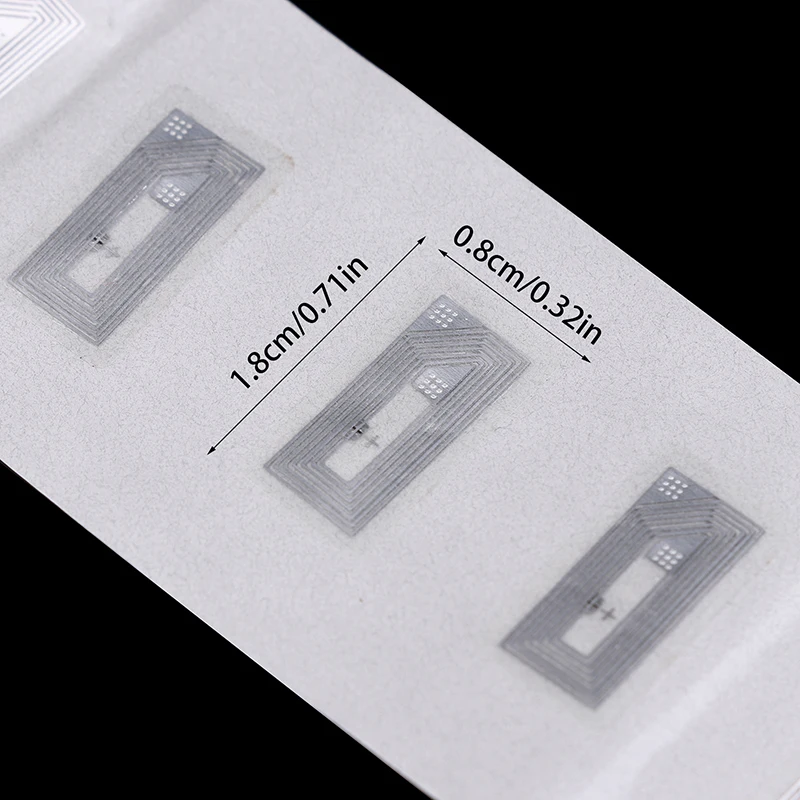
Measuring a compact 11mm x 21mm, these NFC wet inlays are designed for discreet application. Their small footprint ensures they can be affixed to even the most diminutive tool parts or components without obstructing functionality or aesthetics. The term "wet inlay" refers to the construction where the NFC chip and antenna are embedded within a thin, flexible substrate with an adhesive backing, making them ready for immediate peel-and-stick application. They are thin.
This design significantly simplifies the integration process. Imagine a scenario in a busy workshop where every specialized wrench or diagnostic device needs a unique identifier. Applying these adhesive tags is a matter of moments, transforming a laborious manual labeling task into a swift digital update. The flexibility of the wet inlay allows for application on slightly curved surfaces, expanding their utility beyond flat planes.
Traditional rigid RFID tags or bulky labels often present challenges in space-constrained applications or where a low profile is essential. These wet inlays bypass such issues, offering a virtually invisible digital layer. This allows for an upgrade of internals without any noticeable external change, preserving the original look of a restored item while adding modern tracking capabilities. The discreet nature is a key benefit.
Operating at a frequency of 13.56 MHz, these NFC tags adhere to the globally recognized ISO/IEC 14443 Type A protocol. This frequency band is standard for High Frequency (HF) RFID and NFC applications, ensuring broad compatibility with a vast ecosystem of NFC-enabled smartphones, tablets, and dedicated readers. This standardization is critical for widespread adoption and interoperability.
This adherence to a universal standard means that any NFC-enabled device, from a common smartphone to a specialized industrial reader, can interact with these tags. This eliminates the need for proprietary scanning equipment, making the system accessible and affordable to implement. For a small business or an individual restorer, this open standard translates to lower initial investment and greater flexibility in reader choice. Communication is reliable.
In contrast, some specialized RFID systems operate on different frequencies (e.g., Low Frequency or Ultra High Frequency) which require specific, often more expensive, hardware. While those frequencies offer different advantages (like longer read ranges for UHF), 13.56 MHz is optimized for secure, short-range interactions, ideal for item-level identification where physical proximity is expected. This ensures data integrity and reduces accidental reads.
Supplied in a 50-piece roll, these NTAG213 stickers offer a scalable solution for projects requiring multiple tags. Purchasing tags in a roll format significantly reduces the per-unit cost compared to buying individual tags, making it an economical choice for batch deployment. This volume packaging is particularly beneficial for businesses or enthusiasts who regularly manage a substantial inventory of parts or tools.
This bulk availability allows for efficient inventory stocking. Instead of repeatedly ordering small quantities, users can acquire a sufficient supply to last through multiple projects or extended periods. This proactive approach prevents workflow interruptions due to a lack of necessary identification tags. It saves time and administrative overhead.
Considering the potential for asset tracking and anti-counterfeiting, the long-term value of these tags far outweighs their initial modest cost. Implementing an NFC-based tracking system can drastically reduce losses from misplacement or theft of valuable tools and components. This investment helps avoid the significant expense of replacing expensive units, acting as a preventative measure against future costs.
The product title explicitly mentions its suitability as an "anti-counterfeiting label." This capability stems from the unique identifier embedded within each NTAG213 chip. When combined with a secure database, this unique ID can be used to verify the authenticity of a product or component. This is particularly valuable in markets where counterfeit parts are a concern, such as automotive or specialized tool industries.
For a restoration specialist, tagging critical or rare components with these NFC labels provides an immutable digital record of their origin and authenticity. A quick scan can confirm if a part is genuine or a verified reproduction, protecting the integrity and value of a restoration project. This adds a layer of trust. It ensures authenticity.
Compared to purely visual anti-counterfeiting measures like holograms or watermarks, an NFC tag offers a digital, verifiable layer of security that is harder to replicate. While visual cues can be faked, the unique electronic signature of an NFC chip, when cross-referenced with a secure backend, provides a more robust method of authentication. This elevates the standard of verification.
While highly versatile, these NFC wet inlays do have specific operational considerations. A primary limitation is their performance on metallic surfaces. Direct application onto metal can cause significant signal interference, severely degrading or completely preventing the tag from being read. This is a common characteristic of standard NFC tags. Planning is necessary.
For applications involving metal, specialized "on-metal" NFC tags are required, which incorporate a ferrite layer to shield the antenna from interference. Users should carefully consider their application environment before deployment. Additionally, while the 13.56 MHz frequency is excellent for short-range interactions, it does not offer the extended read distances found in Ultra High Frequency (UHF) RFID systems, which can span several meters.
Therefore, for applications requiring batch scanning of items from a distance, or tracking assets across large warehouses, UHF RFID might be a more suitable technology. However, for item-level identification where a user is typically within a few centimeters of the tag, these NTAG213 wet inlays excel. Understanding these trade-offs ensures optimal system design and user satisfaction. Proper placement is key.
Imagine a workshop where every specialized tool, every custom-fabricated part for a vintage engine, and every piece of rare hardware is instantly identifiable with a tap of a smartphone. No more guessing which bolt belongs to which project, no more searching for misplaced inventory. These NTAG213 NFC stickers streamline your workflow, safeguard your assets, and provide an unparalleled level of organization, allowing you to focus on the intricate craft of restoration with newfound efficiency and peace of mind. Your projects become smarter, your inventory becomes traceable, and your time becomes your own.
Digital Footprints: The NTAG213 Core
At the heart of these identification labels lies the NTAG213 chip, a product from NXP, a recognized leader in secure connectivity solutions. This specific chip is known for its robust performance and broad compatibility across the NFC ecosystem. The NTAG213 offers 144 bytes of user memory, a capacity well-suited for storing essential information such as unique serial numbers, URLs linking to product specifications, or brief maintenance logs.
This memory allocation enables a wide array of practical applications. For instance, a restoration technician might embed a URL pointing to a cloud-based database containing detailed schematics or service history for a vintage tool component. Such a system drastically reduces the time spent cross-referencing physical documents. The NTAG213 chip ensures reliable data retention and quick access.
Compared to simpler identification methods like QR codes, NFC tags offer a distinct advantage in terms of user experience and security. A QR code requires visual scanning, which can be cumbersome in low light or with damaged labels. NFC, conversely, operates via proximity, often requiring just a tap. This makes it a superior choice for environments where speed and efficiency are paramount, especially when dealing with numerous small parts that need quick identification.
Seamless Integration: Adhesion and Form Factor
Measuring a compact 11mm x 21mm, these NFC wet inlays are designed for discreet application. Their small footprint ensures they can be affixed to even the most diminutive tool parts or components without obstructing functionality or aesthetics. The term "wet inlay" refers to the construction where the NFC chip and antenna are embedded within a thin, flexible substrate with an adhesive backing, making them ready for immediate peel-and-stick application. They are thin.
This design significantly simplifies the integration process. Imagine a scenario in a busy workshop where every specialized wrench or diagnostic device needs a unique identifier. Applying these adhesive tags is a matter of moments, transforming a laborious manual labeling task into a swift digital update. The flexibility of the wet inlay allows for application on slightly curved surfaces, expanding their utility beyond flat planes.
Traditional rigid RFID tags or bulky labels often present challenges in space-constrained applications or where a low profile is essential. These wet inlays bypass such issues, offering a virtually invisible digital layer. This allows for an upgrade of internals without any noticeable external change, preserving the original look of a restored item while adding modern tracking capabilities. The discreet nature is a key benefit.
Operational Reliability: The 13.56MHz Standard
Operating at a frequency of 13.56 MHz, these NFC tags adhere to the globally recognized ISO/IEC 14443 Type A protocol. This frequency band is standard for High Frequency (HF) RFID and NFC applications, ensuring broad compatibility with a vast ecosystem of NFC-enabled smartphones, tablets, and dedicated readers. This standardization is critical for widespread adoption and interoperability.
This adherence to a universal standard means that any NFC-enabled device, from a common smartphone to a specialized industrial reader, can interact with these tags. This eliminates the need for proprietary scanning equipment, making the system accessible and affordable to implement. For a small business or an individual restorer, this open standard translates to lower initial investment and greater flexibility in reader choice. Communication is reliable.
In contrast, some specialized RFID systems operate on different frequencies (e.g., Low Frequency or Ultra High Frequency) which require specific, often more expensive, hardware. While those frequencies offer different advantages (like longer read ranges for UHF), 13.56 MHz is optimized for secure, short-range interactions, ideal for item-level identification where physical proximity is expected. This ensures data integrity and reduces accidental reads.
Value Proposition: Batch Deployment and Cost-Effectiveness
Supplied in a 50-piece roll, these NTAG213 stickers offer a scalable solution for projects requiring multiple tags. Purchasing tags in a roll format significantly reduces the per-unit cost compared to buying individual tags, making it an economical choice for batch deployment. This volume packaging is particularly beneficial for businesses or enthusiasts who regularly manage a substantial inventory of parts or tools.
This bulk availability allows for efficient inventory stocking. Instead of repeatedly ordering small quantities, users can acquire a sufficient supply to last through multiple projects or extended periods. This proactive approach prevents workflow interruptions due to a lack of necessary identification tags. It saves time and administrative overhead.
Considering the potential for asset tracking and anti-counterfeiting, the long-term value of these tags far outweighs their initial modest cost. Implementing an NFC-based tracking system can drastically reduce losses from misplacement or theft of valuable tools and components. This investment helps avoid the significant expense of replacing expensive units, acting as a preventative measure against future costs.
Anti-Counterfeiting and Asset Management Capabilities
The product title explicitly mentions its suitability as an "anti-counterfeiting label." This capability stems from the unique identifier embedded within each NTAG213 chip. When combined with a secure database, this unique ID can be used to verify the authenticity of a product or component. This is particularly valuable in markets where counterfeit parts are a concern, such as automotive or specialized tool industries.
For a restoration specialist, tagging critical or rare components with these NFC labels provides an immutable digital record of their origin and authenticity. A quick scan can confirm if a part is genuine or a verified reproduction, protecting the integrity and value of a restoration project. This adds a layer of trust. It ensures authenticity.
Compared to purely visual anti-counterfeiting measures like holograms or watermarks, an NFC tag offers a digital, verifiable layer of security that is harder to replicate. While visual cues can be faked, the unique electronic signature of an NFC chip, when cross-referenced with a secure backend, provides a more robust method of authentication. This elevates the standard of verification.
Limitations and Best Practices
While highly versatile, these NFC wet inlays do have specific operational considerations. A primary limitation is their performance on metallic surfaces. Direct application onto metal can cause significant signal interference, severely degrading or completely preventing the tag from being read. This is a common characteristic of standard NFC tags. Planning is necessary.
For applications involving metal, specialized "on-metal" NFC tags are required, which incorporate a ferrite layer to shield the antenna from interference. Users should carefully consider their application environment before deployment. Additionally, while the 13.56 MHz frequency is excellent for short-range interactions, it does not offer the extended read distances found in Ultra High Frequency (UHF) RFID systems, which can span several meters.
Therefore, for applications requiring batch scanning of items from a distance, or tracking assets across large warehouses, UHF RFID might be a more suitable technology. However, for item-level identification where a user is typically within a few centimeters of the tag, these NTAG213 wet inlays excel. Understanding these trade-offs ensures optimal system design and user satisfaction. Proper placement is key.
Imagine a workshop where every specialized tool, every custom-fabricated part for a vintage engine, and every piece of rare hardware is instantly identifiable with a tap of a smartphone. No more guessing which bolt belongs to which project, no more searching for misplaced inventory. These NTAG213 NFC stickers streamline your workflow, safeguard your assets, and provide an unparalleled level of organization, allowing you to focus on the intricate craft of restoration with newfound efficiency and peace of mind. Your projects become smarter, your inventory becomes traceable, and your time becomes your own.