Nordic Style Fixed Blade Utility Knife
Official Store Deal
Expert Analysis Overview
Precision in the Field: An Electrician's View on Utility Blades
The Nordic Style Fixed Blade Utility Knife is a compact, fixed-blade tool designed for general outdoor and utility tasks, appealing to users who prioritize a sharp edge and a robust build in a portable format. This knife presents itself as a versatile companion for various cutting needs, from preparing kindling to opening packages. Its design cues suggest an emphasis on both aesthetic appeal and practical functionality, aiming to provide a reliable cutting instrument for everyday carry or specific outdoor excursions. The tool's overall construction and advertised features warrant a closer examination from a professional perspective, particularly concerning its material claims and intended applications.
Blade Metallurgy and Edge Retention
The product description highlights "M390 High Hardness" steel. This is a premium, high-performance stainless steel known for its exceptional wear resistance and edge retention. True M390 steel contains a high volume of vanadium carbides, which contribute to its hardness and ability to hold a keen edge through prolonged use. Such steel is typically found in high-end knives, often commanding a significantly higher price point than the one observed for this product. The visual evidence, while showing a polished blade, cannot definitively confirm the specific alloy composition. Material verification is crucial.
In practical terms, if the blade genuinely utilizes a high-hardness steel, it implies a reduced frequency of sharpening. This is a significant advantage for users in remote settings or those who require consistent cutting performance without constant maintenance. A harder steel also resists deformation, maintaining its geometry under stress. This translates to fewer interruptions during tasks, enhancing overall efficiency. The blade's ability to maintain a sharp edge is paramount for any utility knife.
Compared to knives made from more common stainless steels like 440C or 8Cr13MoV, a genuine M390 blade would offer vastly superior performance in terms of edge retention and corrosion resistance. However, the discrepancy between the claimed material and the accessible price point suggests that the steel might be a more budget-friendly alternative, possibly a high-carbon stainless steel with similar aesthetic properties but different performance characteristics. Users should manage expectations regarding the longevity of the edge and its resistance to abrasive wear, especially if the steel is not true M390. It is a critical distinction.
Ergonomics and Handle Construction
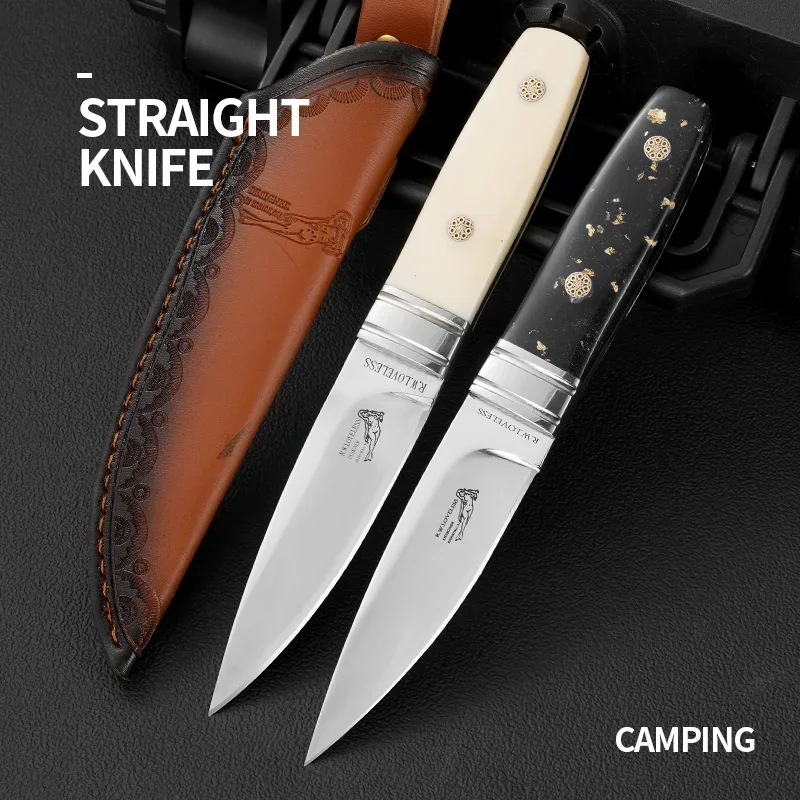
Ergonomics are vital for any hand tool. The knife features two handle variations: one with a lighter, possibly bone or synthetic ivory material, and another with a darker, speckled composite, potentially resin-infused wood or micarta. Both handles appear to be contoured, suggesting a comfortable and secure grip during use. The full tang construction, visible in the close-up images, indicates a robust connection between the blade and handle, enhancing durability and balance. Rivets secure the handle scales firmly.
A comfortable grip minimizes hand fatigue during extended cutting tasks. The visible contours and material choices suggest an attempt to provide a secure hold, even in potentially wet or slippery conditions. A well-designed handle allows for precise control, which is essential for detailed work or when applying significant force. This design consideration directly impacts user safety and efficiency. It feels good in the hand.
Many entry-level utility knives often feature basic, untextured plastic or simple wooden handles that can become slick or uncomfortable over time. The handles on these knives, with their visible texture and ergonomic shaping, appear to offer a superior tactile experience and better control compared to such generic alternatives. The choice of handle material also contributes to the knife's overall aesthetic, making it suitable for display as well as use. This is a thoughtful design.
Sheath and Portability
The knife comes with a brown leather sheath, featuring embossed detailing. A well-constructed sheath is crucial for safe carrying and protection of the blade. The leather appears to be of reasonable thickness, providing adequate protection against accidental cuts and shielding the blade from environmental elements. The sheath's design suggests it can be easily attached to a belt or carried within a pack, ensuring the knife is readily accessible when needed. Portability is key.
Effective blade retention within the sheath is paramount for safety. The images suggest a snug fit, preventing the knife from accidentally falling out during movement. A secure sheath also protects the blade's edge from dulling or chipping against other objects. This ensures the knife remains sharp and ready for use. It keeps the blade safe.
Unlike many knives that come with flimsy nylon or plastic sheaths, the leather sheath provided here offers a more traditional and durable carrying solution. Leather sheaths are known for their longevity and ability to conform to the knife's shape over time, providing a custom fit. This enhances both the safety and the overall user experience, making it a more reliable option for outdoor enthusiasts. The quality is evident.
Utility and Application Versatility
This knife is marketed for camping, climbing, hiking, and general outdoor use. Its straight blade design and compact size make it suitable for a variety of tasks, including preparing food, cutting cordage, opening packages, and light wood processing like feathersticking. The fine tip allows for detailed work, while the overall blade profile suggests good slicing capabilities. Its versatility is a strong point.
For an electrician, while this knife is not an insulated tool and should never be used on live electrical circuits, its sharpness and control could theoretically assist with non-electrical tasks on a job site, such as cutting insulation materials, opening tough packaging, or scoring various non-conductive materials. However, dedicated electrical tools are always recommended for specific electrical work. Precision is possible.
Many general-purpose utility knives often compromise on either blade quality or handle ergonomics, limiting their effectiveness across diverse applications. This knife, with its apparent attention to blade geometry and handle comfort, aims to provide a more balanced performance profile. It offers a more refined cutting experience than a standard box cutter or a multi-tool blade for tasks requiring a dedicated edge. This enhances its practical value.
Maintenance and Longevity
Proper maintenance is essential for extending the life of any knife. For a blade claiming high hardness, regular cleaning and occasional oiling are recommended to prevent corrosion, especially after exposure to moisture or acidic substances. The full tang construction simplifies cleaning, as there are fewer crevices for debris to accumulate. Sharpening, when required, should be done with appropriate stones or systems to maintain the blade's edge geometry. Care prolongs its life.
Neglecting maintenance can lead to premature dulling, rust, or even damage to the handle materials. A well-maintained knife performs reliably for years, making it a valuable investment. The materials chosen for this knife, if of good quality, are inherently durable, but their longevity is directly tied to the user's commitment to proper care. This ensures consistent performance.
Compared to knives with complex folding mechanisms or intricate parts, a fixed-blade knife like this is inherently simpler to maintain. There are no moving parts to lubricate or tighten, reducing potential points of failure. This simplicity contributes to its robustness and ease of care, making it a more dependable tool in demanding environments where complex maintenance might be impractical. Simplicity is a virtue.
Safety Considerations for the Electrician
As an electrician, safety is paramount. This knife is not an insulated tool. It offers no protection against electrical shock and must never be used on or near live electrical circuits. The metal blade and tang are conductive, posing a severe risk of electrocution if used improperly in an electrical context. Dedicated insulated tools are required for such applications. Safety is non-negotiable.
While a sharp blade can strip wire, using this knife for electrical wire stripping carries a high risk of nicking the copper strands. Nicked strands reduce the wire's current-carrying capacity and create potential failure points, leading to hazards like overheating or arcing. Specialized wire strippers are designed to remove insulation precisely without damaging the conductor. Use the right tool.
The comfortable grip, while beneficial for general utility, does not translate to electrical safety. The primary concern for an electrician is the absence of a 1000V insulation rating. This knife is a general-purpose cutting tool, and its application should be strictly limited to non-electrical tasks to prevent serious injury or equipment damage. Always prioritize safety.
Value Proposition and Market Positioning
At its listed price point, this knife presents itself as an accessible option for individuals seeking a fixed-blade utility knife with premium aesthetic and material claims. The perceived value is high, assuming the underlying materials deliver on their promises. For outdoor enthusiasts or those needing a reliable cutting tool for general tasks, the combination of a sharp blade, ergonomic handle, and a durable sheath offers a compelling package. It offers good utility.
However, the