Nema17 Stepper Motor Aluminum Heatsink for 3D Printers
Official Store Deal
Expert Analysis Overview
The Nema17 Stepper Motor Aluminum Heatsink is a crucial thermal management component designed for tinkerers and 3D printer enthusiasts seeking to optimize motor longevity and print fidelity. This passive cooling solution directly addresses a common pain point in 3D printing: overheating stepper motors. Elevated motor temperatures can lead to a cascade of performance issues, from skipped steps to reduced motor lifespan. This review examines how these specific heatsinks mitigate such problems, offering a straightforward upgrade path for a more stable and reliable printing experience.
Stepper motors, like the Nema17 series commonly found in 3D printers, convert electrical pulses into precise mechanical movements. During operation, especially under continuous load or high current settings, these motors generate significant heat. This thermal energy is a byproduct of the electrical resistance within the motor windings. Without effective dissipation, this heat accumulates, driving up the internal temperature of the motor.
Excessive heat directly impacts the motor's performance and longevity. As temperatures rise, the magnetic properties of the motor can weaken, reducing torque output. This weakening of torque is a primary cause of skipped steps, where the motor fails to move to its commanded position, resulting in visible layer shifts or misprints in the final part. It's a frustrating flaw.
Compared to a motor operating within its optimal temperature range, an overheated motor experiences accelerated wear on its internal components, particularly the bearings and insulation. This can lead to premature failure, requiring costly replacements and downtime. Investing in a simple cooling solution like these heatsinks can prevent these more significant issues, extending the life of critical printer components and ensuring consistent print quality.
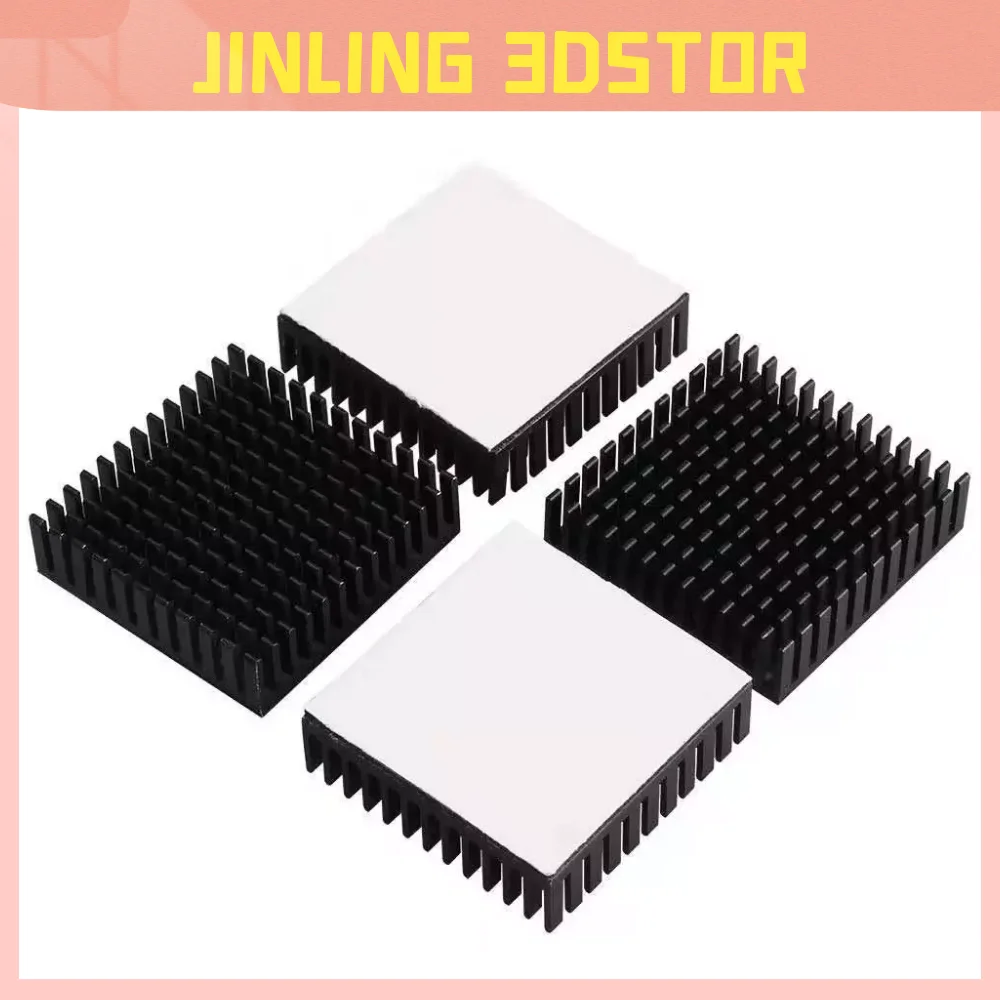
The heatsinks presented are constructed from extruded aluminum, a material chosen for its excellent thermal conductivity. Aluminum effectively draws heat away from the motor's surface. The black anodized finish is not merely aesthetic; it serves a functional purpose by enhancing the emissivity of the material, allowing it to radiate heat more efficiently into the surrounding air.
The design features a grid of closely spaced fins. These fins dramatically increase the surface area available for heat exchange with the ambient environment. More surface area means more air contact. Heat is transferred from the motor, through the aluminum body, and then dissipated from the fin surfaces into the air via convection and radiation.
Standard Nema17 motors often run without any dedicated cooling, relying solely on passive convection from their bare metal casing. These heatsinks offer a substantial upgrade by actively expanding the heat exchange capabilities. This design ensures that even without forced airflow, a significant amount of heat can be passively removed from the motor, keeping temperatures lower than an unadorned motor.
Installation is simplified by the inclusion of a pre-applied thermal adhesive pad on the base of each heatsink. This sticky pad serves a dual purpose: it provides a secure mechanical bond to the motor and, more importantly, ensures efficient thermal transfer between the motor's housing and the heatsink. A proper thermal interface is paramount.
These heatsinks are specifically designed for Nema17 (42 series) stepper motors, which are square with sides approximately 40mm (1.57 inches) in length. This makes them a direct fit for the vast majority of 3D printers, including popular models like the Creality Ender 3. The compact 11mm (0.43 inches) height ensures they generally fit within existing printer envelopes without interfering with other components or the printer's movement.
Unlike more complex active cooling solutions that require wiring and mounting fans, these heatsinks offer a truly plug-and-play experience. The maker simply cleans the motor surface, peels off the protective backing from the adhesive, and presses the heatsink firmly into place. This ease of installation makes them an accessible upgrade for even novice users looking to improve their printer's reliability without extensive modifications.
The primary function of these heatsinks is to maintain stepper motor temperatures within an optimal operating range. By drawing heat away from the motor windings and dissipating it through the finned structure, the heatsinks prevent the internal components from reaching critical temperatures. Cooler motors retain their torque more effectively.
This sustained torque output directly translates to improved print quality. When motors run cooler, the likelihood of skipped steps due to thermal throttling or reduced magnetic strength decreases significantly. This means fewer layer shifts, better dimensional accuracy, and smoother surface finishes on printed parts. Consistency is key in 3D printing.
Consider a scenario where a 3D printer is running a long, intricate print. The stepper motors are continuously active, generating heat over many hours. Without adequate cooling, the motors might gradually lose precision or even skip steps as they heat up, especially towards the end of a print. These heatsinks act as a thermal buffer, ensuring consistent performance throughout even the most demanding print jobs, safeguarding the integrity of lengthy projects.
Aluminum is inherently a durable and corrosion-resistant material, making these heatsinks a long-lasting addition to any 3D printer. The anodization process further enhances these properties, providing a hard, protective layer that resists scratches and environmental degradation. They are built to last.
The passive nature of these heatsinks means there are no moving parts, unlike fans, which can wear out, accumulate dust, or become noisy over time. This absence of mechanical components contributes to their reliability and maintenance-free operation. Once installed, they require no further attention.
From an economic standpoint, these heatsinks represent a small investment with a potentially large return. By preventing premature motor wear and reducing print failures, they save the user money on replacement parts and wasted filament. It's a preventative measure. This simple upgrade extends the operational life of the printer's critical motion components, making it a wise choice for any long-term 3D printing setup.
For the maker and tinkerer community, these heatsinks fit perfectly into the ethos of continuous machine improvement. They are a foundational upgrade, often one of the first modifications suggested for new 3D printer owners. The ease of integration allows for further experimentation.
Many community-driven projects involve pushing 3D printers to their limits, whether through faster print speeds, higher motor currents, or enclosing the printer for exotic filament use. In such scenarios, effective motor cooling becomes not just beneficial, but essential. These heatsinks provide a solid baseline for thermal management, allowing for more aggressive tuning and modifications without immediate thermal concerns.
Furthermore, these heatsinks serve as an excellent starting point for more advanced cooling solutions. While effective on their own, they can be augmented with small fans directed at the fins for active cooling in extremely demanding applications. This modularity aligns well with the maker's desire to customize and optimize every aspect of their machine, fostering a deeper understanding of thermal dynamics in 3D printing hardware.
Considering the relatively low cost of these heatsinks, their value proposition is exceptionally strong. They address a fundamental issue in 3D printing performance and reliability for a minimal financial outlay. A single failed print, especially a long one, can waste more material and time than the cost of a full set of these heatsinks.
The peace of mind that comes from knowing stepper motors are running cooler and more efficiently is invaluable. It allows makers to focus on the creative aspects of 3D printing rather than troubleshooting thermal issues. This upgrade frees up mental bandwidth. It ensures consistent output, which is particularly important for those using their printers for small-batch production or critical prototyping.
Ultimately, these heatsinks are an investment in the overall health and performance of a 3D printer. They mitigate common problems, extend component life, and contribute to higher quality prints. For anyone serious about 3D printing, especially those who enjoy modifying and optimizing their machines, these heatsinks offer tangible, immediate benefits that far outweigh their modest cost. Imagine consistently smooth, accurate prints, project after project, knowing that the core motion components are operating under optimal thermal conditions, allowing for uninterrupted creativity and reliable machine performance.
The Crucial Role of Thermal Management
Stepper motors, like the Nema17 series commonly found in 3D printers, convert electrical pulses into precise mechanical movements. During operation, especially under continuous load or high current settings, these motors generate significant heat. This thermal energy is a byproduct of the electrical resistance within the motor windings. Without effective dissipation, this heat accumulates, driving up the internal temperature of the motor.
Excessive heat directly impacts the motor's performance and longevity. As temperatures rise, the magnetic properties of the motor can weaken, reducing torque output. This weakening of torque is a primary cause of skipped steps, where the motor fails to move to its commanded position, resulting in visible layer shifts or misprints in the final part. It's a frustrating flaw.
Compared to a motor operating within its optimal temperature range, an overheated motor experiences accelerated wear on its internal components, particularly the bearings and insulation. This can lead to premature failure, requiring costly replacements and downtime. Investing in a simple cooling solution like these heatsinks can prevent these more significant issues, extending the life of critical printer components and ensuring consistent print quality.
Design and Construction: An Examination
The heatsinks presented are constructed from extruded aluminum, a material chosen for its excellent thermal conductivity. Aluminum effectively draws heat away from the motor's surface. The black anodized finish is not merely aesthetic; it serves a functional purpose by enhancing the emissivity of the material, allowing it to radiate heat more efficiently into the surrounding air.
The design features a grid of closely spaced fins. These fins dramatically increase the surface area available for heat exchange with the ambient environment. More surface area means more air contact. Heat is transferred from the motor, through the aluminum body, and then dissipated from the fin surfaces into the air via convection and radiation.
Standard Nema17 motors often run without any dedicated cooling, relying solely on passive convection from their bare metal casing. These heatsinks offer a substantial upgrade by actively expanding the heat exchange capabilities. This design ensures that even without forced airflow, a significant amount of heat can be passively removed from the motor, keeping temperatures lower than an unadorned motor.
Installation and Compatibility: A Maker's Perspective
Installation is simplified by the inclusion of a pre-applied thermal adhesive pad on the base of each heatsink. This sticky pad serves a dual purpose: it provides a secure mechanical bond to the motor and, more importantly, ensures efficient thermal transfer between the motor's housing and the heatsink. A proper thermal interface is paramount.
These heatsinks are specifically designed for Nema17 (42 series) stepper motors, which are square with sides approximately 40mm (1.57 inches) in length. This makes them a direct fit for the vast majority of 3D printers, including popular models like the Creality Ender 3. The compact 11mm (0.43 inches) height ensures they generally fit within existing printer envelopes without interfering with other components or the printer's movement.
Unlike more complex active cooling solutions that require wiring and mounting fans, these heatsinks offer a truly plug-and-play experience. The maker simply cleans the motor surface, peels off the protective backing from the adhesive, and presses the heatsink firmly into place. This ease of installation makes them an accessible upgrade for even novice users looking to improve their printer's reliability without extensive modifications.
Thermal Performance and Print Quality Enhancement
The primary function of these heatsinks is to maintain stepper motor temperatures within an optimal operating range. By drawing heat away from the motor windings and dissipating it through the finned structure, the heatsinks prevent the internal components from reaching critical temperatures. Cooler motors retain their torque more effectively.
This sustained torque output directly translates to improved print quality. When motors run cooler, the likelihood of skipped steps due to thermal throttling or reduced magnetic strength decreases significantly. This means fewer layer shifts, better dimensional accuracy, and smoother surface finishes on printed parts. Consistency is key in 3D printing.
Consider a scenario where a 3D printer is running a long, intricate print. The stepper motors are continuously active, generating heat over many hours. Without adequate cooling, the motors might gradually lose precision or even skip steps as they heat up, especially towards the end of a print. These heatsinks act as a thermal buffer, ensuring consistent performance throughout even the most demanding print jobs, safeguarding the integrity of lengthy projects.
Durability and Longevity: A Smart Investment
Aluminum is inherently a durable and corrosion-resistant material, making these heatsinks a long-lasting addition to any 3D printer. The anodization process further enhances these properties, providing a hard, protective layer that resists scratches and environmental degradation. They are built to last.
The passive nature of these heatsinks means there are no moving parts, unlike fans, which can wear out, accumulate dust, or become noisy over time. This absence of mechanical components contributes to their reliability and maintenance-free operation. Once installed, they require no further attention.
From an economic standpoint, these heatsinks represent a small investment with a potentially large return. By preventing premature motor wear and reducing print failures, they save the user money on replacement parts and wasted filament. It's a preventative measure. This simple upgrade extends the operational life of the printer's critical motion components, making it a wise choice for any long-term 3D printing setup.
The Maker/Tinkerer's Advantage: Hackability and Upgrades
For the maker and tinkerer community, these heatsinks fit perfectly into the ethos of continuous machine improvement. They are a foundational upgrade, often one of the first modifications suggested for new 3D printer owners. The ease of integration allows for further experimentation.
Many community-driven projects involve pushing 3D printers to their limits, whether through faster print speeds, higher motor currents, or enclosing the printer for exotic filament use. In such scenarios, effective motor cooling becomes not just beneficial, but essential. These heatsinks provide a solid baseline for thermal management, allowing for more aggressive tuning and modifications without immediate thermal concerns.
Furthermore, these heatsinks serve as an excellent starting point for more advanced cooling solutions. While effective on their own, they can be augmented with small fans directed at the fins for active cooling in extremely demanding applications. This modularity aligns well with the maker's desire to customize and optimize every aspect of their machine, fostering a deeper understanding of thermal dynamics in 3D printing hardware.
Value Proposition: A Small Price for Big Gains
Considering the relatively low cost of these heatsinks, their value proposition is exceptionally strong. They address a fundamental issue in 3D printing performance and reliability for a minimal financial outlay. A single failed print, especially a long one, can waste more material and time than the cost of a full set of these heatsinks.
The peace of mind that comes from knowing stepper motors are running cooler and more efficiently is invaluable. It allows makers to focus on the creative aspects of 3D printing rather than troubleshooting thermal issues. This upgrade frees up mental bandwidth. It ensures consistent output, which is particularly important for those using their printers for small-batch production or critical prototyping.
Ultimately, these heatsinks are an investment in the overall health and performance of a 3D printer. They mitigate common problems, extend component life, and contribute to higher quality prints. For anyone serious about 3D printing, especially those who enjoy modifying and optimizing their machines, these heatsinks offer tangible, immediate benefits that far outweigh their modest cost. Imagine consistently smooth, accurate prints, project after project, knowing that the core motion components are operating under optimal thermal conditions, allowing for uninterrupted creativity and reliable machine performance.