Nema17 17HS4023 Stepper Motor for 3D Printers and CNC
Official Store Deal
Expert Analysis Overview
Precision Motion for the Modern Maker
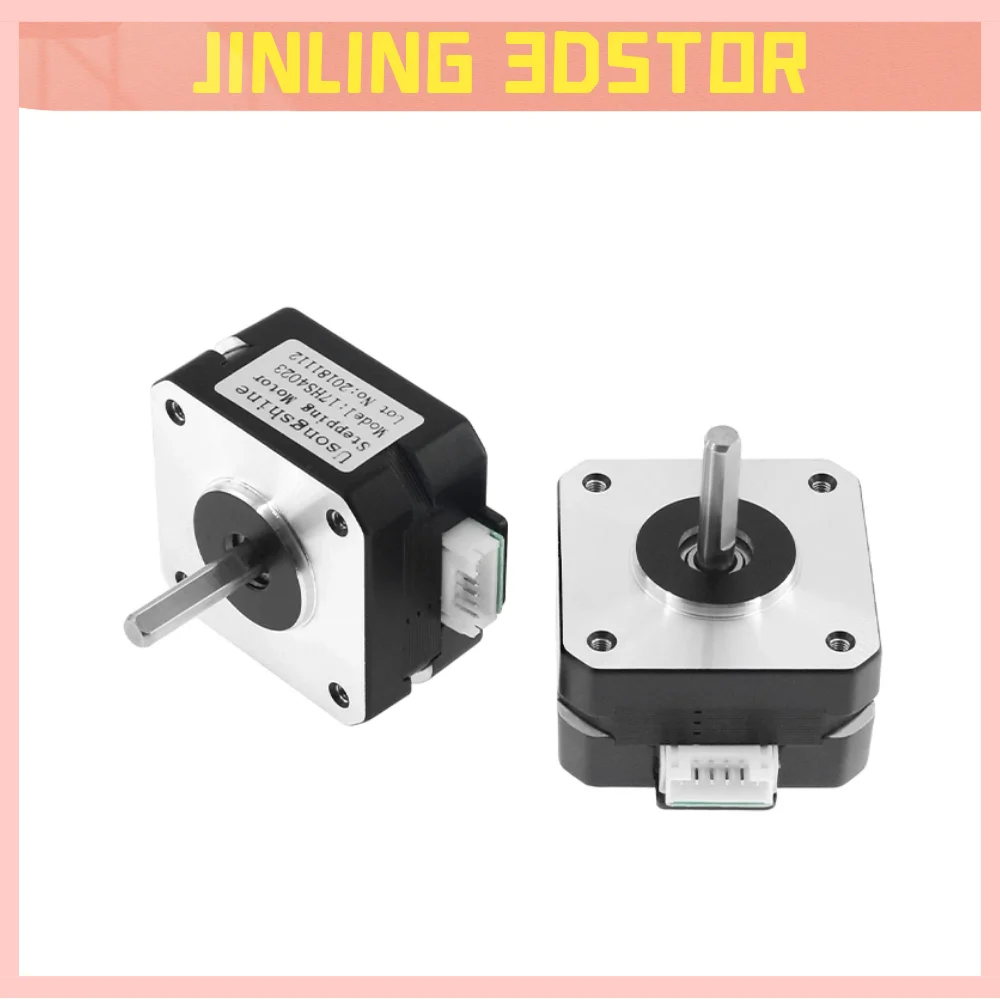
The Nema17 17HS4023 Stepper Motor is a compact, yet capable, motion control component primarily aimed at 3D printer and small-scale CNC machine builders. Its design prioritizes integration into systems where space and weight are critical considerations, offering a balanced performance profile for tasks like filament extrusion or precise tool positioning.
This motor represents a foundational element for many DIY automation projects. It’s a workhorse.
The Nema 17 Standard: A Builder's Foundation
The physical dimensions of this stepper motor adhere to the widely recognized Nema 17 standard, featuring a 42x42mm faceplate. Its shallow 23mm body depth sets it apart from many standard Nema 17 motors, which are often deeper.
This reduced depth is a significant advantage for applications requiring a minimized footprint. For instance, direct-drive extruder setups on 3D printers often struggle with clearance, and a shorter motor can prevent collisions with the printer frame or other components. Every millimeter matters in such designs.
Unlike bulkier Nema 17 variants that might offer slightly higher torque at the cost of increased mass and volume, the 17HS4023 prioritizes a slim profile. This makes it an excellent choice when upgrading from a Bowden to a direct-drive system, where toolhead weight directly impacts print quality and speed. The compact form factor also eases integration into custom CNC laser engravers or plotters, where the moving gantry benefits from lighter components.
Powering Precision: Electrical Specifications
Operating at 1.0A and designed for 12V systems, this 4-lead stepper motor offers straightforward electrical integration. The 4-lead configuration identifies it as a bipolar stepper motor, which requires a bipolar stepper motor driver for operation.
These electrical parameters make the motor compatible with a vast array of common stepper motor drivers found in the maker community. Drivers like the A4988, DRV8825, TMC2208, or TMC2209 are well-suited, requiring minimal adjustment to current limits to match the motor's 1.0A rating. This simplifies the electronic setup considerably.
Compared to older 6-lead or 8-lead motors, the 4-lead setup is less complex to wire and control, as it eliminates the need to consider unipolar configurations or complex coil tap arrangements. This directness appeals to hobbyists looking for reliable performance without unnecessary wiring headaches. It's simple to get running.
Torque and Tenacity: Performance Under Load
With a holding torque of 14N.cm, the 17HS4023 provides sufficient power for its intended applications. Holding torque is crucial for maintaining position accuracy when the motor is stopped or subjected to external forces.
For 3D printer extruders, this torque is ample for pushing filament through the hotend, even with higher resistance materials or at faster print speeds. The motor can reliably grip and advance the filament, preventing skips or grinding. Consistent extrusion is key.
While 14N.cm might not rival the torque of larger Nema 23 motors designed for heavy-duty CNC milling, it is perfectly adequate for light-duty CNC tasks such as laser engraving, pen plotting, or small-scale pick-and-place machines. The balance between size and torque ensures efficient power utilization without overbuilding the system. Its performance is respectable.
Integration and Adaptability: Community and Customization
The Nema 17 form factor is an industry standard, benefiting from extensive community support and a wealth of available accessories. This motor's adherence to the standard ensures broad compatibility with existing designs.
Builders can easily find mounting brackets, pulleys, gears, and couplings that fit the standard 5mm shaft diameter and Nema 17 bolt pattern. This allows for rapid prototyping and modifications without needing custom-machined parts for every iteration. The community knowledge base for Nema 17 motors is vast, providing endless resources for troubleshooting and optimization. Solutions are readily available.
Unlike proprietary motor designs that lock users into specific ecosystems, the Nema 17 standard encourages experimentation. A maker can readily swap this motor with another Nema 17 of different specifications to test performance variations or integrate it into an entirely new project, knowing that the physical and electrical interfaces are consistent. This interchangeability fosters innovation.
The Tinker's Advantage: Upgradability and Longevity
This motor serves as an excellent foundation for future system upgrades. Its standard nature makes it easy to integrate into evolving projects.
If a builder decides to transition a 3D printer from a Bowden setup to a direct-drive system, this motor's compact size and adequate torque make it a suitable candidate for the extruder. Similarly, for CNC applications, it can power an initial setup and later be replaced with a higher-torque motor if the project demands increase, with minimal redesign of the machine's frame. It offers flexibility.
The widespread availability of Nema 17 motors and compatible drivers means that replacement parts are easily sourced, ensuring the longevity of any project it's integrated into. This contrasts with specialized components that might become obsolete or hard to find, forcing complete system overhauls. This motor is a reliable long-term investment for any hobbyist's toolkit. It simplifies maintenance.
Making the Most of Your Motor: Best Practices
Proper integration and tuning are essential for maximizing this stepper motor's performance. Understanding driver settings is critical.
Ensure that the stepper motor driver's current limit is correctly set to 1.0A or slightly below, to prevent overheating while providing sufficient power. Overcurrent can damage the motor.
Mechanical alignment is also paramount. Misaligned shafts or belts can introduce friction and premature wear, reducing the motor's effective torque and lifespan. Always check for smooth rotation and minimal binding.
The motor's operating environment should be considered. While steppers are robust, extreme temperatures or excessive dust can impact performance and longevity. Keep it clean.
Regular inspection of wiring connections can prevent intermittent issues. Loose wires can lead to erratic movement or complete motor failure. A quick check can save hours of troubleshooting.
A Stepping Stone to Innovation
Imagine the precise movements this Nema17 17HS4023 motor enables in your next 3D printing or CNC project. Visualize your extruder smoothly pushing filament, or your laser engraver meticulously tracing intricate designs. This motor isn't just a component; it's a reliable partner in bringing your creative automation ideas to life, allowing you to focus on the design and execution of your projects rather than wrestling with unreliable motion. Your builds will benefit from its dependable performance and compact form factor, opening doors to more ambitious and refined creations. The possibilities are vast.