NB1100 Rotary Deburring Tool with BS1010 HSS Blades
Official Store Deal
Expert Analysis Overview
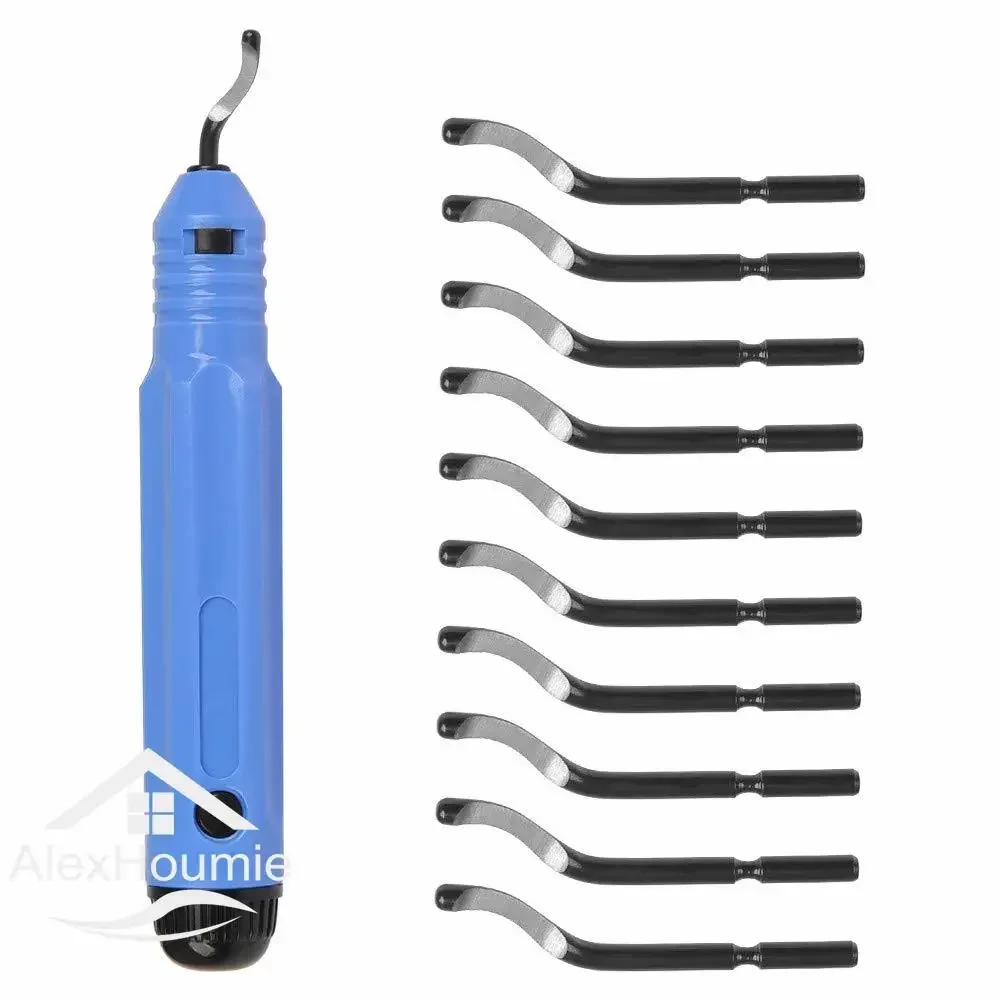
The NB1100 Rotary Deburring Tool, paired with BS1010 HSS blades, is a specialized hand tool engineered for efficient material edge finishing across various substrates. This system targets professionals and hobbyists seeking to refine cut edges on wood, plastic, and soft metals, offering a precise alternative to abrasive methods. Its design emphasizes speed, volume, and cost-per-cut efficiency, positioning it as an essential upgrade for any workshop dealing with post-machining or fabrication cleanup.
The core of this deburring system lies in its M2 High-Speed Steel (HSS) blades. This material choice is not arbitrary; M2 HSS is a widely recognized standard in cutting tool manufacturing, known for its excellent wear resistance and ability to maintain a sharp edge even under moderate heat. The blades are further hardened to 63 HRC, a significant hardness rating that indicates superior durability and edge retention. This high hardness ensures the blades resist deformation and dulling, even when processing tougher plastics or hardwoods. The 40-degree cutting angle is a critical design element, optimized for aggressive material removal while still producing a clean, smooth finish. This angle allows the blade to shear material effectively, minimizing tearing or splintering, which is a common issue with less specialized Tools. Each blade measures 11mm in length with a 3.2mm diameter shank, designed for secure fitment within the NB1100 handle.
For the user, these material specifications translate directly into tangible benefits. The M2 HSS construction means fewer blade changes and more consistent performance over extended periods. Imagine working through a large batch of acrylic panels; the tool maintains its cutting efficacy, reducing downtime spent on sharpening or replacing blades. This consistency is vital for maintaining production quotas and ensuring uniform quality across all finished pieces. The 63 HRC hardness also contributes to a longer lifespan for each blade, providing a better cost-per-cut over time. This is a significant advantage over cheaper, softer steel blades that quickly lose their edge and require frequent replacement, adding to operational costs and project delays.
Compared to generic utility knife blades or even standard carbon steel deburring tools, the M2 HSS BS1010 blades offer a substantial upgrade. Typical utility blades, while sharp initially, are not designed for the lateral forces and abrasive nature of deburring. They dull quickly and can chip, leading to inconsistent results and potential safety hazards. Less specialized deburring tools often use lower-grade steel, which might be adequate for very soft materials but struggles with anything denser than thin plastic. The NB1100 system, with its robust blade material and hardness, provides a professional-grade solution that outperforms these standard alternatives in both longevity and finish quality. It's a tool built for sustained performance, not just occasional light use.
The NB1100 handle is designed for comfortable and secure grip, crucial for precision work. Its blue, ribbed plastic body provides tactile feedback and prevents slippage during use. The internal mechanism allows for quick blade changes and secure retention, ensuring the blade remains stable during aggressive deburring actions. A key feature is the ability to store multiple blades within the handle itself, enhancing portability and reducing the likelihood of misplacing spare blades. This integrated storage is a thoughtful design choice that streamlines workflow, especially when moving between different workstations or tackling various projects.
In practical application, the ergonomic handle minimizes hand fatigue, allowing for longer periods of continuous work. Consider a scenario where an operator needs to deburr hundreds of small plastic components. A poorly designed handle would quickly lead to discomfort and reduced productivity. The NB1100's design ensures that the user maintains control and comfort, directly impacting the volume of work that can be completed efficiently. The quick-change blade system also means less time fumbling with tools and more time cutting. This efficiency is critical in any production environment where time is money. Blade changes are fast.
Many entry-level deburring tools feature basic, often uncomfortable handles that offer little in terms of grip or blade storage. These simpler designs often require external blade cases, which can be cumbersome and slow down the workflow. The NB1100's integrated storage and ergonomic form factor represent a significant improvement, offering a more professional and user-friendly experience. It's an upgrade that enhances both comfort and operational speed, making it a more effective tool for high-volume tasks. The handle is a key differentiator.
The deburring tool is explicitly designed for versatility, capable of processing a range of materials including wood and plastic, as indicated by its usage diagrams. The specific geometry of the BS1010 blade, with its curved profile and 40-degree cutting angle, makes it adept at removing burrs from both straight and curved edges. This adaptability is crucial for workshops that handle diverse projects, from woodworking to plastic fabrication. The tool's ability to 'peel' plastic suggests a clean, shaving action that leaves a smooth surface, rather than a ragged or torn edge.
This broad material compatibility means a single tool can address multiple finishing needs, simplifying tool inventory and reducing the need for specialized equipment. If a project involves both cutting plywood and shaping acrylic, this deburring tool can handle the edge finishing for both. This capability saves time and effort, as operators don't need to switch between different tools or learn new techniques for each material. The consistent performance across different substrates ensures a high-quality finish regardless of the workpiece. It handles many tasks.
Compared to single-purpose deburring tools, which might only excel at metal deburring or specific plastic types, the NB1100 system offers greater utility. Sandpaper or files, while versatile, are often slower and less precise for edge work, especially on intricate shapes. They also tend to create dust and debris, requiring additional cleanup. The NB1100 provides a cleaner, faster, and more precise method for edge finishing, making it a superior choice for workshops that value efficiency and quality across a spectrum of materials. It's a tool that adapts to the job.
The M2 HSS blades, with their 63 HRC hardness, are built for longevity. However, even the toughest blades require proper care to maximize their lifespan. The ability to resharpen these blades, though not explicitly detailed, is an inherent characteristic of HSS tools, provided the user has the appropriate sharpening equipment. This potential for resharpening further extends the economic value of the system, reducing the long-term cost of ownership. The robust construction of both the handle and blades suggests a tool designed for sustained use in demanding environments.
For the user, understanding the maintenance requirements of HSS blades is key to getting the most out of this tool. Regular cleaning to remove accumulated material debris prevents premature dulling and maintains cutting efficiency. Storing the blades properly, ideally within the handle or a protective case, prevents accidental damage to the cutting edge. This proactive approach to maintenance ensures the tool remains in optimal condition, ready for the next task. Proper care extends life.
Unlike disposable blades found in many craft knives, the investment in M2 HSS blades implies a commitment to durability and performance. While initial cost might be slightly higher than basic alternatives, the extended lifespan and potential for resharpening offer a superior return on investment. This deburring tool is not a throwaway item; it's a workshop staple designed to provide reliable service for years, provided it receives appropriate care. It's a long-term asset.
Considering the robust construction, high-quality M2 HSS blades, and ergonomic design, the NB1100 Rotary Deburring Tool presents a compelling value proposition. The inclusion of 10 BS1010 blades in a single package offers significant bulk pricing advantage, reducing the per-blade cost and ensuring a ready supply for continuous work. This bulk offering is particularly beneficial for high-volume users or workshops that frequently engage in deburring tasks, minimizing the need for frequent reordering and ensuring uninterrupted workflow. The tool's efficiency in material removal and its ability to produce clean finishes contribute to overall project quality and reduced rework.
From an economic standpoint, the initial investment in this deburring system is quickly recouped through increased productivity and reduced material waste. The precise cutting action of the blades minimizes the risk of damaging the workpiece, which can lead to costly rejections. Furthermore, the speed at which burrs can be removed translates into faster project completion times, allowing for more projects to be undertaken. This efficiency directly impacts profitability for professional users. It's an investment in productivity.
Compared to relying on less efficient methods like manual filing or sanding, which are labor-intensive and often produce inconsistent results, this deburring tool offers a clear advantage. The combination of durable blades, ergonomic handle, and bulk packaging makes it a cost-effective solution for any workshop aiming to optimize its finishing processes. It's an upgrade that pays for itself through enhanced efficiency, superior results, and long-term reliability. Imagine the satisfaction of consistently producing perfectly finished edges, project after project, knowing your tools are up to the task and your workflow is optimized for maximum output. This deburring system empowers precision and efficiency, allowing you to focus on the craftsmanship rather than fighting with your tools.
Precision Engineering for Clean Finishes
The core of this deburring system lies in its M2 High-Speed Steel (HSS) blades. This material choice is not arbitrary; M2 HSS is a widely recognized standard in cutting tool manufacturing, known for its excellent wear resistance and ability to maintain a sharp edge even under moderate heat. The blades are further hardened to 63 HRC, a significant hardness rating that indicates superior durability and edge retention. This high hardness ensures the blades resist deformation and dulling, even when processing tougher plastics or hardwoods. The 40-degree cutting angle is a critical design element, optimized for aggressive material removal while still producing a clean, smooth finish. This angle allows the blade to shear material effectively, minimizing tearing or splintering, which is a common issue with less specialized Tools. Each blade measures 11mm in length with a 3.2mm diameter shank, designed for secure fitment within the NB1100 handle.
For the user, these material specifications translate directly into tangible benefits. The M2 HSS construction means fewer blade changes and more consistent performance over extended periods. Imagine working through a large batch of acrylic panels; the tool maintains its cutting efficacy, reducing downtime spent on sharpening or replacing blades. This consistency is vital for maintaining production quotas and ensuring uniform quality across all finished pieces. The 63 HRC hardness also contributes to a longer lifespan for each blade, providing a better cost-per-cut over time. This is a significant advantage over cheaper, softer steel blades that quickly lose their edge and require frequent replacement, adding to operational costs and project delays.
Compared to generic utility knife blades or even standard carbon steel deburring tools, the M2 HSS BS1010 blades offer a substantial upgrade. Typical utility blades, while sharp initially, are not designed for the lateral forces and abrasive nature of deburring. They dull quickly and can chip, leading to inconsistent results and potential safety hazards. Less specialized deburring tools often use lower-grade steel, which might be adequate for very soft materials but struggles with anything denser than thin plastic. The NB1100 system, with its robust blade material and hardness, provides a professional-grade solution that outperforms these standard alternatives in both longevity and finish quality. It's a tool built for sustained performance, not just occasional light use.
Ergonomics and Operational Efficiency
The NB1100 handle is designed for comfortable and secure grip, crucial for precision work. Its blue, ribbed plastic body provides tactile feedback and prevents slippage during use. The internal mechanism allows for quick blade changes and secure retention, ensuring the blade remains stable during aggressive deburring actions. A key feature is the ability to store multiple blades within the handle itself, enhancing portability and reducing the likelihood of misplacing spare blades. This integrated storage is a thoughtful design choice that streamlines workflow, especially when moving between different workstations or tackling various projects.
In practical application, the ergonomic handle minimizes hand fatigue, allowing for longer periods of continuous work. Consider a scenario where an operator needs to deburr hundreds of small plastic components. A poorly designed handle would quickly lead to discomfort and reduced productivity. The NB1100's design ensures that the user maintains control and comfort, directly impacting the volume of work that can be completed efficiently. The quick-change blade system also means less time fumbling with tools and more time cutting. This efficiency is critical in any production environment where time is money. Blade changes are fast.
Many entry-level deburring tools feature basic, often uncomfortable handles that offer little in terms of grip or blade storage. These simpler designs often require external blade cases, which can be cumbersome and slow down the workflow. The NB1100's integrated storage and ergonomic form factor represent a significant improvement, offering a more professional and user-friendly experience. It's an upgrade that enhances both comfort and operational speed, making it a more effective tool for high-volume tasks. The handle is a key differentiator.
Versatility Across Materials
The deburring tool is explicitly designed for versatility, capable of processing a range of materials including wood and plastic, as indicated by its usage diagrams. The specific geometry of the BS1010 blade, with its curved profile and 40-degree cutting angle, makes it adept at removing burrs from both straight and curved edges. This adaptability is crucial for workshops that handle diverse projects, from woodworking to plastic fabrication. The tool's ability to 'peel' plastic suggests a clean, shaving action that leaves a smooth surface, rather than a ragged or torn edge.
This broad material compatibility means a single tool can address multiple finishing needs, simplifying tool inventory and reducing the need for specialized equipment. If a project involves both cutting plywood and shaping acrylic, this deburring tool can handle the edge finishing for both. This capability saves time and effort, as operators don't need to switch between different tools or learn new techniques for each material. The consistent performance across different substrates ensures a high-quality finish regardless of the workpiece. It handles many tasks.
Compared to single-purpose deburring tools, which might only excel at metal deburring or specific plastic types, the NB1100 system offers greater utility. Sandpaper or files, while versatile, are often slower and less precise for edge work, especially on intricate shapes. They also tend to create dust and debris, requiring additional cleanup. The NB1100 provides a cleaner, faster, and more precise method for edge finishing, making it a superior choice for workshops that value efficiency and quality across a spectrum of materials. It's a tool that adapts to the job.
Longevity and Maintenance Considerations
The M2 HSS blades, with their 63 HRC hardness, are built for longevity. However, even the toughest blades require proper care to maximize their lifespan. The ability to resharpen these blades, though not explicitly detailed, is an inherent characteristic of HSS tools, provided the user has the appropriate sharpening equipment. This potential for resharpening further extends the economic value of the system, reducing the long-term cost of ownership. The robust construction of both the handle and blades suggests a tool designed for sustained use in demanding environments.
For the user, understanding the maintenance requirements of HSS blades is key to getting the most out of this tool. Regular cleaning to remove accumulated material debris prevents premature dulling and maintains cutting efficiency. Storing the blades properly, ideally within the handle or a protective case, prevents accidental damage to the cutting edge. This proactive approach to maintenance ensures the tool remains in optimal condition, ready for the next task. Proper care extends life.
Unlike disposable blades found in many craft knives, the investment in M2 HSS blades implies a commitment to durability and performance. While initial cost might be slightly higher than basic alternatives, the extended lifespan and potential for resharpening offer a superior return on investment. This deburring tool is not a throwaway item; it's a workshop staple designed to provide reliable service for years, provided it receives appropriate care. It's a long-term asset.
Value Proposition and Investment
Considering the robust construction, high-quality M2 HSS blades, and ergonomic design, the NB1100 Rotary Deburring Tool presents a compelling value proposition. The inclusion of 10 BS1010 blades in a single package offers significant bulk pricing advantage, reducing the per-blade cost and ensuring a ready supply for continuous work. This bulk offering is particularly beneficial for high-volume users or workshops that frequently engage in deburring tasks, minimizing the need for frequent reordering and ensuring uninterrupted workflow. The tool's efficiency in material removal and its ability to produce clean finishes contribute to overall project quality and reduced rework.
From an economic standpoint, the initial investment in this deburring system is quickly recouped through increased productivity and reduced material waste. The precise cutting action of the blades minimizes the risk of damaging the workpiece, which can lead to costly rejections. Furthermore, the speed at which burrs can be removed translates into faster project completion times, allowing for more projects to be undertaken. This efficiency directly impacts profitability for professional users. It's an investment in productivity.
Compared to relying on less efficient methods like manual filing or sanding, which are labor-intensive and often produce inconsistent results, this deburring tool offers a clear advantage. The combination of durable blades, ergonomic handle, and bulk packaging makes it a cost-effective solution for any workshop aiming to optimize its finishing processes. It's an upgrade that pays for itself through enhanced efficiency, superior results, and long-term reliability. Imagine the satisfaction of consistently producing perfectly finished edges, project after project, knowing your tools are up to the task and your workflow is optimized for maximum output. This deburring system empowers precision and efficiency, allowing you to focus on the craftsmanship rather than fighting with your tools.