N Female to IPX/UFL RG178 Coaxial Pigtail Cable
Official Store Deal
Expert Analysis Overview
The N Female to IPX/UFL RG178 Coaxial Pigtail Cable is a specialized interconnect designed for precise radio frequency (RF) signal routing within compact electronic assemblies. This assembly targets users requiring a reliable, low-profile connection between an external N-type antenna or device and an internal IPX/UFL port, commonly found on PCI Wifi cards, embedded modules, and wireless routers. Its utility lies in bridging the gap between robust external connectivity and delicate internal RF components, ensuring signal integrity in space-constrained environments.
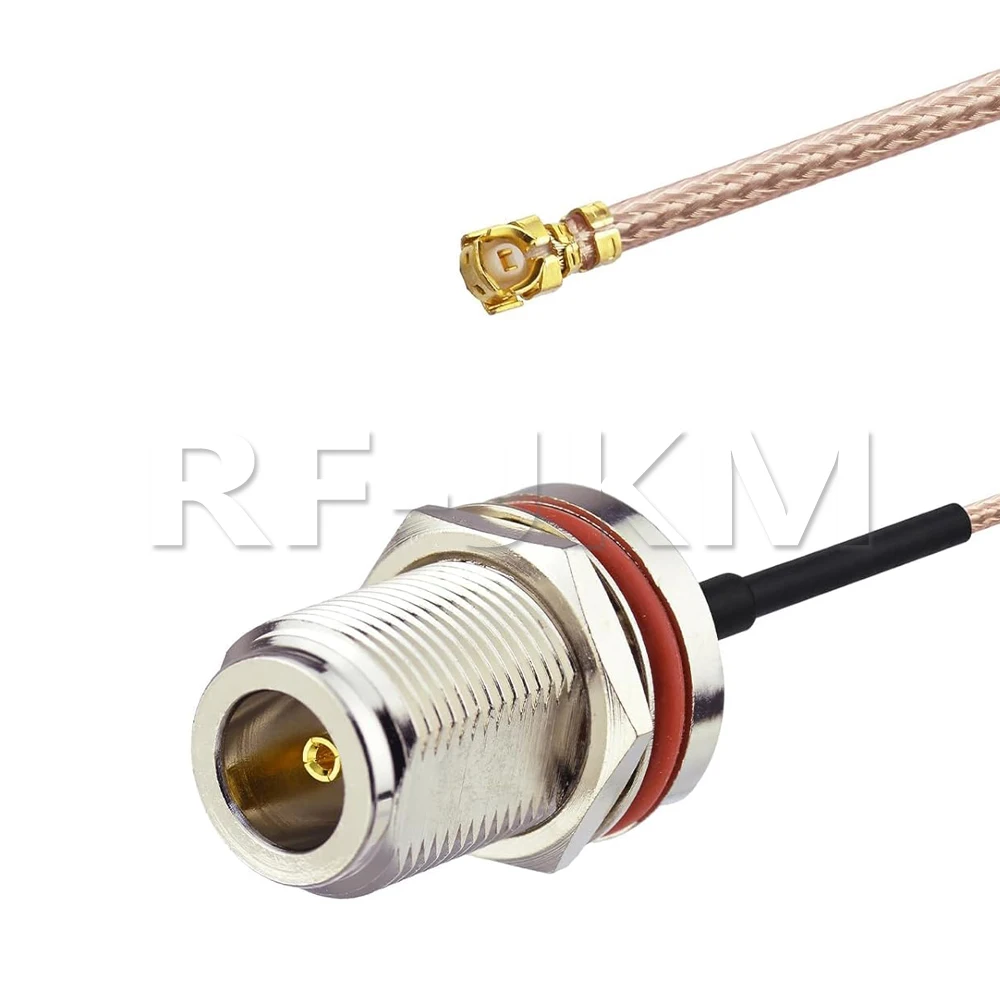
This coaxial pigtail cable features an N Female bulkhead connector on one end and an IPX/UFL connector on the other, linked by an RG178 coaxial cable. The N-type connector is a threaded, medium-sized RF connector known for its robust mechanical stability and excellent electrical performance up to 11 GHz, making it suitable for outdoor and industrial applications where environmental resilience is critical. The IPX/UFL connector, conversely, is a miniature surface-mount connector designed for high-frequency applications in tight spaces, typically found on printed circuit boards (PCBs) for internal antenna connections.
The combination of these connectors facilitates a critical interface. It allows for the integration of high-gain external antennas, which often utilize N-type terminations, with internal wireless modules that are designed for compact IPX/UFL connections. This setup is crucial for optimizing wireless performance in devices where the internal antenna might be insufficient or where a directional external antenna is required for extended range or focused signal transmission. The cable acts as a vital conduit, translating the robust external connection to the delicate internal circuitry without significant signal degradation.
Unlike generic adapter cables that might compromise on impedance matching or material quality, this specific assembly is engineered for a 50-ohm impedance, which is standard for most RF communication systems. Maintaining consistent impedance across the entire signal path is paramount for minimizing signal reflections (VSWR) and maximizing power transfer, thereby ensuring the wireless system operates at its peak efficiency. The careful selection of RG178 cable further supports this, providing a balance between flexibility and electrical characteristics for its intended short-run applications.
The visible construction of the N Female bulkhead connector indicates a durable metal housing, likely nickel-plated brass, which provides excellent corrosion resistance and mechanical strength. The threaded coupling mechanism of the N-type connector ensures a secure, vibration-resistant connection, crucial for maintaining signal continuity in dynamic or exposed environments. A sealing washer, visible as a red ring, suggests an attempt at environmental sealing, which is a critical feature for outdoor installations to prevent moisture ingress.
For an electrician, the quality of the terminal connections is paramount. The crimping or soldering of the RG178 cable to both the N-type and IPX/UFL connectors must be executed with high precision to prevent signal loss and ensure long-term reliability. Poorly terminated cables can introduce significant impedance mismatches, leading to increased signal attenuation and reduced wireless performance. The visual evidence suggests a factory-assembled pigtail, which typically offers a higher degree of consistency and quality control compared to field-assembled alternatives.
Compared to standard, unsealed RF connectors, the bulkhead design with a sealing washer offers superior protection against environmental factors. This is a significant upgrade for applications exposed to varying weather conditions, such as outdoor access points or remote monitoring stations. The robust N-type interface provides a dependable anchor point, preventing stress on the more fragile IPX/UFL connection on the PCB. This design consideration extends the operational lifespan of the entire wireless system.
The RG178 cable is a miniature coaxial cable known for its small diameter and flexibility, making it ideal for internal wiring within enclosures where space is limited. It features a silver-plated copper conductor, a PTFE (Polytetrafluoroethylene) dielectric, and a silver-plated copper braid shield, all encased in a FEP (Fluorinated Ethylene Propylene) jacket. The PTFE dielectric offers excellent high-frequency performance and temperature stability, while the silver plating on the conductor and braid improves conductivity and reduces signal loss at higher frequencies.
While RG178 offers excellent flexibility and a small footprint, its inherent attenuation is higher than larger diameter coaxial cables like RG58 or LMR-400, especially over longer distances. This characteristic makes it suitable for short pigtail applications, typically under 30cm, where the signal loss introduced by the cable itself is minimal and acceptable within the overall link budget. For instance, connecting an antenna directly to a PCI card within a computer case is an ideal application.
Unlike thicker, more rigid coaxial cables, the RG178's flexibility allows for easier routing and installation in confined spaces without putting undue stress on the connectors or the PCB. This is a critical advantage when working with compact embedded systems or when upgrading existing wireless modules. However, this flexibility comes with a trade-off in power handling capability and overall signal loss for extended runs, reinforcing its role as a specialized short-distance interconnect.
Proper installation of this pigtail cable is crucial for both performance and safety. The N Female bulkhead connector requires a mounting hole in the enclosure, secured with the provided nut. Ensuring a tight, secure fit prevents rotational movement and maintains the integrity of the ground connection. The IPX/UFL connector simply snaps onto its mating receptacle on the PCB, requiring careful alignment and gentle pressure to avoid damaging the delicate connector or the PCB traces.
When working with RF components, especially those connected to external antennas, it is essential to consider potential static discharge and lightning protection. While this cable itself does not provide protection, its proper integration into a system with surge arrestors and grounding practices is vital. An electrician must ensure that the entire system, including the external antenna and associated cabling, adheres to local electrical codes and safety standards to prevent electrical hazards or equipment damage from environmental events.
Compared to direct soldering of antenna wires to a PCB, which can be prone to cold joints and mechanical failure, using a pre-assembled pigtail with standard connectors offers a more reliable and serviceable solution. It simplifies maintenance and upgrades, allowing for easy replacement of either the antenna or the wireless module without requiring specialized soldering skills. This modular approach enhances the longevity and adaptability of the wireless system.
This N Female to IPX/UFL RG178 cable offers significant value for specific niche applications. Its primary benefit is enabling the use of external, higher-performance N-type antennas with internal wireless modules that are designed for compact IPX/UFL connections. This capability is indispensable for improving wireless range, signal stability, and overall network performance in scenarios where the built-in antenna is inadequate or where a specific antenna pattern is required.
Consider a scenario where a wireless router needs to provide coverage over a larger area or penetrate obstacles more effectively. By utilizing this pigtail, a high-gain directional N-type antenna can be connected, significantly boosting the router's effective radiated power and reception sensitivity. This upgrade can transform a standard home router into a more robust solution for larger properties or challenging RF environments, extending the useful life and capability of existing hardware.
Unlike relying solely on internal antennas, which are often limited by their size and placement within a device, this pigtail provides the flexibility to position an external antenna optimally. This allows for strategic placement to minimize interference, maximize line-of-sight, and achieve superior signal quality. The investment in such a specialized cable assembly translates directly into enhanced wireless reliability and performance, preventing frustrating signal drops and slow data rates that plague systems with suboptimal antenna configurations.
Imagine a seamless, high-speed wireless connection extending throughout your property, free from dead zones and intermittent drops. This N Female to IPX/UFL RG178 Coaxial Pigtail Cable is the critical link that enables such a robust wireless experience, transforming your network's capabilities by providing a reliable conduit for superior external antenna performance. It ensures your wireless devices operate at their full potential, delivering consistent connectivity where it matters most.
Precision Signal Transmission
This coaxial pigtail cable features an N Female bulkhead connector on one end and an IPX/UFL connector on the other, linked by an RG178 coaxial cable. The N-type connector is a threaded, medium-sized RF connector known for its robust mechanical stability and excellent electrical performance up to 11 GHz, making it suitable for outdoor and industrial applications where environmental resilience is critical. The IPX/UFL connector, conversely, is a miniature surface-mount connector designed for high-frequency applications in tight spaces, typically found on printed circuit boards (PCBs) for internal antenna connections.
The combination of these connectors facilitates a critical interface. It allows for the integration of high-gain external antennas, which often utilize N-type terminations, with internal wireless modules that are designed for compact IPX/UFL connections. This setup is crucial for optimizing wireless performance in devices where the internal antenna might be insufficient or where a directional external antenna is required for extended range or focused signal transmission. The cable acts as a vital conduit, translating the robust external connection to the delicate internal circuitry without significant signal degradation.
Unlike generic adapter cables that might compromise on impedance matching or material quality, this specific assembly is engineered for a 50-ohm impedance, which is standard for most RF communication systems. Maintaining consistent impedance across the entire signal path is paramount for minimizing signal reflections (VSWR) and maximizing power transfer, thereby ensuring the wireless system operates at its peak efficiency. The careful selection of RG178 cable further supports this, providing a balance between flexibility and electrical characteristics for its intended short-run applications.
The Integrity of Connection
The visible construction of the N Female bulkhead connector indicates a durable metal housing, likely nickel-plated brass, which provides excellent corrosion resistance and mechanical strength. The threaded coupling mechanism of the N-type connector ensures a secure, vibration-resistant connection, crucial for maintaining signal continuity in dynamic or exposed environments. A sealing washer, visible as a red ring, suggests an attempt at environmental sealing, which is a critical feature for outdoor installations to prevent moisture ingress.
For an electrician, the quality of the terminal connections is paramount. The crimping or soldering of the RG178 cable to both the N-type and IPX/UFL connectors must be executed with high precision to prevent signal loss and ensure long-term reliability. Poorly terminated cables can introduce significant impedance mismatches, leading to increased signal attenuation and reduced wireless performance. The visual evidence suggests a factory-assembled pigtail, which typically offers a higher degree of consistency and quality control compared to field-assembled alternatives.
Compared to standard, unsealed RF connectors, the bulkhead design with a sealing washer offers superior protection against environmental factors. This is a significant upgrade for applications exposed to varying weather conditions, such as outdoor access points or remote monitoring stations. The robust N-type interface provides a dependable anchor point, preventing stress on the more fragile IPX/UFL connection on the PCB. This design consideration extends the operational lifespan of the entire wireless system.
Cable Characteristics and Performance
The RG178 cable is a miniature coaxial cable known for its small diameter and flexibility, making it ideal for internal wiring within enclosures where space is limited. It features a silver-plated copper conductor, a PTFE (Polytetrafluoroethylene) dielectric, and a silver-plated copper braid shield, all encased in a FEP (Fluorinated Ethylene Propylene) jacket. The PTFE dielectric offers excellent high-frequency performance and temperature stability, while the silver plating on the conductor and braid improves conductivity and reduces signal loss at higher frequencies.
While RG178 offers excellent flexibility and a small footprint, its inherent attenuation is higher than larger diameter coaxial cables like RG58 or LMR-400, especially over longer distances. This characteristic makes it suitable for short pigtail applications, typically under 30cm, where the signal loss introduced by the cable itself is minimal and acceptable within the overall link budget. For instance, connecting an antenna directly to a PCI card within a computer case is an ideal application.
Unlike thicker, more rigid coaxial cables, the RG178's flexibility allows for easier routing and installation in confined spaces without putting undue stress on the connectors or the PCB. This is a critical advantage when working with compact embedded systems or when upgrading existing wireless modules. However, this flexibility comes with a trade-off in power handling capability and overall signal loss for extended runs, reinforcing its role as a specialized short-distance interconnect.
Installation and Safety Considerations
Proper installation of this pigtail cable is crucial for both performance and safety. The N Female bulkhead connector requires a mounting hole in the enclosure, secured with the provided nut. Ensuring a tight, secure fit prevents rotational movement and maintains the integrity of the ground connection. The IPX/UFL connector simply snaps onto its mating receptacle on the PCB, requiring careful alignment and gentle pressure to avoid damaging the delicate connector or the PCB traces.
When working with RF components, especially those connected to external antennas, it is essential to consider potential static discharge and lightning protection. While this cable itself does not provide protection, its proper integration into a system with surge arrestors and grounding practices is vital. An electrician must ensure that the entire system, including the external antenna and associated cabling, adheres to local electrical codes and safety standards to prevent electrical hazards or equipment damage from environmental events.
Compared to direct soldering of antenna wires to a PCB, which can be prone to cold joints and mechanical failure, using a pre-assembled pigtail with standard connectors offers a more reliable and serviceable solution. It simplifies maintenance and upgrades, allowing for easy replacement of either the antenna or the wireless module without requiring specialized soldering skills. This modular approach enhances the longevity and adaptability of the wireless system.
Value Proposition and Application Scenarios
This N Female to IPX/UFL RG178 cable offers significant value for specific niche applications. Its primary benefit is enabling the use of external, higher-performance N-type antennas with internal wireless modules that are designed for compact IPX/UFL connections. This capability is indispensable for improving wireless range, signal stability, and overall network performance in scenarios where the built-in antenna is inadequate or where a specific antenna pattern is required.
Consider a scenario where a wireless router needs to provide coverage over a larger area or penetrate obstacles more effectively. By utilizing this pigtail, a high-gain directional N-type antenna can be connected, significantly boosting the router's effective radiated power and reception sensitivity. This upgrade can transform a standard home router into a more robust solution for larger properties or challenging RF environments, extending the useful life and capability of existing hardware.
Unlike relying solely on internal antennas, which are often limited by their size and placement within a device, this pigtail provides the flexibility to position an external antenna optimally. This allows for strategic placement to minimize interference, maximize line-of-sight, and achieve superior signal quality. The investment in such a specialized cable assembly translates directly into enhanced wireless reliability and performance, preventing frustrating signal drops and slow data rates that plague systems with suboptimal antenna configurations.
Imagine a seamless, high-speed wireless connection extending throughout your property, free from dead zones and intermittent drops. This N Female to IPX/UFL RG178 Coaxial Pigtail Cable is the critical link that enables such a robust wireless experience, transforming your network's capabilities by providing a reliable conduit for superior external antenna performance. It ensures your wireless devices operate at their full potential, delivering consistent connectivity where it matters most.