Multi-Voltage Lithium & Lead-Acid Battery Charger (5.5x2.1mm/2.5mm)
Official Store Deal
Expert Analysis Overview
Power Delivery Architecture: A Versatile Charging Solution
The Multi-Voltage Lithium & Lead-Acid Battery Charger is a highly adaptable power solution engineered for electronics technicians and hobbyists managing diverse battery chemistries. This device addresses the common challenge of needing multiple dedicated chargers for various portable electronic devices. Its design prioritizes broad compatibility over specialized features, making it a practical addition to any workbench.Universal Input Voltage
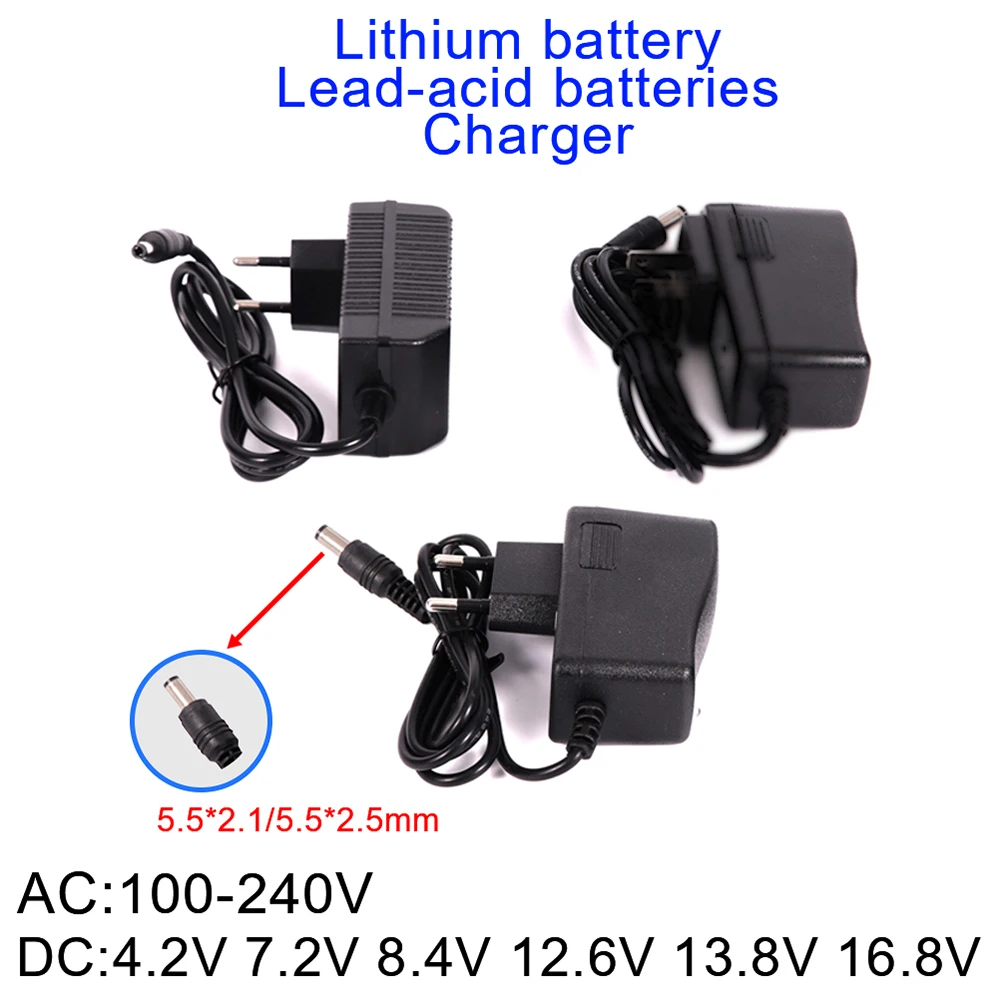
The charger specifies an input voltage range of AC 100-240V. This broad input capability ensures compatibility with electrical grids worldwide. Users can operate the unit in diverse geographical locations without needing a separate voltage converter. It works anywhere. Unlike region-specific power adapters, which often limit operation to 110V or 220V, this universal input design significantly enhances the charger's utility for international travel or varied operational environments. The internal power conversion circuitry is designed to handle fluctuations, providing a stable output.Output Versatility for Battery Chemistries
Multiple output voltage options are available, including DC 4.2V, 7.2V, 8.4V, 12.6V, 13.8V, and 16.8V. This extensive range supports common battery pack configurations for both Lithium-ion (Li-ion) and Lead-acid batteries. Li-ion cells typically charge to 4.2V per cell, meaning this charger can support 1-cell (4.2V), 2-cell (8.4V), 3-cell (12.6V), and 4-cell (16.8V) Li-ion packs. Lead-acid batteries, often found in 6V or 12V configurations, benefit from the 7.2V and 13.8V options, which are suitable float or absorption voltages for 6V and 12V systems respectively. This covers many applications. The ability to select the precise voltage for different battery types prevents overcharging or undercharging, which can degrade battery life or pose safety risks. Compared to single-voltage chargers, this unit offers a significant upgrade in utility, reducing the need for multiple specialized devices and streamlining the charging process for a varied inventory of battery-powered equipment.Current Delivery Options
Output current options include 1A, 2A, and 3A, depending on the specific model selected. This allows for flexibility in charging speed. A 1A output is suitable for smaller battery packs or for a slower, gentler charge cycle that can extend battery longevity. Higher currents like 2A or 3A facilitate faster charging for larger capacity battery packs, reducing downtime for critical equipment. Speed matters. The choice of current directly impacts the charge time; a 2000mAh battery will charge twice as fast with a 2A charger compared to a 1A unit. This adaptability contrasts sharply with many generic chargers that offer only a single, fixed current output, often leading to either excessively long charge times or potentially overstressing smaller batteries.Connector Standards and Physical Construction
DC Barrel Connector
The primary DC output connector is a 5.5mm x 2.1mm barrel plug, with some variants also supporting 5.5mm x 2.5mm. This is a widely adopted standard in low-voltage DC applications. The prevalence of this connector type ensures compatibility with a vast array of electronic devices, from LED strips to portable audio equipment and various battery packs. A common connector simplifies connections. The physical connection point is critical for reliable power transfer; a snug fit minimizes resistance and prevents intermittent power delivery. Unlike proprietary connectors that limit interoperability, the use of a standard barrel plug significantly broadens the charger's application scope, making it a more universal tool for electronics enthusiasts.Cable Integrity and Strain Relief
The integrated DC cable length is approximately 100cm. This provides a reasonable reach for most desktop or workbench charging scenarios. The cable appears to be of standard gauge for its current ratings. Visual inspection of the images suggests adequate strain relief at both the adapter body and the DC barrel plug. Good strain relief is crucial. This design feature helps to prevent internal wire breakage at points of high mechanical stress, which is a common failure mode for power adapters. Without proper strain relief, repeated bending and pulling can quickly compromise the cable's integrity, leading to premature failure. The visible construction implies a focus on practical durability for everyday use.Adapter Housing and Heat Dissipation
The adapter housing is constructed from a black plastic material. This material choice is typical for power adapters, offering electrical insulation and a degree of impact resistance. The compact form factor is evident across the various plug types (US, EU). Compactness is a benefit. While specific heat dissipation features like vents are not prominently visible, the design relies on the plastic casing and internal component spacing to manage thermal loads. For units operating at 1A or 2A, passive cooling is generally sufficient. However, for the 3A models, internal thermal management becomes more critical to ensure long-term reliability and prevent component degradation. The overall aesthetic is utilitarian, prioritizing function over elaborate design.Internal Protection and Operational Safety
Integrated Safety Mechanisms
Specific models, such as the 8.4V 2A EU/US plug variants, advertise protection features including overload, over-voltage, and over-temperature. These are fundamental safety mechanisms for any power supply. Overload protection prevents damage to the charger and connected device if too much current is drawn. Over-voltage protection safeguards against voltage spikes that could harm sensitive electronics. Over-temperature protection prevents thermal runaway. These protections are essential. The inclusion of these features indicates a basic level of engineering consideration for safe operation, mitigating common electrical hazards. While not as sophisticated as multi-stage charging algorithms with cell balancing found in high-end battery management systems, these core protections offer a significant advantage over unregulated power supplies, enhancing both device and user safety.Reliability of Connections
From an electronics repair perspective, the long-term reliability of power connections is paramount. The fixed cable design, while potentially limiting in terms of modularity, often results in a more robust connection than detachable cable systems that can introduce points of failure at the connector interface. The barrel connector itself, when properly seated, provides a secure mechanical and electrical contact. Consistent power delivery is key. The quality of internal soldering points, though not visible, is critical for sustained performance. Assuming standard manufacturing practices for this price point, the connections should hold up under typical usage, provided the cables are not subjected to excessive bending or pulling forces. Regular inspection of the cable and connector for signs of wear is always recommended to ensure optimal signal integrity and prevent potential shorts.Value Proposition and Target Audience
Cost-Effectiveness for Diverse Needs
This charger offers a highly cost-effective solution for individuals or small businesses that need to power or charge a variety of devices with different battery requirements. Instead of investing in multiple single-purpose chargers, this versatile unit consolidates charging capabilities. It saves money. The ability to handle both Lithium-ion and Lead-acid chemistries across a range of voltages means a single purchase can address numerous power needs, providing excellent return on investment over time. This approach contrasts with the higher initial outlay and ongoing management of a collection of specialized chargers, making it an attractive option for budget-conscious users.Ideal for Hobbyists and Technicians
For hobbyists working with DIY electronics, RC models, or custom battery packs, this charger provides the necessary flexibility. Technicians repairing or testing various devices will also find its multi-voltage capability invaluable. It simplifies the toolkit. The straightforward operation and standard connector type make it easy to integrate into existing setups. The product is designed for those who understand battery chemistry basics and can correctly match the charger's output to their battery's requirements, offering a practical tool for everyday electronic tasks and repairs. It empowers users to maintain a wide array of battery-powered equipment efficiently.Imagine effortlessly maintaining all your battery-powered tools and gadgets with a single, reliable power source. This charger simplifies your workspace, eliminating cable clutter and the confusion of mismatched adapters. You will experience the convenience of universal charging, ensuring every device is ready when needed, without the hassle of searching for a specific charger. This is smart power management.