Multi-Pitch JST Style Male Wafer Connectors Assortment
Official Store Deal
Expert Analysis Overview
The Multi-Pitch JST Style Male Wafer Connectors Assortment is a remarkably versatile component kit designed for electronics hobbyists and solar energy enthusiasts who demand precision and adaptability in their circuit designs. This collection of male wafer connectors addresses a common challenge in prototyping and repair: the need for a wide array of pitch sizes and mounting orientations to interface with diverse printed circuit boards (PCBs) and modules. Unlike generic connector packs that often provide limited options, this assortment offers a comprehensive selection, crucial for building and maintaining efficient, self-sustaining energy systems. Its utility extends from custom solar charge controllers to intricate monitoring circuits, providing the foundational connections for reliable operation. This kit simplifies complex wiring.
This assortment stands out due to its extensive range of JST-style male wafer connectors, encompassing popular pitches such as SH1.0mm, JST1.25mm, ZH1.5mm, PH2.0mm, XH2.54mm, and VH3.96mm. These varying dimensions are critical for ensuring compatibility across a broad spectrum of microcontrollers, sensors, and power management modules commonly found in solar projects. The inclusion of multiple pitch sizes directly addresses the fragmentation often encountered when sourcing specific connectors for different components, which can lead to frustrating delays and compromised designs. A single kit can now support numerous project requirements. This saves valuable time.
The concept of "pitch" refers to the center-to-center distance between adjacent pins. In solar electronics, different components often adhere to specific connector standards. For example, a small solar charge controller might use a 1.0mm pitch connector for a temperature sensor, while a battery management system (BMS) might employ a 2.54mm pitch for cell balancing leads. Without a diverse selection, a hobbyist would need to purchase multiple, specialized connector packs, increasing both cost and complexity. This comprehensive kit streamlines the component acquisition process, allowing for more focus on the actual design and implementation of the solar system. It reduces procurement headaches. This ensures project continuity.
Compared to relying on a limited stock of connectors, which often forces design compromises or multiple procurement cycles, this comprehensive set provides immediate access to the right component. This reduces project delays and ensures that the most appropriate connector type is always available. The ability to quickly select the ideal connector for a given board layout or wiring direction significantly enhances the prototyping process, allowing for more rapid iteration and refinement of solar energy solutions. This accelerates development cycles. It fosters innovation.
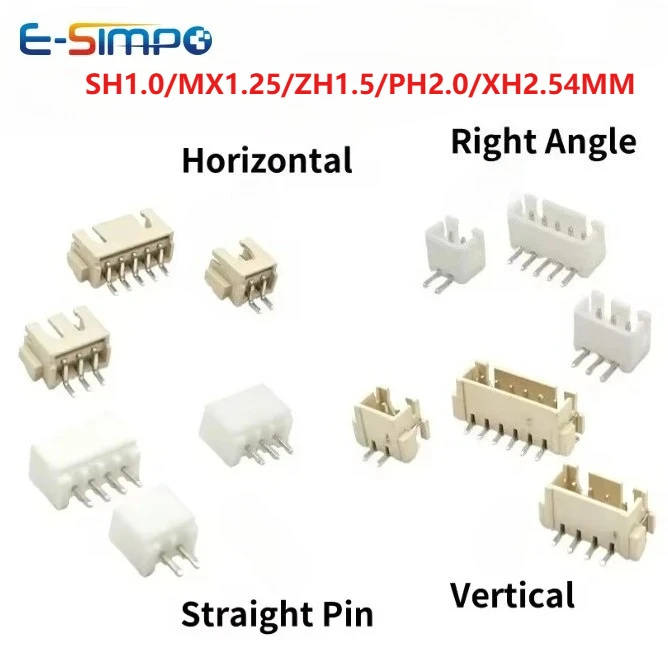
The physical configurations offered are equally diverse, featuring Straight DIP, Right Angle DIP, Vertical SMT, and Horizontal SMT options. This variety is not merely cosmetic; it dictates how the connector sits on the PCB and how wires are routed, which is paramount for space-constrained designs or enclosures. For instance, a right-angle SMT connector can facilitate a low-profile connection on a board, allowing for tighter stacking of PCBs or fitting into slim enclosures where vertical clearance is minimal. A vertical DIP, conversely, might be preferred for ease of access in a stacked PCB arrangement where cables need to exit upwards for easier connection or disconnection. Every orientation has its place.
DIP (Dual In-line Package) connectors are through-hole components, meaning their pins pass through drilled holes in the PCB and are soldered on the opposite side. This mounting method provides exceptional mechanical stability, making them suitable for connections that might experience frequent mating/unmating cycles or physical stress. In solar applications, where connections might be subject to vibrations from nearby equipment or handling during installation or maintenance, the robust nature of DIP connectors can be a significant advantage. They offer strong anchorage. This enhances durability.
SMT (Surface Mount Technology) connectors, by contrast, are soldered directly onto conductive pads on the surface of the PCB. This method allows for higher component density on the board, crucial for miniaturizing solar monitoring devices or compact charge controllers where every millimeter counts. The choice between vertical and horizontal SMT options provides further design freedom. A vertical SMT connector allows cables to exit perpendicularly from the board, optimizing space when components are arranged in rows or when a clean, upward cable path is desired. A horizontal SMT connector enables parallel cable routing, which can be critical for fitting boards into slim enclosures or managing airflow around heat-generating components. These options are vital. They optimize space.
When considering the typical alternatives, many hobbyist kits offer only a limited selection of either DIP or SMT, and often only one or two pitch sizes. This forces designers to adapt their PCBs to the available connectors, rather than selecting connectors that best suit their design. This assortment, by contrast, empowers the designer to choose the optimal connector for a specific board layout, leading to cleaner, more professional, and potentially more reliable builds. The ability to precisely match the connector to the application minimizes stress on solder joints and improves overall system longevity. This optimizes long-term performance. It reduces potential failure points.
The connectors are constructed with insulating plastic housings and metal pins. The plastic housing serves a crucial role in preventing short circuits between adjacent pins and providing mechanical support for the delicate metal contacts. The visual consistency across the different pitches and styles suggests a standardized manufacturing process, implying a consistent level of quality in the plastic molding. This consistency is vital for ensuring that the mating female connectors fit snugly and securely, maintaining electrical integrity over time. Good insulation is paramount. It protects the circuit.
The metal pins are the conduits for electrical signals and power. While the specific metal alloy is not detailed, the typical industry standard for such connectors involves tin-plated brass or phosphor bronze. These materials offer a good balance of conductivity, corrosion resistance, and mechanical strength, which are essential for reliable electrical connections. Tin plating, for instance, improves solderability and provides a protective layer against oxidation, ensuring stable contact resistance over the connector's lifespan. This minimizes signal degradation. The pins are designed to be easily soldered, whether through-hole or surface mount, facilitating straightforward assembly for users with varying levels of soldering experience. Proper soldering ensures a low-resistance connection, minimizing efficiency losses in DC circuits, which is a primary concern for solar energy systems. Every millivolt counts. This maximizes power transfer.
In contrast to lower-quality connectors that might use brittle plastics or easily corroded pin materials, this assortment appears to prioritize functional reliability. The robust nature of the plastic housings, as depicted, suggests they can withstand the typical handling and soldering temperatures encountered during assembly without deforming or melting. This prevents structural compromise. For solar applications, where connections might be subject to temperature cycling (e.g., day-night fluctuations), vibrations (e.g., from nearby machinery or wind), or even mild chemical exposure (e.g., from cleaning agents), the inherent stability of these materials contributes significantly to the long-term performance and safety of the system. This attention to material quality helps to prevent intermittent faults and ensures a stable power delivery path, critical for uninterrupted solar power. Reliability is key. It ensures system uptime.
For individuals engaged in building self-sustaining energy systems, the value of a comprehensive connector kit cannot be overstated. These connectors are fundamental building blocks for creating custom wiring harnesses, interfacing microcontrollers with sensors, or connecting various modules within a solar charge controller or battery management system. The ability to quickly prototype and adapt connections without waiting for specific parts streamlines the development process, allowing for more rapid innovation in off-grid solutions. This directly contributes to the goal of building efficient and reliable independent power sources. Rapid prototyping is essential. It fosters creativity.
The assortment's utility extends to the critical task of calculating efficiency losses within a solar setup. Every connection introduces a potential point of resistance, and while individual wafer connectors have minimal impact, a poorly chosen or improperly installed connector can lead to measurable power loss. For example, a loose or corroded pin connection can increase resistance, converting valuable electrical energy into unwanted heat, which can stress other components. By providing a range of high-quality, properly sized connectors, this kit helps minimize these losses. Using the correct pitch and mounting style ensures optimal contact and reduces the likelihood of resistance buildup, thereby preserving the maximum possible energy harvested from solar panels. This precision is vital for maximizing the return on investment in solar components. Efficiency drives value. It saves money.
Furthermore, these connectors are instrumental in verifying compatibility with existing solar setups. Many off-the-shelf solar components, such as small solar panels, charge controllers, or battery packs, utilize JST-style connectors for their internal wiring or external interfaces. Having a diverse selection of male wafers allows for easy integration of new modules or replacement of damaged connectors, ensuring seamless expansion or repair of an existing system. This compatibility reduces the need for custom adapters or extensive re-wiring, making system modifications more straightforward and less prone to errors. It simplifies upgrades. This enhances modularity.
The assembly process for these wafer connectors typically involves soldering them onto a printed circuit board. For DIP connectors, this means inserting the pins through the designated holes and soldering them from the underside of the board. This method creates a strong mechanical bond. It is a time-tested technique. For SMT connectors, the process requires careful alignment and soldering onto surface pads, often benefiting from solder paste and reflow techniques for mass production, though hand soldering is common for hobbyists. Precision is key, especially with the smaller pitch sizes, to avoid solder bridges between pins. A clean soldering iron tip and appropriate flux are essential for creating strong, reliable joints. Patience is a virtue. Good tools help.
Maintenance primarily revolves around ensuring the integrity of the soldered connections and the cleanliness of the contacts. In solar applications, where equipment might be exposed to dust, humidity, or even insect ingress, periodic inspection of connections can prevent long-term issues. Loose connections or corroded pins can lead to increased resistance, resulting in power loss and potential overheating, which can degrade component lifespan and even pose fire risks. The plastic housings are generally robust, but care should be taken to avoid excessive force when mating and unmating connectors, as this can bend pins or crack the housing. Gentle handling extends life. Proper care prevents damage.
Compared to crimp-style connectors that require specialized tools for wire termination, these wafer connectors simplify the board-side connection. While the corresponding female housings will require crimping, the male wafer itself provides a direct, solderable interface to the PCB. This distinction allows for more flexible design choices, enabling the creation of custom cable lengths and configurations as needed for specific solar projects, rather than being limited by pre-made cable assemblies. The focus remains on robust, board-level integration, offering a cleaner and more permanent solution for internal wiring within solar devices. This provides design freedom. It streamlines custom builds.
Acquiring a 50-piece assortment of these connectors at a competitive price point offers a significant economical advantage for both hobbyists and small-scale developers. Rather than purchasing individual bags of specific connectors, which can quickly accumulate costs and lead to excess inventory of unused types, this kit provides a balanced mix. This approach minimizes upfront investment while maximizing the available options for various projects. The cost-per-connector becomes exceptionally low, making experimentation and iteration more financially viable. This is truly cost-effective. It supports exploration.
This value proposition is particularly relevant for those who frequently prototype different solar energy circuits, from micro-inverters to battery charge controllers, or even small-scale solar-powered IoT devices. The ability to grab the exact connector needed without a separate order saves both time and shipping costs, which can quickly add up for specialized components. It supports a "maker" mentality, encouraging rapid development and testing without the friction of component scarcity. This strategic stocking of common components is a smart investment for any serious electronics workbench, ensuring that project momentum is maintained. Avoid delays. Maintain productivity.
Moreover, the bulk purchase helps to mitigate the common frustration of running out of a specific connector type mid-project. Such interruptions can derail momentum and add unforeseen delays, potentially costing more in lost time than the components themselves. By providing a diverse stock, this assortment acts as a preventative measure against these common project pitfalls, ensuring that the focus remains on innovation and successful project completion. It is a foundational kit that pays dividends in convenience and project continuity, allowing solar enthusiasts to push the boundaries of their designs. This kit is indispensable. It's a smart investment.
Imagine a workbench where every component finds its perfect mate, where custom solar circuits come to life with seamless, reliable connections, and where the frustration of incompatible parts is a distant memory. This comprehensive assortment of JST-style male wafer connectors empowers you to build, modify, and expand your solar energy systems with unparalleled flexibility. Envision effortlessly integrating new sensors into your charge controller, designing compact power distribution boards for off-grid lighting, or repairing existing modules with the exact connector required. This kit ensures that your focus remains on the innovation and efficiency of your solar projects, not on sourcing elusive components. It's about bringing your sustainable energy visions to fruition with confidence and precision.
The Foundation of Flexible Solar System Integration
This assortment stands out due to its extensive range of JST-style male wafer connectors, encompassing popular pitches such as SH1.0mm, JST1.25mm, ZH1.5mm, PH2.0mm, XH2.54mm, and VH3.96mm. These varying dimensions are critical for ensuring compatibility across a broad spectrum of microcontrollers, sensors, and power management modules commonly found in solar projects. The inclusion of multiple pitch sizes directly addresses the fragmentation often encountered when sourcing specific connectors for different components, which can lead to frustrating delays and compromised designs. A single kit can now support numerous project requirements. This saves valuable time.
The concept of "pitch" refers to the center-to-center distance between adjacent pins. In solar electronics, different components often adhere to specific connector standards. For example, a small solar charge controller might use a 1.0mm pitch connector for a temperature sensor, while a battery management system (BMS) might employ a 2.54mm pitch for cell balancing leads. Without a diverse selection, a hobbyist would need to purchase multiple, specialized connector packs, increasing both cost and complexity. This comprehensive kit streamlines the component acquisition process, allowing for more focus on the actual design and implementation of the solar system. It reduces procurement headaches. This ensures project continuity.
Compared to relying on a limited stock of connectors, which often forces design compromises or multiple procurement cycles, this comprehensive set provides immediate access to the right component. This reduces project delays and ensures that the most appropriate connector type is always available. The ability to quickly select the ideal connector for a given board layout or wiring direction significantly enhances the prototyping process, allowing for more rapid iteration and refinement of solar energy solutions. This accelerates development cycles. It fosters innovation.
Strategic Mounting for Optimal Circuit Layouts
The physical configurations offered are equally diverse, featuring Straight DIP, Right Angle DIP, Vertical SMT, and Horizontal SMT options. This variety is not merely cosmetic; it dictates how the connector sits on the PCB and how wires are routed, which is paramount for space-constrained designs or enclosures. For instance, a right-angle SMT connector can facilitate a low-profile connection on a board, allowing for tighter stacking of PCBs or fitting into slim enclosures where vertical clearance is minimal. A vertical DIP, conversely, might be preferred for ease of access in a stacked PCB arrangement where cables need to exit upwards for easier connection or disconnection. Every orientation has its place.
DIP (Dual In-line Package) connectors are through-hole components, meaning their pins pass through drilled holes in the PCB and are soldered on the opposite side. This mounting method provides exceptional mechanical stability, making them suitable for connections that might experience frequent mating/unmating cycles or physical stress. In solar applications, where connections might be subject to vibrations from nearby equipment or handling during installation or maintenance, the robust nature of DIP connectors can be a significant advantage. They offer strong anchorage. This enhances durability.
SMT (Surface Mount Technology) connectors, by contrast, are soldered directly onto conductive pads on the surface of the PCB. This method allows for higher component density on the board, crucial for miniaturizing solar monitoring devices or compact charge controllers where every millimeter counts. The choice between vertical and horizontal SMT options provides further design freedom. A vertical SMT connector allows cables to exit perpendicularly from the board, optimizing space when components are arranged in rows or when a clean, upward cable path is desired. A horizontal SMT connector enables parallel cable routing, which can be critical for fitting boards into slim enclosures or managing airflow around heat-generating components. These options are vital. They optimize space.
When considering the typical alternatives, many hobbyist kits offer only a limited selection of either DIP or SMT, and often only one or two pitch sizes. This forces designers to adapt their PCBs to the available connectors, rather than selecting connectors that best suit their design. This assortment, by contrast, empowers the designer to choose the optimal connector for a specific board layout, leading to cleaner, more professional, and potentially more reliable builds. The ability to precisely match the connector to the application minimizes stress on solder joints and improves overall system longevity. This optimizes long-term performance. It reduces potential failure points.
The Integrity of Electrical Pathways: Materials and Construction
The connectors are constructed with insulating plastic housings and metal pins. The plastic housing serves a crucial role in preventing short circuits between adjacent pins and providing mechanical support for the delicate metal contacts. The visual consistency across the different pitches and styles suggests a standardized manufacturing process, implying a consistent level of quality in the plastic molding. This consistency is vital for ensuring that the mating female connectors fit snugly and securely, maintaining electrical integrity over time. Good insulation is paramount. It protects the circuit.
The metal pins are the conduits for electrical signals and power. While the specific metal alloy is not detailed, the typical industry standard for such connectors involves tin-plated brass or phosphor bronze. These materials offer a good balance of conductivity, corrosion resistance, and mechanical strength, which are essential for reliable electrical connections. Tin plating, for instance, improves solderability and provides a protective layer against oxidation, ensuring stable contact resistance over the connector's lifespan. This minimizes signal degradation. The pins are designed to be easily soldered, whether through-hole or surface mount, facilitating straightforward assembly for users with varying levels of soldering experience. Proper soldering ensures a low-resistance connection, minimizing efficiency losses in DC circuits, which is a primary concern for solar energy systems. Every millivolt counts. This maximizes power transfer.
In contrast to lower-quality connectors that might use brittle plastics or easily corroded pin materials, this assortment appears to prioritize functional reliability. The robust nature of the plastic housings, as depicted, suggests they can withstand the typical handling and soldering temperatures encountered during assembly without deforming or melting. This prevents structural compromise. For solar applications, where connections might be subject to temperature cycling (e.g., day-night fluctuations), vibrations (e.g., from nearby machinery or wind), or even mild chemical exposure (e.g., from cleaning agents), the inherent stability of these materials contributes significantly to the long-term performance and safety of the system. This attention to material quality helps to prevent intermittent faults and ensures a stable power delivery path, critical for uninterrupted solar power. Reliability is key. It ensures system uptime.
Empowering Self-Sustaining Energy Systems
For individuals engaged in building self-sustaining energy systems, the value of a comprehensive connector kit cannot be overstated. These connectors are fundamental building blocks for creating custom wiring harnesses, interfacing microcontrollers with sensors, or connecting various modules within a solar charge controller or battery management system. The ability to quickly prototype and adapt connections without waiting for specific parts streamlines the development process, allowing for more rapid innovation in off-grid solutions. This directly contributes to the goal of building efficient and reliable independent power sources. Rapid prototyping is essential. It fosters creativity.
The assortment's utility extends to the critical task of calculating efficiency losses within a solar setup. Every connection introduces a potential point of resistance, and while individual wafer connectors have minimal impact, a poorly chosen or improperly installed connector can lead to measurable power loss. For example, a loose or corroded pin connection can increase resistance, converting valuable electrical energy into unwanted heat, which can stress other components. By providing a range of high-quality, properly sized connectors, this kit helps minimize these losses. Using the correct pitch and mounting style ensures optimal contact and reduces the likelihood of resistance buildup, thereby preserving the maximum possible energy harvested from solar panels. This precision is vital for maximizing the return on investment in solar components. Efficiency drives value. It saves money.
Furthermore, these connectors are instrumental in verifying compatibility with existing solar setups. Many off-the-shelf solar components, such as small solar panels, charge controllers, or battery packs, utilize JST-style connectors for their internal wiring or external interfaces. Having a diverse selection of male wafers allows for easy integration of new modules or replacement of damaged connectors, ensuring seamless expansion or repair of an existing system. This compatibility reduces the need for custom adapters or extensive re-wiring, making system modifications more straightforward and less prone to errors. It simplifies upgrades. This enhances modularity.
Practical Assembly and Longevity in Solar Environments
The assembly process for these wafer connectors typically involves soldering them onto a printed circuit board. For DIP connectors, this means inserting the pins through the designated holes and soldering them from the underside of the board. This method creates a strong mechanical bond. It is a time-tested technique. For SMT connectors, the process requires careful alignment and soldering onto surface pads, often benefiting from solder paste and reflow techniques for mass production, though hand soldering is common for hobbyists. Precision is key, especially with the smaller pitch sizes, to avoid solder bridges between pins. A clean soldering iron tip and appropriate flux are essential for creating strong, reliable joints. Patience is a virtue. Good tools help.
Maintenance primarily revolves around ensuring the integrity of the soldered connections and the cleanliness of the contacts. In solar applications, where equipment might be exposed to dust, humidity, or even insect ingress, periodic inspection of connections can prevent long-term issues. Loose connections or corroded pins can lead to increased resistance, resulting in power loss and potential overheating, which can degrade component lifespan and even pose fire risks. The plastic housings are generally robust, but care should be taken to avoid excessive force when mating and unmating connectors, as this can bend pins or crack the housing. Gentle handling extends life. Proper care prevents damage.
Compared to crimp-style connectors that require specialized tools for wire termination, these wafer connectors simplify the board-side connection. While the corresponding female housings will require crimping, the male wafer itself provides a direct, solderable interface to the PCB. This distinction allows for more flexible design choices, enabling the creation of custom cable lengths and configurations as needed for specific solar projects, rather than being limited by pre-made cable assemblies. The focus remains on robust, board-level integration, offering a cleaner and more permanent solution for internal wiring within solar devices. This provides design freedom. It streamlines custom builds.
The Economical Advantage for Prototyping and Repair
Acquiring a 50-piece assortment of these connectors at a competitive price point offers a significant economical advantage for both hobbyists and small-scale developers. Rather than purchasing individual bags of specific connectors, which can quickly accumulate costs and lead to excess inventory of unused types, this kit provides a balanced mix. This approach minimizes upfront investment while maximizing the available options for various projects. The cost-per-connector becomes exceptionally low, making experimentation and iteration more financially viable. This is truly cost-effective. It supports exploration.
This value proposition is particularly relevant for those who frequently prototype different solar energy circuits, from micro-inverters to battery charge controllers, or even small-scale solar-powered IoT devices. The ability to grab the exact connector needed without a separate order saves both time and shipping costs, which can quickly add up for specialized components. It supports a "maker" mentality, encouraging rapid development and testing without the friction of component scarcity. This strategic stocking of common components is a smart investment for any serious electronics workbench, ensuring that project momentum is maintained. Avoid delays. Maintain productivity.
Moreover, the bulk purchase helps to mitigate the common frustration of running out of a specific connector type mid-project. Such interruptions can derail momentum and add unforeseen delays, potentially costing more in lost time than the components themselves. By providing a diverse stock, this assortment acts as a preventative measure against these common project pitfalls, ensuring that the focus remains on innovation and successful project completion. It is a foundational kit that pays dividends in convenience and project continuity, allowing solar enthusiasts to push the boundaries of their designs. This kit is indispensable. It's a smart investment.
A Future of Seamless Solar Integration
Imagine a workbench where every component finds its perfect mate, where custom solar circuits come to life with seamless, reliable connections, and where the frustration of incompatible parts is a distant memory. This comprehensive assortment of JST-style male wafer connectors empowers you to build, modify, and expand your solar energy systems with unparalleled flexibility. Envision effortlessly integrating new sensors into your charge controller, designing compact power distribution boards for off-grid lighting, or repairing existing modules with the exact connector required. This kit ensures that your focus remains on the innovation and efficiency of your solar projects, not on sourcing elusive components. It's about bringing your sustainable energy visions to fruition with confidence and precision.