Multi-Pin LED Strip Connectors for SMD5050 Lighting
Official Store Deal
Expert Analysis Overview
Precision in Illumination: The Role of LED Connectors
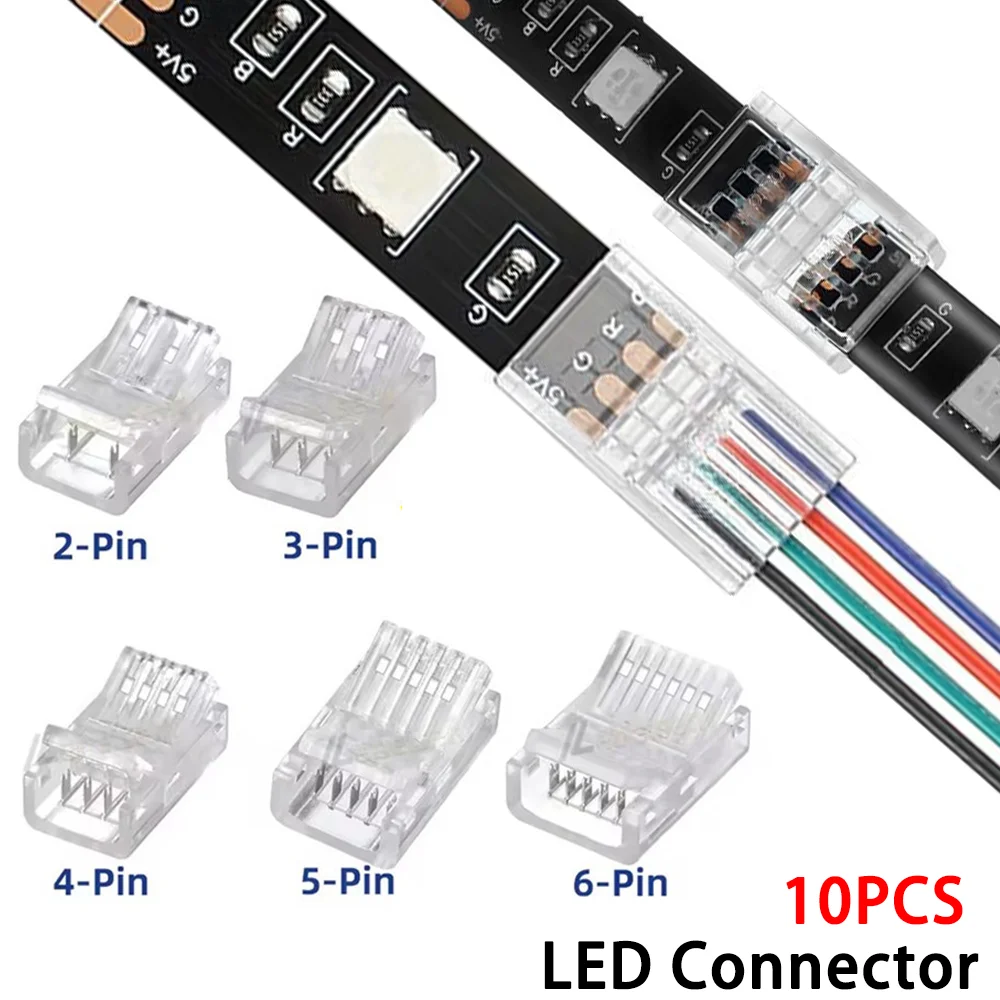
The Multi-Pin LED Strip Connectors are essential electrical components designed for reliable, solderless connections in low-voltage LED lighting installations, catering to a spectrum of strip types and widths. This product offers a practical solution for various LED strip configurations.The product images clearly display a range of transparent buckle-style connectors, from 2-pin to 6-pin configurations. These are explicitly designed for 8mm, 10mm, and 12mm LED strips, specifically mentioning SMD5050 compatibility. The visual evidence confirms their application for both strip-to-strip and strip-to-wire connections. This variety ensures broad applicability.
This comprehensive selection of pin counts directly addresses the diverse requirements of modern LED lighting. A 2-pin connector handles single-color strips, while a 3-pin is typically designated for CCT (Correlated Color Temperature) or basic RGB applications. The 4-pin supports standard RGB, 5-pin for RGBW (RGB + White), and the 6-pin for RGBWW (RGB + Warm White + Cool White). This versatility is critical for installers.
Unlike generic, single-purpose connectors that limit project scope, this assortment provides a tailored solution for virtually any common LED strip configuration. This eliminates the need to stock multiple specialized connector types, streamlining inventory. It simplifies project planning.
Installation Dynamics: Solderless Efficiency
The provided instructional images meticulously detail the connection process, making it accessible even for those with limited electrical experience. For strip-to-strip connections, the user simply flips open the connector's buckle, inserts the LED strip, ensures the copper contacts on the strip align precisely with the connector's internal pins, and then securely closes the buckle. For wire-to-strip applications, the wire is cut to length, stripped of its insulation, inserted into designated guide slots within the connector, and then secured by closing the cover. Pliers are suggested for assistance in achieving a firm closure, particularly for the wire connections.This buckle mechanism represents a significant advancement over older, friction-fit or adhesive-based connectors, which often suffer from unreliable contact over time. The positive locking action of the buckle minimizes accidental disconnections, a common point of failure in less robust designs. This enhances system reliability and reduces maintenance calls.
Traditional soldering, while providing a permanent electrical bond, demands specific skills, specialized equipment such as a soldering iron, solder, and flux, and considerable time for preparation and execution. These solderless connectors drastically reduce the barrier to entry for LED installations, allowing for rapid deployment without extensive training. They save labor costs significantly.
Compared to crimp-style connectors, which often require a dedicated crimping tool and precise pressure, these buckle connectors offer a tool-free or minimal-tool installation. This makes them highly appealing for quick field repairs or modifications. They are user-friendly.
Material Integrity: Conductor and Housing
The connectors feature a transparent housing, which appears to be constructed from polycarbonate or a similar clear polymer. This material choice is not merely aesthetic; it serves a crucial functional purpose. The internal contacts are clearly visible copper, indicating a material selected for its excellent electrical conductivity and corrosion resistance.This transparent housing is a critical safety and diagnostic feature. It permits installers to visually verify that the LED strip's copper pads are correctly aligned with the connector's pins, and that the wires are fully seated. Misalignment or incomplete insertion is easily spotted, preventing potential short circuits or intermittent connections before power is applied. Visual inspection is immediate.
Opaque connectors, common in many electrical applications, conceal the critical connection point, making troubleshooting and initial verification more challenging and time-consuming. The clear design of these LED connectors offers an immediate diagnostic advantage, allowing for quick confirmation of proper contact. Copper contacts ensure efficient power transfer and minimal resistance.
The choice of polycarbonate for the housing provides good electrical insulation and mechanical strength. This material is known for its impact resistance and ability to withstand a range of temperatures, contributing to the overall durability of the connector. It protects internal components effectively.
Environmental Adaptability: Waterproofing Considerations
One of the product images explicitly highlights the connectors' compatibility with "GLUE COATED WATERPROOF RGBWW 12MM IP20 / IP65" strips. This visual demonstration shows both a glue-coated strip and a non-waterproof strip successfully connected, indicating a versatile design. This broadens application possibilities.This indicates careful design to accommodate the slightly thicker profile and varied surface textures of glue-coated waterproof strips. The ability to connect both IP20 (non-waterproof, indoor use) and IP65 (protected against water jets, suitable for damp or outdoor sheltered environments) rated strips significantly broadens the application possibilities for these connectors. Proper sealing is crucial for longevity.
Connecting waterproof LED strips often presents unique challenges due to the silicone or epoxy coating that encapsulates the strip. Many standard connectors are not designed to penetrate or bypass this coating effectively, leading to unreliable connections or damage to the strip. These connectors appear to address this specific installation hurdle by providing a mechanism that can securely grip and make contact with coated strips.
However, it is important to note that while the connector itself can interface with an IP65 strip, the connection point itself may not maintain the original IP65 rating of the strip unless additional waterproofing measures, such as silicone sealant or heat-shrink tubing, are applied over the connector. This ensures environmental protection.
Electrical Safety: Load and Gauge Verification
While specific current ratings are not explicitly listed on the connectors themselves, their design for LED strip lighting implies low-voltage DC applications, typically 5V, 12V, or 24V. The visible copper contacts are appropriately sized for typical LED strip current draws, which are generally in the low-amperage range. These are for low power.As a Certified Electrician, the primary concern is preventing electrical fires and ensuring safety standard compliance in any installation. These connectors are intended for low-voltage, low-amperage LED circuits. Overloading them with higher power demands than they are designed for can lead to excessive heat generation at the connection point. This poses a significant risk of melting the plastic housing, damaging the LED strip, or even initiating a fire. Correct sizing is paramount.
Unlike general-purpose electrical connectors, which might handle higher voltages and currents, these are optimized for the specific electrical characteristics of LED strips. It is imperative that the installer verifies the wire gauge accuracy when using the strip-to-wire connectors. Using undersized wire for the length and current draw can create a bottleneck, leading to voltage drop, increased resistance, and dangerous heat buildup. The terminal quality, visible as robust copper, suggests good conductivity, but proper installation is key.
Before any installation, the total current draw of the LED strip segment must be calculated and compared against the assumed current capacity of these connectors. If the current exceeds a safe margin, alternative connection methods or multiple power injection points should be considered. This prevents overheating.
Durability and Reusability: Long-Term Performance
The buckle design, a mechanical locking mechanism, suggests a degree of durability beyond simple friction-fit connections that can loosen over time. The clear plastic housing appears robust enough for repeated opening and closing cycles without immediate degradation. This enhances product longevity.This secure locking mechanism helps maintain consistent electrical contact over time, even in environments subject to minor vibrations or occasional physical disturbances. This reduces the likelihood of intermittent lighting issues, flickering, or complete circuit failure, which can be frustrating to diagnose and repair. Reusability is a significant benefit for installers.
Many temporary or lower-quality connectors degrade after only a few cycles of connection and disconnection, forcing installers to replace them frequently. These buckle connectors, by design, offer a more resilient and repeatable connection, which is invaluable for troubleshooting existing installations or reconfiguring lighting layouts without needing to purchase new components. They offer flexibility.
The material choice for the buckle mechanism itself is critical for its long-term performance. Assuming a durable plastic, the repeated stress of opening and closing should not lead to premature fatigue or breakage. This contributes to the overall reliability of the LED system. It is a practical design.
Value Proposition: Efficiency and Reliability
The product offers a pack of 10 connectors, providing an ample supply for multiple projects or extensive installations, making it a cost-effective bulk purchase. The variety of pin counts included in a single offering adds to its utility, ensuring the right connector is available for diverse needs. This offers great utility.From a professional standpoint, the value proposition extends significantly beyond the initial purchase price. By simplifying and accelerating the installation process, these solderless connectors significantly reduce labor time, which translates directly into substantial cost savings for both professional electricians and DIY enthusiasts. Time is money in any project.
When considering the total cost of an LED lighting project, the expense of connectors is often minor compared to the time and effort involved in making reliable electrical connections. These connectors offer a substantial return on investment by streamlining the most critical part of the installation, minimizing the need for specialized tools and skills. They prevent costly rework and delays.
Furthermore, the reliability offered by the secure buckle mechanism and transparent housing reduces the likelihood of post-installation issues, which can be expensive and time-consuming to rectify. Investing in reliable connectors upfront saves headaches later. This ensures project success.